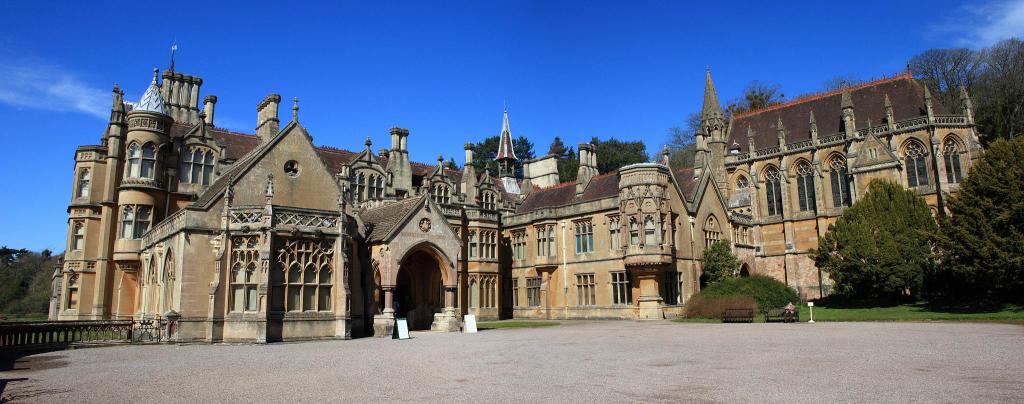
Photo: Chilli Head from Weston-super-Mare, UK / CC BY https://creativecommons.org/licenses/by/2.0
(A translation into English can be found below)
Hace nueve meses escribí en este blog sobre los miles de esclavos chinos que murieron en el siglo diecinueve en las Islas Chincha peruanas («La exposición, William Gibbs, Desde Madrid a Tyntesfield» 21 Octubre 2019).
Los esclavos chinos excavaban a mano el guano que William Gibbs vendía para crear la fortuna con la que se construyó Tyntesfield, su casa señorial cerca del puerto de Bristol en el sur de Inglaterra. Trabajaban en condiciones infrahumanas y si no obedecían eran flagelados y torturados. Miles murieron y muy pocos sobrevivieron.
Ahora la mansión de Gibbs pertenece al National Trust, la organización sin fines de lucro que se dedica a la conservación del patrimonio nacional de Inglaterra, Gales e Irlanda del Norte. Me alegro decir que, a raíz de las manifestaciones de ¡Las vidas negras importan! el National Trust acaba de anunciar que tiene la intención de dejar bien claro el papel que desempeñó la esclavitud en la creación de las fortunas que permitieron que se construyeran muchas de los stately homes ahora en su custodia — cientos de casas señoriales que se encuentran esparcidas por todos los condados del Reino Unido.
Estoy seguro de que lo van a hacer sistematicamente, examinando la financiación no sólo de las casas mas obvias, aquellas que pertenecían directamente a los esclavistas, sino de todas sus propiedades por Inglaterra, Gales e Irlanda del Norte, Tyntesfield incluída — donde la esclavitud involucrada no era negra sino china.
La esclavitud viene en muchas formas y lleva varios disfraces; aunque se hiciera ilegal la trata de esclavos por todo el imperio británico en 1807 y la esclavitud fuera abolida por completo en las posesiones coloniales británicas en 1833, la práctica idéntica siguió existiendo bajo muchos otros eufemismos y en muchos otros sitios fuera del alcance de los abolicionistas de este país, no menos en el negocio de la exportación del guano de las Islas Chincha donde William Gibbs y varios otros “empresarios” cargaban sus barcos destinados a los mercados jardineros y agrícolas del mundo. La trata de esclavos y la esclavitud ya estaba prohibida en el imperio británico pero eso no impidió que Gibbs y otros de su calaña se aprovecharan de la trata de esclavos transpacífica que siguió floreciendo en el Perú sin trabas ni cortapisas (al igual que la industria algodonera británica siguió aprovechando las cosechas exportadas de las plantaciones esclavistas estadounidenses).
Actualmente, cuando visitas a Tyntesfield, sólo se menciona el guano como una anécdota divertida (¡Jajajá, que emprendedor, un hombre capaz de amasar una fortuna a base de la caca de aves!) y no se dice nada acerca del holocausto de los mineros chinos esclavizados.
Photo: Chilli Head from Weston-super-Mare, UK / CC BY (https://creativecommons.org/licenses/by/2.0)
Tyntesfield, Transparency and the Chinese Slave Trade
Nine months ago in this blog I wrote about the thousands of Chinese slaves that died in the nineteenth century in the Peruvian Chincha Islands («The Exhibition, William Gibbs, from Madrid to Tyntesfield» 21 October 2019).
The Chinese slaves dug out by hand the guano that William Gibbs sold to create the fortune he used to build Tyntesfield, his stately home near the port of Bristol in the south of England. They worked in subhuman conditions and if they didn’t obey they were whipped and tortured. Thousands died and very few survived.
Now the mansion belongs to The National Trust, the non-profit making organisation that preserves the national heritage of England, Wales and Northern Ireland. I am delighted to say that, as a result of the Black Lives Matter demonstrations that The National Trust has announced that it intends to make it absolutely clear the role that slavery played in the creation of the fortunes which made possible the construction of many of the stately homes now in their care — hundreds of mansions that are to be found scattered around every county of the United Kingdom .
I’m sure they will do it systematically, examining the financing not only of the most obvious houses, those that belonged directly to the slave owners, but all of their properties throughout England, Wales and Northern Ireland, Tyntesfield included — where the slavery involved was not black but Chinese.
Slavery comes in many forms and guises; although the slave trade was made illegal throughout the British Empire in 1807 and slavery itself was abolished in 1833, the identical practice continued to exist under many other euphemisms and in many other places beyond the reach of this country’s abolitionists, not least in the business of exporting guano from the Chincha Islands where William Gibbs and several other “entrepreneurs” loaded their boats destined for the agricultural and gardening markets of the World. Slave trading and slavery was prohibited in the British Empire but that didn’t stop Gibbs and others of his ilk exploiting the transpacific slave trading which continued to flourish without let or hindrance in Peru. (Just as the British cotton weaving industry continued to take advantage of the crops exported by the slave plantations of the United States.)
At present, when you visit Tyntesfield, guano is only mentioned as an amusing anecdote (Hahaha! How enterprising, a man capable of amassing a fortune made of bird poo!) and nothing about the holocaust of the enslaved Chinese miners is ever mentioned.
Photo: Chilli Head from Weston-super-Mare, UK / CC BY (https://creativecommons.org/licenses/by/2.0)

 Ingleses