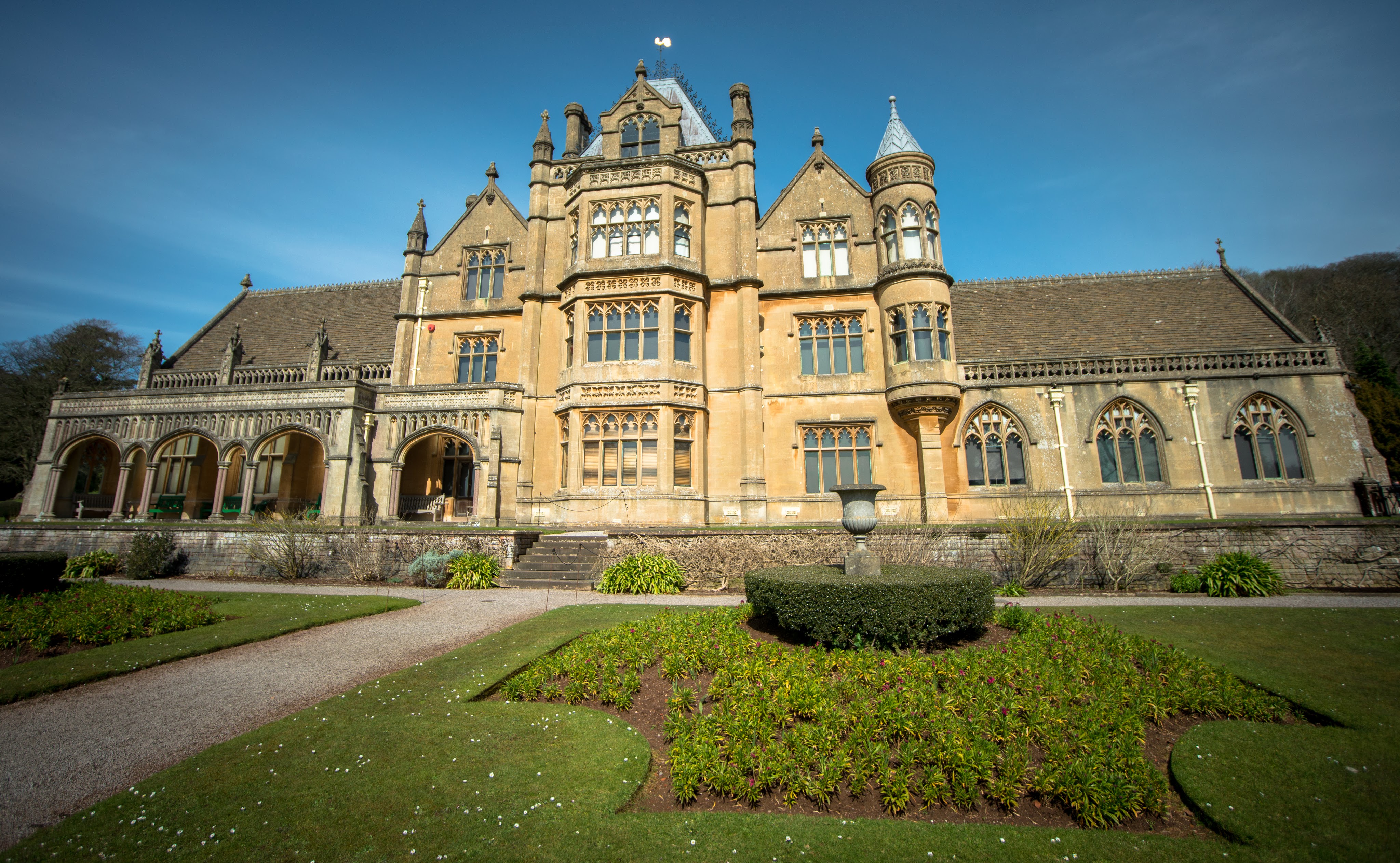
A few weeks ago, I watched Secrets of the National Trust, a Channel 5 programme on which the presenter, Alan Titchmarsh, was praising William Gibbs, the man who built Tyntesfield.
Titchmarsh described Gibbs as a marvellous Christian, a kind and respectable man who had amassed a fortune in a way that was as ingenious as it was comical: it had occurred to Gibbs to import into England an enormous quantity of bird poo from Peru, and he had done so some 74 years before the opening of the Panama Canal. He had brought hundreds of thousands of tons of excrement more than 12 thousand miles by sea from Peru to England and he had sold it for a mint. What an ingenious and inoffensive man!
I wrote to the National Trust and to Channel 5 saying that it was worth pointing out that thousands of kidnapped Chinese miners had to die in a concentration camp in order that the Gibbs family could make the money to build its fabulous mansion and it was impossible that Gibbs was unaware of the working conditions of the men. It was common knowledge amongst the captains and the crews, the exporters’ agents (Gibbs was only one of many international exporters), journalists and diplomats. There even existed photos and sketches of the kidnapping, abuse and torture of the Chinese.
The History of the Peruvian Guano Industry is a good summary of events and is to be found on the WordPress blog, Jeff’s Travels at https://yaffle53.wordpress.com/2014/05/22/a-history-of-the-peruvian-guano-industry/. It includes photos and drawings from the time.
Gibbs knew what he was doing but he felt protected by Victorian Christian ethics. In the Great Britain of the 19th century racial inequality was an accepted fact. Yes, black slavery had been abolished but this did not mean that black people were the equals of whites. They were the recipients of the abolitionists’ sympathy but, at the end of the day, they belonged to an inferior race. They didn’t deserve to be treated as animals but that didn’t mean that they had the right to consider themselves the equals of the white man. It was the same with the Chinese.
From this general belief in the inferiority of other races, it was a short step to contempt. And contempt for other human beings leads rapidly to an indifference to their fate and what they might suffer before their death.
As a good Christian, William Gibbs prayed to God and was guided by Him. Everything formed part of the Lord’s eternal plan for the development of the World. According to the logic of the day, God had created the animals to serve human beings and had created the inferior human races to be instructed and dominated by the whites. Unfortunately, would have to give their lives for the greater good of humanity (that’s to say, white humanity) and in this way fulfil the wishes of our Maker.
I received replies from the customer service desks of Channel 5 and the National Trust. Both responses tend to be somewhat formulaic: they are written in the language of public relations; they are designed to have a soothing effect; they employ euphemisms instead of calling things by their name.
The spokesperson for the National Trust wrote:
“We are aware that across the National Trust we have more work to do to address the sources of wealth at the places we look after. This programme was filmed 2 years ago and followed the way that, at that time, the story of the house and family was presented by us. We are now accelerating the work we are doing across all National Trust properties to research and highlight links to colonialism and slavery and how the wealth was acquired that built and furnished them. At Tyntesfield we are now working to do more to talk about the horrific history of the guano industry and how it brought wealth to the Gibbs family. For example, last year the property hosted an exhibition of photography by Olli Hellman, $tow High in Transit, which explored the disparity between Tyntesfield’s wealth and the decimation of the Chincha islands where the guano was mined. This display was a temporary exhibition, however, further interpretation is currently being researched to ensure that we can present an accurate, open and inclusive history of the property including the link to the guano industry.
In order to address your concerns we have spoken to Channel 5 who will be making you aware that they are adding an amendment to the episode for future broadcasts that reflects this position.
Finally, you may be interested to know that we are publishing a report in mid-September that highlights slavery and colonialism connections at National Trust places in England, Wales and Northern Ireland and which will also enable us to update property websites and on-site interpretation to take account of the report’s findings.
Thank you for taking the time to write to us, and for sharing your concerns, I hope you are reassured that we are fully committed to ensuring these stories are more fully and honestly told.”
She says that “This programme was filmed 2 years ago and followed the way that, at that time, the story of the house and family was presented by us.” Evidently, she has not read the 2020 guide to the National Trust in which it says that the house “was created for the Gibbs family to celebrate their achievements, raise their children and share their passions for family and faith” and the story of William is of “young love… a close-knit family and the making of a vast fortune”.
No, here in the present guidebook, there is no mention of the Chinese who were forced to work until they died.
The spokesperson also mentions the exhibition, $tow High in Transit, ten photographic juxtapositions which contrast the richness of the house and garden at Tyntesfield with the sterile and caustic surroundings of the Chincha Islands. These photos were exhibited on easels scattered around the house. They had neither captions nor explanations and they didn’t illustrate the life of the miners. In the absence of any other explanation it would have been very easy for a visitor to the house to conclude from the photos that William Gibbs was no less than a conjuror and a genius who had made a fortune to appear as if by magic and without causing anyone harm.
It’s even more difficult to believe that the National Trust has turned over a new leaf when they have just recorded, a few weeks ago, another programme about Tyntesfield in which they fall into the same old ways. This time they’ve collaborated with Channel 4. In the latest episode of George Clarke’s National Trust Unlocked they portray William Gibbs as a very successful merchant who made his pile selling a pile of bird poo. Once again, we see the same innocence and the same clichés, it strikes the very same “humorous note” and we hear the same old bowdlerised version of what really happened. How comforting.
Channel 5 sent me this:
“Channel 5 appreciates all viewer feedback and thank you for your letter and your observations about Tyntesfield, and its links with enslaved miners. We have looked into this. The programme was filmed more than a year ago and we were guided by The Trust and the way they, at that time, presented the story of the house and family. We don’t feel the programme was misleading, but we accept that it was unfortunate not to acknowledge the terrible situation of the workers who harvested the Guano. We understand that the Trust is now reappraising the way it presents its building’s stories, and is now accelerating work at its properties in researching and bringing to the public the wider world histories, and the sources of wealth that built and furnished them. To reflect this, we are adding a card to the programme to explain this element of the story and the Trust’s response. Secrets of The National Trust does have a quite light hearted approach to its stories on occasion, and mainly concentrates on the houses and their physical secrets, but over three series it has acknowledged the links to slavery and connections with Britain’s imperial past on many occasions. However, we regret that this was not done in this particular programme. Thank you for bringing this to our attention.”
I twice requested a clarification of the term “add a card” but the staff at Channel 5 couldn’t be bothered to reply. I believe that it means to insert a text, a commentary or perhaps a link with a web page.
The spokesman also claims that “it was unfortunate not to acknowledge the terrible situation of the workers who harvested the Guano.” To harvest is a verb which conjures up images of rural folk who reap fields of golden wheat or pick by hand the fruit and vegetables in a market garden. Harvest is not a verb that describes the reality of the miners on the Chincha islands who were forced to work in subhuman conditions until they died from exhaustion, torture and illness. The mere use of the verb indicates a lack of understanding on the part of the spokesman.
This is a central issue of the history of Tyntesfield. It is not sufficient to “add a card”. The programme should be recorded again in order to explain the true relationship between Tyntesfield and the way in which the funds were produced for its construction.

 Ingleses