¿Estas planeando una visita a Londres? Vale la pena que pases por la casa de Samuel Johnson

Si estás planeando una visita a Londres vale la pena que pases por la casa de Dr Samuel Johnson, el célebre lexicógrafo y autor del siglo dieciocho, el hombre que aseveró famosamente, «Cuando un hombre se aburre de Londres se aburre de la vida».  (“When a man is tired of London he is tired of life”)
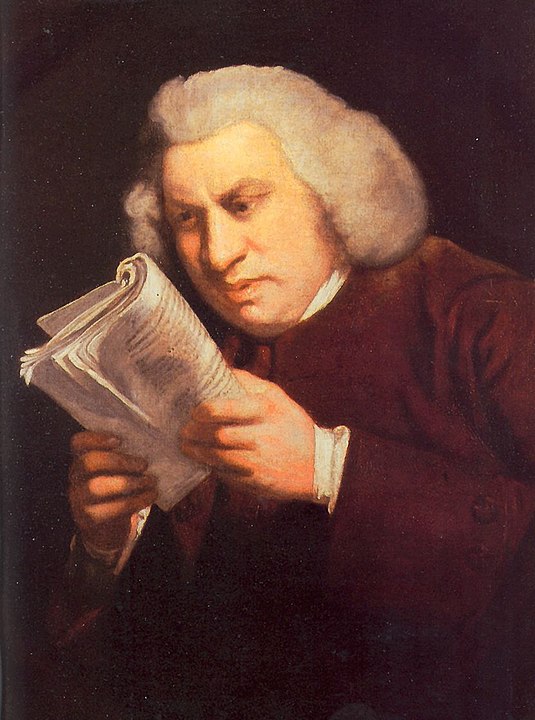
Samuel Johnson por Joshua Reynolds 1775. Wikimedia Commons

Johnson era un hombre alto e imponente con una complexión fuerte y robusta. Tenía dos características mentales sobresalientes. Padecía el síndrome de Tourette y poseía un talento fenomenal para resumir y definir: un hombre que acertaba en sus generalizaciones, acuñaba frases que todavía se oyen en el inglés moderno, e inventaba epítetos que siguen repercutiendo por los siglos. 

Johnson nació en 1709  en Lichfield en el centro de Inglaterra, cursó estudios universitarios en Oxford y vivió la mayoría de su vida en Londres donde, a la edad de 39 años, un grupo de editores le contrataron a escribir un diccionario de la lengua inglesa. Hasta entonces la ortografía del idioma había sido algo caótica e idiosincrásica, la gente deletreando como le daba la gana. Incluso, a veces, la confusión ocasionada por la ortografía aleatoria llevaba al lector a malinterpretar lo que leía: tanto el sentido de las palabras como las intenciones del autor. 

Johnson insistió que él no necesitaría más de 3 años para dar por finalizado el diccionario. También él lo haría por sí solo.  Cuando alguien le mencionó que la Académie française había empleado a 40 académicos a lo largo de 40 años para recopilar la nueva edición de su dictionnaire, Johnson respondió de su típica manera sarcástica y mordaz:  “He aquí la proporción: a ver, 40 por 40 son 1.600. Así es la proporción de un inglés a un francés: 3 valen 1.600”. 

En aquel entonces los ingleses y los franceses no se podían soportar. Johnson no era ninguna excepción a la regla. Desde el siglo doce había existido entre los dos países un estado de guerra casi permanente. Todavía queda algún que otro historiador o comentarista que sigue refiriendo a los franceses como “el viejo enemigo”. (Hay que añadir que Johnson no sólo despreciaba a los franceses: tenía juicios condenatorios, contundentes y categóricos para toda persona que le contrariaba.)

El diccionario se publicó en 1755 y hasta la publicación de la primera edición de la Oxford English Dictionary en 1928 la obra de Johnson, que el casi hace por su propia cuenta sin la ayuda de nadie fuera de unas escribas, fue la biblia de la ortografía inglesa durante 173 años.

Samuel Johnson y su igualmente famoso biógrafo James Boswell se conocieron en 1773. Johnson llevaba 32 años a Boswell, un joven escocés de ascendencia aristocrática que trabajaba de abogado en Londres. Pero, a pesar de la diferencia en años, los dos hombres forjaron una amistad firme y duradera. Boswell admiraba a Johnson con una actitud casi reverencial. Algunos comentaristas dicen que, para Boswell, Johnson era una figura paterna, un hombre mayor más simpático y cariñoso que su propio padre. 

La casa de Dr Johnson en Gough Square, Londres. Foto por George Rex

Cuando se conocieron, Samuel Johnson vivía en Gough Square en una casa de la Ciudad de Londres construida en las últimas décadas del siglo diecisiete. La casa se puede visitar y es muy interesante, especialmente el último piso donde Johnson trabajaba sobre el diccionario. Aquí puedes hojear una edición facsímil. Vale la pena echar un vistazo dentro del libro porque Johnson no podía resistir la tentación de incluir sus propias opiniones y observaciones humorísticas sobre las definiciones. El ejemplo que se suele dar es de la definición de la avena: “un grano que se da generalmente a los caballos en Inglaterra, pero en Escocia alimenta a la gente”. El museo dispone de folletos informativos sobre la exhibición en varios idiomas, el español incluido.  Entradas: Adultos £8, concesiones £7, niños 5 -17 años £4. https://www.drjohnsonshouse.org/

Cerca de su casa está Ye Olde Cheshire Cheese, El viejo queso de Cheshire, un pub en que Johnson comía y bebía. El local se conserva más o menos igual a lo que era en el siglo dieciocho. Está señalado el sitio en el que Johnson solía sentarse. No tienes que pagar una entrada pero sería considerado maleducado que no pidieras nada de beber ni comer.

Unos años después del Gran Incendio de Londres (1666) el arquitecto de la reconstrucción de la ciudad, Sir Christopher Wren, mandó construir un monumento a la devastación, una columna erigida donde se había iniciado el incendio, una torre de más de 60 metros de altura desde la cual se daban unas vistas muy impresionantes de la ciudad renovada. La torre se encuentra a una milla al oeste de la casa de Johnson.  Hoy en día el monumento queda empequeñecido por los rascacielos que lo rodean aunque para su época la torre era un gigante: tiene 311 escalones y no se puede subir de una sola tirada. Hay que parar y descansar varias veces. Aún así, la subida puede dejarte hecho polvo.

El monumento al Gran Incendio de Londres. Foto por Fastily

En el pasado, cuando la gente estaba menos acostumbrada a tales altitudes y tenía más miedo a las alturas el ascenso podía resultar aterrador. Una de aquellas personas a quién sí le metió miedo fue el propio James Boswell.  En 1763, el año en que él y Johnson se conocieron, Boswell  decidió visitar el monumento. A medio ascenso sufrió un ataque de nervios. Pero, sacó fuerzas de flaqueza y perseveró para llegar a la cima porque no quería perder la dignidad. En la cima dijo que “fue horrible estar a una altura tan monstruosa, en un sitio tan elevado, encima de Londres y todas sus agujas: «…it was horrid to be so monstrous a way up in the air, so far above London and all its spires«. Si quieres visitar el monumento tienes que pagar: adultos £5.80 y menores £2.90. No puedes comprar ni reservar entradas online. Tienes que hacer cola. Pero vale la pena. https://www.themonument.info/

20 Fenchurch St, el Walkie-Walkie. El monumento se divisa en el rincón inferior izquierdo de este foto por Gab.pr

Hoy en día la torre parece enano delante del edificio que hay detrás, el rascacielos, 20 Fenchurch Street, el llamado Walkie-Talkie. A diferencia del monumento, este edificio se visita gratis. Solo tienes que reservar online. No solo obtienes una vista maravillosa del Río Támesis y el centro de Londres desde la plataforma de observación sino también puedes visitar el sky-garden, el jardín exótico situado en los tres pisos más altos del edificio. También en la parte superior del edificio hay bares, restaurantes y, de vez en cuando, música en vivo. https://skygarden.london/

Si te apetece la idea de visitar las iglesias que quedan de las que Wren reconstruyó en las décadas que siguieron al Gran Incendio, puedes elegir entre las varias caminatas guiadas ofrecidas online. Por ejemplo la web de City Guides https://www.cityoflondonguides.com/tours ofrece uno de estos paseos cada martes a las 11 de la mañana. Cuesta £12 y £10 concesiones. Todas estas iglesias habrían sido flamantes edificios recién construidos en la época de Samuel Johnson y le habrían sido muy familiares. Los que quedan son auténticas joyas del Londres del siglo diecisiete. City guides también ofrece varias otras caminatas guiadas que exploran el barrio en que Johnson vivía y trabajaba.

Johnson falleció en 1784 y puedes visitar su tumba en la abadía de Westminster donde está sepultado al lado de todos los grandes de la literatura británica en El Rincón de los Poetas. Pero, ojo, los precios de entrada son desorbitados: adultos £25, concesiones £22, niños 6-17 £11, niños menores de 6 años, gratis. https://www.westminster-abbey.org/


¿Qué pasa con los ingleses y los idiomas?

Mientras el resto del mundo se empeña en saber inglés, el interés de los estudiantes ingleses en idiomas extranjeros es cada vez más escaso. A lo largo de las últimas décadas el número de estudiantes de secundaria que se alistan a cursos de idiomas se ha ido reduciendo de año en año. Desde 2004 (el año en el que el estudio de lenguas modernas extranjeras dejó de ser obligatorio a partir de los 15 años) la cifra se ha desplomado vertiginosamente. Como consecuencia, hay cada vez menos interés en estudiar idiomas en la universidad y muchas de ellas han respondido a esta falta de demanda cerrando sus facultades de lenguas modernas extranjeras. 

10 Spring Gardens, Londres, la sede del British Council. Foto por Stephen Richards via Wikimedia Commons

Claro que ha habido muchos informes que han intentado dilucidar esta creciente falta de interés lingüístico por parte de los jóvenes ingleses, pero estas valoraciones generales no van al grano; solo sirven para crear más confusión. Por ejemplo, cada año el British Council publica un informe que se titula Language Trends England que examina las tendencias de lenguas modernas extranjeras en colegios e institutos estatales. En 2020, el mismo British Council publicó un informe especial sobre el desinterés generalizado que muestran los adolescentes varones ingleses por los cursos de idiomas (dos tercios de los estudiantes de idiomas en este país son chicas). El informe enumera los factores sociales que influyen negativamente en el aprendizaje de idiomas entre los adolescente varones e identifica que los típicos chicos que salen mal parados: 

  • son de familias humildes 
  • no hablan ningún otro idioma en casa 
  • tienen un código postal «problemático»
  • tienen necesidades educativas especiales

Bueno, ¡Qué sorpresa! ¿Quién se lo hubiera imaginado? 

Pero, estos no son los motivos del pobre rendimiento en las aulas de idiomas. Estos solo son los corolarios presentes en las vidas de estudiantes ingleses que no aprenden bien en clases de idiomas.

Lo que no se menciona en el informe es que estos no son factores negativos y determinantes en otros países donde se estudia inglés como segundo idioma. Por todo el resto del mundo los chicos de ambos sexos de familias monolingües empobrecidas de barrios marginados se esfuerzan por hablar inglés. Y lo hacen porque entienden que sus conocimientos de este idioma son la clave de un futuro más próspero. Hasta los peques saben que su meta principal es la adquisición de un buen nivel de inglés.

Una clase de primaria en Indonesia. Foto por USAID Indonesia via Wikimedia Commons

Por ejemplo, tienen en Indonesia un libro de texto muy conocido titulado Aprende Inglés por una vida mejor. Niños indonesios saben que si priorizan el estudio de este segundo idioma estarán capacitados a trabajar en los muchos sectores de la economía en que se emplea inglés:

  • en turismo 
  • en hostelería 
  • en informática 
  • en comercio  
  • en interpretación y traducción 

No importa que uno salga de un barrio humilde, de los suburbios, de los anillos de pobreza que rodean el próspero centro de la ciudad, todos entienden la importancia de aprender este idioma y se esfuerzan por hacerlo.

Entonces, ¿cuál es el auténtico motivo por el cual los idiomas no interesan a los adolescentes ingleses, especialmente a los varones?

El informe del British Council va dirigido a todas las instituciones educativas del país. El British Council es un organismo muy positivo y bien intencionado y como tal, hace todo lo que puede para sugerir cómo se pudiera intentar revertir una situación que va de mal en peor. Para que se produzca una mejora en la situación el informe destaca dos prerrequisitos esenciales:

  • El equipo dirigente del instituto tiene que hacer obligatorio el estudio de idiomas
  • Hay que mejorar la calidad de la enseñanza

El informe incluye ejemplos de varios institutos que han superado un poquito las dificultades de los chicos desfavorecidos. Incluye también un resumen de sus buenas prácticas que el British Council recomienda a todos los colegios e institutos:

  • más horas de clases y conversación
  • actividades extra curriculares 
  • más asesoramiento ocupacional 
  • visitas a sitios relevantes 
  • clases más pequeñas 
  • clases abiertas a todos

El problema con todas estas recomendaciones es que

  • ya hemos cumplido con ellas en el pasado sin grandes resultados 
  • Y cuestan dinero: los institutos no tienen presupuestos sin límites. Reciben del gobierno £5000 anuales por cada estudiante que tienen. Si salen 20 estudiantes porque prefieren seguir empresariales en otro instituto, las pérdidas a su instituto de origen se elevan a unos £100,000. Entonces, ¿qué hacen los directores? No estarán podrido de dinero. No pueden estirar los pies más de lo que da la frazada. Necesitan retener el número de estudiantes más alto posible. Es sencillo. Lo que hacen es quitar idiomas y poner empresariales.
  • Pero, más importante todavía es que la opinión pública inglesa no cree que valgan la pena las horas extra y los estudiantes y sus padres ya se han dado cuenta de que no tienen que aprender ningún otro idioma porque ya son hablantes nativos de la lengua común adoptada por todo el mundo. 

En las raras ocasiones en las que los ingleses van de vacaciones a otros países saben muy bien que la gente de por ahí ya ha aprendido a relacionarse con ellos en el inglés. ¿Por qué demonios les hace falta aprender cualquier otro idioma cuando todo el mundo habla el suyo? Y si se da el caso improbable de que la gente local no hable inglés, los angloparlantes monolingües tienen un móvil con la aplicación que lo traduce todo. Es más, el aparato lo hace al instante, y no solo responde por ellos, lo hace pronunciando como Dios manda. 

La incapacidad de hablar idiomas extranjeros no quiere decir que los chicos británicos sean ni vagos, ni bordes, ni ignorantes. Y el que no se comuniquen en español, francés, mandarín o árabe no es un inconveniente para la competitividad de la economía británica, como insisten muchos especialistas en educación. Si la industria británica produce buenas manufacturas innovadoras, si seguimos fabricando productos inventivos y efectivos que resuelven problemas técnicos difíciles y si continuamos a hacerlo todo a un coste razonable, si el sector de servicios financieros y la banca mantienen sus posiciones dominantes en el mercado, el mundo seguirá llamando a nuestra puerta, pidiendo tranquilamente nuestros bienes y servicios en inglés. 

Los informes de augustos órganos de pedagogos, como el British Council, no siempre toman en consideración el hecho sociológico básico de que no estudiamos idiomas porque ya no hay necesidad alguna de hacerlo. La verdad sencilla y sin adornos es que aquí, la posesión de un segundo idioma, en sí mismo, no tiene ninguna finalidad económica.

Lo más irónico es que, hasta cierto punto, el British Council es el autor del problema que intenta resolver. Es un organismo mundial financiado por el gobierno británico que tiene como su papel principal la popularización y la enseñanza del inglés como lengua extranjera: un rol que ha desempeñado desde hace casi un siglo con muy buenos resultados, ayudando a mantener y reforzar el inglés como la lingua franca del mundo, el idioma universal del planeta y, en las propias palabras del British Council, “la llave para liberar todo un nuevo mundo de oportunidades”. Su campaña de enseñar al mundo a hablar inglés ha sido tan exitosa que los ingleses ya no vemos la necesidad de aprender otros idiomas. Las lenguas modernas extranjeras se han vuelto redundantes. El mundo ha optado por nuestro sistema lingüístico como su lengua de relación. 

¿Qué pensáis?

What is it with the English and Foreign Languages?

While the rest of the world is determined to learn English, the interest of our students in foreign languages is diminishing. Throughout the last few decades, the number of secondary students who sign up for Modern Foreign Languages (MFL) has been declining year upon year. Since 2004 (the year in which MFL ceased to be obligatory after year 9) the numbers have collapsed dramatically. As a consequence, there is less and less interest in studying MFL at university and many universities have responded to this lack of demand by closing their language faculties.

10 Spring Gardens, London, home of the British Council. Photo by Stephen Richards. Via Wikimedia Commons: Creative Commons Attribution Share-alike license 2.0

Of course, there have been many reports that have tried to throw some light upon this declining linguistic interest on the part of English youth, but these assessments don’t go to the nub of the matter; they simply serve to create more confusion. For example, every year the British Council publishes a report entitled, Language Trends England which examines the trends of MFL in state primary and secondary schools. In 2020 the British Council published a special report on the generalised disinterest towards MFL amongst English adolescent boys (two thirds of language students in this country are girls). The report lists the social factors which have a negative effect on the language learning of adolescents and identifies the typical boys who come out badly:

  • they are from poor families
  • they don’t speak another language at home
  • they live in a “problem” postcode
  • they have special educational needs 

Well. What a surprise! Who would have imagined?

However, these are not reasons for poor performance in language classes. They are only corollaries present in the lives of students in England who, generally speaking, don’t do well in this subject.

What is not mentioned in the report is that these are not negative and decisive factors in other countries where English is studied as a second language. Throughout the rest of the World children of both sexes of monolingual families who live on the fringes of society strive to learn English. And they do so because they understand that their knowledge of this language is the key to a more prosperous future. Even the youngest know that their principal aim is the acquisition of a good standard of English.

Primary school class in Indonesia.. Photo by USAID Indonesia via Wikimedia Commons

For example, in Indonesia there is a well-known language textbook entitled, Learn English for a Better Life. Indonesian children know that if they prioritise the study of this second language they will be prepared for work in all of the many sectors of the economy in which English is employed:

  • in tourism
  • in the hospitality industry
  • in computing
  • in business
  • in interpretation and translation

It doesn’t matter that one comes from a poor neighbourhood, from the slums, from the rings of poverty that surround the prosperous centre of the city, for everybody understands the importance of this language and works hard to learn it.

So, what is the real reason that English adolescents, especially the boys, are not interested in languages?

The British Council report is addressed to all the educational institutions of the country. The British Council is a very positive and well-intentioned organisation and as such it does everything it can to suggest how we might reverse this situation which is going from bad to worse. In order to produce a change for the better, the report headlines two essential prerequisites:

  • The senior management teams of secondary schools have to make the study of MFL obligatory
  • The quality of language teaching has to improve

The report includes examples of various secondary schools that have, to a certain extent, overcome the difficulties faced by underprivileged children. It includes a summary of their good practices which the British Council commends to all schools:

  • more hours of tuition and conversation
  • extracurricular activities 
  • more employment advice 
  • visits to relevant places 
  • smaller classes 
  • classes open to all

The problem with all these recommendations is that:

  • we’ve already done most of these in the past without great results
  • and they cost money. Secondary schools don’t have unlimited budgets. They get £5000 for each student from the government. If 20 of them leave to do Business Studies in another school, the loss to their previous school is £100,000. So what do head teachers do? They are not made of money. They have to cut their coat according to their cloth. They need to keep the highest number of students possible. It’s simple. What they do is take out MFL and put in Business Studies
  • Even more importantly, British public opinion doesn’t believe the extra hours of tuition are worth it and the students and their parents have already realised that they don’t have to learn any other language because they are already native speakers of the World’s number one common language

On the rare occasions that the English go abroad on holiday they know full well that the people there have already learnt how to interact with them in English. Why the hell should they need to learn any other language if everybody else speaks theirs? And if the unlikely happens and the locals don’t speak English, then the monolingual holidaymakers have an app that can translate anything. Moreover, it does it in a flash and not only responds on their behalf, it pronounces everything properly.

The inability to speak foreign languages doesn’t mean that English children are lazy, rude or ignorant. Neither is it true that the fact that they don’t communicate in Spanish, French, Mandarin or Arabic is an obstacle to the competitiveness of the British economy, as many educationalists insist. If British industry produces innovative merchandise, if it continues to manufacture inventive and effective goods that resolve difficult technical issues and does it all at a reasonable cost, if the banking and financial services sector maintain their positions of dominance in the market, the World will go on knocking at Britain’s door, happily ordering our goods and services in English.

Reports by august bodies of educationalists such as the British Council don’t always take into account the basic sociological fact that we don’t study other languages because we no longer have to do it. The simple unvarnished truth is that in England, the possession of a second language serves no economic purpose in itself.

The irony is that the British Council is, to some extent, the author of the problem it is trying to solve. It is a global body funded by the British government whose main role is the popularisation and teaching of English as a foreign language: a role that it has fulfilled for nearly a century all over the World with very good results, helping to maintain and reinforce English as the World’s lingua franca, the universal language of the planet and, in its own words «the key to unlocking a whole new world of opportunity». Its campaign to teach the World to speak English has been so successful that the English no longer see the need to learn any other language. Modern foreign languages have become redundant as the World has opted for our linguistic system as its common tongue.

What do you think?

The English: A Suitable Case for Family Therapy

Image by scray via Wikimedia Commons

Not long ago an article appeared in El País in which the author examined the British custom of saying sorry all the time. She had read a study which established that we say it an average of eight times a day, although some of us do it up to twenty times. Instead of asking forgiveness for our behaviour (I am not an apologist for aspects of our culture), I would like to point out that this obsession can be used to therapeutic advantage.

In the eighties I used to work in a psychiatric day hospital. Our patients were not the florid psychotics who had to be detained for their own good or for the protection of others, but those who were suffering from affective disorders associated with dysfunctional personal relationships.

Our task in the hospital was to do everything possible to reduce the number of psychological problems that were clogging up GP surgeries. It is estimated that up to fifty percent of patients who turn up at the doctor’s have psychosomatic problems and this high percentage hampers GPs in their work of treating the more physical illnesses. There aren’t enough hours in the day for the average GP to attend and listen to the many patients who are demonstrating the signs and symptoms of a neurotic complaint.

Three family therapists: Braulio Montalvo, Salvador Minuchin y Jay Haley. Photo by Jamespkeim via Wikimedia Commons

We used various methods to intervene in the lives of our patients. The most important was family therapy. We followed a model developed by Salvador Minuchin, an Argentinian psychiatrist of Judeo-Russian descent who practised in the USA during the second half of the twentieth century. He became famous in the seventies for the development of his structural family therapy which emphasised the inclusion of all members of the family, even the children. This incorporated a democratic element into all our interviews. Everyone, whatever their age, had a valid point of view regarding the smooth operation of the family and the subsequent recuperation of the afflicted individual. The premise was that everyone was part of the problem and everyone had to play a part in the resolution of the problem.

The role of the therapist was to integrate himself in the family and to direct questions to all the members in order to elicit the dysfunctional elements. At no time were the signs and symptoms of the identified patient tackled directly. We avoided all discussion of the peculiarity of the so-called sick person.

The inclusion of the whole family was conducive to the deconstruction of the rows which broke out habitually and which apportioned blame and concentrated anguish in one of the members. We concentrated on the day to day life of the family. Very often we focussed in on a banal episode which had given rise to a fierce yet inconclusive row.

One of the tricks we used was the apology. We combined this with mock sincerity. We would say things like, “You will have to excuse our ignorance. We haven’t the slightest idea what is going on here. Forgive us but it is too soon for us to have arrived at a conclusion”. We took advantage of the British pathological desire to excuse oneself and to be excused. In this country everyone is entitled to ask for pardon on any occasion for whatever offence we might have committed, however small it might be. It is a well-respected right. And our families always fell for it.

We never assumed the role of experts. We relegated ourselves to the same level as all the members of the family. This way they felt freer to express what they were thinking. This unleashed some rows, some of them pretty big. We never ever asked what the problem was because if the family had known what the problem was they would have solved it long ago.

We never criticised anybody. We simply reformulated negative characteristics as positive qualities. We would refer to an unintelligent or insensitive father as a practical man whereas an overbearing woman might become a good organiser. We would call a rude child funny or amusing.

We also took advantage of a universal human characteristic, that of being very susceptible to the power of contrasuggestion. That is, we are all somewhat rebellious and we all have a tendency to want to do the opposite of what we are advised.

Take this simple example. A family came to see us that had been to the GP’s surgery on many occasions. There was a young woman in the family who seemed to have lost her speech (the whole family turned up for the interview). Moreover, she had been in this condition for the past year. It was clear that the girl was not complaining of any physiological or medical symptoms and she hadn’t suffered any injury to her vocal chords. The family believed that she had gone mad but to us it was quite obvious that the girl had sunk into an elective mutism (that is, she hadn’t lost her speech, she had simply chosen not to speak). In the initial interview we apologised for not understanding the situation and, given that it had already gone on for a year, we predicted that there would not be a quick and easy answer and that they would have to accept our apologies and exercise a great deal of patience because our intervention might be a long while in producing a result. The girl was talking freely in just a few days.

The therapist never acted alone. The interviews were discretely filmed and the conversations with the families were transmitted live to a panel of doctors, social workers and psychiatric nurses who followed their progress remotely. The therapist always had an earpiece through which he or she could receive the observations, the instructions, the doubts and the questions of his or her colleagues.

I understand very well that our effusive apologies produce distaste and annoyance in certain countries. For example, if we do it in Spain our British good manners are counterproductive: so many pleases, thank yous and apologies sound ridiculous to the Spanish ear. We do it with the intention of ingratiating ourselves with our hosts but we shoot ourselves in the foot. We end up losing the respect of the people whom we are trying to impress.

But for us in the family therapy team, years ago in the psychiatric day hospital, the traditional British apology served us exceptionally well.

Los ingleses: un caso adecuado para la terapia familiar

Imagen por scray via Wikimedia Commons

Hace unos años apareció en El País un artículo en el que la autora examinaba la costumbre británica de estar todo el día diciendo “sorry” (perdón, disculpa). Ella había leído un estudio que constató que lo decíamos una media de ocho veces al día, aunque algunos de nosotros llegábamos a hacerlo hasta veinte veces. En vez de pedir disculpas por nuestro comportamiento (no soy apologista de aspectos de nuestra cultura), me gustaría decir que se puede aprovechar de esta obsesión para fines terapeúticos.

En los años ochenta yo trabajaba en un hospital psiquiátrico de día. Nuestros pacientes no eran los psicóticos floridos que tenían que ser detenidos por su propio bien o por la protección de otros, sino los que padecían trastornos afectivos asociados con sus relaciones personales disfuncionales.

Nuestra tarea en el hospital era la de hacer todo lo posible para reducir la cantidad de problemas psicológicos que atascaban las salas de espera de los consultorios de los médicos de cabecera. Se estima que hasta un cincuenta por ciento de los pacientes que acuden al médico tienen problemas psicosomáticos y ese porcentaje tan elevado impide que el médico lleve a cabo su trabajo de curar las enfermedades más físicas. El típico médico de cabecera no dispone de las horas necesarias para entender y atender a todos los muchos pacientes que manifiestan síntomas y signos de un trastorno neurótico.

Tres terapeutas familiares: Braulio Montalvo, Salvador Minuchin y Jay Haley. Foto por Jamespkeim via Wikimedia Commons

Practicamos varios métodos de intervención en las vidas de nuestros pacientes. El más importante era la terapia familiar. Seguimos un modelo evolucionado por Salvador Minuchin, un psiquiatra argentino de origen judío-ruso, que trabajaba en EEUU durante la segunda mitad del siglo veinte. Se hizo famoso en los años setenta con la elaboración de su terapia familiar estructural que hacía hincapié en la inclusión de todos los miembros de la familia, hasta los niños. Así se incorporó un elemento democrático a todas nuestras entrevistas. Cada uno, cualquiera que fuera su edad, tenía un punto de vista válido en relación con el buen funcionamiento de la familia y la consiguiente recuperación del individuo afligido. La premisa era que todos formaban parte del problema y todos tenían que desempeñar un papel en la resolución del problema.

El papel del terapeuta era el de integrarse en los sistemas de interacción de la familia y dirigir preguntas a todos los miembros destinadas a desvelar los elementos disfuncionales. En ningún momento se abordaban directamente los síntomas del paciente identificado. Evitábamos toda discusión sobre la singularidad del llamado enfermo.

La inclusión de toda la familia era propicia a la desconstrucción de las broncas que tenían lugar habitualmente y que echaban la culpa y centraban la aflicción en uno de sus individuos. Concentrábamos en el día a día de la familia. Muchas veces nos enfocábamos en los detalles de un episodio banal que había dado lugar a una discusión fuerte pero inconclusa.

Uno de los trucos que utilizábamos era la disculpa. Mezclábamos este con una falsa sinceridad. Decíamos cosas como, “Tendréis que disculparnos por nuestra ignorancia. No tenemos la más mínima idea de lo que esté pasando por aquí. Perdonadnos, pero es muy pronto para que lleguemos a una solución.” Nos aprovechábamos del deseo patológico británico de disculparse y ser disculpado. En este país todos tenemos el derecho de pedir perdón en toda ocasión por cualquier ofensa que hayamos cometido, por leve que sea. Y es un derecho muy respetado. Y nuestras familias siempre se tragaron el cuento.

Nunca jugamos el papel del perito. Nos relegamos al mismo nivel de todos los miembros de la familia. Así se sentían más libres para decir lo que estaban pensando. Así se desataban unas discusiones a veces muy fuertes. Y nunca jamás preguntamos cuál era el problema porque si la familia hubiera sabido cuál era el problema hacía mucho tiempo que lo habría resuelto.

Nunca criticamos a nadie. Sólo reformulamos las características negativas en cualidades positivas. A un padre poco inteligente o insensible nos dirigíamos llamándole práctico, a una señora mandona podríamos referirnos a ella llamándole una buena organizadora. A un chico impertinente le llamaríamos gracioso.

Nos aprovechábamos también de una característica humana universal, la de ser muy susceptible al poder de la contra-sugerencia. Es decir, somos todos un poco rebeldes y todos tenemos una tendencia a querer hacer todo lo contrario a lo que se nos aconseje.

Pongo un ejemplo sencillo. Vino a vernos una familia que ya se había presentado en el consultorio de su médico de cabecera en muchas ocasiones. Dentro de la familia (todos acudieron a la entrevista) había una joven que parecía haber perdido el habla. Aún más, había estado en esta condición desde hacía un año. Claro que la chica no se quejaba de ningunos síntomas fisiológicos o médicos y no había sostenido ninguna lesión a sus cuerdas vocales. La familia creía que ella se había vuelto loca pero para nosotros estaba bien claro que la chica estaba sumida en un mutismo electivo (es decir que no había perdido el habla sino que había decidido que no hablaría). En la entrevista inicial nos disculpamos por no entender la situación y, dado que ya se había prolongado durante un año, predecimos que un problema que ya había durado tanto tiempo no tendría una solución rápida ni fácil y ellos tendrían que aceptar nuestras disculpas y ejercer mucha paciencia porque podría ser que nuestra intervención pudiera demorarse mucho en dar resultados. La chica estaba hablando libremente en cuestión de días.

El terapeuta nunca actuaba sólo. Las entrevistas con las familias se filmaban de modo discreto y transmitidas en vivo a un panel de médicos, asistentes sociales y enfermeros psiquiátricos que observaban y supervisaban el desarrollo de la terapia desde lejos. El terapeuta siempre llevaba un auricular por el cual recibía las observaciones, las instrucciones, las dudas y las preguntas de sus colegas.

Entiendo muy bien que en ciertos países, cuando los ingleses nos deshacemos en disculpas, solo provocamos disgustos y desagrado porque damos la impresión de ser una pobre raza de individuos pusilánimes. Por ejemplo, si lo hacemos en España nuestros «buenos modales británicos» nos resultan contraproducentes: tantos por favores, gracias y disculpas parecen ridículos al oído español. Lo hacemos con la intención de congraciarnos con nuestros anfitriones pero el tiro nos sale por la culata. Acabamos perdiendo el respeto de las propias personas a las que intentamos impresionar.

Pero, para nosotros en el equipo de terapia familiar, hace muchos años en el hospital psiquiátrico de día, la tradicional disculpa británica nos servía excepcionalmente bien.

Steven Spielberg. What is the Function of a Musical?

Steven Spielberg. Photo by Gage Skidmore via Wikimedia Commons

My God, I have read some pretentious opinions about the new West Side Story, none of which have been more pompous than those of the director himself.

Steven Spielberg tells us that he fell in love with West Side Story at the tender age of 9. Fine, I can’t blame him for that. I, too, by the age of 13, had already seen the film a dozen times. Every week of the summer holidays I would take the bus to the centre of town to hand over my weekly pocket money at the box office of the Curzon cinema. I never tired of the music of Leonard Bernstein and the balletic choreography of Jerome Robbins. The music and the dance thrilled me like nothing else. That’s why I can understand 100% how you can be in love with a film.

Up till that summer I had frequented the Embassy, a flea pit (but cheap) where they used to show old films like Gold Diggers of 1933 (1933) with Ginger Rogers and Dick Powell, Road to Morocco (1942) with Bing Crosby, Bob Hope and Dorothy Lamour, and Calamity Jane (1953) starring Doris Day. Until one day I got so fed up with all that old-fashioned nonsense, that I walked 200 yards down the road to see what was on at the Curzon.

West Side Story was something else.

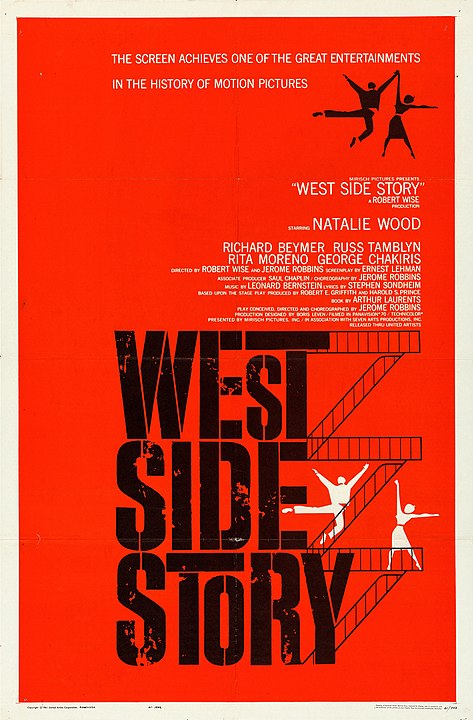
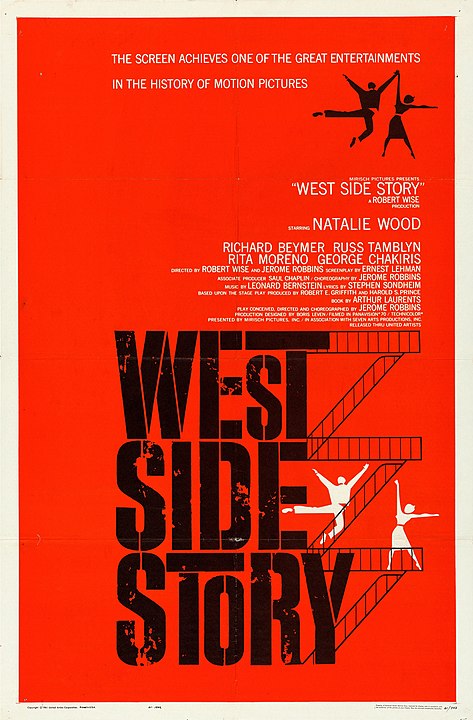
Poster for the 1961 version

Steven Spielberg claims that the object of his new version was to make the story and its characters more true to the 50s in New York, their lives more detailed and believable and their personalities deeper and more rounded. He wanted to make a version that was more acceptable and “less insulting” to a Puerto Rican audience. He added 5% of dialogue exclusively in Puerto Rican Spanish and did not provide subtitles. Just like Abdulrazak Gurnah with the Swahili vocabulary of his novels, Steven Spielberg didn’t want the Spanish translated; he believed that if the whole script had been exclusively in English, this would have impoverished the authentic atmosphere he was trying to create. He sought out young actors of Puerto Rican descent and schooled them in their grandparents’ idioms. He even, in order to protect the sentiments of the Puerto Rican people, censored the lyrics of the famous song “America”, eliminating the couplet in which Anita wishes that the island of her birth should «sink back in the ocean». His West Side Story would be politically correct, a more appropriate parable for our times, a musical against racism and xenophobia.

This is how Steven Spielberg expressed himself, in lofty terms with which no one can disagree and from which no one would wish to dissociate themselves. There is no one today who would dare say no to this goal, because it is all very commendable from a modern perspective that wants to be scrupulously fair to all.

BUT I suspect that Steven Spielberg’s underlying motive has little to do with what he says. What confirms me in this opinion is that he announced before filming that this new West Side Story would be his last film. In other words, to celebrate his retirement, he was going to dedicate his final work to one of his first loves. More than anything else, his swan song is an act of homage and veneration and, at the same time, a sentimental return to his childhood.

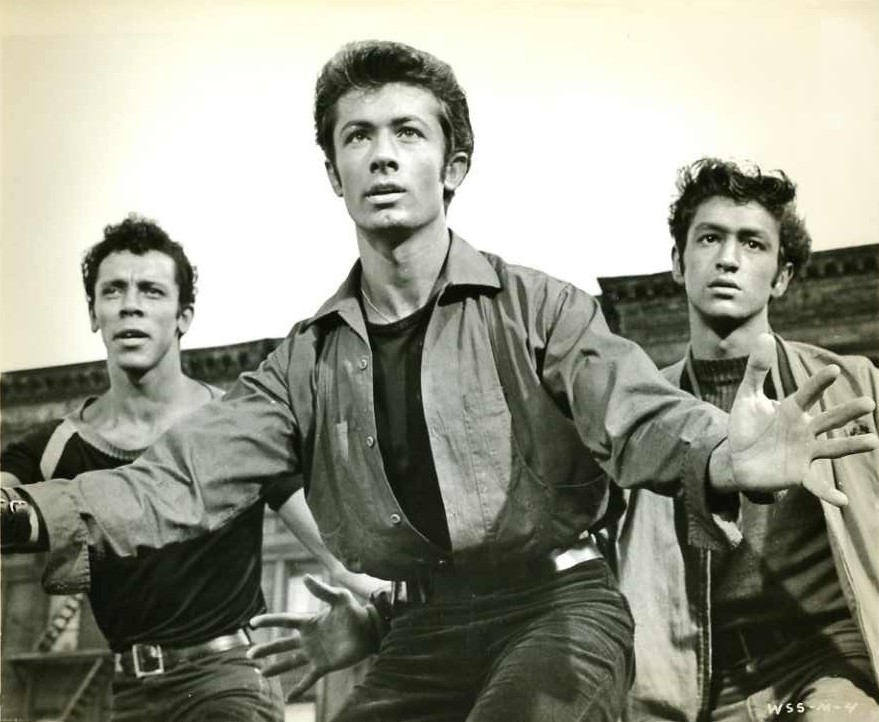
His politically correct motives, his recourse to all the modern clichés about equality, don’t ring true. Since when has it been necessary for a musical to be a faithful representation of reality? Nobody goes to the cinema to see a musical in an attempt to understand delinquency on the streets. It matters little to anybody that the new actor who plays the wife of the leader of the Sharks should be darker skinned than the Anita of the first version. Or that her partner from the first version, George Chakiris, was Greek. And the extra words in Spanish don’t add much.

George Chakiris in the 1961 version

I may be wrong but it doesn’t seem to me that the new West Side Story has generated any great interest amongst Puerto Ricans. The changes carried out by the new director are irrelevancies to them. If they do feel offended and looked down on, this will have more to do with the unfortunate present reality of the island, caused by the negligent way in which the USA has treated its colony of Puerto Rico throughout the last few years. In 2015 this US territory was obliged to declare itself bankrupt because of the island’s poor administration. In 2017, in the space of one month, the island was battered by 2 hurricanes which caused thousands of deaths and devastated an already weak economy. After the hurricanes came the earthquakes, more than 2000 tremors which claimed more lives, collapsed more buildings and further disrupted the infrastructure.

Despite the fact that the island belongs to one of the World’s most prosperous economies it has yet to recover from the damage inflicted by its recent natural disasters, its poor administration and bankruptcy. It has a National Grid which still has not completely recovered. More than ever, the local people are abandoning their own country to seek their fortune in the States. Today, there are more Puerto Ricans in the USA than on their own island and the words of “America” are more relevant than ever.

Is the American musical an appropriate vehicle for dealing with important matters? I don’t think so. The musical is a frivolous genre, an extravaganza of love, dreams and dance, a journey to wonderland. It is light-hearted fun, a fairy tale, a brightly coloured spectacle full of young, good- looking actors.  If this wasn’t the case we would already have had South Atlantic, a clone of South Pacific, only this time set during the Falklands War. Perhaps also, a North Atlantic which tackled the triangular slave trade, a film in which the African slaves dance in leg irons aboard the slave ships. Or Indian Ocean, a musical about the disappearance of the Maldives beneath the waves as a result of the rise in the level of the sea occasioned by global warming.  We could have amused ourselves watching the natives dancing on their roofs with the seawater up to their ankles. It would also have been high time for a song and dance western about the genocide of the Native American people.

With this, I return to the starting point. Fundamentally, Steven Spielberg is caught up in the romanticism of a film which he fell in love with 65 years ago. His motivation comes from wanting to be amongst his best friends, having fun with a makeover of one of the loves of his life. And he adores mixing with the survivors of the cast of 1961.

If he had really set out to make entertainment that adds something to the debate about the inherent racism in American society, he might have tried to direct something more like Passing or Queenie and Slim, modern films that not only contain a strong anti-racist message but also a musical soundtrack.

“Steven, you can’t justify your desire to relive your childhood by reciting all the modern clichés about equality. It’s obvious that your yearning to do something politically correct was just a pretext to tinker with a film that many people thought was already perfectly placed in its own time and didn’t need anyone to update it.”

Does it add anything to the original?

Yes. 3 minutes. But the last half an hour seems to go on forever. 

PS The idea of modifying the dialogue to allow the actors to express themselves a little more in their own language makes me think of what could be done with William Shakespeare’s original Romeo and Juliet which was first performed in 1597. Perhaps in the future there will be a remake of the stage play in which some director follows Steven Spielberg’s example and for the first time in over 425 years incorporates 5 percent of authentic 16th century Italian dialogue into the script, thus adding a new note of realism to the production.

Steven Spielberg, ¿Cuál es el propósito de un musical?

Steven Spielberg foto: Gage Skidmore via Wikimedia Commons

Dios mío, he leído unas opiniones pretenciosas sobre el nuevo West Side Story, ninguna de ellas más presumidas que las del propio director.

Spielberg dice que se enamoró del West Side Story a la corta edad de 9 años. Bueno, no le puedo culpar por eso. Yo también, para la edad de 13 años, ya había visto la película doce veces. Cada semana de las vacaciones veraniegas yo tomaba el bus al centro de la ciudad para entregar mi paga semanal a la taquillera del cine Curzon. Nunca me cansé de la música de Leonard Bernstein y la coreografía del ballet de Jerome Robbins. La música y el baile me emocionaban. Por eso es por lo que puedo entender cien por cien como se puede enamorarse de una peli.

Hasta aquel verano yo solo había frecuentado el Embassy, un cine de mala muerte (pero de bajo coste) donde ponían películas antiguas como Gold Diggers of 1933 (1933) con Ginger Rogers y Dick Powell, Road to Morocco (1942) con Bing Crosby, Bob Hope y Dorothy Lamour, y Calamity Jane (1953) con Doris Day. Hasta que, un día, harto de tanta cinebasura trasnochada, me trasladé unos 200 metros calle abajo al Curzon a ver lo que se ofrecía allí. 

West Side Story era otra cosa.  

Cartel de la version de 1961

Steven Spielberg afirma que el objetivo de su remake, era él de hacer que la historia y los protagonistas fueran más fieles a la época de los 50 en Nueva York, sus vidas más detalladas y creíbles y sus personalidades más profundas y redondeadas. Quería hacer lo que él consideraba una versión más aceptable y “menos insultante” al público puertorriqueño.  Añadió un 5 por ciento de diálogo exclusivamente en el español boricua de los 50 y no le dio subtítulos. Igual que hace Abdulrazak Gurnah con el vocabulario suajili de sus novelas, Steven Spielberg no quería que el español se tradujera; creía que si todo el guión hubiera sido exclusivamente en inglés esto habría empobrecido el ambiente auténtico que él intentaba crear. Buscaba actores jóvenes de ascendencia puertorriqueña y les educó en los modismos de sus abuelos. Incluso, para proteger a los sentimientos de la gente boricua, censuró la lírica de la famosa canción, “America”, suprimiendo la copla en la que Anita desea que la isla de su nacimiento se vuelva a hundir en el océano. Su West Side Story sería una peli «correcta», una parábola más apropiada para los tiempos que corren, un musical contra el racismo y la xenofobia. 

Así se expresaba Steven Spielberg, en términos elevados con los que no hay nadie que pueda discrepar y de los que nadie quisiera desmarcarse. No habrá nadie hoy en día que se atreva decir que no a este objetivo porque todo esto es muy loable desde la perspectiva moderna que quiere ser escrupulosamente justa con todos.

PERO sospecho que el motivo fundamental de Steven Spielberg tiene poco que ver con lo que dice. Lo que me confirma en esta opinión es que el anunciara antes del rodaje que esta nueva West Side Story sería su última película. Es decir, para celebrar su jubilación iba a dedicar su obra final a uno de sus primeros amores. Más que nada, su canto de cisne es un acto de homenaje y veneración y, a la vez, un retorno sentimental a su niñez.

Sus motivos políticamente correctos, eso de recurrir a todos los tópicos modernos sobre la igualdad, no parecen convincentes. ¿Desde cuándo ha sido necesario que un musical sea una representación fiel de la realidad? Nadie va al cine a ver un musical en un intento de entender las causas de la delincuencia callejera. A nadie le importa demasiado que la nueva actriz que interpreta el papel de la mujer del líder de los Shark sea más prieta que la Anita de la primera peli. Ni que su pareja de la primera peli, George Chakiris, fuera griego. Y no añade mucho que haya unas cuantas palabras extras en español.

George Chakiris en la versión de 1961

Puede que me equivoque pero no me parece que la nueva West Side Story haya generado gran interés entre los puertorriqueños. Los cambios llevados a cabo por el nuevo director son unas irrelevancias para ellos. Si se sienten ofendidos y ninguneados eso tendrá más que ver con la desafortunada realidad actual de la isla, a causa de la manera negligente en que EEUU ha tratado a su colonia de Puerto Rico a lo largo de los últimos años. En 2015 este territorio estadounidense se vio obligado a declararse en proceso de quiebra por la mala administración de la isla. En 2017, en el espacio de un mes, la isla fue azotada por dos huracanes que causaron miles de muertos y devastaron una economía ya bastante débil. Después de los huracanes vinieron los terremotos, más de 2000 movimientos sísmicos que se cobraron más vidas, derrumbaron más edificios y perturbaron aún más las infraestructuras.

A pesar de que la isla pertenece a una de las economías más prósperas del mundo no se ha recuperado todavía de los daños infligidos por los desastres naturales recientes, la mala administración y el estado de quiebra. Tiene una red eléctrica que aún no se ha restablecido del todo. Más que nunca la gente indígena está abandonando su país para buscarse la vida en EEUU. Hoy en día hay más puertorriqueños en EEUU que en la propia isla y “America” es una canción más relevante que nunca.

¿Es el musical norteamericano el vehículo adecuado para indagar en temas trascendentes? Creo que no. El musical es un género frívolo, una extravaganza de amores, sueños y bailes, un viaje al país de las maravillas. Es una diversión ligera, una cuenta de hadas, un espectáculo de colores vivos lleno de actores jóvenes y bien plantados.  La razón por la que nos enamoramos de los musicales es que son una dosis de algo entretenido, muchas veces azucarado y edulcorado, una píldora dorada, un antidepresivo. La clave está en el nombre: musical.  No hay tal cosa como un musical realista.

Si esto no fuese el caso ya habríamos tenido South Atlantic, un clon de South Pacific, esta vez ambientado en la guerra de las Malvinas. Quizás, también, una North Atlantic que encara la historia de la trata transatlántica de esclavos, una película en la que los esclavos africanos bailan en grilletes a bordo de los barcos negreros. O Indian Ocean, un musical sobre la desaparición de los Maldives debajo de las olas a consecuencia del aumento del nivel del mar ocasionado por el calentamiento global. Nos podíamos haber divertido viendo a los indígenas bailando sobre sus tejados hasta los tobillos de agua de mar. Y ya habría sido hora de un western de canto y danza sobre el genocidio de la gente nativa norteamericana.

Con este reductio ad absurdum, vuelvo al punto de partida. Fundamentalmente, Spielberg está absorto en el romanticismo de una peli de la que se enamoró hace 65 años. Su motivación viene de querer estar entre sus mejores amigos, divirtiéndose con una remodelación de una de las pasiones de su vida. Y le encanta mezclarse con los supervivientes del reparto de 1961. 

Si realmente se hubiera planteado hacer un entretenimiento que añade algo al debate sobre el racismo inherente en la sociedad norteamericana, podría haber intentado rodar algo más parecido a Passing o Queenie and Slim, unas películas modernas que no solo contienen un fuerte mensaje antirracista sino también una banda sonora musical.

“Steven, no tienes que justificar tu deseo de revivir tu niñez recitando todos los tópicos modernos sobre la igualdad. Es evidente que tu anhelo de hacer algo políticamente correcto solo era el pretexto de juguetear con una película que mucha gente cree que ya estaba perfectamente situada en su propia época y no necesitaba que alguien la actualizara.” 

¿Añade algo al original? 

Sí. 3 minutos. Pero la última media hora se hace muy, muy larga.

PD La idea de modificar el diálogo para que los actores se expresen un poco más en su propio idioma me hace pensar en lo que se pudiera hacer con el Romeo y Julieta original de William Shakespeare que se estrenó en 1597. A lo mejor en el futuro habrá una versión nueva del drama original en la que algún director siga el ejemplo de Spielberg y por primera vez en más de 425 años se incorpore al guión un 5 por ciento del italiano auténtico del siglo 16, añadiendo así una nueva nota de realismo a la drama.

.

Abdulrazak Gurnah, East African Novelist and Historian

Abdulrzak Gurnah. Photo by PalFest. https://creativecommons.org/licenses/by/2.0/deed.en

I used to have a psychiatrist friend who said that he had learnt more psychology from the pages of good literature than he had from any of the dried up text books in the medical library, however long he had scrutinised the taxonomies and clasifications described therein. I think that you could say something similar about the study of history. If you want history to come alive, I recommend you read a good novel.

Although it might not be his primary intention, Abdulrazak Gurnah relates the history of East Africa, from the carve-up of the continent by the Conference of Berlin between 1884 and 1885 until the achievement of independence in the sixties and the terror that ensued. But Gurnah doesn’t stop there. He deals also with the post colonial relations between the decolonised nations and their “mother country”. The latter he does through the pictures he paints of the immigrants, refugees and asylum seekers and the cold and hostile welcome that they experience when they turn up, voluntarily or out of necessity, on the doorstep of the United Kingdom. (See for example On the Beach)

I started to read his books, just as many others did, because he had just been named the winner of the Nobel prize for literature 2021. And I was enchanted by his colourful and laberinthine novels, books that reflected the complex range of emotions, beliefs, customs, feelings and reservations of the ordinary everyday people of a muslim african culture under the occupation of an imperial power.

But not only that. His books have put into context some of my childhood experiences in England.

Towards the end of the 1950s the British economy began to shake off the enormous debt that it had been obliged to assume in order to pay the cost of the Second World War (rationing didn’t end until the summer of 1954). Until then we had to be financially very careful. Above all, our diet was very limited. We were still eating wartime recipes, we wasted nothing, we finished every meal, we cleaned our plates. But the quality of what we ate was very poor. I remember that the sausages were particularly crap, they didn’t contain a shred of meat, just a mixture of minced gristle, stale bread and unidentifiable lumps: even now when I see them on the plate they still make me gag. We were ignorant of the exotic food of our neighbours on what we called “the continent”; we didn’t know what lemons, olives, figs or mushrooms were. But we didn’t go hungry and in comparison with the privaciones that the Spanish people suffered during the post civil war period we survived tolerably well. Even so, many people here decided that life in England had become somewhat boring and monotonous: they said their lives had turned into a black and white B film and that they deserved something better, something in technicolour, something set in a climate warmer than ours.

It was no surprise that many people decided to emigrate to the Empire. We still had an empire and everyone knew that life was better in the colonies. The downstairs neighbours emigrated to Australia, others went to Canada and the most adventurous set sail for South Africa.

So it was that my uncle Edward announced one day that he had obtained a job in Dar-es-Salaam running a dealership for a well known make of car. Uncle Edward, auntie Esme and my cousins Carol and Jane spent 7 years there in Tanganyika. During their stay there the family adopted all the characteristics of expats. In their house they employed a black maid and a black houseboy and paid them both a pittance. The family changed their clothes three times a day and their sheets every morning, they criticised the food that was placed before them and had no hesitation in expressing their opinions about the psychology of the black man. 

However, my uncle and aunt became very nervous when the country obtained its independence under the supervision of the British Monarchy in 1961 and they left in a hurry when finally, in 1963 the country renounced the Queen and the British Governor returned home. When they came back hurriedly to England they no longer had a house to come home to and they came to stay with us. So we had to squeeze up to let them in. During the six months we had the pleasure of living together Edward did what he could to open our eyes to the faults and defects of the black man.

He used to say things like, “The black man is a lazy man. There is only one thing he understands”, “The black man is like a child – you have to be firm but fair with him”, “The blacks are not ready for independence. Nothing good will come of it. The communists will take advantage of their gullibility. It won’t work”, and “When it’s all said and done, the blacks prefer to work for a white man.” 

My uncle’s opinions were identical to those of Frederick Turnah, a Victorian character in Desertion, one of the best novels of Abdulrazak Gurnah. The book begins in 1899. The British have just taken control of Zanzibar, Kenya and Uganda, the latter two being new countries invented by the Conference of Berlin, the conference that sanctioned the allocation of the regions of Africa which had not as yet been appropriated formally by any of the European powers. On assuming the administration of its new colonies, the British abolished slavery, the activity which had made a fortune for the previous owners of the coastal region, the arab sultans of Zanzibar. However, abolition brought with it a big problem: the freed people were reluctant to work for the British. In the words of Frederick Turner, the colonial government’s local administrator: “In slavery they learned idleness and evasion, and now cannot conceive of working with any kind of endeavour or responsibility, even for payment”. Burton, a friend of Turner and manager of a British estate, is of much the same opinion: “You can only make them work by coercion and manipulation, not by making them understand that there is something moral in working and achieving”. In addition, Burton liked to predict the slow disappearance of the lazy, savage negro and his replacement by the energetic european colonist. He was convinced that “the blacks” were a race on the road to extinction. For Burton, and many others who shared his dream, the future of Africa would be like that of the USA, a whole continent peopled by European immigrants.

At the same time that the Conference of Berlin granted the countries of Uganda, Kenya and Zanzibar to Great Britain, it assigned Tanganyika to the Germans as their own “sphere of influence”, one of the more notable euphemisms of the 20th century. The tribes in the interior of the country didn’t have the slightest intention of allowing anyone to dominate them and in his novel, After Lives, Gurnah describes the German reaction to the intransigence of the autochthonous people. Instead of carrying out a policy of ingratiating themselves with them, for example, installing supplies of clean water, opening schools for the children o assisting them with agriculture, the Germans treated them worse than stubborn animals: they carried out a policy of selective extermination: a strategy of mass killings, public executions and the elimination of entire native peoples by the use of a scorched earth campaign. 

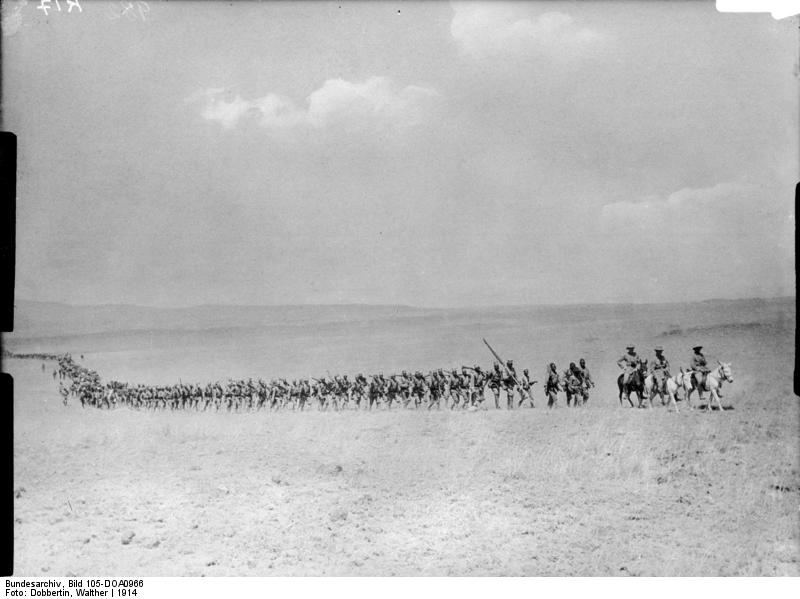
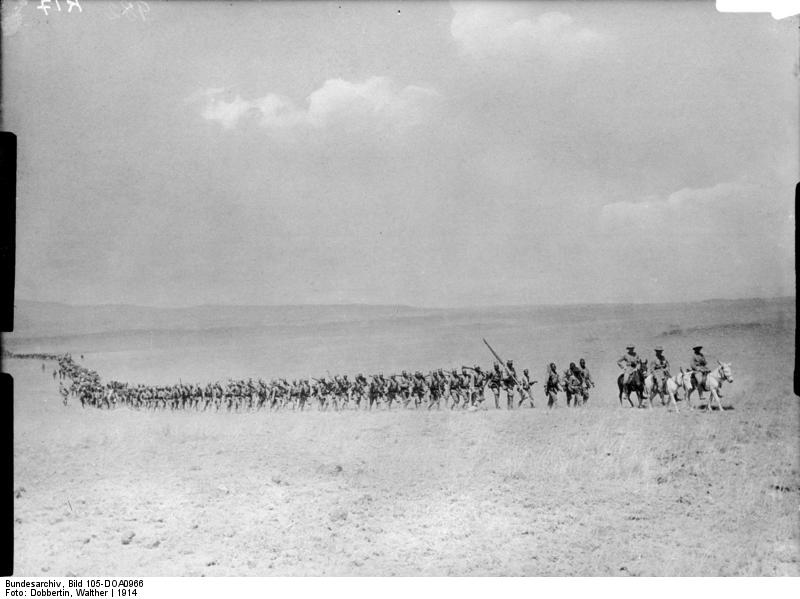
After Lives also shows us the pathetic spectacle of how, during the First World War, native troops were tricked or forced into fighting a foreign war by distant European countries that didn’t give a shit whether they lived or died.

Kriegssafari (Marching to War) 1914 https://creativecommons.org/licenses/by/2.0/deed.en

During the 1950s, in neighbouring Kenya, the British army suppressed the nationalist insurrection with great brutality, employing much of the strategy that the Germans had previously used in Tanganyika. The British government approved the practice of torture. At least 11,000 indigenous people died, a figure that includes the hanging of 1,090 rebels at the end of the war in 1960. 

As a result of the defeat of the Germans in the First World War, Tanganyika became a further British possession. My uncle and aunt arrived there in the fifties, just four decades after the expulsion of the Germans, but it never occurred to them that the violent behaviour of the Aryan master race might have been a determining factor in the antipathy of the black population towards Europeans. In the same way, my uncle and aunt despised the ambitions of the Kenyan pro-independence supporters. How could such a childish people ever hope to govern themselves? They got what they deserved. 

My uncle and aunt believed that, with independence, the native population of Tanganyika had turned openly ungrateful towards its British benefactors and this was surely the result of the influence of the communists. 

All their opinions were widespread in the UK during the decades which followed the Second World War. It is not surprising that the africans and the afro caribbeans that arrived here during this time felt themselves to be personae non gratae

Finally, my uncle and his family also left our house, giving us back our independence. Throughout the six months that they had been with us, my uncomplaining mother had worked very hard to meet their colonial standards. After six months of cooking, doing the washing and ironing for everybody, she began to refer to her brother as “the black man’s burden”. 

Only three of Gurnah’s novels have been translated into Spanish and they are not always easy to get hold of. Paradise (Paraiso), On the Beach (En la orilla) and Admiring Silence (Precario Silencio).

If you fancy reading Paradise in Spanish, a Kindle version has just been published at a very reasonable price. The novel is an attempt to recreate the East Africa of the years between the end of the 19th century and the beginning of the First World War, the period in which the region was being split between Great Britain and Germany, the age in which names were given to the great expanses of Africa “granted” to every western european power represented at the Conference of Berlin. Gurnah recreates this period by telling the story of an epic trading expedition on foot to the interior of the continent. The novel is set in Kenya, Tanganyika and what is now called the Democratic Republic of Congo. It is almost an imagined documentary of a lost time.

Throughout Gurnah’s work the reader must familiarise themself with the Swahili words that pepper the page. Gurnah rejects the idea of a glossary, believing that a translation to another language would impoverish his linguistic portrait.

Abdulrazak Gurnah, novelista e historiador de África oriental

Yo tenía un amigo psiquiatra que decía que había aprendido más psicología a través de las páginas de la buena literatura que mediante los secos libros de texto de la biblioteca de la escuela de medicina, por mucho que él escrutara las taxonomías y clasificaciones descritas en ellos. Yo creo que se puede decir algo parecido sobre el estudio de la historia. Si quieres que la historia cobre vida, recomiendo que leas una buena novela.

Aunque no sea su intención primaria, en sus novelas Abdulrazak Gurnah relata la historia de la África oriental, desde la repartición del continente por la Conferencia de Berlín en los años 1884-1885 hasta la consecución de la independencia en los 60 y el terror que la seguía.  Pero Gurnah no para ahí. Trata también de las relaciones poscoloniales entre las naciones descolonizadas y su traicionera “madre patria” . Lo último lo hace a través de los retratos que pinta de los inmigrantes, refugiados y solicitantes de asilo y la acogida fría y hostil que experimentan cuando se presentan voluntaria o forzosamente a la puerta del Reino Unido (Véase por ejemplo En la orilla)

Yo comencé a leer su libros, igual que muchas otras personas, porque acababan de nombrarlo ganador del premio Nobel de literatura de 2021. Y me han encantado sus abigarradas y laberínticas novelas, libros que reflejan toda la enrevesada gama de emociones, creencias, costumbres, sentimientos y recelos que existen entre la gente corriente y moliente de una cultura musulmana africana bajo la ocupación de un poder imperial. 

Pero, no solo eso. Sus libros han puesto en contexto algunas vivencias de mi niñez en Inglaterra.

Hacia el final de la década de los 50 la economía británica empezaba a quitarse de encima la deuda tremenda que se había visto obligado a asumir para pagar los costes de la Segunda Guerra Mundial (el racionamiento no cesó hasta el verano de 1954). Hasta entonces teníamos que estar muy económicos. Sobre todo, nuestra dieta era muy limitada. Seguíamos comiendo recetas que se habían originado durante los años de guerra, no desperdiciamos nada, terminábamos cada comida, no dejábamos nada en el plato. Pero, la calidad de lo que comíamos era muy baja. Recuerdo que las salchichas eran una mierda especial, no contenían ni asomo de carne, solo una mezcla de cartílago picado, pan duro y tropezones no identificados; incluso ahora cuando las veo en el plato no puedo reprimir una sensación de náuseas. No conocimos la comida exótica de nuestros vecinos de lo que llamábamos “el continente”; no sabíamos lo que eran limones, aceitunas, higos o setas. Pero no pasamos hambre y en comparación con las privaciones que sufrió la gente española durante la posguerra sobrevivimos tolerablemente bien. Aún así, mucha gente de aquí decidió que la vida en Inglaterra se había hecho algo aburrida y monótona; decían que sus vidas se habían convertido en una peli de blanco y negro de serie B y que ellos se merecían algo mejor, algo en tecnicolor, ambientado en un clima más cálido que el nuestro. 

No fue una sorpresa que mucha gente decidiera emigrar al imperio. Todavía teníamos imperio y todo el mundo sabía que allí en las colonias uno vivía mejor. Los vecinos de abajo emigraron a Australia, otros se fueron a Canadá y los más aventureros cogieron el barco a Sudáfrica. 

Así que un día en 1956 mi tío Edward anunció que había conseguido trabajo en Dar-es-Salaam como concesionario de una marca de coches muy conocida. Tío Edward, tía Esme y mis primos, Carol y Jane pasaron siete años ahí en Tanganica. Durante su estancia ahí, la familia adoptó todas las características de los “expats”, los expatriados británicos. En casa, empleaban un mozo negro y una mucama negra y pagaban a los dos una miseria. La familia cambiaba de ropa tres veces al día, y las sábanas cada manana, criticaban la comida que se les servía y no tenían miedo de expresar sus opiniones sobre la psicología del hombre negro. 

Sin embargo, se pusieron muy nerviosos cuando el país obtuvo su independencia bajo la supervisión de la monarquía británica en 1961 y salieron pitando cuando finalmente, en 1963, el país renunció a la reina y el gobernador británico regresó a casa. Cuando volvieron apresuradamente a Inglaterra ya no tenían casa en este país y vinieron a vivir con nosotros. Así que tuvimos que apretarnos para darles sitio. Durante los seis meses que tuvimos el placer de vivir juntos, Edward hizo lo que pudo para abrirnos los ojos a las taras y defectos de los hombres negros.

Decía cosas como,“El hombre negro es un hombre perezoso. Solo hay una cosa que entiende”, “El hombre negro es como un chico – hay que ser firme pero justo con él”, “ Los negros no están preparados para la independencia. No saldrá nada bueno de ella. Los comunistas se aprovecharán de su ingenuidad. La cosa no funcionará” y “Al fin y al cabo los negros prefieren a trabajar para un hombre blanco.”

Las opiniones de mi tío eran idénticas a las de Frederick Turner, un personaje victoriano de Deserción, una de las mejores novelas de Abdulrazak Gurnah. El libro comienza en 1899. Los británicos acababan de hacerse con el control de Zanzíbar, Kenia y Uganda, estos dos últimos siendo nuevos países inventados por la Conferencia de Berlín, el congreso que sancionó el reparto de las regiones de África que aún no habían sido apropiadas formalmente por ninguna de las potencias europeas. Al asumir la administracion de sus nuevas colonias, los británicos abolieron la esclavitud, la actividad con que se forraban los antiguos dueños de la costa, los sultanes àrabes de Zanzíbar. Pero la abolición conllevó un gran problema: la gente liberada era reacia a trabajar para los ingleses. En las palabras de Frederick Turner, el administrador local del gobierno colonial, “Cuando eran esclavos aprendieron evasión y holgazanería, y ahora ni siquiera conciben como pudieran trabajar con empeño o responsabilidad, ni por un salario”. Burton, el gerente de una hacienda británica opinaba igual: “Solo consigues que trabajen por fuerza o por manipulación, no vale la pena que intentes convencerles que lo debieran hacer por razones morales y lograr algo por su propio esfuerzo”. Por anadidura, a Burton le gustaba predecir la lenta desaparición del perezoso salvaje negro y su remplazo por el enérgico colonizador europeo. Estába convencido de que los negros eran una raza en vías de extinción. Para Burton, y muchos otros que compartían su sueño, el futuro de África sería como el de EE UU, todo un continente poblado de inmigrantes europeos.

A la vez que la conferencia de Berlín otorgó los países de Uganda, Kenia y Zanzíbar a Gran Bretaña, les asignó Tanganica a los alemanes como su propia ‘esfera de influencia’, uno de los eufemismos más notables del siglo 20. Las tribus interiores del país no tenían la más mínima intención de permitir que les dominara nadie y en su novela After Lives Gurnah describe la reacción alemana a la intransigencia de la gente autóctona. En vez de llevar a cabo una política de congraciarse con ellos, por ejemplo, instalándose un suministro de agua limpia, abriendo escuelas para los niños o ayudándoles con la agricultura, los alemanes los trataban peor que hubieran tratado a unas bestias renuentes: llevaron a cabo una política de exterminación selectiva: una estrategia de matanzas masivas, ejecuciones públicas y la eliminación de pueblos indígenas enteros con una campaña de tierra quemada.  

También, After Lives nos muestra el espectáculo patético de cómo, durante la Primera Guerra Mundial, las tropas nativas fueron engañadas o forzadas a luchar una guerra ajena por países europeos lejanos a los que no les importaba una mierda que ellos vivieran o murieran.

Kriegssafari (Expedición
de guerra alemán) 1914

Durante los años 50, en el país vecino, Kenia, el ejército británico suprimió la insurrección nacionalista con suma brutalidad, empleando mucha de la estrategia que los alemanes habían utilizado previamente en Tanganica. El gobierno británico aprobó la práctica de la tortura. Por lo menos 11,000 personas indígenas murieron, una cifra que incluye el ahorcamiento de 1,090 rebeldes al final de la guerra en 1960.

Como resultado de la derrota de los alemanes en la Primera Guerra Mundial, Tanganica pasó a ser otro posesión británica. Mis tíos llegaron ahí en los años 50, solo cuatro décadas después de la expulsión de los alemanes, pero no se les ocurrió que el comportamiento violento de la raza aria superior pudiera haber sido otro factor determinante en la animadversión de la población negra. Del mismo modo, mis tíos menospreciaban los independentistas kenianos. ¿Cómo podía gobernarse un pueblo tan pueril? Tuvieron su merecido.

Mis tíos creyeron que, con la independencia, la población nativa de Tanganica se había vuelto abiertamente ingrata ante sus benefactores británicos y seguramente eso fue el resultado de la influencia de los comunistas. 

Todas sus opiniones eran generalizadas en el Reino Unido durante las décadas que siguieron a la Segunda Guerra Mundial. No es de extrañar que los africanos y los afrocaribeños que llegaron aquí durante aquella época se sintieran personae non gratae.

Por fin mis tíos se marcharon también de nuestra casa, devolviendo a nosotros nuestra independencia. A lo largo de los seis meses que habían estado con nosotros, mi sufrida mamá había trabajado muy duro para cumplir con sus estándares coloniales. Despues de seis meses de cocinar, hacer la colada y planchar para todos, mi madre comenzó a referir a su hermano como “la carga del hombre negro”.

Solo tres de las novelas de Gurnah han sido traducidas al español y no siempre son fáciles de obtener: Paraíso, En la orilla (el mismo nombre de la novela de Chirbes) y Precario silencio.

Si te apetece leer Paraiso, el libro acaba de publicarse en español en formato Kindle a un precio muy económico. La novela es un intento de recrear la África oriental de los años entre los finales del siglo 19 y el inicio de la primera guerra mundial, el período en el que la región estaba siendo repartida entre Gran Bretaña y Alemania, la época en la que se pusieron nombres a las grandes extensiones de África “otorgadas” a cada poder europeo occidental representado en la Conferencia de Berlín. Gurnah recrea este período contando la historia de una expedición comercial épica a pie al interior del continente. La novela está ambientada en Tanganica, Kenia y lo que hoy en día se llama La república democrática del Congo. Es casi un documental imaginado de una época perdida. 

Por toda la obra de Gurnah el lector debe familiarizarse con las palabras suajilis que salpican la página. Gurnah rechaza la idea de un glosario, creyendo que una traducción a otro idioma empobrecería su retrato lingüístico. 

The Definitive History of Modern Spanish Tourism and the Fight to Save the Mar Menor

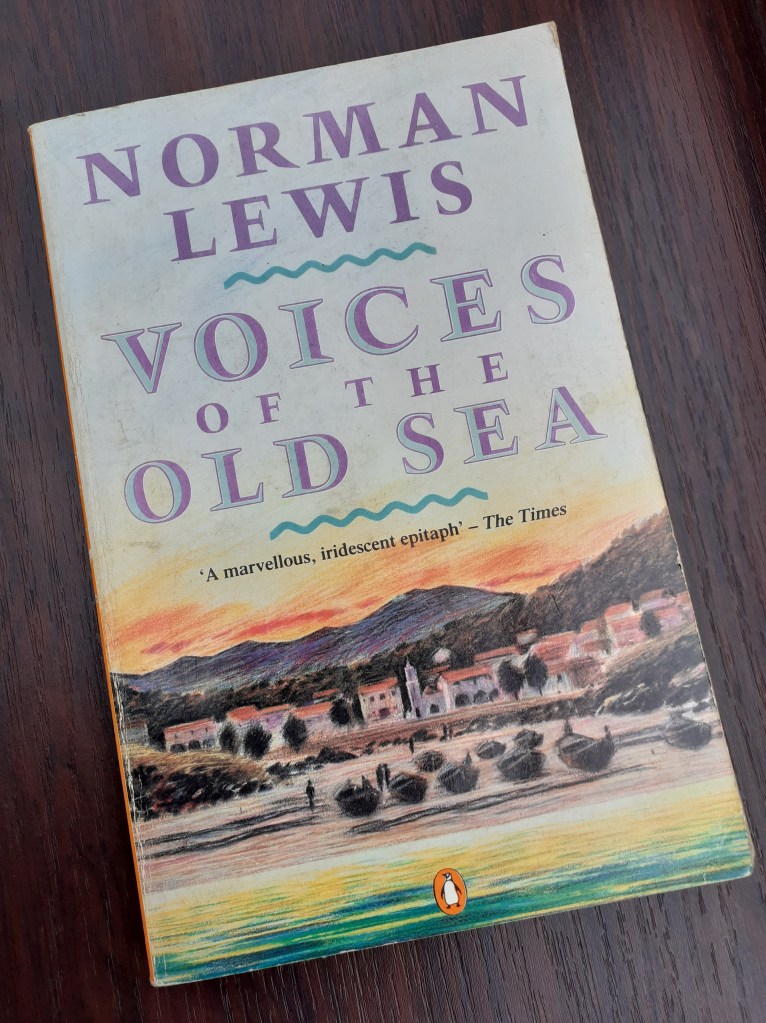
The definitive history of modern Spanish tourism has yet to be written. When somebody does so they have to include excerpts from Voices of the Old Sea by Norman Lewis, an English writer who lived for a couple of years in a remote Catalan fishing village during the late 1940s, at a time before the arrival of mass tourism. Lewis contrasts the innocence of the place with the endemic corruption of local politics. The area is a microcosm of Francoist post Civil War Spain. The provincial politicians and landowners make up the rules, taking advantage of their domination to do whatever takes their fancy. Lewis observes how they invent tourism, appropriating other people’s land, confiscating grounds adjacent to the beach and remodelling the old guest houses to create the primitive hotels that will open their doors to the first English and German visitors.  Lewis witnesses the birth of the Catalan tourist industry, the invention of  the Costa Brava and the beginning of the inexorable process which will culminate, in only 70 years, in environmental disasters such as that of the poisoning of the Mar Menor. Of course the mass tourist invasion was yet to come, as was the intensification of agriculture and the construction of the blocks of apartments, but they wouldn’t be far behind. By the 1960s the industry would grow like topsy and the die would be cast. The pollution caused by the plague of  “affordable” tourism from the countries of Northern Europe and the lack of a local infrastructure that was capable of dealing with the consequences was a lethal combination that could end up killing the Mediterranean, starting with the salt lagoons that border the open sea.

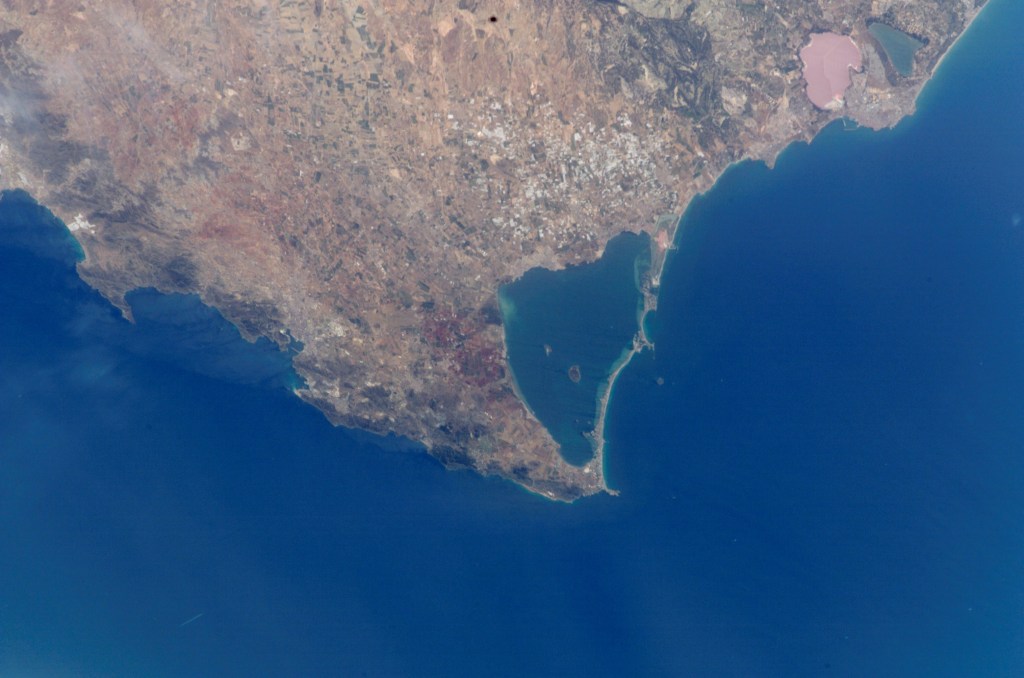
The Mar Menor seen from a NASA satellite. In the top left part of the Mar Menor there can be seen the faint image of the run-off which contains the fertilisers
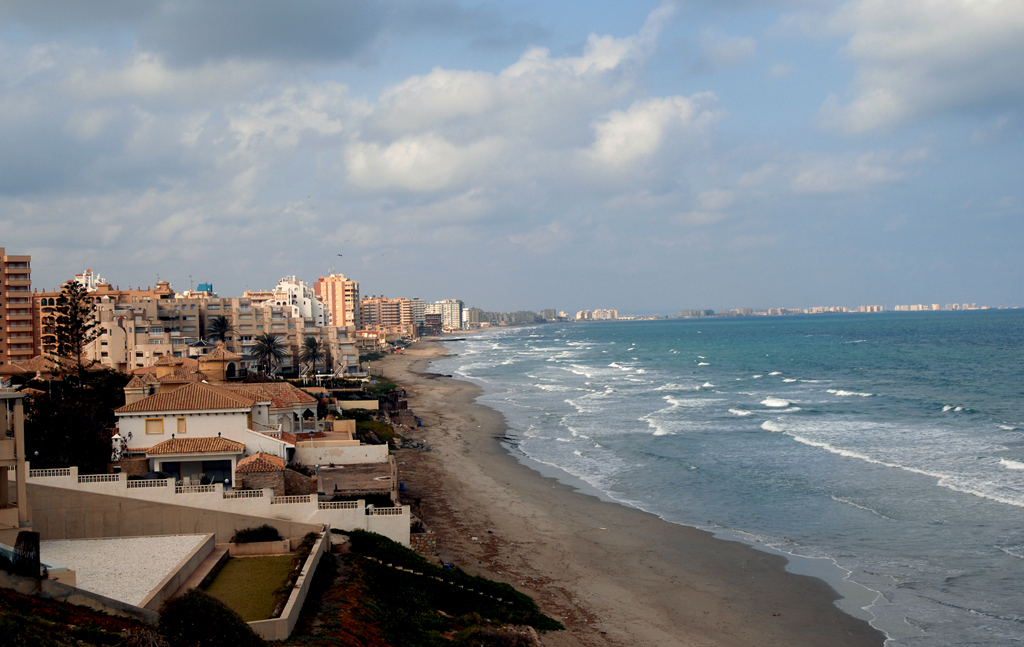
La Manga and the Mar Menor. From satellite you cannot appreciate the ring of hotels that surround the Mar Menor. Photo by Raúl Soriano

In  a guest essay for  the  New York Times (12.08.21) entitled “The Spanish Coast is Threatened by Death”, David Jimenez writes about the precarious state of health of the Mar Menor. It is a hard-hitting piece which contains links to other excellent articles which explain the catastrophe in detail. 

In brief, the ecosystem of the Mar Menor is not capable of dealing with the quantity of fertilisers that ends up in its waters. They arrive at this salt lagoon by two routes. In the first instance they get there in the run-off from the land which surrounds the Mar Menor. Secondly, and more important still, is the devastation caused by the raw brine discharged into the Mar Menor as a consequence of the activity of the many desalination plants that supply drinking water to the local people and the tourist population  (The lack of rainfall in the region of Murcia, the insufficient diversion of water into the local River Segura from other parts of Spain and the overexploitation of the aquifers make necessary the generalised use of desalination plants).  The raw brine is the infamous “green soup”, the residue that the desalination plants dump into the Mar Menor: a fetid liquid which contains a concentration of nitrates which causes death to all plant and animal life in the sea.

When it’s all said and done the designation of the Mar Menor as a special conservation zone by the European Union hasn’t offered an ounce of protection against everything that has been dumped in its waters. It seems that for twenty years the Government of the Región de Murcia has done little to comply with the European regulations for the protection of the environment in the Mar Menor. Environmental rules are nothing if they are not enforced.                   

Going back to the matter of the unbridled building boom that began in the 60s, there is an essay on the internet by Sasha D. Pack in which she points out that legislation that could have controlled construction on the Costas did exist during the 60s although nobody could be bothered to enforce it:

“Built hastily and under considerable pressure from land speculators and foreign tour operators, the hotels were with a few exceptions poor imitations of high modernism. The economics of high-volume, low-cost tourism thwarted ambitions of quality in urban design. The rapid sale of coastal agricultural terrains to land speculators drove prices upward, and as a result the objective of maximising tourist volume and density quickly overshadowed pretensions of inventing another Côte d’Azur. The Franco government has often received blame for failing to prevent the “architectural horrors” that beset Spanish coasts. In fact, the regime had adopted urban development laws mandating green space, height restrictions on buildings, and the provision of municipal services. The general disregard for such laws frustrated urban planners and tourism authorities in Madrid throughout the 1960s. As provincial delegations continually reported “clandestine” touristic developments proliferating with no state approval, Francoist officials quarrelled over how better to enforce the law. Along the southern littorals, the resort village that fully met legal urban-planning standards was a rarity by the mid-1960s.”

Tourism, Modernisation, and Difference: A Twentieth-Century Spanish Paradigm Sasha D. Pack University at Buffalo  https://www.ucm.es/data/cont/docs/297-2013-07-29-3-07.pdf

Although law-breaking corruption is not a contemporary phenomenon unique to Spain, it would be fair to say that during and after the post-war period the level of fraud in the country has broken all records. I am not saying that it did not exist before. Of course it has existed since the Garden of Eden, but undoubtedly the impunity with which politicians and businessmen who had been good servants of the National Movement acted during the 1960s has contributed to the strong prevalence of dishonesty in civic life that continues to this day.

Lewis published Voices of the Old Sea in 1984. He wrote it based on notes he took while he lived in his unnamed fishing village. In the New York Times of 14/07/85 the book was reviewed by one Barbara Probst Solomon. She accused Norman Lewis of being nothing more than a romantic egocentric who would have preferred the fishing village to remain slumped in poverty rather than to be transformed into a prosperous beach resort. According to her it was “Better a littered landscape than stagnation”.       

To me this negative review only indicates that American neoliberalism and Spanish corruption go hand in hand. Neither of them are concerned about the negative consequences of unruly economic growth.

If Norman Lewis is the writer who best captures the spirit of the first moments of tourism at the height of the post Civil War period, there is no doubt that the last novels of Rafael Chirbes best express the general repugnance that people feel for the construction and corruption that has done so much damage to the coast of Valencia. (It must not be forgotten that Voices of the Old Sea is an anthropological study whereas Chirbes’ books are novels, even if the genres do manifest a tendency to overlap.)

Chirbes published Crematorio in 2007 (It was first  published in English as Cremation in 2016). The book is a contemporaneous work, set right at the height of the building boom. Ruben, aged 73, is the villain of the piece. He has made his fortune selling “hundreds of prefabricated bungalows erected on plots in dry river beds and ravines that have been falsely recertified during the boom as building land: with their poor foundations it is only possible to live in the bungalows for certain months of the year, and only then because of the relatively mild nature of the local climate”.      

Ruben financed his developments by laundering dirty money: cash that came directly from the Colombian drug industry (the cash obtained from the sale of cocaine concealed in the intestines of horses imported legally into the country), roubles que were exported illegally from the former Soviet Union and dollars that flowed from the pernicious activities of the American mafia.  Ruben has done whatever was needed to make himself rich. He employs simple immigrants as cheap labour and uses Russian criminals to carry out his more sinister dealings. The book is full of characters who are dying or who die an early death, as well as crooks, hypocrites, criminals, murderers, invalids and addicts.   

Very often the prose is foul, gross and distorted as are the lives of the protagonists. As is the case with Chirbes’ next book, On the Edge (first published as En la orilla in Spanish 2013), which deals with the economic depression which follows the boom, Crematorio is a dense volume, difficult to read. The author deliberately ignores the rules of punctuation. Both books are four hundred and twenty pages without paragraphs or commas. They deal with difficult subjects. The laws of society are broken and the author has abandoned the rules of writing.

In Chirbes’ writing, building work sweeps all before it. Orange orchards are ripped from the ground, centuries-old cypresses and pines are sawn off at the base, moscatel vines are grubbed up, market gardens are concreted over, and the wells from which cold refreshing water once came are capped and sealed. Likewise the Arab and Roman remains (the water channels, the ancient walls, the stone built reservoirs etc) are buried beneath the new estates. Chirbes doesn’t deal directly with the protection of the sea but he does mention the developers’ indifference towards the wetlands along the coast: the marshes serve as rubbish tips; they are even useful as places to dump the corpses of those unfortunates who have disrupted the activities of the local mafiosos. In the first chapter of On the Edge, two wild dogs fight over the remains of a human hand that has surfaced from a saltmarsh.

The Fight to Save The Mar Menor

For years, local people have been warning of the slow death of the Mar Menor. Photo by P4K1T0

So far, politicians have done nothing to prohibit the flow of chemical substances into the lagoon. They seem content to argue amongst themselves. Once more, the local people have been the ones to take the initiative. An alliance of local people, ecologists and lawyers are calling for the Mar Menor to be given legal status in its own right. It is an extraordinary strategy that has as its aim, the right of the lagoon to exist and to defend itself just like any other person or enterprise. This right will mean, from the moment it is granted, that all the constituent parts of the Mar Menor, the water, all the organisms that live within it and the surrounding soil, must be left in peace and whatever damage that the lagoon incurs, must be made good. The first step for  this to happen is to obtain the signatures of 500,000 Spanish voters before the coming 28 October.  If the petition reaches this figure it can be placed before the Spanish parliament for debate. Even then, this only  guarantees that a debate will take place in the Congress.  If the signatures achieve their goal and if the Congress gives a go-ahead to the proposal, the rights of the salt lagoon can be defended in the courts. At the time of writing, some 300,000 signatures have already been collected and the organisers are confident that they can obtain the quantity demanded by law within the given period.   

The mass tourism, the never-ending construction, the desalination of the sea water, the discharge of the poisoned brine and the intensification of agricultural production are all connected.  It is not possible to deal with any of these huge problems without facing up to them all.

Graffiti in plaça Josep Pla in Girona, photo by Davidpar

In  many places, “tourist” has become a swear word and there is growing public discontent.

However, tourism is  going to continue in one form or another, but at this time the government should announce a moratorium on building because the ecosystems can no longer cope with the stress of the agglomeration of so many people on the Costas. Many local people believe that the government should go even further and do the unthinkable: begin a process of compulsory purchase of inappropriate coastal buildings, proceed directly to their demolition and commence a  programme of rewilding in these areas, whatever it costs.    

One thing is certain: economic growth solely based upon tourism in areas in danger of desertification are not environmentally sustainable.