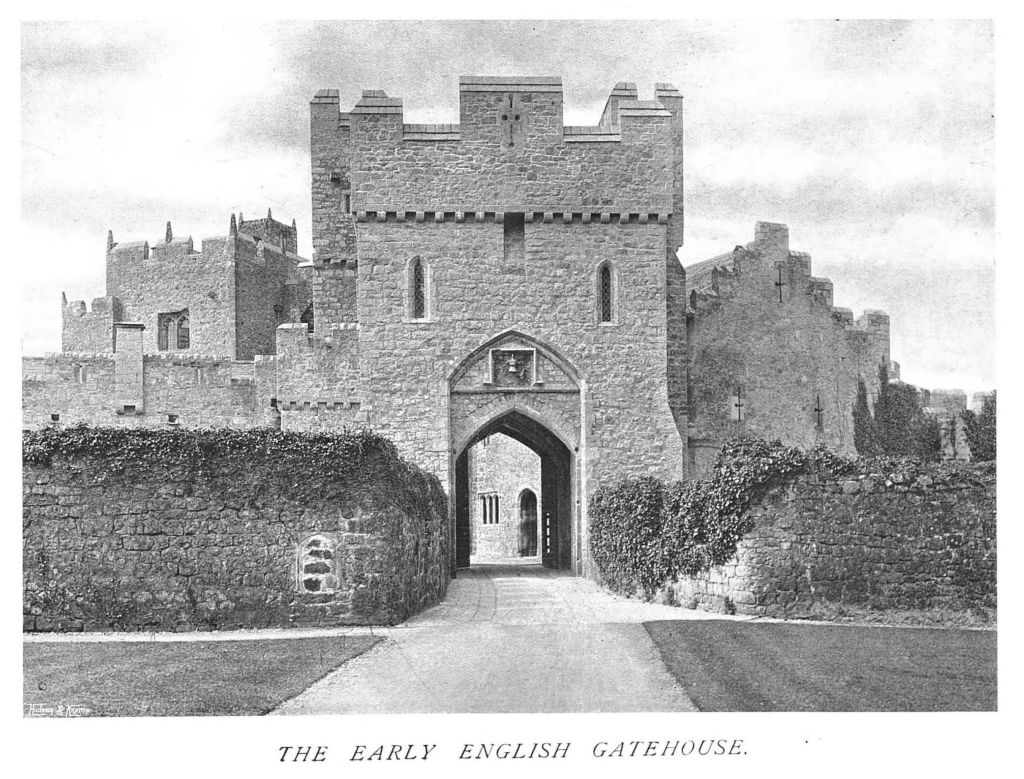
How the Emeritus King of Spain Can Help the People of Bradenstoke Realise Their Dream

By Charles Latham (1847-1912) – https://archive.org/details/in-english-homes-vol-2-31295007279283, Public Domain, https://commons.wikimedia.org/w/index.php?curid=90520669

Some ten years ago my friends Susan and Mick were married in St Donat’s castle in the beautiful Vale of Glamorgan.The castle nestles discreetly in a breach of the cliffs from where it looks out over the Bristol Channel. The countryside there is peaceful, idyllic and off the beaten track. There are terrific views. From the Tudor rose gardens you get a panorama of the low-lying Somerset coast, 14 miles to the south. A little further to the south west where the County of Somerset meets Devon you can see the high ground of Exmoor National Park. So it was that we spent a perfect summer’s day at a fairy-tale castle in a marvellous state of preservation. But it wasn’t always like this.

The history of St Donat’s goes back to medieval times but by the 1920s the castle was in a partly ruinous state. It had a change of fortune in 1925 when it was acquired by William Randolph Hearst, the infamous American newspaper magnate who had so much money he could do anything he felt like doing. And whatever he felt like doing, he carried out with total disdain for history and with an absolute indifference towards public opinion; he would have laughed at modern concepts like cultural or world heritage.

Hearst purchased the castle after seeing it advertised for sale in Country Life; he cabled his agent in England to buy it. In order to transform St Donat’s into the castle of his dreams, and add a little more “historical interest” Hearst bought other buildings of inestimable historical value, had them dismantled and transported to Wales with the intention of incorporating them into his phantasmagorical plans.

His greatest act of vandalism was the destruction of the Agustinian priory of Bradenstoke in the English county of Wiltshire, founded in 1142. He removed the enormous and magnificent vaulted roof and used it to cover the party room that he added to the castle. He also ripped out the windows and the magnificent prior’s fireplace, adding these to his party room and at the same time reducing the priory to rubble. It was here in his party room during his very infrequent visits to the castle that Hearst entertained his illustrious guests – members of high society, important politicians, Hollywood stars and members of the royal family.

What I cannot get into my head is why Hearst didn’t get his carpenters to copy the roof instead of destroying the monastery. Hearst was dripping with money and the only explanation for his vandalism is that he must have been an impulsive and impatient man, a man who was used to getting what he wanted immediately. Obviously, it was a more rapid solution to rip it off the top of an incalculably valuable building rather than to wait a few months for a replica, or at least, something similar. There’s no doubt whatsoever that the carpenters would have been capable of making a faithful reproduction because when they installed the roof in the castle they had expanded it from 50 to 90 feet in length.

If you wish to see the priory before it was destroyed visit the webpage of the Lyneham and Bradenstoke parish council:https://www.lynehamandbradenstoke-pc.gov.uk/community/lyneham-and-bradenstoke-parish-council-16223/old-images-of-bradenstoke-prioryabbey/

Now, all that is left of the priory is a portion of the tower and the ruins of the undercroft.
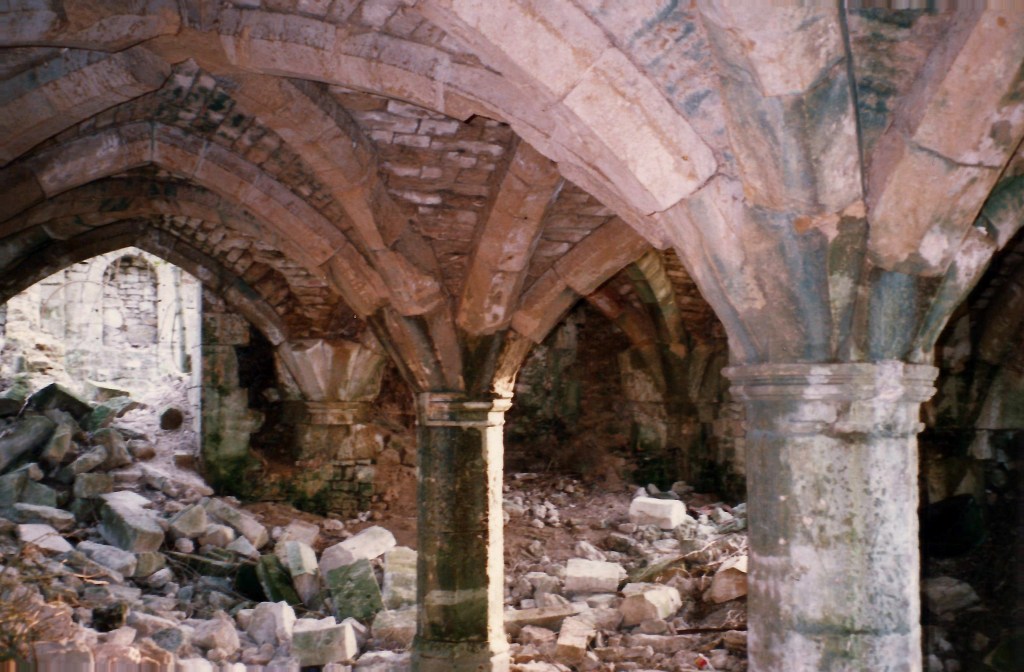
photo by Rodhullandemu

The castle was sold after the death of Hearst and in 1962 it became Atlantic College, a private sixth form boarding school where the students study for  the International Baccalaureate. Tatler, the British high fashion magazine says that Atlantic College “has become the place where international royals, Californian scenesters and intellectual bohemians choose to send their children to study”. When Princess Isabel of Belgium enrolled in the college in 2018 the Times of London called the castle the “Hogwarts for hippies”.

In the next school year the college will welcome another daughter of royalty, Princess Leonor of Asturias, the 17 year old heir to the Spanish throne. For two years Atlantic College will be where she works towards the International Baccalaureate at a total cost of £67,000, a sum which will be paid by her parents, King Philip VI and Queen Letizia. 

Hearst also bought and dismantled Bradenstoke priory tithe barn, another building of immense historical interest. He crated up the wooden framework and shipped it to his other luxury castle in San Simeon, California. Once again, Hearst lost interest in the project and sold the barn to another businessman who planned to rebuild it as a wedding chapel in the Californian city of San Luis Obispo. However, the city council prohibited him from doing so because the building was not earthquake proof. So it is that 90 years later the 109 long crates that contain the beams, the doors, the wind braces and the many other timbers that comprise the barn, are still stored in a warehouse belonging to Alex Madonna Construction of San Luis Obispo. If you wish to see photos of this enormous medieval building take a look at this video:

It’s also very worthwhile having a look at the little-watched BBC video in which the historian Dan Cruickshank interviews Hannah Swarbrick, the last surviving person who lived in the priory before it was bought by Hearst. Cruickshank also visits the ruins of the priory and St Donat’s castle. He then travels to San Luis Obispo where he opens the crates containing the tithe barn “kit” and enthuses about the idea of returning the building to its original site.

The people of Bradenstoke understand full well that they have lost the priory forever but the return of the tithe barn continues to be a dream of theirs, even though the parish doesn’t have the necessary funds to buy it, bring it back home and rebuild it. What a marvellous gesture it would be for the Emeritus King of Spain, the ex King Juan Carlos I, to use his extensive funds to grant them their wish! Besides, he would have the satisfaction of knowing that he had helped to right one of the many wrongs that Hearst committed in the sacking of Bradenstoke, the village which gave its medieval soul to the reconstruction of the Hogwarts Castle at which his granddaughter is to complete the final phase of her secondary education. 
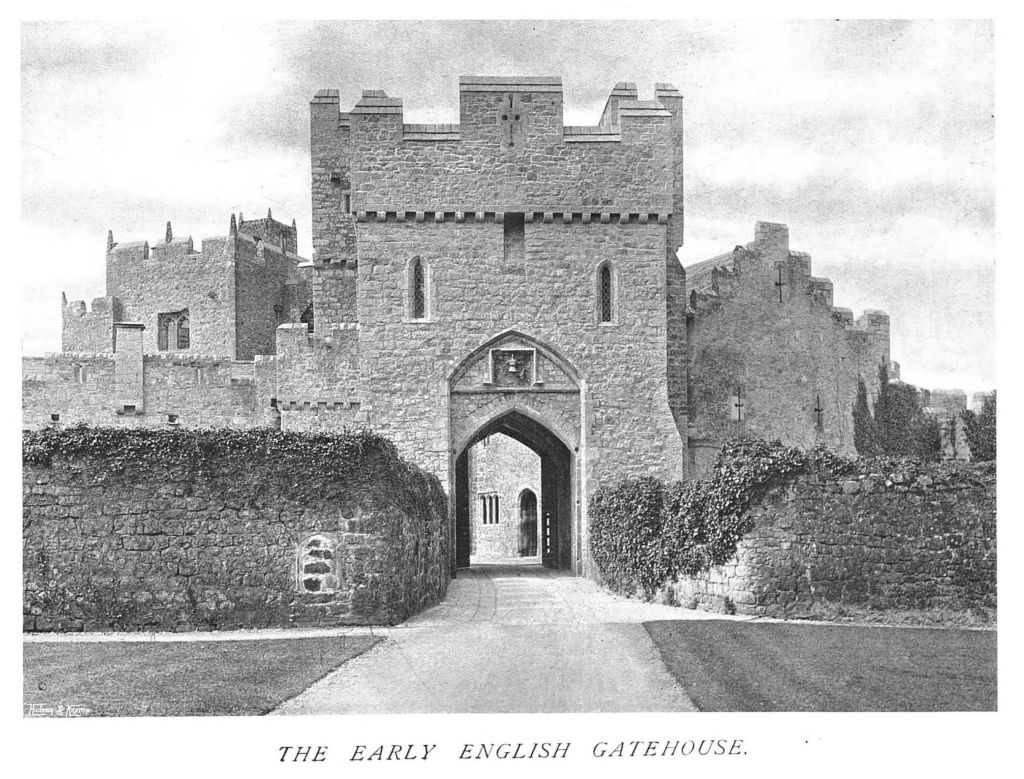
Como el Rey emérito de España puede ayudar a la gente de Bradenstoke a realizar su sueño

foto por Charles Latham (1847-1912) – https://archive.org/details/in-english-homes-vol-2-31295007279283, Public Domain, https://commons.wikimedia.org/w/index.php?curid=90520669

Hace unos diez años mis amigos Mick y Susan celebraron sus bodas en el castillo de San Donato, que se sitúa discreto en una brecha de los acantilados galeses que dan al canal de Bristol. Es un paisaje idílico, tranquilo y apartado. Tiene vistas tremendas. Desde los jardines tudor llenos de rosas se tiene un panorama de la costa del condado inglés de Somerset que se encuentra baja en la orilla opuesta del canal, a unos 20 kilómetros de distancia. Un poco más al suroeste, donde el condado de Somerset se encuentra con Devon se pueden ver las tierras altas del pintoresco Parque Nacional de Exmoor. Así fue que pasamos un día perfecto en un castillo de cuento de hadas que se encuentra en un maravilloso estado de conservación. Pero no siempre fue así.

La historia del castillo de San Donato se remonta a tiempos medievales pero, para los años 20 del siglo pasado el castillo había venido a menos. Su fortuna cambió en 1925, el año en el que fue adquirido por William Randolph Hearst, el infame magnate de la prensa norteamericana que tenía tanto dinero que podía hacer absolutamente todo lo que se le ocurriera. Y cualquier cosa que se le ocurriera lo llevaba a cabo con un desdén total por la historia y con la más absoluta indiferencia a la opinión pública; se habría reído de conceptos modernos como ‘patrimonio cultural’ o ‘patrimonio de la humanidad’. 

Hearst compró el castillo tras haberlo visto anunciado a la venta en la revista Country Life; envió un mensaje por telegrama a su agente en Inglaterra ordenándole que lo comprara. Para transformar San Donato en el castillo de sus sueños, y añadir un poco más de “interés histórico”, Hearst compró otros edificios de valor histórico inestimable, los hizo desmantelar y los transportó a Gales con la intención de incorporarlos en su proyecto fantasmagórico. 

Su mayor acto de vandalismo fue la destrucción del priorato agustino de Bradenstoke en el condado inglés de Wiltshire, un espléndido monasterio fundado en 1142. Quitó el enorme y magnífico techo abovedado medieval y lo utilizó para cubrir el gran salón de fiestas que añadió al castillo. Arrancó de cuajo también las ventanas y la magnífica chimenea del prior, añadiéndoles a su «party room» y a la vez, reduciendo el monasterio a escombros. Fue aquí, en su salón de fiestas, durante sus muy infrecuentes visitas al castillo, que Hearst entretenía a sus invitados ilustres – miembros de la alta sociedad, políticos importantes, estrellas de Hollywood y miembros de la familia real. 

Lo que no me entra en la cabeza es por qué no hizo Hearst que sus carpinteros copiaran el techo en vez de destrozar el monasterio. Hearst estaba podrido de dinero y la única explicación por su vandalismo es que él debe de haber sido un hombre impulsivo e impaciente, un hombre acostumbrado a conseguir todo lo que quisiera en seguida. Evidentemente, fue una solución más rápida arrancarlo de encima de un edificio de valor incalculable que esperar unos meses para que se fabricara una réplica o, por lo menos, algo por el estilo. No hay lugar a dudas de que los carpinteros habrían sido capaces de hacer una reproducción fiel porque cuando instalaron el techo en el castillo ya lo habían expandido de 50 a 90 pies de longitud.

Si quieres ver el priorato antes de su destrucción visita la web del concejo parroquial de Lyneham y Bradenstoke: https://www.lynehamandbradenstoke-pc.gov.uk/community/lyneham-and-bradenstoke-parish-council-16223/old-images-of-bradenstoke-prioryabbey/

Ahora, lo único que queda del priorato es una porción de la torre y las ruinas de la cripta.

foto por Rodhullandemu

El castillo se vendió después de la muerte de Hearst y en 1962 el conjunto se convirtió en Atlantic College, un internado privado en el que los estudiantes (350 de ellos entre 16 y 18 años de edad) concluyen su educación secundaria, cursando el bachillerato internacional. Como dice la Tatler, la revista británica de alta costura, Atlantic College se ha hecho “el lugar al que la realeza internacional, los hipsters californianos adinerados y los bohemios intelectuales eligen enviar a sus hijos a estudiar”. Cuando la princesa Isabel de Bélgica se matriculó en el colegio en 2018 el Times de Londres llamó el castillo “el Hogwarts de los hippies”.

El año lectivo que viene el colegio dará la bienvenida a otra hija de la realeza, esta vez la Princesa Leonor de Asturias, la heredera de 17 años del trono español. Por dos años Atlantic College será donde ella estudiará el Bachillerato Internacional a un coste de €76,500, un importe que pagarán sus padres, el Rey Felipe VI y la Reina Letizia.   

Hearst compró y desmanteló también el granero de diezmos del priorato de Bradenstoke, otro edificio medieval de inmenso interés histórico. Embaló el armazón de madera y lo envió todo a su otro castillo de lujo en San Simeon, California. Una vez más, Hearst perdió interés en el proyecto y vendió el granero a otro empresario que planeaba a reconstruirlo como capilla de bodas en la ciudad californiana de San Luis Obispo. Sin embargo, el ayuntamiento le prohibió hacerlo porque el edificio no estaba a prueba de terremotos. Así que, 90 años después, los 109 cajones que contienen las vigas, las viguetas, los contraventeos, las puertas y los otros muchos componentes de madera, siguen almacenados en un depósito perteneciente a Alex Madonna Construction de San Luis Obispo. Si quieres ver fotos de este enorme edificio medieval echa un vistazo a este video:

 https://www.youtube.com/watch?v=80PHqu9fH9Q.

Vale la pena también el video poco visto de la BBC en el que el historiador inglés Dan Cruickshank entrevista a Hannah Swarbrick la última persona sobreviviente que vivía en el priorato antes de que Hearst lo comprara. Cruickshank visita también las ruinas del priorato y el castillo de San Donato. Luego viaja a San Luis Obispo donde abre los cajones que contienen el «kit» del granero y se entusiasma sobre la idea de devolver el edificio a su sitio original.

La gente del pueblecito de Bradenstoke entiende muy bien que han perdido el priorato para siempre pero el retorno del granero sigue siendo un sueño de ellos aunque la parroquia no tenga los fondos suficientes para comprarlo, traerlo a casa y reconstruirlo. ¡Qué gesto tan magnífico sería que el Rey emérito de España, el ex Rey Juan Carlos I, utilizara sus fondos extensivos para concederles su deseo! Además, el tendría la satisfacción de saber que había ayudado a enderezar uno de los muchos males que cometió Hearst durante su saqueo de Bradenstoke, el pueblecito que dio su alma medieval a la construcción del castillo de Hogwarts en que su nieta está destinada a recibir la fase final de su educación secundaria.

Keeping up your Castellano during lockdown: my favourite YouTube channels for learning Spanish

Spanish comedians

left to right:

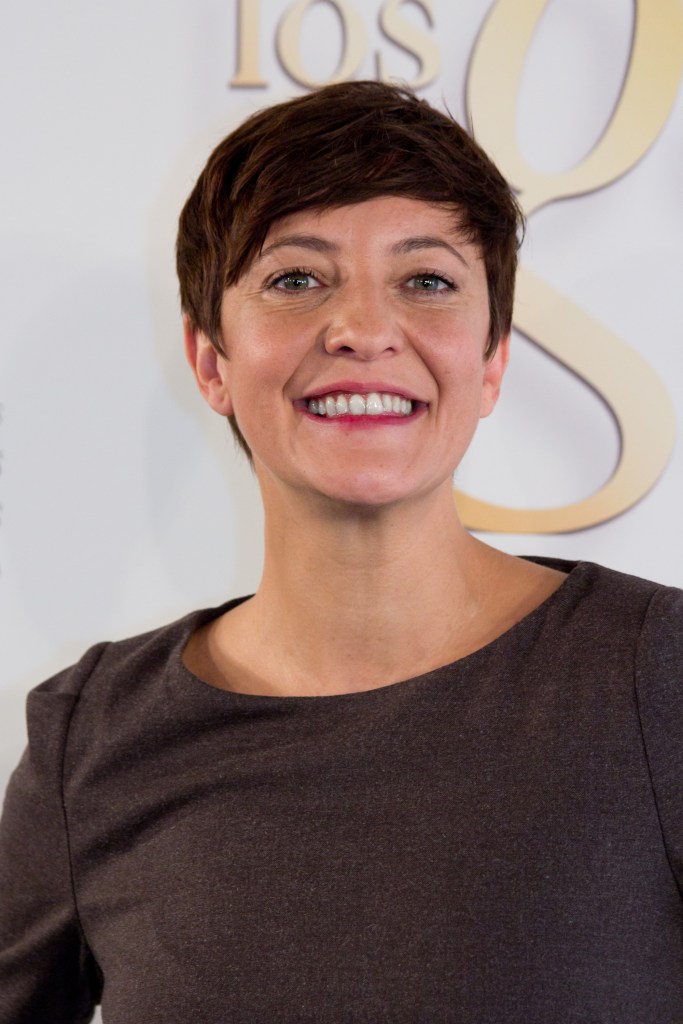
Eva Hache (photo by Pedro J Pacheco)

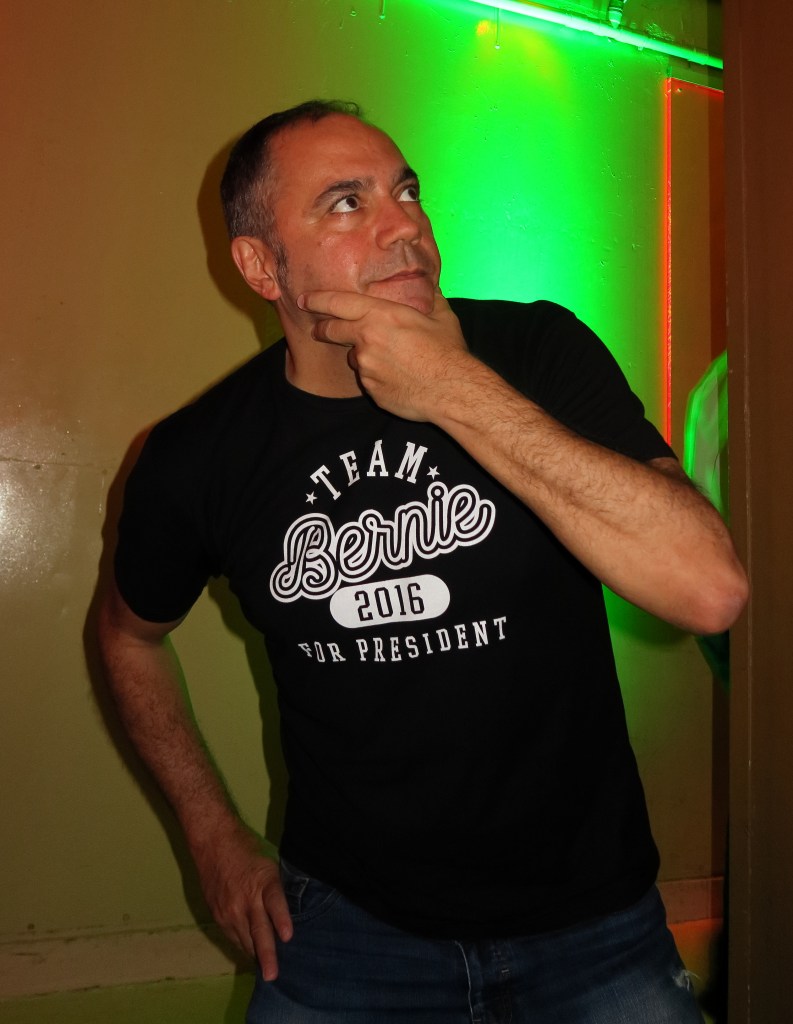
Berto Romero (photo by Mutari)

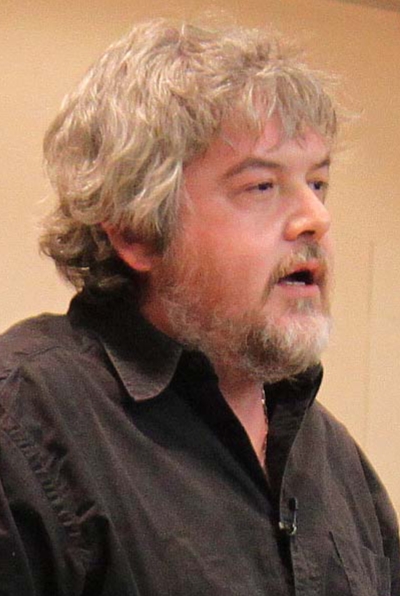
Javier Coronas (photo by Urcomunicacion)

Pepe Colubi (photo by Malopez 21)

Andreu Buenafuente (photo by Pedro J Pacheco)

Ana Morgade (photo by Ruben Ortega)

YouTube has so much free material. There are myriad channels from all over the Spanish speaking world. Of course, all these channels are really adverts aimed at enticing you into a paid subscription. But there’s no need to buy. 

Top of my list is Español con Juan. Don’t be tempted to dismiss Juan because of his slightly halting style or his unglamourous appearance. Juan is much more sophisticated than he first appears. His great strength is that he doesn’t deal directly with grammar. For example, he doesn’t plough laboriously through tenses. Instead, he plays out situations which illustrate the correct use of language. He often takes to the streets. This approach makes him successful with the English. Juan is from Granada but has lived and taught in England for over 20 years and he understands very well that English people have NEVER been taught to use their language by learning tenses. He recognises that we are genuinely perplexed, intimidated and inhibited by all talk of rules, even irritated by the use of terms such as pretérito pluscuamperfecto or condicional perfecto. Start with his Tips to learn Spanish (all in Spanish). This series of videos is comprehensive and full of sound advice based on experience. It begins with a warning about Vendedores de humo, in which he cautions against online courses that seem too good to be true: ones that promise you can learn Spanish in 2 months on just 10 minutes of work a day.  Beware, he says. If it looks too good to be true the chances are it is too good to be true; all that glitters is not gold. 

The other very impressive feature of his work is the candid nature of the stories that he tells about himself. He uses startlingly convincing nightmare scenarios from his past but be careful what you believe because he intersperses his confessions with a cast of imaginary friends and enemies. Often, it is the straight truth. Nevertheless, you remember what he says. Here are two of his memorable performances: the meaning of the phrase meter la pata: https://www.youtube.com/watch?v=x_Qvth0IRfY  and how to express probability https://www.youtube.com/watch?v=kTKdxX2rfvE

Juan’s output has been steady over the past 5 years: the creation of a video each week has built an impressive YouTube library which deals with most aspects of learning the language. He puts a lot of effort into his work. He speaks at a pace which is designed for learners and he repeats what he says in different ways throughout each video. He is enthusiastic and enjoys what he does. He has learnt his craft over many years and like all great teachers his lessons are unforgettable and often unorthodox.

Juan also has a list of his favourite YouTube channels for learning Spanish which, once again, you can find in one of the videos in the series, Tips to learn Spanish.

Thousands of miles away is Why not spanish? run by Maria from Colombia and her quietly-spoken US husband Cody from Tennessee (Plus of course their dog, Maya) The speech of both Maria and Cody is naturally unhurried, relaxed and clearly pronounced. They do videos  at all levels. Don’t judge them by the early videos that they made back in 2017 when Cody was just learning Spanish. But, if it’s beginners’ lessons you’re looking for these could actually be useful.

Like Juan, they know that using the details of their lives is a way of engaging with their public. In so doing, they show themselves to be unpretentious people who are honest about their lives.  The couple recently moved from Tennessee to Bogotá. María often interviews Colombian speakers from other parts of the country or Latin America to demonstrate their varied vocabulary and their distinct accents (not that I can detect many of the local differences). She and Cody also go out onto their neighbourhood streets to make videos about ordinary Colombian life. (It is always a relief to know that if you are off to visit Colombia you are safe in the knowledge that it is a Latin American country where coger means agarrar and not follar.) 

At the other end of the glamour spectrum is Superholly who also deserves a mention, if only for her absolutely immense popularity. (At the time of writing she has 4.17 million subscribers). Holly is a gringa who grew up in Mexico and she speaks a flawless Mexican. Iberocentrics tend to look down on Mexican Spanish as it is plagued with anglicisms due to the country’s geographical proximity to the United States and the massive numbers of its citizens who work there. Nevertheless, Holly’s pronunciation is clear as a bell and she uses it to tell long, entertaining stories about her childhood, her brothers and sisters, her mother, her father the linguist, her own career, her motley crowd of neighbours and last but not least, her Mexican husband, Ben. They are a stunningly good-looking couple and their videos are professionally of a very high standard. Their life can look a bit “picture book” and their videos can be somewhat schmaltzy but somehow you forgive them because of the positivity they radiate. However, Holly is not above pouring scorn on the unsuccessful attempts of public figures whose English is not up to the mark. Neither does she miss the opportunity to get her own back on those who have slighted her. She doesn’t name names but I’m sure they know who they are.

And then there is Spanish with Vicente. Vicente once again illustrates his grammatical points by recounting the details of the everyday events of his personal life in small-town Fuengirola. He styles himself as profesor de español online y Director de la Academia de Español Online. I imagine he is both the Director and the only employee of the academy but you have to hand it to him: he is young, clear, personable and much liked. There is a new video each week and he has built up a whole back catalogue that you can always raid to resolve any of your doubts. 

My most recent but most spectacular discovery has been Yo hablo, Tu hablas run by Alicia, an extremely clear-headed and clearly spoken teacher.  If you do want Spanish grammar explained to you simply and accurately this is the place. I have never heard the difference between ser and estar made as plain as this, nor the various uses of se, nor the use of quedarse as opposed to quedar. Neither will she use terms such as perífrasis without explaining what they are. 

A lot of students who want a change from lessons watch the news and current affairs. My humble advice, based upon personal experience, is don’t get too obsessed with the Spanish television or radio news. It might seem a good idea because of its presentation, but the easy-to-understand neutral accent has little to do with the way that people speak; likewise, the ostensible evenhandedness of State broadcasting comes nowhere near the more disinterested standard of the BBC.  Newspapers are also written in journalese and their vocabulary is often unnecessarily recherché. Spanish copy editors demand flowery and elaborate writing.

I go instead for the German broadcaster, Deutsche Welle, whose Spanish service specialises in compassionate in-depth documentaries that concern social and political issues, have exceptional speech quality and are based upon excellent research, clean production and superb camerawork. Recently, I watched Después de la huida – Cuando lo ajeno se vuelve un hogar, truly, a beautiful piece of work: https://www.youtube.com/watch?v=Mp54Q85e8nQ 

If you want colloquial, you can always try comedy shows of which there is no shortage. Some comedians have a cult following in Spain.  Probably the best example is Berto Romero. His most famous show on YouTube is Nadie Sabe Nada, an hour-long improvisation with Andreu Buenafuente. Nadie used to provide moments of great hilarity when an adoring live audience  interacted heedlessly with the presenters. However, since lockdown when the audience disappeared halfway through series 7, the programme has definitely gone off the boil.

But, a word of warning. Berto was recently voted the third muckiest comedian in Spain. I don’t know who the first two were supposed to be, but I suspect Pepe Colubi and Javier Coronas might have been the culprits There is definitely a male clique of comedians who dominate Spanish humour and it has to be said that they can be boringly adolescente with their endless scatogical humour and gross sexual exaggeration. However, for whatever reason, there is a big market for it in Spain. (If anybody would like to offer an explanation I’d be very interested). There is a sort of unspoken competition to see how far they can go. They don’t do it because they are unsophisticated. Far from it. Pepe Colubi, who has an unrivalled reputation for obscenity and who appears regularly on Ilustres Ignorantes is otherwise a wonderfully articulate, cosmopolitan and educated person.

Female comedians do more sophisticated, observational humour which doesn’t rely on willy and bum jokes. Eva Hache was a brilliant host of the now defunct TV series, El Club de la Comedia and there is a lot of her best stuff from six or seven years ago. More contemporary is the work of Ana Morgade although she’s taking time off lately as her first baby is due.

Remember, if you are watching anything on YouTube you can always switch on the subtitles which give a rough idea of what is being said. You can also go to settings and reduce the playback speed to hear things a little slower.

Good luck.

The Crown: Thatcher and the Falklands reviewed by Fuera de Foco

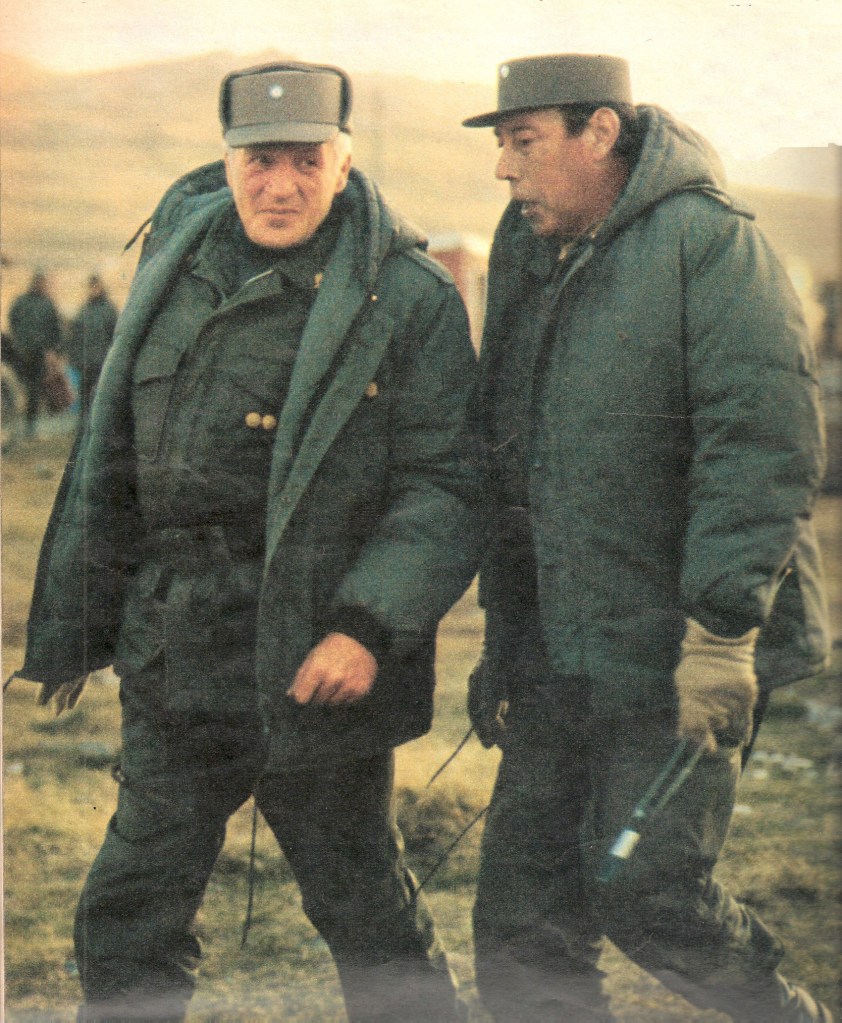
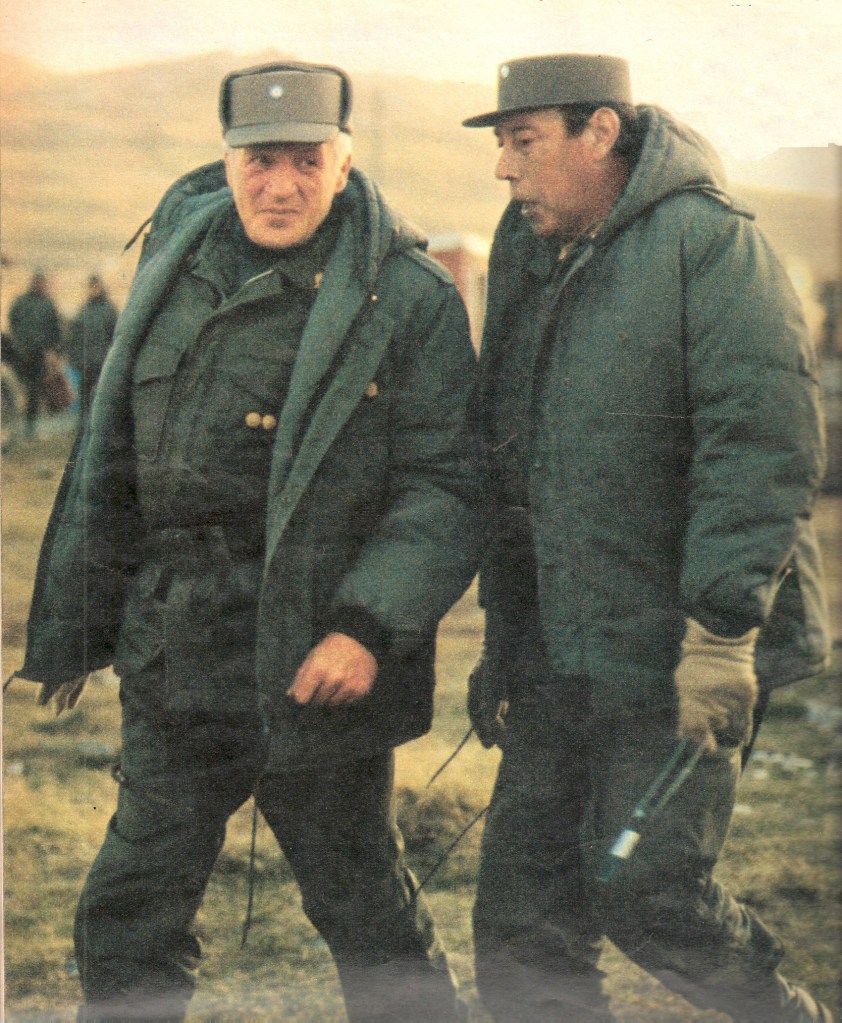
Generals Galtieri and Jofre on The Falklands
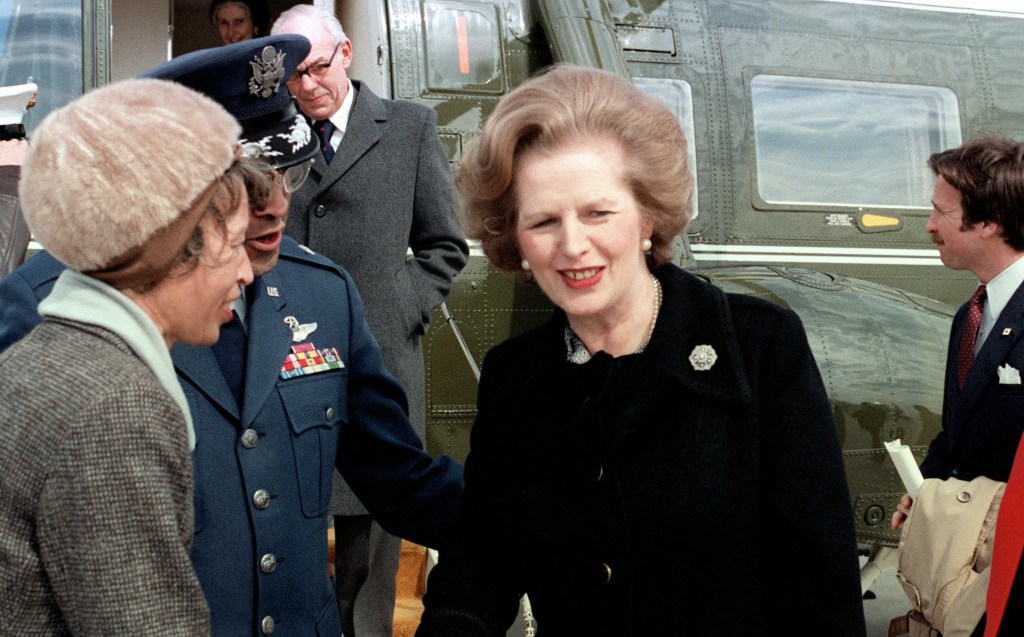
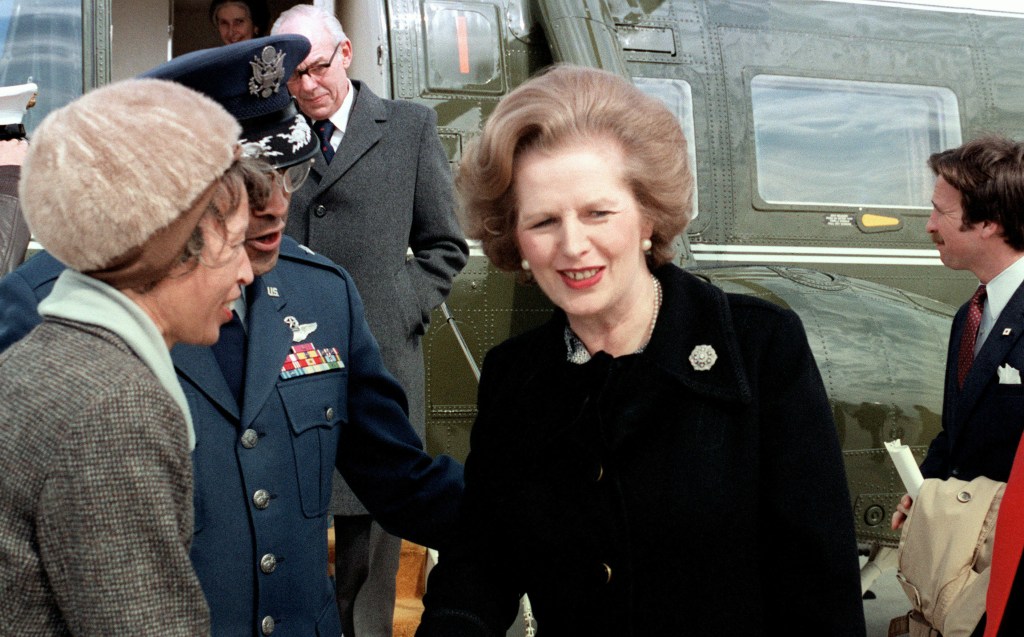
Prime Minister Margaret Thatcher of England is bid farewell on her departure after a visit to the United States.

Last time I commented on the very few minutes of his time that Carlos Boyero bestowed upon The Crown after having watched 10 hours of Series 4. Much more exhaustive is the treatment of Gaby Meza on her Mexican channel Fuera de Foco (Out of Focus). The outstanding feature of her analysis is the special mention she makes of her Argentinian audience, addressing them directly and asking for their opinion of how they feel the series tackles the Falklands War in “CRÍTICA: THE CROWN Temporada 4 | Princesa Diana, Tatcher [sic] y Las Malvinas”.

Gaby greets her many Argentine followers, sends them a hug and the now clichéd symbol of “I love you”, pressing her fingers together to form the shape of a heart. It’s obvious she’s nervous and feels the necessity of ingratiating herself with her Argentinian audience.

She says of the Falklands episode, “The only mention of the Argentine point of view was that it was some country that wanted to have the Falklands, end of. If you are Argentinian you will have much more understanding of the issue, so if you have something important to say on this matter, I would love you to comment below about what you thought of the portrayal of this issue. Are you happy or unhappy about it and why?”

Once again, at the end of the video, Gaby urges Argentinians to submit their commentaries.

Despite the nervousness that Gaby feels at having to tackle the subject of the Falklands War and the evident fear she has of offending her subscribers the matter only occupies a small percentage of the 3000 comments. Of course, there are some “The Malvinas are Argentine and will always be Argentine!!!!” but the majority of the visitors to her channel are more interested in the psychological conflicts within the Royal Family.

Like Gaby herself, I was expecting much more fury and resentment on the part of her Argentinian public but the majority of the replies are, generally, much more weighed and considered than they are rancorous. Take for example, this one. Although it is a little incoherent, it demonstrates an understanding of the situation:

“I’m a 40 year old Argentinian woman and I was 2 during the war. I never thought I’d have any support for my theory and now I see it in this series. This episode was very important for me. I got goosebumps when I saw the characters speaking in Argentinian. From my point of view this war should never have taken place. It existed because of the government at the time in Argentina. They believed that making war on England would put them in a better position but the opposite happened. When I see Margaret declaring war, sending troops, she does not do it just because she wants her government to be popular, but also to defend the small population of the Malvinas. Fascist. I believe that, thanks to England, this government ended up falling. And that the Argentinians should be grateful to England. Many people would kill me if I said this out loud but it’s what I truly feel.. Keep going The Crown, the best series on Netflix.”

The lady is correct. That’s how it works: when the leader of a country in the middle of an economic crisis wishes to divert public attention away from their domestic policy, one of their solutions is to look for an external enemy. There is nothing better to unify the people behind a hated leader than a patriotic fight to kick out an evil invader. Samuel Johnson said in 1775 that patriotism is the last refuge of the scoundrel. In the case of the Falklands this principle can be applied equally to Margaret Thatcher and General Galtieri. Both were presiding over an economic mess and both looked gladly upon the popularity they might regain with the reconquest of the Falklands/Malvinas. I don’t believe that Mrs Thatcher’s primary objective was to oust the bloodstained military dictators and restore democracy to Argentina, but that’s what happened. It’s an ill wind….

Curiously, the thing that most annoyed commentators was that Netflix hadn’t taken the trouble to employ Argentinian actors to play the soldiers and the scrap metal dealers who hoisted the Argentinian flag on South Georgia and sang the national anthem during the days that led up to the war. Netflix had given the job to other Spanish speakers and their accents grated on the Argentinian television viewers.

“CRÍTICA: THE CROWN Temporada 4 | Princesa Diana, Tatcher [sic] y Las Malvinas”

Margaret Thatcher en EEUU 1981. Autor, Williams, US Military

A la izquierda, Generales Galtieri y Jofre en las islas Malvinas, revista Gente, Abril 1982. Autor desconocido

En la última entrada de blog comenté sobre los escasos minutos que Carlos Boyero se dignó de conceder a La Corona después de ver 10 horas de la serie 4.  Mucho más exhaustiva es la crítica de la mejicana Gaby Meza en su popular canal de YouTube, Fuera de Foco. La nota que destaca de su análisis es la mención especial que ella hace de su público argentino. Se dirige directamente a ellos, pidiéndoles que den su opinión de cómo la serie aborda la Guerra de las Malvinas en “CRÍTICA: THE CROWN Temporada 4 | Princesa Diana, Tatcher [sic] y Las Malvinas”.

Gaby saluda a sus muchos seguidores argentinos, les manda un abrazo y el ya tópico símbolo de “te amo”, juntándose los dedos en forma de corazón. Es evidente que está nerviosa y siente la obligación de congraciarse de inmediato con su público argentino.

Dice del episodio de Las Malvinas: “No se ve mucho de la postura argentina fuera de que los retraten como este país que quiere quedarse con estas tierras de las Malvinas y listo. Si tú eres argentino seguramente tendrás muchos más conocimientos al respeto, así que si tienes algo importante que decir sobre este tema me encantará que comentes aquí abajo que te pareció la forma en la que abordaron. ¿Estás contento o no y por qué?”

Otra vez, al final de su video, Gaby insta a los argentinos a que envíen sus comentarios.

A pesar del nerviosismo que siente Gaby al tener que abordar el tema de las Malvinas y el evidente miedo que tiene de ofender a sus suscriptores, el asunto solo ocupa un pequeño porcentaje de los 3000 comentarios. Claro que hay unos “¡¡¡¡Las Malvinas son argentinas y siempre serán argentinas!!!!” pero la mayoría de los visitantes al canal están más interesados en los conflictos psicológicos dentro de la familia real.

Como la propia Gaby, yo esperaba mucho más furia y resentimiento por parte de los argentinos, pero la mayoría de sus respuestas son, por lo general, mucho más sopesadas y consideradas que rencorosas. Pongo, por ejemplo, este. Aunque sea un poco incoherente, demuestra una comprensión de la situación:

Yo soy Argentina tengo 40 años tenía 2 años cuándo fue la guerra. Siempre lo pensé pero no tenía donde apoyarme con mi teoría y ahora lo vi en la serie ese capítulo fue para mí muy importante. Se me puso la piel de gallina cuando vi personajes hablando en argentino. Desde mi opinión esta guerra nunca tendría que haber existido. Existió por culpa del gobierno de facto de ese momento en Argentina. Creían que hacerle guerra a Inglaterra los iba a posicionar y fue todo lo contrario. Cuando en la serie veo que Margaret le declara la guerra mandando tropas , lo hace tanto para defender a la pequeña población de las malvinas y más por qué era un gobierno de facto. Fasista. Yo creo que gracias a Inglaterra ese gobierno terminó de caer. Y que los argentinos deberían agradecerle a Inglaterra. Me Matarían muchos si digo ésto en persona pero es lo q de verdad siento.. aguante the crown la mejor serie de Netflix.”

La señora tiene razón. Así es como funciona la cosa: cuando un líder de un país en plena crisis económica quiere desviar la atención pública de su política doméstica, una de sus soluciones es de buscar a un enemigo exterior. No hay nada mejor para unificar a un pueblo detrás de un líder odiado que una lucha patriótica para quitarse de encima a un invasor maléfico. Samuel Johnson dijo en 1775 que el patriotismo es el último refugio de un canalla. En el caso de la Guerra de la Malvinas este principio puede aplicarse igualmente a Margaret Thatcher y al general Galtieri. Ambos se habían metido en un lio económico y ambos vieron con buenos ojos la popularidad que pudieran recuperar con la reconquista de Las Malvinas. No creo que el objetivo principal de la señora Thatcher fuera él de desbancar a los ensangrentados dictadores militares y la restauración de la democracia en Argentina, pero así ocurrió. No hay mal…

Por curiosidad, la cosa que más molestaba a los comentaristas era que el Netflix no se hubiera dado la molestia de contratar a actores argentinos para interpretar a los chatarreros y soldados que izaron la bandera argentina y cantaron el himno nacional en la isla Georgia del Sur durante los días antes de que se estrellara la guerra. Netflix había empleado otros hispanoparlantes y los acentos les molestaba bastante a los telespectadores argentinos.

Why the Spanish like The Crown (Series 4)

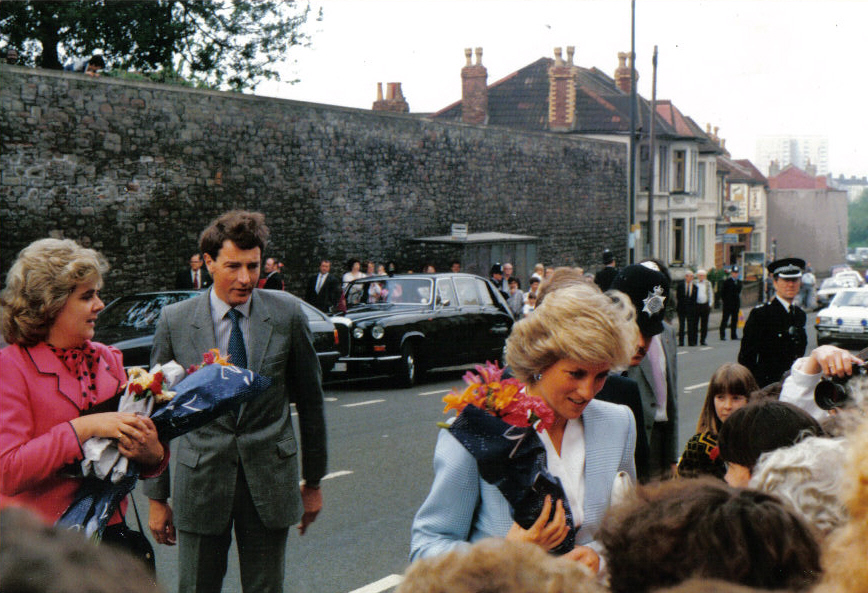
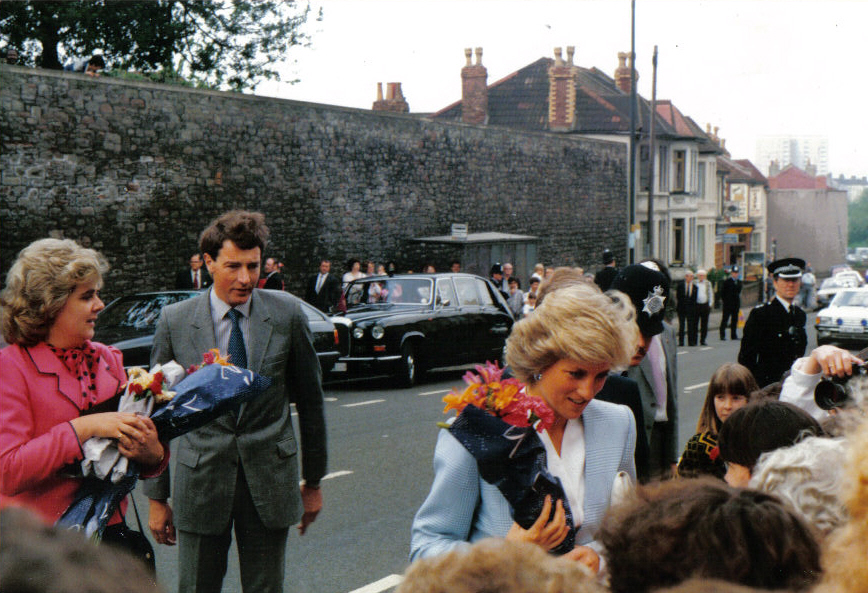
Princess Diana opening a community centre in Bristol in 1987. Photo by Rick, CC BY 2.0 https://creativecommons.org/licenses/by/2.0, via Wikimedia Commons

Carlos Boyero, a film critic for the Spanish radio station La SER, says, “I believe that this series is a tremendous boon for the British Monarchy….Talented film-makers are trying to show us….that these are very human people in almost constantly difficult circumstances….”

I can assure you that nothing could be further from the truth. The majority of the English believe that this series is yet another nail in the coffin of the monarchy. What it does show us is the coldness of the Queen, the self-serving behaviour of the whole family in their perpetuation of their image at all cost, quite prepared to sacrifice whoever gets in the way; it shows us that the marriage of Prince Charles with Diana Spencer was arranged by the family in psychopathic style to serve as a cover for his “inappropriate” relationship with the married Camilla Parker Bowles; it shows the ensuing coldness and the cruelty with which they treated poor Diana when she became aware of the set up and expressed her repulsion at what was going on. Then, when every member of the royal family ignored her protests, they labelled her as hysterical or mad, showing us their collective lack of humanity. Charles comes out of this portrayal particularly poorly.

And what does Señor Boyero think of the episode which concerns the two female cousins of the Queen who are declared dead in the newspaper, whereas, in reality, they have been locked away in an institution for people with learning difficulties in an attempt to protect the image of a family with an impeccable genetic structure?

In The Crown every member of the royal family, other than the Queen, appears to be merely selfish, spoilt and bored. Throughout series 4 there is nobody, apart from the Queen, who has any redeeming features. No señor. This series has been a real disaster for the British royal family.

Señor Boyero says that he has watched all the episodes (ten hours) of the series, but I suggest he goes back and takes another look at them all. Because, the first time around, he didn’t get the message at all.

This series shows us a collection of pampered, irritable and superficial characters who have no pity for anyone. Practically the only mention that señor Boyero makes of them is when he professes his love and fascination for Princess Margaret, (“To me, she is a great beauty, she has always seemed extremely attractive”) something which tells us more about his personal sexual frustration than anything else.

Is señor Boyero’s programme, La Ventana en el cine, a serious window on the world of films?

How is it possible that anyone can watch such a brilliant and complex series for ten hours and then have nothing to say other a few trivial remarks? Don’t the trials and tribulations of the British Royal Family represent anything other to Señor Boyero than the ups and downs of any average family: we’re all the same wherever you go?

Then, I thought, perhaps I ought to be a little more understanding with this man. It might be that his lack of criticism of the Royal Family, whether it be the real Windsors or the Netflix invention, indicates his desire to celebrate a royal family unsullied by the financial corruption that has blackened the name of the Borbons and has severely reduced their popularity in Spain; however many problems and defects the British Royal Family might have, they are still a royal family in the old style, full of personal intrigue and somewhat old fashioned, but at the end of the day, an innocent institution and a fine repository for Spaniards who are looking for a trustworthy abode in which to place their monarchist sentiments, a substitute royal family, a foster royal family for Spanish monarchists who feel let down by the home side.

Because, whatever you say, you have to admit that the recent mishaps of the British Royal Family are not very serious in comparison with the extravagant deceitfulness of their Spanish colleagues.

Por qué a los españoles les gusta La Corona (Serie 4)

La princesa Diana inaugura un centro comunitario en Bristol en 1987. Photo by Rick, CC BY 2.0 https://creativecommons.org/licenses/by/2.0, via Wikimedia Commons

Carlos Boyero, un crítico cinematográfico de la SER, dice en su programa, La Ventana, “Yo creo que esta serie le está haciendo un favor a la monarquía inglesa tremendo…. Intentan demostrarnos con un talento cinematográfico …. que son gente muy humana en circunstancias casi siempre problemáticas” …

Os aseguro que no hay nada que pueda estar más lejos de la verdad. La mayoría de los ingleses cree que esta serie ha sido otro clavo en el ataúd de la monarquía. Lo que sí demuestra la serie es la frialdad de la monarca y la conducta interesada de toda la familia en la perpetuación de la imagen a toda costa, caiga quien caiga; demuestra que el matrimonio del príncipe Carlos con Diana Spencer fue un matrimonio arreglado por la familia en plan psicópata para que el matrimonio sirviera de tapadera de su relación “inapropiada” con la casada Camila Parker-Bowles; demuestra la crueldad y la frialdad subsiguiente con la que trataban a la pobrecita Diana cuando ella se dio cuenta del complot y expresaba su repulsión. Luego, cuando todo miembro de la familia real hacía caso omiso de sus protestas, la etiquetaban de loca o histérica, demostrando así la falta de humanidad de todos ellos. Carlos, en especial, sale muy mal parado.

¿Y qué piensa el señor Boyero del episodio que trata de las dos primas de la reina que fueron declaradas muertas en el periódico, cuando la realidad fue que estaban vivas y habían sido encarceladas en una residencia para los disminuidos mentales en un intento de proteger la imagen de una familia con una estructura genética impecable?

En La Corona todos los miembros de la familia real, a excepción de la reina, solo parecen unos egocéntricos, consentidos y aburridos. Fuera de la reina, no hay nadie, por toda la serie 4, que tenga alguna característica redentora. No señor. Esta serie ha sido un auténtico desastre para la familia real británica. Señor Boyero dice que ha visto todos los capítulos (diez horas) de esta entrega, pero le sugiero que vuelva a echarlos otro vistazo. Porque la primera vez, no ha entendido en absoluto el mensaje.

Esta serie nos muestra unos personajes mimados, fastidiados, superficiales y sin piedad y prácticamente la única mención que el señor Boyero hace de ellos es la confesión de su propia fascinación y amor por la princesa Margarita, (“Me parece una belleza, siempre me ha parecido guapísima”) algo que nos dice más de su frustración sexual personal que cualquier otra cosa.

¿Es La Ventana un programa serio?

¿Como es posible que alguien pueda ver 10 horas de una serie tan brillante y compleja y no tener nada que decir fuera de unas observaciones francamente triviales? ¿Es que los padecimientos y tribulaciones de la familia real británica no le representan al señor Boyero nada más que las vicisitudes que se esperan en cualquier familia: en todas partes cuecen habas?

Luego pensé, talvez yo debería ser un poco más comprensivo con este hombre. Puede que su falta de negatividad hacia la corona, sea la verdadera familia Windsor o sea la invención de Netflix, indique un deseo de celebrar a una familia real no contaminada por la corrupción financiera que ha ensuciado el nombre de los Borbón y ha reducido severamente su popularidad en España; por mucho que la familia británica tenga sus defectos y fracasos, sigue siendo una familia real a la vieja usanza, llena de intrigas personales y algo trasnochada, pero, al fin y al cabo, una institución inocente y un buen repositorio para todos aquellos españoles que busquen un sitio fiable para depositar sus sentimientos monárquicos: una familia real sustitutoria,  una familia real de acogida para todos los monarquistas españoles que se sientan decepcionados por el equipo de casa.

Porque, digáis lo que digáis, tenéis que admitir que las peripecias recientes de la familia real británica son poco negativas en comparación con los engaños extravagantes de sus colegas españoles.

English Football Through Spanish Eyes: La Media Inglesa

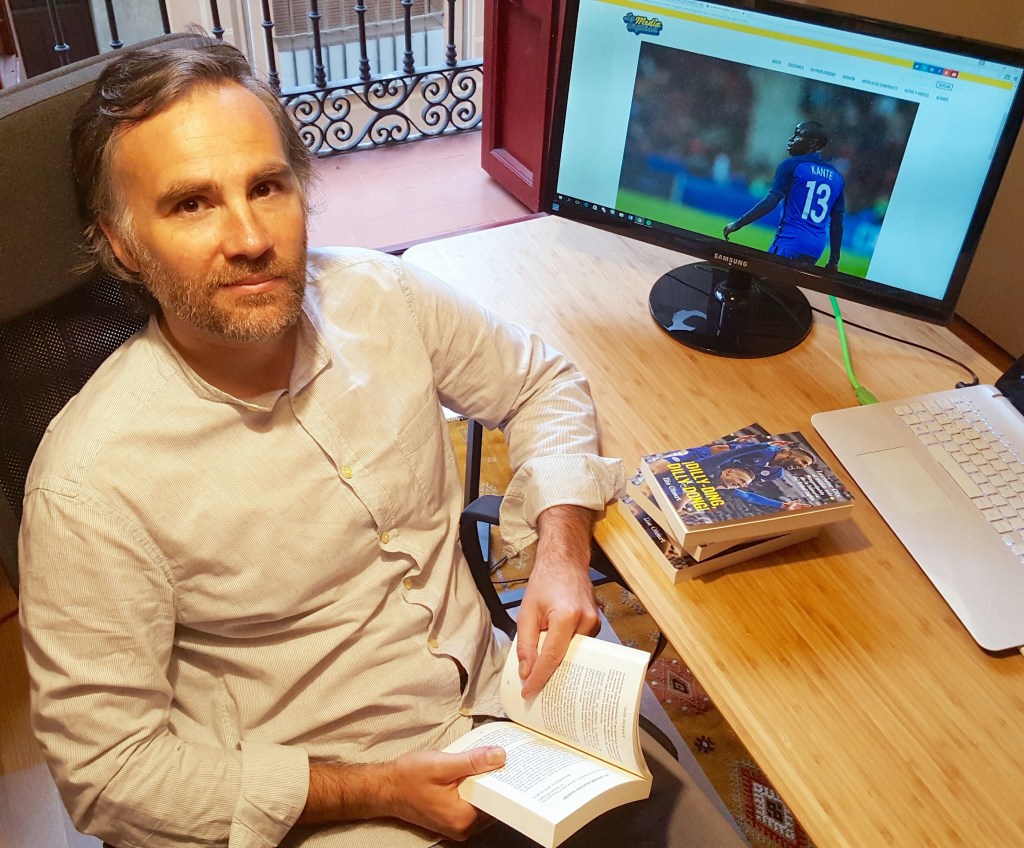
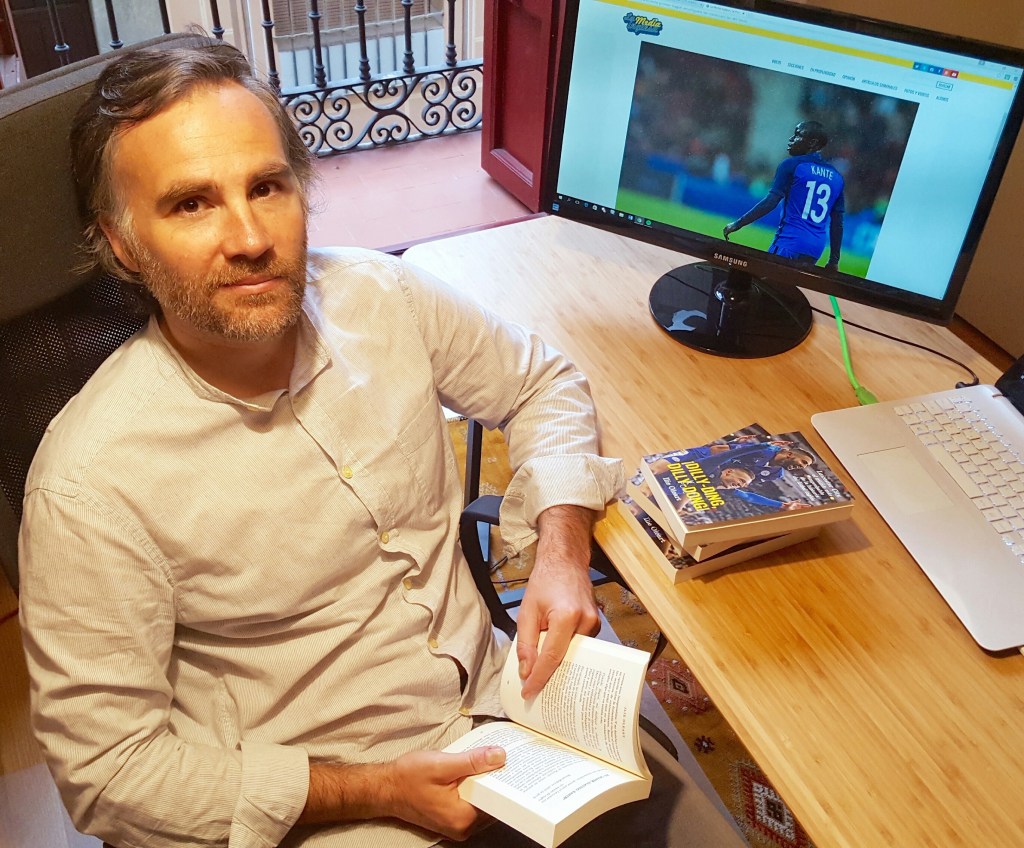
Ilie Oleart, founder of La Media Inglesa

The UK and Spain are very intense about their football and take it very seriously. Both countries show each other’s games live on the telly. Wherever you are in England, you are never far from a pub that’s showing a match from La Liga. Likewise, in Spain there is great interest in the Premier League. Both countries appreciate the football of the other. Besides, YouTube has various bilingual channels that show highlights of all games.

However, in Spain there is a channel that has gone one step further. It’s called La Media Inglesa. On its homepage it says, “Founded in 2011, La Media Inglesa is a channel in Spanish dedicated exclusively to English Football.”

It’s founder, Ilie Oleart, is a Catalan journalist who presents videos alongside Nacho González. The pair of them take an interest in all aspects of the English game and they do not limit themselves to the Premier League.

Their message is simple: without football from the lower leagues there can be no football. Don’t get me wrong. These are energetic presenters and their output is prolific. They generate hundreds of videos and many of them have to do with the fate of clubs in the Premier League. I’ve just watched their review of the surprising, scandalous and madcap history of West Ham and I recommend it: 125 AÑOS DEL WEST HAM: SUICIDIOS, BOBBY MOORE Y EL 66, REDKNAPP Y TITTYSHEV, Y JACUZZIS CON SORPRESA. https://www.youtube.com/watch?v=AxIGyOmUKx0

Less known, but equally interesting, is the history of Barrow, promoted this season to the Football League: EL INCREÍBLE ASCENSO DE BARROW: GOLES DE ÁRBITROS, MERMELADA Y GUARDIOLISMO (The incredible rise of Barrow: Jam, Goals by the referee and football in the style of Guardiola). This video not only highlights the referee’s goal that gave Barrow victory over Plymouth Argyle but also the astounding expedition organised by 23 fans in order to watch their heroes in the away game against Dover last season in the National League. https://www.youtube.com/watch?v=MLSaejuuofA

Last year Ilie and Nacho visited Wycombe Wanderers, another small yet successful club. Beforehand, they had written to all 92 clubs in the Football League asking them why the people who watched their channel should support their club. Not all the clubs could be bothered to reply, not even in English. But both presenters were stunned when one club (and one club only) wrote back in Spanish. For that reason, Ilie and Nacho decided to pay a call on Wycombe Wanderers. The resulting video was entitled, UNA NOCHE EN WYCOMBE: UN CLUB FAMILIAR, UN TÉCNICO ROCKERO Y ADEBAYO AKINFENWA (A night in Wycombe: a family club, a rock star as a manager and Adebayo Akinfenwa).

Wycombe have the longest-standing manager in the English professional league. Gareth Ainsworth has been there for 8 years although he confesses that his alter ego is Mick Jagger and he would like the option to be the lead singer of the Stones. They interview him in English with Spanish subtitles and even if you don’t watch the whole video you ought to take a look at this part. He’s a genuine bloke who loves the fans. And they’ve got great loyalty and affection for him. Ainsworth explains that the club hasn’t got the money to be youngsters with big price tags. He puts his efforts into “spotting the  players who aren’t always the top players, seeing something different in the players, so when we go scouting players….we look for character, we look for the psychology of the players, rather than the best players….We see something in them we can develop, but it’s not there yet….Then you have your generals, your experienced boys to add to that group…a few experienced boys bringing these boys through.”

Gareth Ainsworth’s remarks echo some of the recurrent themes on the channel: an appreciation of traditional football values and the way in which the manager copes with limited funds. Ilie and Nacho recognise that money is no guarantee of success. I also suspect that they have a slight scorn for those exaggerated fees that some clubs are willing to pay to obtain international star players.

They also interview Adebayo Akinfenwa, a Wycombe player, a great favourite of subscribers to the channel and a very likeable guy. His interview also deserves a watch, just to appreciate his warmth and sincerity. https://www.youtube.com/watch?v=qgBKdDXo2Cs

And if you are asking yourself what is the origin of the title “Wanderers” that Wycombe has in common with both Wolverhampton and Bolton, it refers to the fact that when these clubs were founded in the 19th Century they didn’t have their own pitches. They always played away. Obviously, they eventually acquired their own grounds but, by then, the term “Wanderers” had stuck.

On the other hand, at the other end of the spectrum, Ilie y Nacho worry about clubs like Macclesfield Town, a side that has been in the Football League for 142 years but which is about to disappear beneath the weight of its own debts. It’s what happens when a club with a financial crisis allows itself to be purchased by a foreign investor who hasn’t the least human interest in the club or its fans. It’s a tendency that they have denounced in many videos. Indeed, La Media Inglesa has published its own instruction manual for all would-be lamentable owners: GUÍA PRÁCTICA PARA SER UN DUEÑO LAMENTABLE: (https://www.youtube.com/watch?v=PI6MRBcWt5M)

It surprises them a great deal that the English FA offers such little control over the finances of clubs in the lower divisions or the existence of unscrupulous owners who do what they like with these clubs which end up on the scrap heap.

The presenters also take an interest in the personal values of players. Just a couple of weeks ago they dedicated half an hour to Marcus Rashford and the successful campaign he waged to ensure that free school meals continued during quarantine. His actions moved them so much they told the story of Rashford’s life. He grew up in Wythenshaw, Manchester where two thirds of children live in poverty. Marcus Rashford’s mother raised a family of five children on her minimum wage but never had enough money to feed them properly. The family survived thanks to food banks, the generosity of neighbours and free school meals. Christmas dinner came courtesy of a charity.

Rashford wrote a letter to all MPs asking them to guarantee the continuation of free school meals while the schools were closed as well as during the school holidays: “As a Black man from a low-income family in Wythenshawe, Manchester, I could have been just another statistic. Instead, due to the selfless actions of my mum, my family, my neighbours, and my coaches, the only stats I’m associated with are goals, appearances and caps. I would be doing myself, my family and my community an injustice if I didn’t stand here today with my voice and my platform and ask you for help.”

What he says about his platform is correct. If Rashford had been a young unknown black man nobody would have paid him any attention: at best, after a wait of several months, he would have received a standard letter from Boris Johnson’s office thanking him for his interest in the matter. https://www.youtube.com/watch?v=43xR3xjSDt0&t=609s

This underlines what I was saying in the blog of January 7 this year: football has the power to change the World, to stand up to racism and to reduce xenophobia (see the side bar or use the link below).  I don’t claim that it can eliminate poverty on its own but its star players enjoy much more prestige than politicians, and if they have the courage of their convictions, they can change the course of any government. https://wordpress.com/post/ingleses.blog/94

It’s a real pity that British fans can’t enjoy the full benefit of this channel. But here is a splendid opportunity for La Media Inglesa: it could widen its fan base if it had English subtitles. Unfortunately, you can’t rely on the automatic ones provided by YouTube. For example, in the Barrow video ‘sausage rolls’ appear as ‘Seychelles’. It’s worth a try as many of the most pertinent perceptions of a country and its culture come from outside. This observation is true of football just as much as anything else.

Somebody called Lucas left a commentary on the Barrow video. For him, La Media Inglesa is an antidote to “conventional sporting journalism: top ten goals from only the elite players, the private life of the stars, the conflict between the management and the staff, speculation about the big clubs and the transfer market, monotonous and superficial reporting”.

It’s not that Ilie and Nacho ignore the Premier League. On the contrary, they pay great attention to the details of the Premier League: they examine the style of each club, they visit them, they delve into their history, they take an interest in their strategy, their atmosphere, the reserves and what the club does to promote youth football, the criteria that the club takes into account when scouting, they interview Spanish players who have or who have had careers in English football and much, much more.

But for me, the most outstanding thing about this channel is the great affection that the presenters demonstrate towards English football and everybody involved in it. What surprises me is the profound depth of knowledge that they possess about our game.

They are famous amongst their followers for their jokes. Every video contains a collection of amusing anecdotes. As well as acute observation, they give you laughs.

A winning formula.

PS I wrote to La Media Inglesa and they tell me they have been intending to do English subtitles for a while. So, keep an eye out.

La Media Inglesa: el fútbol inglés a través de ojos españoles

Ilie Oleart, fundador de La Media Inglesa

España y el Reino Unido son dos países en los que el fútbol se vive con mucha intensidad y se lo toma muy en serio. En ambos países los partidos del otro se ven en directo en la tele. Estés donde estés en Inglaterra siempre hay un pub cercano en que están poniendo algún partido de la Liga. Igualmente, en España hay gran interés en la Premier. Cada país aprecia el fútbol del otro. Además, YouTube tiene varios canales bilingües que resumen todos los encuentros.

Pero, en España hay un canal que ha dado un paso más. Se llama La Media Inglesa. Dice la cabecera, “Fundado en 2011, La Media Inglesa es un medio de comunicación en español dedicado exclusivamente al fútbol inglés”.

Su fundador, el periodista catalán, Ilie Oleart presenta los videos con Nacho González. Los dos se interesan por todos los aspectos del juego inglés y no se limitan a los equipos de la Premier.

Su mensaje es sencillo: Sin el fútbol modesto, es decir el fútbol de las divisiones inferiores, no existe el fútbol. Pero, no me malinterpretéis. Son unos presentadores muy enérgicos y su rendimiento es prolífico. Generan cientos de videos y muchos de ellos tratan de la suerte de los clubes de la Premier. He visto muchos. Acabo de ver su repaso de la historia atolondrada, sorprendente y escandalosa de West Ham y os lo recomiendo: 125 AÑOS DEL WEST HAM: SUICIDIOS, BOBBY MOORE Y EL 66, REDKNAPP Y TITTYSHEV, Y JACUZZIS CON SORPRESA. https://www.youtube.com/watch?v=AxIGyOmUKx0

Menos conocido pero igual de interesante ha sido la historia del nuevo club de la segunda división: EL INCREÍBLE ASCENSO DE BARROW: GOLES DE ÁRBITROS, MERMELADA Y GUARDIOLISMO. Este video destaca no solo por el cuento del gol que marcó el colegiado y que les dio la victoria sobre el Plymouth Argyle sino también por la historia flipante de la expedición que los 23 fans montaron para ver a sus héroes en el partido de fuera contra el Dover durante la temporada pasada en la National League (es decir, la quinta división). https://www.youtube.com/watch?v=MLSaejuuofA

El año pasado Ilie y Nacho visitaron a otro pequeño club exitoso, los Wycombe Wanderers. Antes habían escrito a los 92 clubes de la Liga inglesa pidiéndoles que les dijeran por qué la gente que ven su canal deberían ser aficionados de su club. No todos los clubes se dieron la molestia de contestar, ni siquiera en inglés.  Pero los presentadores quedaron noqueados por el club (un solo club) que les respondió en español. Fue por eso que Ilie y Nacho decidieron pasar por el Wycombe. El video resultante se titula: UNA NOCHE EN WYCOMBE: UN CLUB FAMILIAR, UN TÉCNICO ROCKERO Y ADEBAYO AKINFENWA.

El Wycombe tiene el entrenador más longevo de la liga profesional inglesa. Gareth Ainsworth lleva 8 años trabajando ahí aunque confiesa que su álter ego es Mick Jagger y le gustaría tener la opción de ser el vocalista de los Rolling Stones.  Le entrevistan en inglés con subtítulos españoles y si no veis el video entero deberíais echarle un vistazo a esta parte. Es un tío sincero que ama a los fans. Y es recíproco. Ellos le tienen gran afecto y lealtad. Ainsworth explica que el club no tiene dinero para comprar los jóvenes que tengan etiquetas costosas. Intenta a “detectar jugadores que no necesariamente sean los mejores pero tengan algo diferente. Cuando ojeamos jugadores miramos su carácter, su psicología, en lugar de quiénes son los mejores…..Vemos potencial para desarrollar pero que todavía no está ahí ….Y luego tienes sus generales, a tus jugadores experimentados para añadir a este grupo…y te ayudan a hacer progresar a los jóvenes.” Estos son unos de los temas recurrentes en los videos del canal: una apreciación de los valores futbolísticos tradicionales y la manera en que el entrenador se enfrenta al problema de los fondos limitados. Reconocen que el dinero no es ninguna garantía del éxito. También, sospecho que tienen un cierto desprecio por los precios exagerados que algunos clubes están dispuestos a pagar para fichar a las estrellas mundiales.

Entrevistan también a Adebayo Akinfenwa, un jugador del Wycombe y un ídolo de los suscriptores del canal y un tío muy simpático. Su entrevista también merece una mirada por su sencillez y su cordialidad. https://www.youtube.com/watch?v=qgBKdDXo2Cs

Y si os estáis preguntando qué significa el título Wanderers, se refiere a personas andantes, errantes o nómadas. Wolverhampton, Bolton y Wycombe son tres clubes que llevan este sobrenombre oficial que es una forma de apellido adoptivo. El nombre tiene sus orígenes en el siglo 19 cuando se fundaron estos clubes. Fueron jugadores andantes porque, en aquel entonces, no tenían su propio terreno. Siempre jugaron fuera. Claro que luego adquirieron sus propios campos pero, para entonces, ya se les había pegado la denominación de los Wanderers.

Por contraste, al otro extremo del espectro, Ilie y Nacho se preocupan por casos como él del Macclesfield Town, un club que tiene 142 años de existencia en la liga de fútbol y ahora está a punto de desaparecer bajo el peso de sus deudas. Es lo que pasa cuando un club en un bajón económico se deja comprar por un inversor extranjero que no tiene el más mínimo interés humano ni en el club ni en sus fans. Es una tendencia que ya han denunciado en muchos videos. Más aún, La Media Inglesa ya ha publicado su propio manual de instrucciones: GUÍA PRÁCTICA PARA SER UN DUEÑO LAMENTABLE:  https://www.youtube.com/watch?v=PI6MRBcWt5M

Les sorprende mucho el poco control que ejerce el Football League en divisiones inferiores sobre las finanzas de los clubes endeudados y la presencia de dueños sin escrúpulos que hacen lo que quieren con estos clubes que acaban esfumándose.

Se interesan también por los valores personales de los jugadores. Hace solo un par de semanas dedicaron media hora a Marcus Rashford y la campaña exitosa que llevó a cabo para asegurar que las comidas escolares gratis continuaran durante la cuarentena:  Sus acciones les impresionaron muchísimo y les conmovieron tanto que contaron la vida de Rashford: creció en el barrio de Wythenshaw de Manchester donde dos tercios de los niños viven en situación de pobreza. En el caso de Rashford fue su madre que se encargó de él y sus cuatro hermanos. Ella trabajaba por el salario mínimo y nunca tuvo el dinero suficiente para que la familia comiera adecuadamente. La familia sobrevivió gracias a los bancos de alimentos, la generosidad de los vecinos y las comidas escolares gratis. La cena de navidad fue cortesía de una sociedad benéfica.

Rashford escribió una carta abierta a todos los diputados pidiéndoles que garantizaran la continuación del sistema de comidas escolares gratis por toda la cuarentena, no solo mientras las escuelas estaban cerradas, sino también durante las vacaciones académicas: “Como hombre negro de una familia de bajos ingresos en Wythenshawe, Manchester, podría haber sido sólo otra estadística. En cambio, debido a las acciones desinteresadas de mi madre, mi familia, mis vecinos y mis entrenadores, las únicas estadísticas con las que estoy asociado son los goles, las apariciones y el número de veces que he jugado para la Selección. Me estaría haciendo a mí mismo, a mi familia y a mi comunidad una injusticia si no me plantara aquí hoy y les pidiera ayuda con mi plataforma y mi voz.”

Lo que dice de su plataforma es verdad. Si Rashford hubiera sido un joven negro desconocido nadie le habría hecho caso: en el mejor de los casos, tras una espera de varios meses, habría recibido una carta estereotipada desde la oficina de Boris Johnson dándole las gracias por su interés en el asunto. https://www.youtube.com/watch?v=43xR3xjSDt0&t=609s

Eso reitera lo que escribí en el blog del 7 de enero de este año: el fútbol tiene el poder de cambiar el mundo, de hacer frente al racismo y reducir la xenofobia. No digo que pueda eliminar por sí solo la pobreza, pero sus estrellas gozan de mucho más prestigio que los políticos y si tienen el coraje de sus convicciones pueden cambiar el curso de las políticas de cualquier gobierno. https://wordpress.com/post/ingleses.blog/94

Es una auténtica lástima que los forofos británicos no puedan aprovechar de este canal. Pero, aquí hay una espléndida oportunidad para La Media Inglesa: podría ampliar su propio base de aficionados si se añadieran subtítulos en inglés. Por desgracia, no se puede contar con los subtítulos automáticos en YouTube. Por ejemplo, en el video sobre Barrow, sausage rolls figura como Seychelles. Vale la pena intentarlo porque muchas de las percepciones más pertinentes de un país y su cultura vienen de fuera. Y esta observación es válida para el fútbol también.

Un tal Lucas dejó este comentario sobre el video del Barrow. Para él, La Media Inglesa es el antídoto al “Periodismo deportivo convencional: Top 10 goles solo de los jugadores de la élite, vida privada de las estrellas, salseo entre cuerpo técnico y plantilla, especulación sobre el mercado de fichajes de los equipos grandes, monotonía y superficialidad informativa”.

No es que Ilie y Nacho no se hagan caso a la Premier. Al contrario, prestan mucha atención a los pormenores de la Premier: examinan el estilo de cada club, los visitan, indagan en su historia, se interesan por su estrategia, su ambiente, la cantera y lo que haga el club para fomentar al fútbol juvenil, las opiniones de los fans, los criterios que el club toma en cuenta cuando caza talentos, entrevistan a jugadores españoles que tienen o han tenido carreras en el fútbol inglés y mucho, muchísimo más.

Pero no lo hacen a expensas de los clubes más humildes.

Pero, para mí, lo más destacado de este canal es el gran afecto que los presentadores demuestran hacia el fútbol inglés y toda la gente involucrada en ello. Lo que me sorprende es el conocimiento tan profundo que poseen sobre la historia de nuestro balompié.

Son famosos entre sus seguidores por sus bromas. Cada video recoge una serie de anécdotas muy graciosas. Combinan risas con un análisis certero.

Una formula ganadora.

Tyntesfield, transparencia y la trata de esclavos chinos (3)

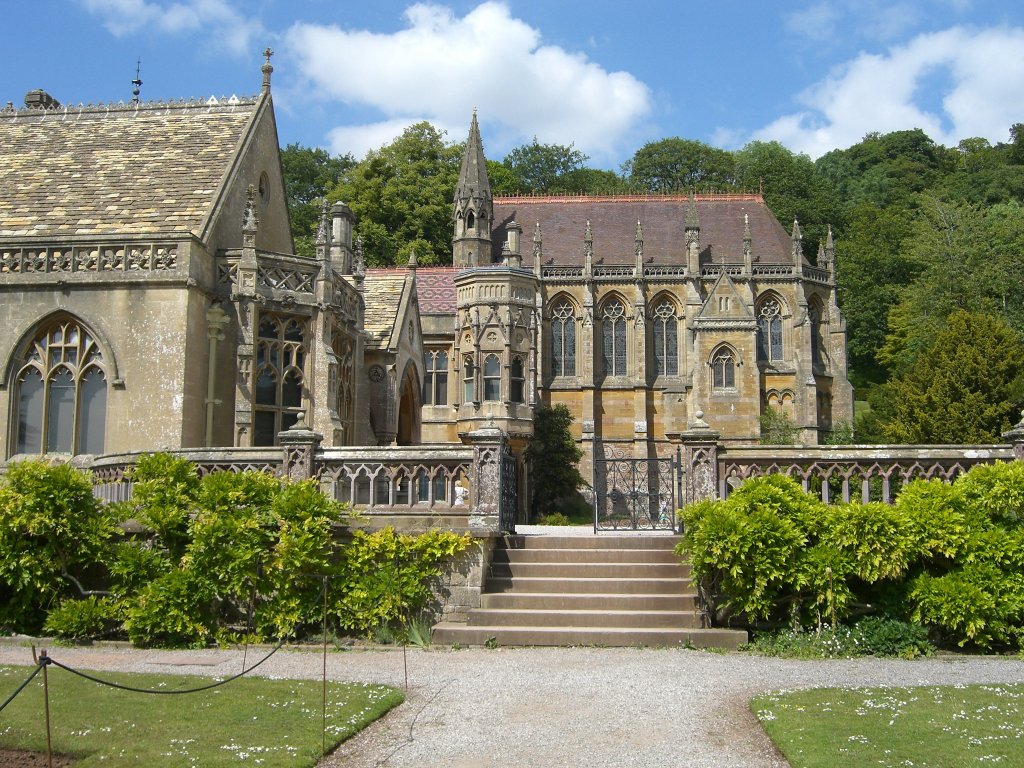
Tyntesfield chapel: By PJMarriott, CC BY 3.0, https://commons.wikimedia.org/w/index.php?curid=53589423

En la serie televisiva Great British Railway Journeys el presentador, Michael Portillo, baja del tren para visitar Tyntesfield1. Uno de los guías le enseña el lugar y le explica que William Gibbs no tenía ninguna responsabilidad por la esclavitud de los chinos. Dice textualmente que “fue el gobierno peruano que llevaba a cabo la actividad minera”. En otro eufemismo típicamente británico admite que las condiciones de trabajo eran “bastante adustas”. No había ninguna mención de los miles de esclavos chinos que fueron forzados a trabajar hasta la muerte en la explotación del guano. En lugar de eso, oímos que William Gibbs era abstemio, un pilar de la clase dirigente, un miembro de la iglesia anglicana tradicional y un hombre dedicado a la oración matutina y vespertina.

Luego en 2018 pusieron el programa en el que Alan Titchmarsh elogió a William Gibbs en un tono deferencial, respetuoso y, hay que decirlo, francamente adulador2. Titchmarsh estaba anonadado por la fortuna que este cristiano tan venerable e ingenioso había creado de la importación de una sustancia tan humilde y tan barata.

Fue entonces, después de escuchar esta sarta de tonterías, cuando escribí a la oficina de atención al cliente de la National Trust (NT). Como sabéis, me aseguraron de que todo estaba cambiando en la NT: el programa presentado por Titchmarsh fue cosa de hace dos años y nunca volverían a hablar de Tyntesfield de la misma manera: “estamos intentando hablar más sobre la historia horrorosa de la industria guanera y como la familia Gibbs obtuvo su riqueza de ella.” En el futuro presentarían “una historia fiel, abierta e inclusiva de la mansión y sus lazos a la industria guanera.”

Pero hace unas semanas viene el programa que la NT acaba de hacer en colaboración con el Channel 4: en George Clarke’s National Trust Unlocked3 volvieron a pintar a William Gibbs como un comerciante muy exitoso que hizo su agosto vendiendo un montón de caca de pájaro. Una vez más, oímos la misma inocencia, oímos los mismos tópicos, oímos la mismísima “nota de humor” y escuchamos la misma versión expurgada de lo que pasó.

Después de la última entrada del blog escribí a Hilary McGrady, directora general de la NT, preguntándole la razón por la cual la NT seguía hablando del guano sin mencionar a los esclavos y el papel que cada uno de ellos había desempeñado en la creación de la fortuna de familia Gibbs. La señora McGrady lleva toda una vida trabajando en marketing. Entiende muy bien los beneficios de la buena publicidad y el valor de las buenas relaciones con su público.

Ella no se dignó a contestar.

No entiendo porque la NT se considera obligada a ser apologista por un hombre que hizo construir su casa señorial con las ganancias que el obtuvo de un campo de concentración victoriano. No entiendo los motivos por los cuales la NT sigue con la farsa de insistir que William Gibbs era un caballero honrado y un empresario ingenioso.

¿Piensa el consejo de dirección de la NT que la gente dejaría de visitar estas atracciones si se diera a conocer que fueron construidas sobre la tortura y la muerte de los auténticos creadores de la fortuna que dio origen a la casa y sus terrenos? Yo creo que esto es un ejemplo de pensar al revés. Hablando por lo general, el público de la NT es gente educada de la clase media y se compone de personas que preferirían ser informadas de la verdadera historia del lugar. La realidad es que la mayoría de los socios de la NT solo quieren pasar un día agradable con la familia, recorriendo una casa de interés histórico, dando un paseo por los jardines bien cultivados y comiendo algo sabroso en el restaurante. Lo que no quieren es que la NT les engañe con tonterías.

Es grotesco y mentiroso que la NT siga limitándose a decir que es muy gracioso que un hombre hubiese hecho una fortuna de la caca de aves suramericanas. Porque no es la verdad. El valor fue creado por los esclavos. Sin los chinos secuestrados y encarcelados en las islas Chincha, Gibbs no podía haber comprado el guano a un precio tan reducido y haberlo vendido por unas ganancias tan altas. No reconocer esto es un insulto a la inteligencia de los socios de la NT. Más importante todavía es que representa un insulto a la gente china que fue sacrificada tan cruelmente al afán de lucro.

Las vidas chinas importan también.

Referencias

1 Great British Railway Journeys S7 Ep 14. BBC 2015. Actualmente este episodio no se puede ver en la BBC. Sin embargo, hay una copia de baja calidad en YouTube.

2 Secrets of the National Trust S3 Ep 6, 08/08/2018. Channel 5.

3 George Clarke’s National Trust Unlocked S1 Ep 4, 13/09/20. Channel 4.