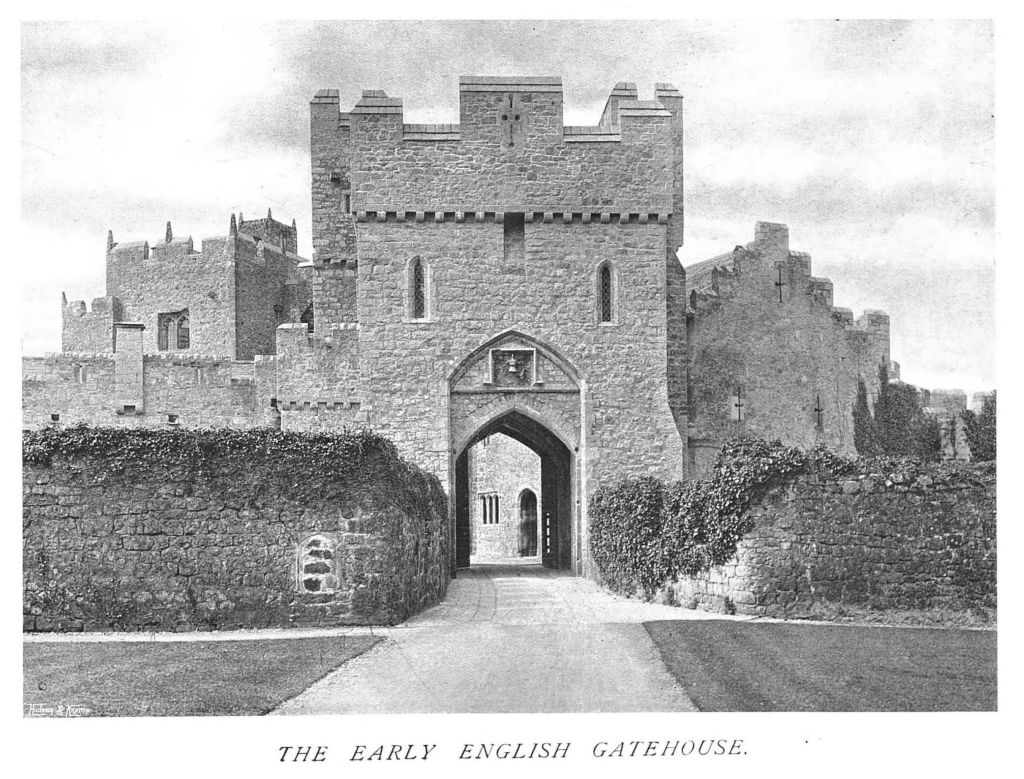
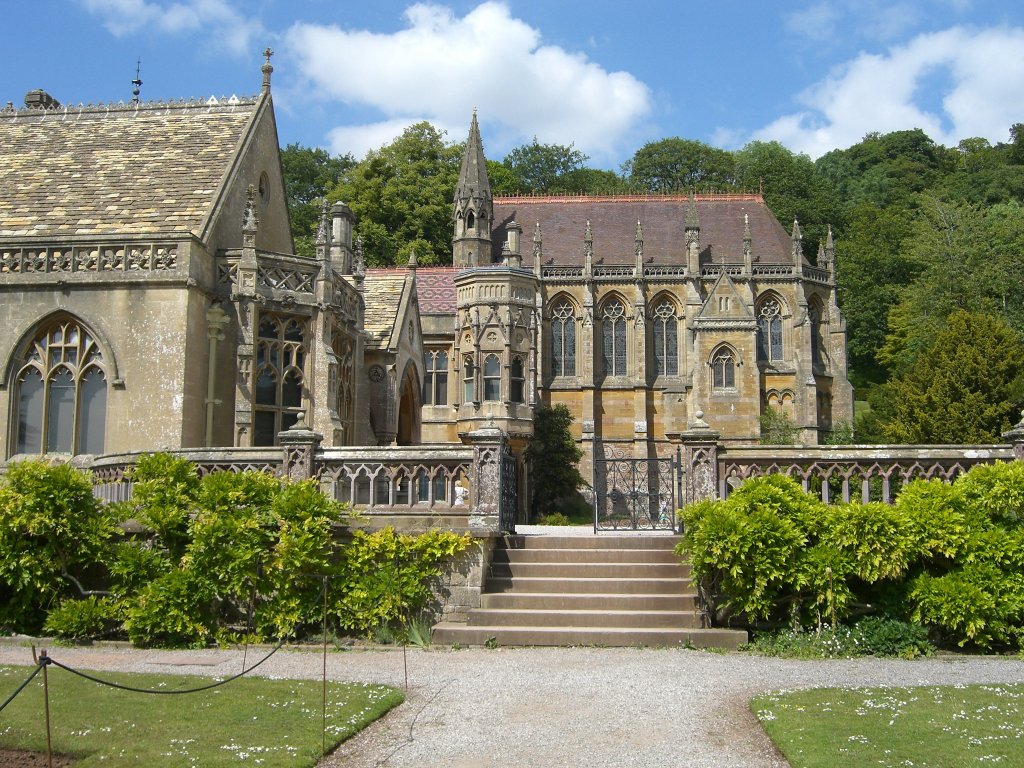
Some ten years ago my friends Susan and Mick were married in St Donat’s castle in the beautiful Vale of Glamorgan.The castle nestles discreetly in a breach of the cliffs from where it looks out over the Bristol Channel. The countryside there is peaceful, idyllic and off the beaten track. There are terrific views. From the Tudor rose gardens you get a panorama of the low-lying Somerset coast, 14 miles to the south. A little further to the south west where the County of Somerset meets Devon you can see the high ground of Exmoor National Park. So it was that we spent a perfect summer’s day at a fairy-tale castle in a marvellous state of preservation. But it wasn’t always like this.
The history of St Donat’s goes back to medieval times but by the 1920s the castle was in a partly ruinous state. It had a change of fortune in 1925 when it was acquired by William Randolph Hearst, the infamous American newspaper magnate who had so much money he could do anything he felt like doing. And whatever he felt like doing, he carried out with total disdain for history and with an absolute indifference towards public opinion; he would have laughed at modern concepts like cultural or world heritage.
Hearst purchased the castle after seeing it advertised for sale in Country Life; he cabled his agent in England to buy it. In order to transform St Donat’s into the castle of his dreams, and add a little more “historical interest” Hearst bought other buildings of inestimable historical value, had them dismantled and transported to Wales with the intention of incorporating them into his phantasmagorical plans.
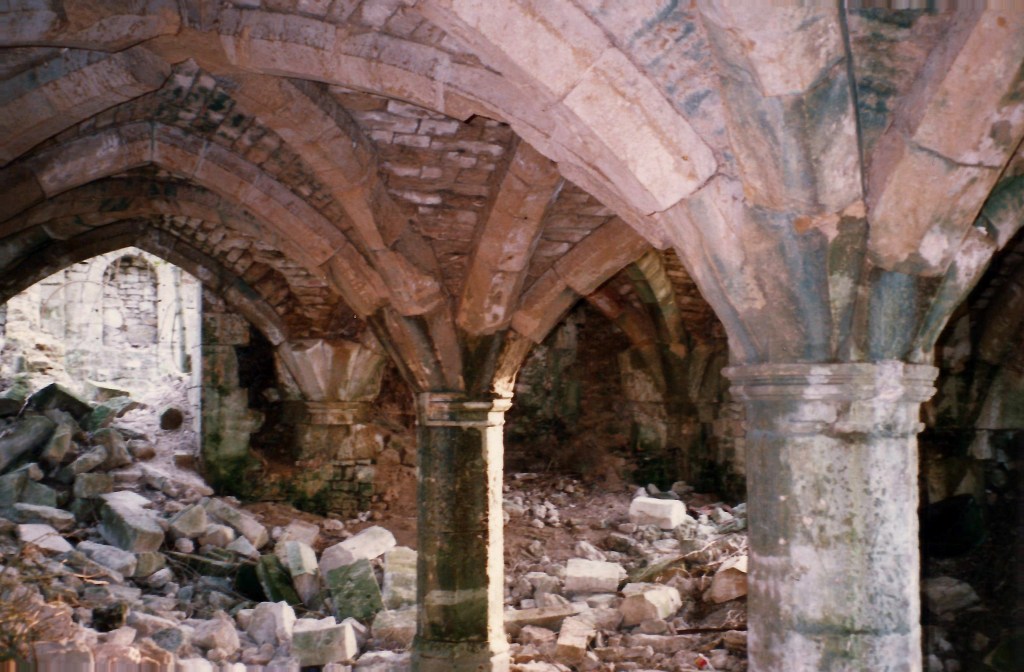
His greatest act of vandalism was the destruction of the Agustinian priory of Bradenstoke in the English county of Wiltshire, founded in 1142. He removed the enormous and magnificent vaulted roof and used it to cover the party room that he added to the castle. He also ripped out the windows and the magnificent prior’s fireplace, adding these to his party room and at the same time reducing the priory to rubble. It was here in his party room during his very infrequent visits to the castle that Hearst entertained his illustrious guests – members of high society, important politicians, Hollywood stars and members of the royal family.
What I cannot get into my head is why Hearst didn’t get his carpenters to copy the roof instead of destroying the monastery. Hearst was dripping with money and the only explanation for his vandalism is that he must have been an impulsive and impatient man, a man who was used to getting what he wanted immediately. Obviously, it was a more rapid solution to rip it off the top of an incalculably valuable building rather than to wait a few months for a replica, or at least, something similar. There’s no doubt whatsoever that the carpenters would have been capable of making a faithful reproduction because when they installed the roof in the castle they had expanded it from 50 to 90 feet in length.
If you wish to see the priory before it was destroyed visit the webpage of the Lyneham and Bradenstoke parish council:https://www.lynehamandbradenstoke-pc.gov.uk/community/lyneham-and-bradenstoke-parish-council-16223/old-images-of-bradenstoke-prioryabbey/
Now, all that is left of the priory is a portion of the tower and the ruins of the undercroft.
The castle was sold after the death of Hearst and in 1962 it became Atlantic College, a private sixth form boarding school where the students study for the International Baccalaureate. Tatler, the British high fashion magazine says that Atlantic College “has become the place where international royals, Californian scenesters and intellectual bohemians choose to send their children to study”. When Princess Isabel of Belgium enrolled in the college in 2018 the Times of London called the castle the “Hogwarts for hippies”.
In the next school year the college will welcome another daughter of royalty, Princess Leonor of Asturias, the 17 year old heir to the Spanish throne. For two years Atlantic College will be where she works towards the International Baccalaureate at a total cost of £67,000, a sum which will be paid by her parents, King Philip VI and Queen Letizia.
Hearst also bought and dismantled Bradenstoke priory tithe barn, another building of immense historical interest. He crated up the wooden framework and shipped it to his other luxury castle in San Simeon, California. Once again, Hearst lost interest in the project and sold the barn to another businessman who planned to rebuild it as a wedding chapel in the Californian city of San Luis Obispo. However, the city council prohibited him from doing so because the building was not earthquake proof. So it is that 90 years later the 109 long crates that contain the beams, the doors, the wind braces and the many other timbers that comprise the barn, are still stored in a warehouse belonging to Alex Madonna Construction of San Luis Obispo. If you wish to see photos of this enormous medieval building take a look at this video:
It’s also very worthwhile having a look at the little-watched BBC video in which the historian Dan Cruickshank interviews Hannah Swarbrick, the last surviving person who lived in the priory before it was bought by Hearst. Cruickshank also visits the ruins of the priory and St Donat’s castle. He then travels to San Luis Obispo where he opens the crates containing the tithe barn “kit” and enthuses about the idea of returning the building to its original site.
The people of Bradenstoke understand full well that they have lost the priory forever but the return of the tithe barn continues to be a dream of theirs, even though the parish doesn’t have the necessary funds to buy it, bring it back home and rebuild it. What a marvellous gesture it would be for the Emeritus King of Spain, the ex King Juan Carlos I, to use his extensive funds to grant them their wish! Besides, he would have the satisfaction of knowing that he had helped to right one of the many wrongs that Hearst committed in the sacking of Bradenstoke, the village which gave its medieval soul to the reconstruction of the Hogwarts Castle at which his granddaughter is to complete the final phase of her secondary education.








 Ingleses