Cómo entender Tyntesfield: El programa de Al Jazeera, Perilous Jobs in Peru (Trabajos peligrosos en Peru)

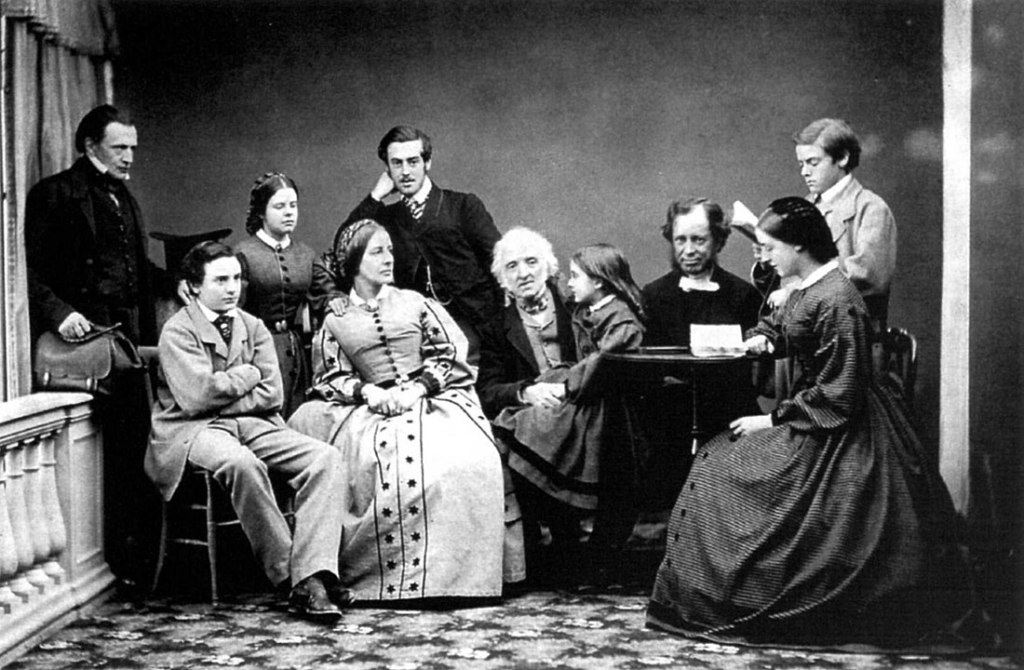
1862. William Gibbs (centro), el devoto cristiano que construyó Tyntesfield con el dinero que obtuvo de los miles de esclavos chinos que fueron trabajados hasta la muerte en las áridas islas tóxicas frente a la costa de Perú

He escrito varias veces sobre Tyntesfield, la casa señorial cerca de Bristol que hoy en día es propiedad del National Trust. William Gibbs hizo construir la casa a mediados del siglo diecinueve con los ingresos que obtuvo del trabajo forzado de miles de chinos secuestrados y esclavizados. Ninguno de ellos sobrevivió. Todos fueron trabajados hasta la muerte, décadas después de la abolición oficial de la esclavitud en el Reino Unido. 

Los esclavos eran utilizados para extraer excrementos de aves (guano) en las islas del Pacífico Sur. La gran idea de importar guano al Reino Unido no se le ocurrió a Gibb hasta 1840. En sentido estricto la idea no vino de él sino de su agente en Lima. Al principio, le parecía a Gibbs un proyecto descabellado y poco rentable. Pero, antes de que él pudiese decir que no, el agente había firmado un acuerdo para comprar el guano del gobierno peruano. Por suerte, Gibbs había subestimado la manía victoriana por la jardinería. El guano se vendía como pan caliente, por decirlo así.

Se obtenía el guano de las islas Chincha, situadas frente a la costa peruana. En aquel entonces estaban cubiertas de una capa de treinta metros de profundidad de excrementos de aves marinas, en su mayoría los de los pájaros bobos, los llamados alcatraces piqueros. Había millones de toneladas listas para llevárselas.

En cantidades limitadas el guano, lleno de nitratos, fosfatos y potasios es un fertilizante ideal. Pero, su enorme concentración en las islas Chincha las convertía en áridos y cáusticos entornos muy dañinos a la salud de cualquier ser humano expuesto a ellos a lo largo de un período prolongado. Nada florecía en condiciones tan ácidas y hostiles, mucho menos los hombres que fueron mandados a la fuerza a trabajar allí.

Al principio, las excavaciones fueron llevadas a cabo mayormente por presidiarios, desertores del ejército peruano recapturados y esclavos. De esta manera el gobierno peruano mantuvo el coste de producción a un nivel mínimo e hizo que la extracción fuera lo más rentable posible.

En 1849, cuando se necesitaban mas trabajadores forzados se empezaba a introducir mano de obra china “contratada”, este término siendo un eufemismo para la esclavitud. Estos peones eran secuestrados o engañados y luego detenidos en barracones antes de ser transportados al Perú.

En el siglo decimonónico las estimaciones de la tasa de mortalidad entre los chinos raptados varían de investigador a investigador. Algunos estimaron que entre 1847 y 1859 murieron un 40 por ciento de estos culis (coolies en inglés) durante la singladura a las islas Chincha. Otros dijeron que más de dos tercios de los sobrevivientes fallecieron durante su período de “contratación”, la duración de un “contrato” siendo típicamente de unos 5 o 7 años. Además, si duraron al final del “contrato” los chinos se vieron forzados a continuar a trabajar hasta que cayeron muertos. (términos como contratación y contrato se utilizaban en un intento de evitar alegatos de esclavitud que podian haber traido ruina al negocio)

En 1860 se calculó que no sobrevivió ni un solo chino de los 4,000 transportados a las islas desde el comienzo de la industria. La brutalidad del sufrimiento de los chinos hizo que las islas tendrían menos de esclavitud y más de campos de concentración nazis. El salvajismo con el que se trataba a los chinos era bien conocido. Todos los testigos – y hubo muchos – atestiguaban que la disciplina consistía en flagelaciones y torturas.  A unos 25 kilómetros de la costa, era imposible que los esclavos escaparan nadando. El único método de evasión infalible fue él del suicidio. Según el Journal of Latin American Studies, un marinero norteamericano alegó que hubo un caso en 1853 en el que 50 chinos se cogieron de la mano y se lanzaron de un precipicio a su muerte en el mar.

Todas las tripulaciones de las docenas de barcos que acudían a las islas para llenar sus bodegas con los sacos llenos de guano comentaban sobre la barbaridad de las condiciones y habría sido imposible que ningún comerciante de guano no hubiera sido consciente de las condiciones infrahumanas que existían en las islas.

Por algún motivo perverso el National Trust sigue negándose a explicar de lleno que la riqueza de la familia Gibbs se deriva de la muerte de miles de esclavos chinos. ¿Acaso el National Trust se avergüenza de la historia de la casa, como si, al haberla comprado, fuera inevitablemente cómplice, como los Gibbs, de los horrores ocultos de su pasado, o es simplemente que les gustaría aferrarse al cuento de hadas que han contado durante años sobre el amable hombrecito cristiano que hizo su dinero vendiendo caca de pájaro? Bajo presión, The National Trust admite ahora que «las condiciones de vida eran deficientes» para los chinos que vivían en «condiciones similares a la esclavitud». Esto es como decir de Auschwitz que las cosas ahí eran difíciles para los judíos. Sólo podemos esperar que algún día, alguien con interés en la verdad herede el puesto de director de la Trust.

Mientras tanto, para el resto de los que actualmente están en la cúpula del National Trust (que tal vez simplemente no se imaginan cómo se trabajaba hasta la muerte a los chinos), hay un interesante documental de televisión sobre las condiciones de trabajo actuales en la industria del guano. En junio de 2019 el canal de noticias y documentales Al Jazeera realizó un programa llamado Perilous Jobs in Peru (Trabajos peligrosos en Perú), parte de su serie Risking it all (Arriesgándolo todo):  Perilous Jobs in Peru | Poverty and Development. El programa mostraba que la industria de recoger el guano continua, aunque hoy en día está regulada. Aun así, los trabajadores que eligen este trabajo lo encuentran casi insoportable. Los realizadores del programa visitaron la isla de Asia, un sitio rocoso y esteril, situado a un par de kilómetros de la costa de Perú. Aquí se mina el guano. Muchos de los hombres que vienen aquí a trabajar solo lo pueden aguantar un mes, algunas veces solamente una semana. Son jóvenes de la montaña, gente en buena forma física que está acostumbrada a un fuerte trabajo manual. Vienen bien equipados. Ganan el doble del salario mínimo y reciben casa y comida gratis. Pero no hay agua dulce en la isla y tienen que conformarse con 8 litros diarios para lavarse y hacer la colada. Cada siete días un barco trae más agua. Por el calor ecuatorial, el trabajo comienza a las 5 de la madrugada. La excavación del guano se hace a mano porque el uso de excavadoras mecánicas espantarían a los pájaros. Los hombres usan picos porque el guano se ha endurecido como si fuera cemento. El polvo es muy irritante, el olor amoniacal es casi insoportable y causa daño a los pulmones incluso en dosis pequeñas. El proceso de cribar el guano para eliminar las piedras y las plumas y después empacarlo en sacos produce nubes de polvo. Para protegerse del polvo los hombres se cubren la boca con pañuelos. El gobierno les da mascarillas pero no pueden respirar a través de ellas porque se atascan con el polvo. Asimismo los hombres prescinden de las viseras de plexiglás porque estas no sirven para nada con la cantidad de mugre que se acumula encima. El guano y la cantidad de insectos que viven dentro de la caca causan daños tanto al interior como al exterior del cuerpo. La isla rebosa de garrapatas que chupan la sangre. El guano sí mismo produce una reacción alérgica en la piel.  En poco tiempo los brazos y las piernas de los trabajadores están cubiertos de llagas y picaduras. Los hombres cosechan sobre 50 toneladas al día, durante el cual cada uno de ellos lleva 100 sacos de 50 kilos cuesta arriba a la plataforma de carga. Una vez terminada la jornada no hay nada que hacer en la isla. Uno de los hombres comentó con una sonrisa irónica que la isla parecía una cárcel.

Sin duda, no es difícil comprender que los hombres chinos desnutridos que fueron metidos a la fuerza en las bodegas de los barcos-prisión y llevados al otro lado del Pacífico y liberados en su estado debilitado en las islas del guano, sin equipo de seguridad, ropa de protección o instalaciones de lavado y luego con una dieta insustancial, sucumbirían fácilmente a las condiciones infernales y a la violencia física que se ejercía regularmente. No podían vivir más de unos meses o un año como máximo. Simplemente se les hacía trabajar hasta la muerte.
Understanding Tyntesfield. The Al Jazeera programme, Perilous Jobs in Peru.

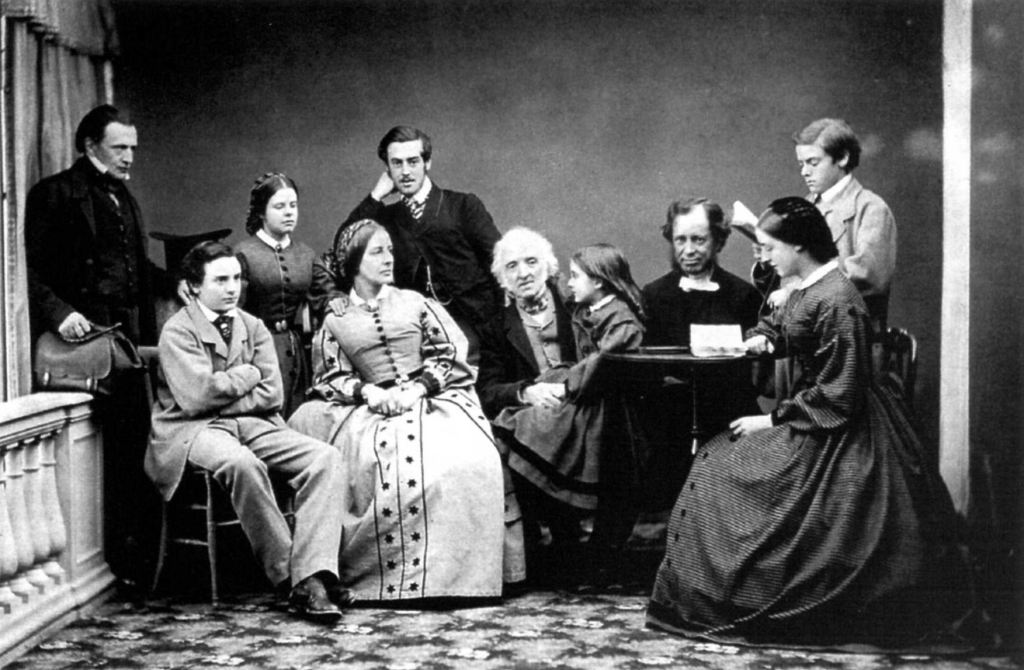
1862. William Gibbs (centre), the devout Christian man who built Tyntesfield from the money he made from the thousands of Chinese slaves who were worked to death on barren toxic islands off the coast of Peru.

I have written several times about Tyntesfield, the National Trust property near Bristol that was built from the money made by William Gibbs from the labour of thousands of Chinese slaves who were worked to death in the mid nineteenth century, decades after slavery was officially abolished in Britain. 

The slaves were used to mine bird droppings (guano) on islands in the South Pacific. The great idea of importing guano into the United Kingdom occurred to William Gibbs’ agent in Lima in 1840. In the beginning, the project seemed hare-brained and unprofitable to Gibbs. But, before he could say no, the agent had signed an agreement with the Peruvian government to buy the guano. Luckily for Gibbs, in Victorian times there was an extremely lucrative demand for all things which boosted horticultural production and the bird droppings proved to be a powerful fertiliser. The guano sold like hot cakes, for want of a better expression.

The guano was obtained from the Chincha Islands, situated off the Peruvian coast. At that time they were covered in a layer of seabird droppings some thirty metres thick, mainly the excrement of Boobies, the so-called blue-footed albatross. There were millions of tons ready to go.

In limited quantities, the guano, full of nitrates, phosphates and potassium is an ideal fertiliser. But its enormous concentration on the Chincha Islands made them a caustic environment, very harmful to the health of any human being exposed to it for a prolonged period. Nothing flourished in such hostile and acid conditions, least of all the men who were forced to work there.

At the beginning the digging was mainly done by prisoners, recaptured deserters from the Peruvian army and slaves. In this way the Peruvian government kept the cost of production to a minimum and made the venture as profitable as possible.

In 1849 when replacement workers were needed (presumably because the original ones had perished), they began to import “indentured” Chinese labourers, kidnapped or duped in China and held in barracks until they were transported to Peru in prison ships reminiscent of those used to carry black slaves from Africa to Latin America.

In the 19th century, estimates of the mortality rate of these Chinese forced labourers varied from investigator to investigator. Some estimated that between 1847 and 1859, 40% of these coolies died on the sea journey to the islands. Others said that two thirds of those who survived the crossing died during their “indenture”, the duration of said “indenture” lasting 5 or 7 years. Moreover, if they lasted to the end of the “contract” the Chinese were forced to continue working until they dropped dead. (Words like indenture and contract were used in an attempt to avoid allegations of slavery which could have ruined the business).

In 1860 it was calculated that not one of the 4,000 Chinese who had been transported to the islands since the beginning of the industry had survived. The brutality of the suffering of the Chinese made the islands more like Nazi concentration camps and less like the traditional slave plantations. The savagery of the regime with which the Peruvians governed the workers was common knowledge. All the witnesses — and there were many — attested that discipline consisted of whipping and torture. And there was no escape. At a distance of 25 kilometres from the coast it was impossible to swim to the mainland. The only infallible escape was suicide. According to the Journal of Latin American Studies an American sailor alleged that there was a case in 1853 in which 50 Chinese linked hands and jumped from a precipice to their death in the sea.

All the crews of the dozens of boats that came to fill their holds with the sacks of guano commented on the barbarity of the conditions and it would have been impossible for any dealer in guano not to be aware of the subhuman conditions that obtained in the islands.

For some perverted reason, the National Trust continues to refuse to fully explain that the Gibbs fortune was based upon the death of thousands of Chinese slaves. Does the NT feel somehow ashamed of the history of the house as if, having bought the place, they are, like the Gibbs family, inevitably complicit in the hidden horrors of its past or is it simply that they’d really like to hang on to the fairy tale that they have told for years of the nice Christian man who made his money from selling bird poo? Under pressure, The National Trust now admits that “living conditions were poor” for the Chinese who lived in “slavery-like conditions”. This is like saying that in Auschwitz things were tough for the Jews. We can only hope that one day, somebody with an interest in the truth will inherit the job at the top of the Trust. 

Meanwhile, for the rest of those currently at the top of the National Trust (who may simply have no imagination of how the Chinese were worked to death), there is an interesting TV documentary on the current working conditions in the guano industry. In June 2019 the news and documentary channel Al Jazeera made a programme called Perilous Jobs in Peru in their series Risking It All. Perilous Jobs in Peru | Poverty and Development . It showed that the industry of harvesting bird droppings continues but is no longer unregulated. Even so, the work is still almost unbearable for those who volunteer for the job. The programme makers visited Asia island, a barren rocky place, a couple of kilometres off the Peruvian coast. Guano is mined here. Many men who come to work here for the first time only stay for a month, sometimes they can only stand it for a week. These are fit young men from the mountains who are used to tough manual labour.  They come well equipped.  They earn double the minimum wage and are also fed and housed for free. But there is no fresh water on the island and they have to make do with 8 litres a day for washing and laundry. A boat makes a weekly delivery of water. Work starts at 5 am because of the equatorial heat. The digging is all done by hand as machines would scare off the birds. The men use picks because the guano has set as hard as cement. The dust is very irritating, the ammoniacal smell is almost unbearable and even short periods of exposure to it will damage lungs. Sifting out feathers and stones and packing the dung into sacks produces clouds of dust. To combat this the men wear scarves over their faces. The government provides masks but the men don’t use them as they clog up with dust so they cannot breathe. Likewise they dispense with the perspex goggles that are provided as they cannot cope with the volume of grime. The guano and the insects that live in it are damaging to the inside and outside of the human body. The island is swarming with ticks which suck the blood of the workers. The guano itself produces an allergic reaction on their skin. In no time at all the arms and legs of the workers are covered in bites and sores. The men harvest about 50 tons a day, during the course of which each man carries 100 sacks weighing 50 kilos uphill to the loading platforms. Once work is over for the day there is nothing to do. One of the men commented with an ironic smile that the place was like a prison. 

Surely it is not difficult to see how undernourished Chinese men who were thrown into the holds of prison ships and brought right across the Pacific and released in their debilitated state on to the guano islands without safety equipment, protective clothing or washing facilities and then given an insubstantial diet, would easily succumb to the hellish conditions and the physical violence that was regularly meted out. They could not have lived longer than a few months or a year at the most. They were simply worked to death.