
Not long ago an article appeared in El País in which the author examined the British custom of saying sorry all the time. She had read a study which established that we say it an average of eight times a day, although some of us do it up to twenty times. Instead of asking forgiveness for our behaviour (I am not an apologist for aspects of our culture), I would like to point out that this obsession can be used to therapeutic advantage.
In the eighties I used to work in a psychiatric day hospital. Our patients were not the florid psychotics who had to be detained for their own good or for the protection of others, but those who were suffering from affective disorders associated with dysfunctional personal relationships.
Our task in the hospital was to do everything possible to reduce the number of psychological problems that were clogging up GP surgeries. It is estimated that up to fifty percent of patients who turn up at the doctor’s have psychosomatic problems and this high percentage hampers GPs in their work of treating the more physical illnesses. There aren’t enough hours in the day for the average GP to attend and listen to the many patients who are demonstrating the signs and symptoms of a neurotic complaint.
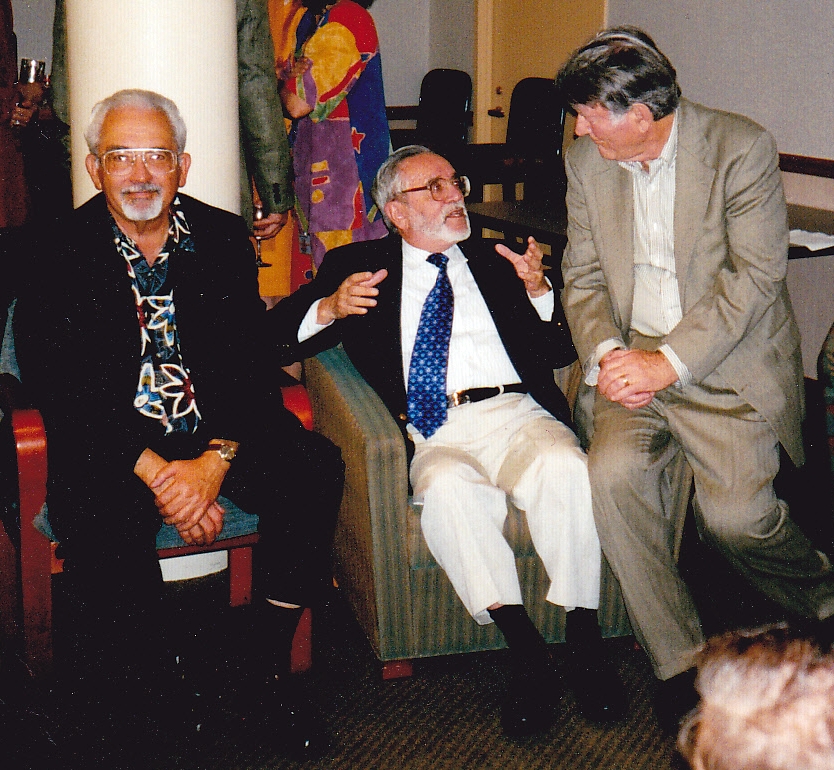
We used various methods to intervene in the lives of our patients. The most important was family therapy. We followed a model developed by Salvador Minuchin, an Argentinian psychiatrist of Judeo-Russian descent who practised in the USA during the second half of the twentieth century. He became famous in the seventies for the development of his structural family therapy which emphasised the inclusion of all members of the family, even the children. This incorporated a democratic element into all our interviews. Everyone, whatever their age, had a valid point of view regarding the smooth operation of the family and the subsequent recuperation of the afflicted individual. The premise was that everyone was part of the problem and everyone had to play a part in the resolution of the problem.
The role of the therapist was to integrate himself in the family and to direct questions to all the members in order to elicit the dysfunctional elements. At no time were the signs and symptoms of the identified patient tackled directly. We avoided all discussion of the peculiarity of the so-called sick person.
The inclusion of the whole family was conducive to the deconstruction of the rows which broke out habitually and which apportioned blame and concentrated anguish in one of the members. We concentrated on the day to day life of the family. Very often we focussed in on a banal episode which had given rise to a fierce yet inconclusive row.
One of the tricks we used was the apology. We combined this with mock sincerity. We would say things like, “You will have to excuse our ignorance. We haven’t the slightest idea what is going on here. Forgive us but it is too soon for us to have arrived at a conclusion”. We took advantage of the British pathological desire to excuse oneself and to be excused. In this country everyone is entitled to ask for pardon on any occasion for whatever offence we might have committed, however small it might be. It is a well-respected right. And our families always fell for it.
We never assumed the role of experts. We relegated ourselves to the same level as all the members of the family. This way they felt freer to express what they were thinking. This unleashed some rows, some of them pretty big. We never ever asked what the problem was because if the family had known what the problem was they would have solved it long ago.
We never criticised anybody. We simply reformulated negative characteristics as positive qualities. We would refer to an unintelligent or insensitive father as a practical man whereas an overbearing woman might become a good organiser. We would call a rude child funny or amusing.
We also took advantage of a universal human characteristic, that of being very susceptible to the power of contrasuggestion. That is, we are all somewhat rebellious and we all have a tendency to want to do the opposite of what we are advised.
Take this simple example. A family came to see us that had been to the GP’s surgery on many occasions. There was a young woman in the family who seemed to have lost her speech (the whole family turned up for the interview). Moreover, she had been in this condition for the past year. It was clear that the girl was not complaining of any physiological or medical symptoms and she hadn’t suffered any injury to her vocal chords. The family believed that she had gone mad but to us it was quite obvious that the girl had sunk into an elective mutism (that is, she hadn’t lost her speech, she had simply chosen not to speak). In the initial interview we apologised for not understanding the situation and, given that it had already gone on for a year, we predicted that there would not be a quick and easy answer and that they would have to accept our apologies and exercise a great deal of patience because our intervention might be a long while in producing a result. The girl was talking freely in just a few days.
The therapist never acted alone. The interviews were discretely filmed and the conversations with the families were transmitted live to a panel of doctors, social workers and psychiatric nurses who followed their progress remotely. The therapist always had an earpiece through which he or she could receive the observations, the instructions, the doubts and the questions of his or her colleagues.
I understand very well that our effusive apologies produce distaste and annoyance in certain countries. For example, if we do it in Spain our British good manners are counterproductive: so many pleases, thank yous and apologies sound ridiculous to the Spanish ear. We do it with the intention of ingratiating ourselves with our hosts but we shoot ourselves in the foot. We end up losing the respect of the people whom we are trying to impress.
But for us in the family therapy team, years ago in the psychiatric day hospital, the traditional British apology served us exceptionally well.
 Ingleses