Understanding Tyntesfield. The Al Jazeera programme, Perilous Jobs in Peru.

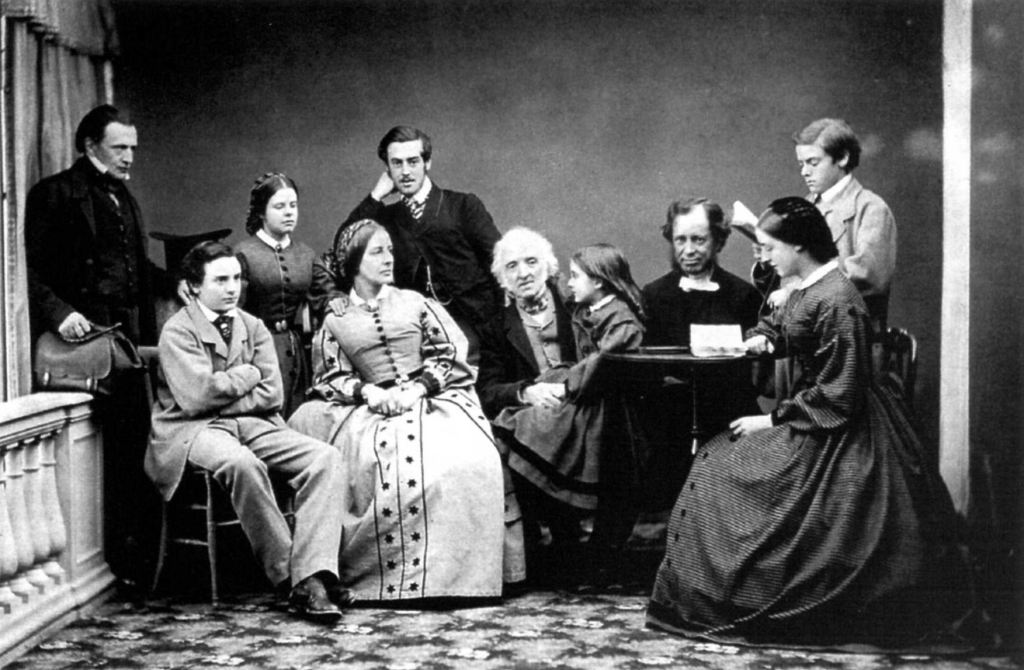
1862. William Gibbs (centre), the devout Christian man who built Tyntesfield from the money he made from the thousands of Chinese slaves who were worked to death on barren toxic islands off the coast of Peru.

I have written several times about Tyntesfield, the National Trust property near Bristol that was built from the money made by William Gibbs from the labour of thousands of Chinese slaves who were worked to death in the mid nineteenth century, decades after slavery was officially abolished in Britain. 

The slaves were used to mine bird droppings (guano) on islands in the South Pacific. The great idea of importing guano into the United Kingdom occurred to William Gibbs’ agent in Lima in 1840. In the beginning, the project seemed hare-brained and unprofitable to Gibbs. But, before he could say no, the agent had signed an agreement with the Peruvian government to buy the guano. Luckily for Gibbs, in Victorian times there was an extremely lucrative demand for all things which boosted horticultural production and the bird droppings proved to be a powerful fertiliser. The guano sold like hot cakes, for want of a better expression.

The guano was obtained from the Chincha Islands, situated off the Peruvian coast. At that time they were covered in a layer of seabird droppings some thirty metres thick, mainly the excrement of Boobies, the so-called blue-footed albatross. There were millions of tons ready to go.

In limited quantities, the guano, full of nitrates, phosphates and potassium is an ideal fertiliser. But its enormous concentration on the Chincha Islands made them a caustic environment, very harmful to the health of any human being exposed to it for a prolonged period. Nothing flourished in such hostile and acid conditions, least of all the men who were forced to work there.

At the beginning the digging was mainly done by prisoners, recaptured deserters from the Peruvian army and slaves. In this way the Peruvian government kept the cost of production to a minimum and made the venture as profitable as possible.

In 1849 when replacement workers were needed (presumably because the original ones had perished), they began to import “indentured” Chinese labourers, kidnapped or duped in China and held in barracks until they were transported to Peru in prison ships reminiscent of those used to carry black slaves from Africa to Latin America.

In the 19th century, estimates of the mortality rate of these Chinese forced labourers varied from investigator to investigator. Some estimated that between 1847 and 1859, 40% of these coolies died on the sea journey to the islands. Others said that two thirds of those who survived the crossing died during their “indenture”, the duration of said “indenture” lasting 5 or 7 years. Moreover, if they lasted to the end of the “contract” the Chinese were forced to continue working until they dropped dead. (Words like indenture and contract were used in an attempt to avoid allegations of slavery which could have ruined the business).

In 1860 it was calculated that not one of the 4,000 Chinese who had been transported to the islands since the beginning of the industry had survived. The brutality of the suffering of the Chinese made the islands more like Nazi concentration camps and less like the traditional slave plantations. The savagery of the regime with which the Peruvians governed the workers was common knowledge. All the witnesses — and there were many — attested that discipline consisted of whipping and torture. And there was no escape. At a distance of 25 kilometres from the coast it was impossible to swim to the mainland. The only infallible escape was suicide. According to the Journal of Latin American Studies an American sailor alleged that there was a case in 1853 in which 50 Chinese linked hands and jumped from a precipice to their death in the sea.

All the crews of the dozens of boats that came to fill their holds with the sacks of guano commented on the barbarity of the conditions and it would have been impossible for any dealer in guano not to be aware of the subhuman conditions that obtained in the islands.

For some perverted reason, the National Trust continues to refuse to fully explain that the Gibbs fortune was based upon the death of thousands of Chinese slaves. Does the NT feel somehow ashamed of the history of the house as if, having bought the place, they are, like the Gibbs family, inevitably complicit in the hidden horrors of its past or is it simply that they’d really like to hang on to the fairy tale that they have told for years of the nice Christian man who made his money from selling bird poo? Under pressure, The National Trust now admits that “living conditions were poor” for the Chinese who lived in “slavery-like conditions”. This is like saying that in Auschwitz things were tough for the Jews. We can only hope that one day, somebody with an interest in the truth will inherit the job at the top of the Trust. 

Meanwhile, for the rest of those currently at the top of the National Trust (who may simply have no imagination of how the Chinese were worked to death), there is an interesting TV documentary on the current working conditions in the guano industry. In June 2019 the news and documentary channel Al Jazeera made a programme called Perilous Jobs in Peru in their series Risking It All. Perilous Jobs in Peru | Poverty and Development . It showed that the industry of harvesting bird droppings continues but is no longer unregulated. Even so, the work is still almost unbearable for those who volunteer for the job. The programme makers visited Asia island, a barren rocky place, a couple of kilometres off the Peruvian coast. Guano is mined here. Many men who come to work here for the first time only stay for a month, sometimes they can only stand it for a week. These are fit young men from the mountains who are used to tough manual labour.  They come well equipped.  They earn double the minimum wage and are also fed and housed for free. But there is no fresh water on the island and they have to make do with 8 litres a day for washing and laundry. A boat makes a weekly delivery of water. Work starts at 5 am because of the equatorial heat. The digging is all done by hand as machines would scare off the birds. The men use picks because the guano has set as hard as cement. The dust is very irritating, the ammoniacal smell is almost unbearable and even short periods of exposure to it will damage lungs. Sifting out feathers and stones and packing the dung into sacks produces clouds of dust. To combat this the men wear scarves over their faces. The government provides masks but the men don’t use them as they clog up with dust so they cannot breathe. Likewise they dispense with the perspex goggles that are provided as they cannot cope with the volume of grime. The guano and the insects that live in it are damaging to the inside and outside of the human body. The island is swarming with ticks which suck the blood of the workers. The guano itself produces an allergic reaction on their skin. In no time at all the arms and legs of the workers are covered in bites and sores. The men harvest about 50 tons a day, during the course of which each man carries 100 sacks weighing 50 kilos uphill to the loading platforms. Once work is over for the day there is nothing to do. One of the men commented with an ironic smile that the place was like a prison. 

Surely it is not difficult to see how undernourished Chinese men who were thrown into the holds of prison ships and brought right across the Pacific and released in their debilitated state on to the guano islands without safety equipment, protective clothing or washing facilities and then given an insubstantial diet, would easily succumb to the hellish conditions and the physical violence that was regularly meted out. They could not have lived longer than a few months or a year at the most. They were simply worked to death.
Tyntesfield, Transparency and the Chinese Slave Trade (2)

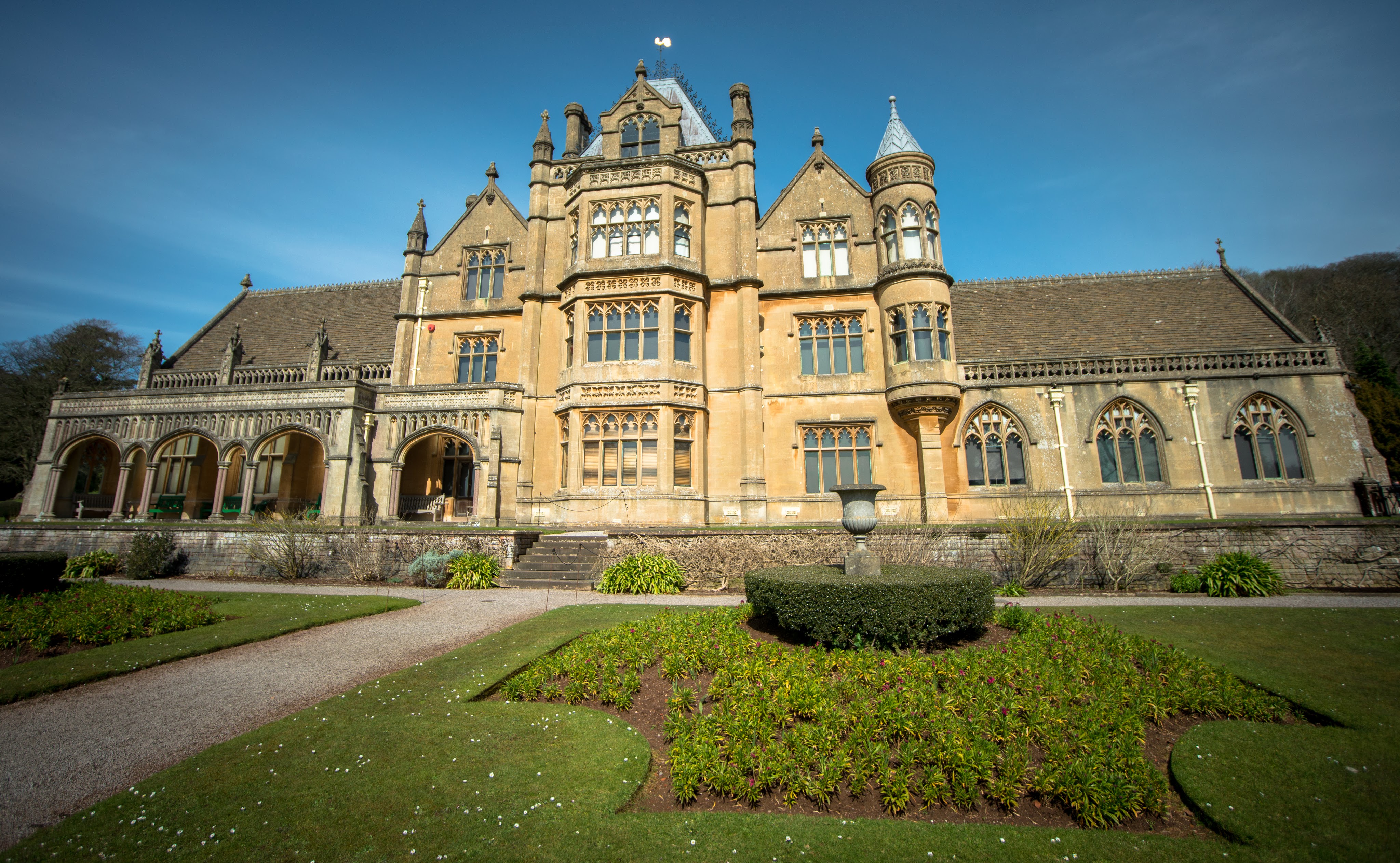
Photo by Bs0u10e01 from Wikimedia Commons: Front elevation of Tyntesfield, near Bristol UK

A few weeks ago, I watched Secrets of the National Trust, a Channel 5 programme on which the presenter, Alan Titchmarsh, was praising William Gibbs, the man who built Tyntesfield.

Titchmarsh described Gibbs as a marvellous Christian, a kind and respectable man who had amassed a fortune in a way that was as ingenious as it was comical: it had occurred to Gibbs to import into England an enormous quantity of bird poo from Peru, and he had done so some 74 years before the opening of the Panama Canal. He had brought hundreds of thousands of tons of excrement more than 12 thousand miles by sea from Peru to England and he had sold it for a mint. What an ingenious and inoffensive man!

I wrote to the National Trust and to Channel 5 saying that it was worth pointing out that thousands of kidnapped Chinese miners had to die in a concentration camp in order that the Gibbs family could make the money to build its fabulous mansion and it was impossible that Gibbs was unaware of the working conditions of the men. It was common knowledge amongst the captains and the crews, the exporters’ agents (Gibbs was only one of many international exporters), journalists and diplomats. There even existed photos and sketches of the kidnapping, abuse and torture of the Chinese.

The History of the Peruvian Guano Industry is a good summary of events and is to be found on the WordPress blog, Jeff’s Travels at https://yaffle53.wordpress.com/2014/05/22/a-history-of-the-peruvian-guano-industry/. It includes photos and drawings from the time.

Gibbs knew what he was doing but he felt protected by Victorian Christian ethics. In the Great Britain of the 19th century racial inequality was an accepted fact. Yes, black slavery had been abolished but this did not mean that black people were the equals of whites. They were the recipients of the abolitionists’ sympathy but, at the end of the day, they belonged to an inferior race. They didn’t deserve to be treated as animals but that didn’t mean that they had the right to consider themselves the equals of the white man. It was the same with the Chinese.

From this general belief in the inferiority of other races, it was a short step to contempt. And contempt for other human beings leads rapidly to an indifference to their fate and what they might suffer before their death.

As a good Christian, William Gibbs prayed to God and was guided by Him. Everything formed part of the Lord’s eternal plan for the development of the World. According to the logic of the day, God had created the animals to serve human beings and had created the inferior human races to be instructed and dominated by the whites. Unfortunately, would have to give their lives for the greater good of humanity (that’s to say, white humanity) and in this way fulfil the wishes of our Maker.

I received replies from the customer service desks of Channel 5 and the National Trust. Both responses tend to be somewhat formulaic: they are written in the language of public relations; they are designed to have a soothing effect; they employ euphemisms instead of calling things by their name.

The spokesperson for the National Trust wrote:

“We are aware that across the National Trust we have more work to do to address the sources of wealth at the places we look after. This programme was filmed 2 years ago and followed the way that, at that time, the story of the house and family was presented by us. We are now accelerating the work we are doing across all National Trust properties to research and highlight links to colonialism and slavery and how the wealth was acquired that built and furnished them. At Tyntesfield we are now working to do more to talk about the horrific history of the guano industry and how it brought wealth to the Gibbs family. For example, last year the property hosted an exhibition of photography by Olli Hellman, $tow High in Transit, which explored the disparity between Tyntesfield’s wealth and the decimation of the Chincha islands where the guano was mined. This display was a temporary exhibition, however, further interpretation is currently being researched to ensure that we can present an accurate, open and inclusive history of the property including the link to the guano industry.

In order to address your concerns we have spoken to Channel 5 who will be making you aware that they are adding an amendment to the episode for future broadcasts that reflects this position.

Finally, you may be interested to know that we are publishing a report in mid-September that highlights slavery and colonialism connections at National Trust places in England, Wales and Northern Ireland and which will also enable us to update property websites and on-site interpretation to take account of the report’s findings.

Thank you for taking the time to write to us, and for sharing your concerns, I hope you are reassured that we are fully committed to ensuring these stories are more fully and honestly told.”

She says that “This programme was filmed 2 years ago and followed the way that, at that time, the story of the house and family was presented by us.” Evidently, she has not read the 2020 guide to the National Trust in which it says that the house “was created for the Gibbs family to celebrate their achievements, raise their children and share their passions for family and faith” and the story of William is of “young love… a close-knit family and the making of a vast fortune”.

No, here in the present guidebook, there is no mention of the Chinese who were forced to work until they died.

The spokesperson also mentions the exhibition, $tow High in Transit, ten photographic juxtapositions which contrast the richness of the house and garden at Tyntesfield with the sterile and caustic surroundings of the Chincha Islands. These photos were exhibited on easels scattered around the house. They had neither captions nor explanations and they didn’t illustrate the life of the miners. In the absence of any other explanation it would have been very easy for a visitor to the house to conclude from the photos that William Gibbs was no less than a conjuror and a genius who had made a fortune to appear as if by magic and without causing anyone harm.

It’s even more difficult to believe that the National Trust has turned over a new leaf when they have just recorded, a few weeks ago, another programme about Tyntesfield in which they fall into the same old ways. This time they’ve collaborated with Channel 4. In the latest episode of George Clarke’s National Trust Unlocked they portray William Gibbs as a very successful merchant who made his pile selling a pile of bird poo. Once again, we see the same innocence and the same clichés, it strikes the very same “humorous note” and we hear the same old bowdlerised version of what really happened. How comforting.

Channel 5 sent me this:

“Channel 5 appreciates all viewer feedback and thank you for your letter and your observations about Tyntesfield, and its links with enslaved miners. We have looked into this. The programme was filmed more than a year ago and we were guided by The Trust and the way they, at that time, presented the story of the house and family. We don’t feel the programme was misleading, but we accept that it was unfortunate not to acknowledge the terrible situation of the workers who harvested the Guano. We understand that the Trust is now reappraising the way it presents its building’s stories, and is now accelerating work at its properties in researching and bringing to the public the wider world histories, and the sources of wealth that built and furnished them. To reflect this, we are adding a card to the programme to explain this element of the story and the Trust’s response. Secrets of The National Trust does have a quite light hearted approach to its stories on occasion, and mainly concentrates on the houses and their physical secrets, but over three series it has acknowledged the links to slavery and connections with Britain’s imperial past on many occasions. However, we regret that this was not done in this particular programme. Thank you for bringing this to our attention.”

I twice requested a clarification of the term “add a card” but the staff at Channel 5 couldn’t be bothered to reply. I believe that it means to insert a text, a commentary or perhaps a link with a web page.

The spokesman also claims that “it was unfortunate not to acknowledge the terrible situation of the workers who harvested the Guano.” To harvest is a verb which conjures up images of rural folk who reap fields of golden wheat or pick by hand the fruit and vegetables in a market garden. Harvest is not a verb that describes the reality of the miners on the Chincha islands who were forced to work in subhuman conditions until they died from exhaustion, torture and illness. The mere use of the verb indicates a lack of understanding on the part of the spokesman.

This is a central issue of the history of Tyntesfield. It is not sufficient to “add a card”. The programme should be recorded again in order to explain the true relationship between Tyntesfield and the way in which the funds were produced for its construction.