The Migration Museum

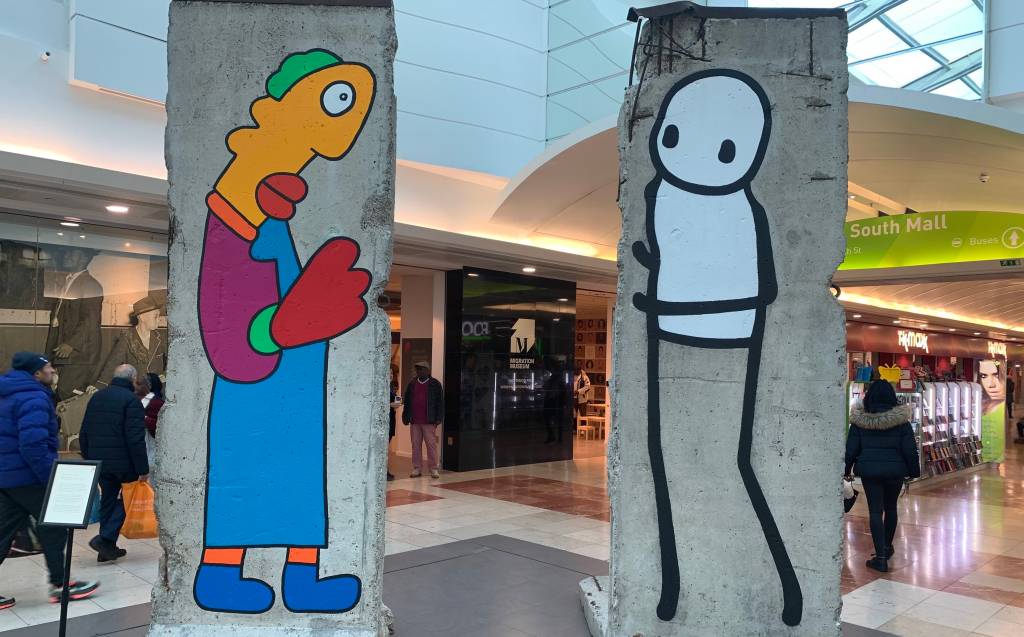
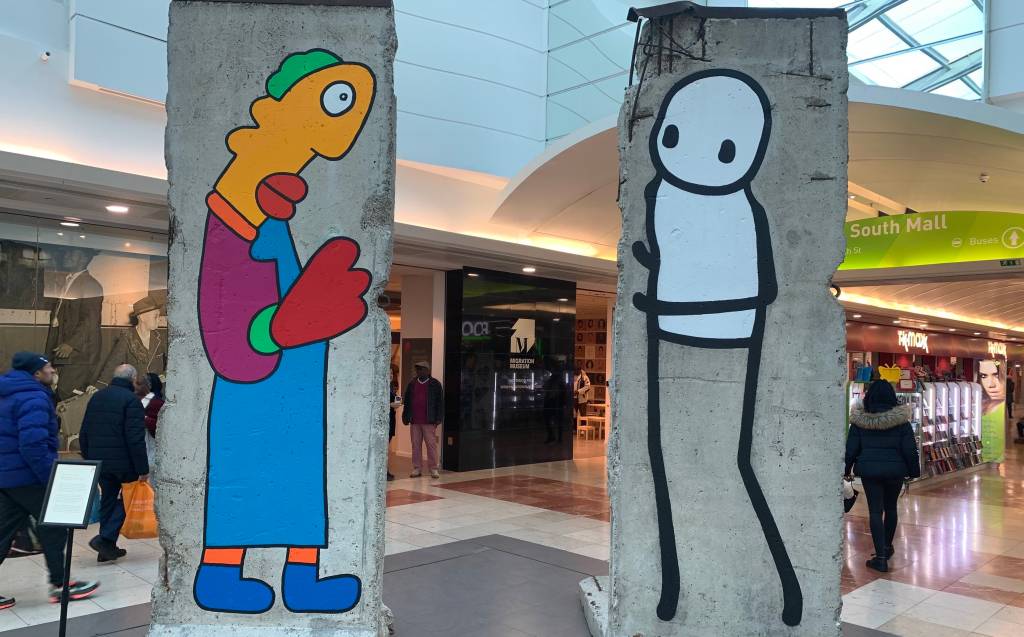
Entrance to the Migration Museum, Lewisham. 2 chunks of the Berlin Wall. Photo by Hanyu001 via Wikimedia Commons

You come out of this museum remembering positive things. Most of all you recall the love and respect that second and third generations of immigrants have for their parents and grandparents. And just how proud they are of the useful contribution all their relatives have made to this country.

The current exhibition, All Our Stories, «brings together the Migration Museum’s work over the past decade and more, alongside new stories that highlight just how central migration is to our lives».
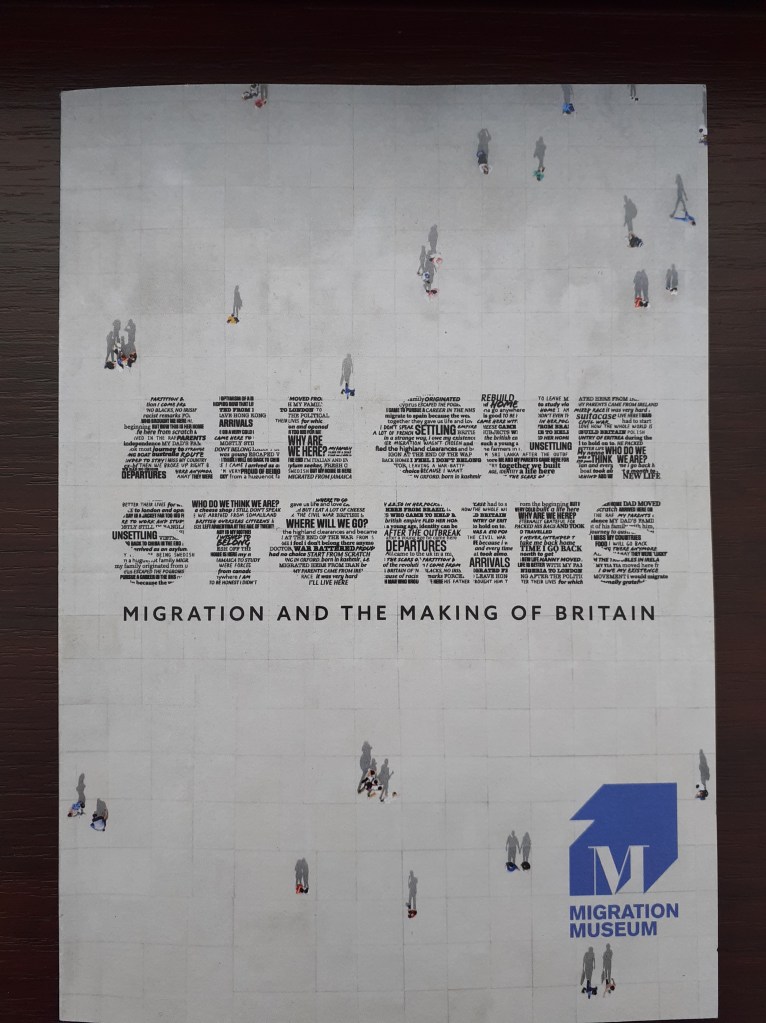
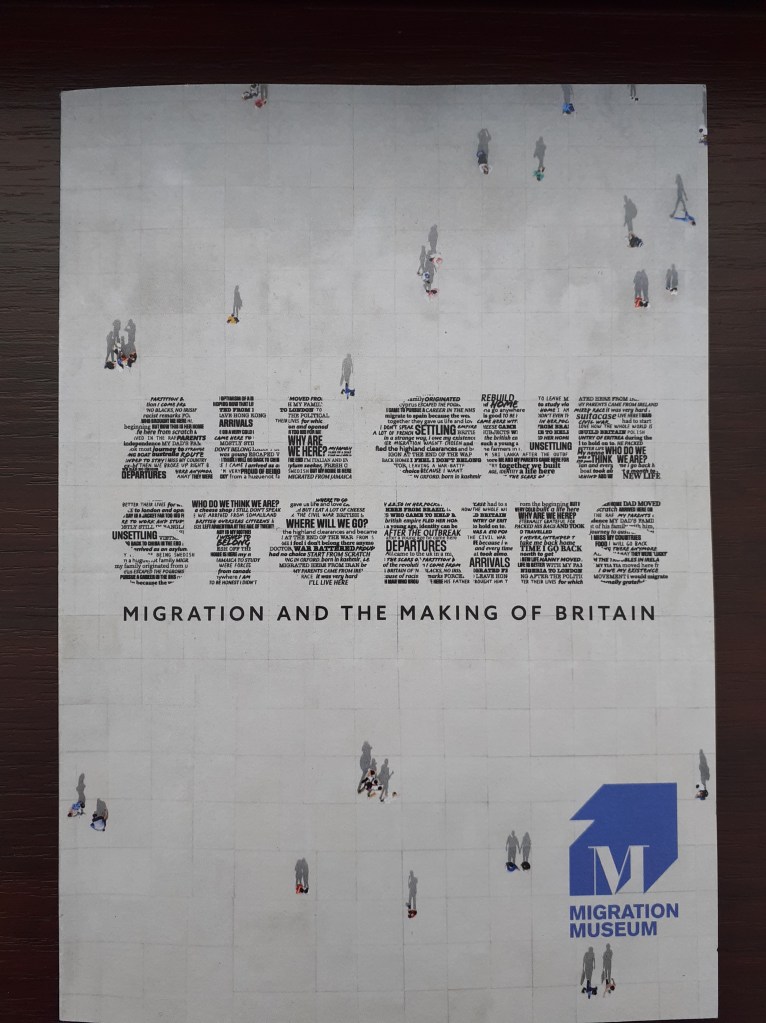
Exhibition booklet: All our Stories

The quote above is from the book All Our Stories that accompanies the exhibition. More than a pamphlet and less than a book, the 50-page publication will only cost you a donation, but buy it because it encapsulates everything about the subject and is an essential explanation of the spirit and nature of the museum. Its articles on the museum’s work are very succinct, distilled and informed and clarify the many terms that characterise the immigration debate.

The museum’s message is easy to assimilate.

As George Alagiah, the recently deceased BBC correspondent and presenter who was born in Sri Lanka, grew up in Ghana and became an adult in England, said, the museum is ‘a place where the story of Britain is told in all its colour and variety. A United Kingdom of peoples. That’s what the Migration Museum represents.’

That’s what the museum does: it focuses on the personal stories of migrants and their families. It shows that we are all the same, whatever our ethnicity, our colour or our religion. We are all members of one another.

Start your visit by watching the short film that has been prepared about the history of this little piece of cold land that was not even habitable until 10,000 years ago, the time when the ice melted and our ancestors were able to arrive from the European mainland. Yes, from the moment the first human set foot on this island, we are all immigrants. The film concludes by talking about the new arrivals from Ukraine. (Let us hope that finally our governments in the West will keep their word and give them the military aid they need so that they can do what they long to do: return to their own country. But that remains to be seen).

The museum avoids being rancorous and vitriolic. That doesn’t mean it shrinks from pointing out the shameful way we treat many immigrants and how we use them to divert attention away from our own political and economic failures. 

For example, the Chart of Shame exhibit, shows the front pages of the British press in the run-up to the notorious 2016 referendum on our continued membership of the European Union. It demonstrates that, instead of analysing the possible dire economic repercussions of excluding ourselves from the world’s largest trading bloc, the press helped turn the whole thing into a vote against immigrants. Liz Gerard, another journalist, made a collection of all the front pages of the national newspapers that year in which 287 of them carried a hostile headline indiscriminately aimed at the presence of more or less any foreigners in our country. 
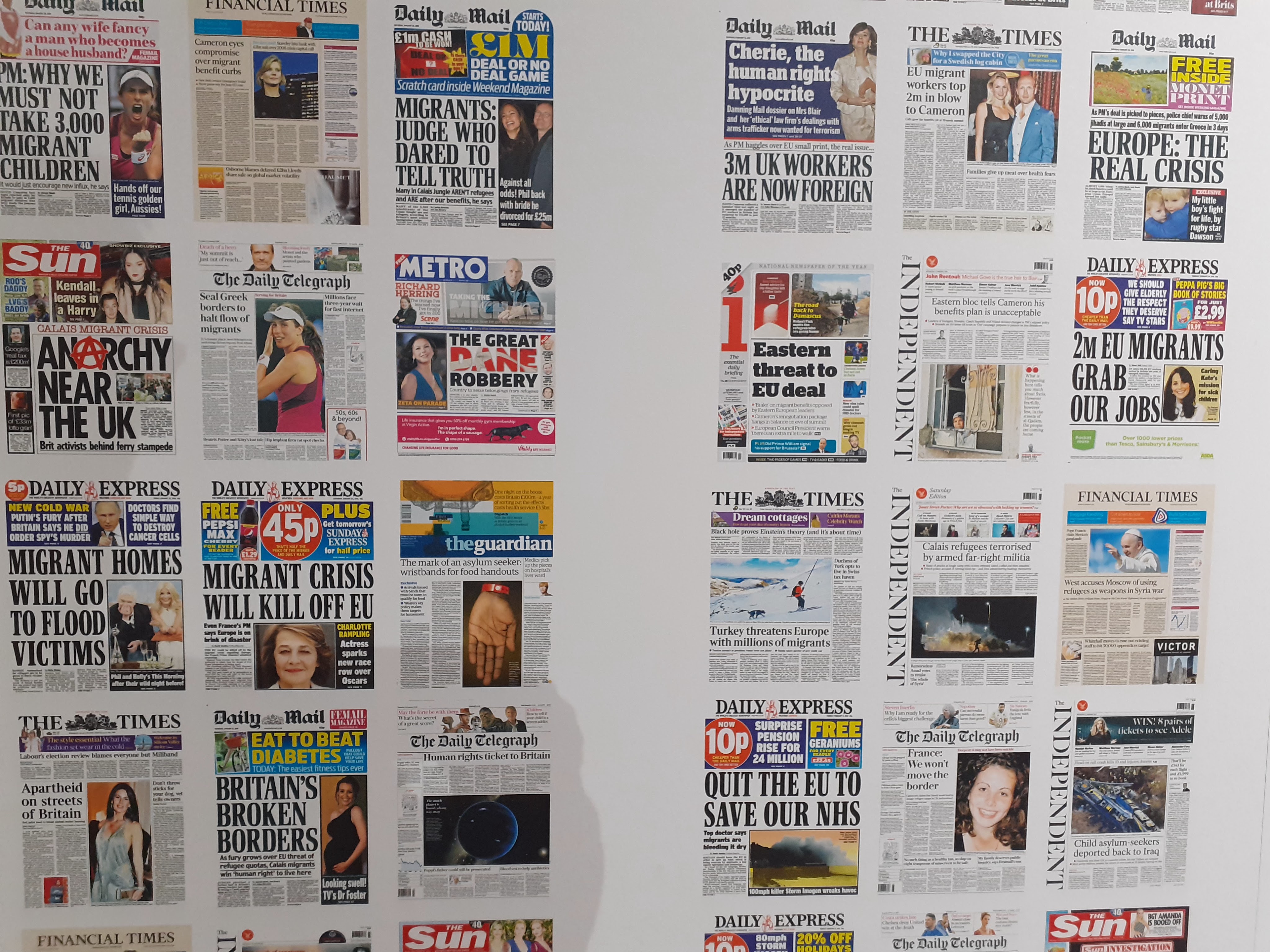
The Chart of Shame

Liz Gerard describes the attitudes of the headline writers as follows: «Journalists know very well the differences between EU and non-EU migrants, between refugees, asylum seekers and illegal immigrants – but some were, and still are, happy to create an overall impression of one amorphous mass hell-bent on invading our country and changing our way of life. It is easier to blame ‘the other’ than ourselves for all that is wrong in our society. And it shames my trade.»

The message of the museum is that the history of this country that the newspapers hand out is deliberately upside down and to make sense of it we have to turn it up the right way. Only then can we see that it is not true that migrants depend upon us, but that we depend upon them. In other words, without migrants, we will never achieve anything. They are the doctors and nurses in our National Health Service; they work in our laboratories; they are our scientists and inventors, our bus and taxi drivers, our musicians and authors; they are in charge of our hotel and catering industry; they are the staff of universities, teachers and professors; they are television presenters and correspondents; and they play an essential role across the whole range of British industry; they are factory workers, farm workers, home helps, and office and domestic cleaners. They comprise the majority of regular Premier League players of our national sport. So much so, that 9 of the 11 starters in the England squad for Euro 2024 were the children and grandchildren of immigrants. If they had been excluded from the national team only John Stones and Phil Foden would have been allowed to play.

The museum reminds us that millions of us have also left our home country and moved to other parts of the globe. We must never forget that we are all migrants, the British included. David Olusoga, the historian of slavery and racial discrimination, says on page 52 of All Our Stories that ‘one of the most astonishing and significant statistics on migration is perhaps the least known. Between the Battle of Waterloo in 1815 and the outbreak of the First World War in 1914, 22 million British people sailed off to become citizens of other countries or citizens of British colonies’.  

The museum does not engage in political campaigning. It does not offer solutions to the logistical problems faced by government and immigrants alike. The exhibitions limit themselves to bearing witness to the good and bad experiences of migrants. The museum does exactly what a good museum does: it teaches everything related to the central theme. But it steers away from being directly political.

The difference between this and a more traditional, historical museum is that the issues that are focused on and addressed here are present, current, happening now, real and burning, and many of them have yet to be resolved.

The thing I have never quite understood is why, for the most part, asylum seekers do not have the right to work while they are awaiting the resolution of their particular case, an embargo that produces a whole series of absurd problems. This percentage of migrants often arrive here penniless and homeless. The number of people stuck in this category varies from month to month but the government estimated at the end of March 2024 that, at that time, the number was over 117,000. Although the government does not give them money, it does accept the responsibility of housing these people and feeding them. This results in the creation of a private accommodation industry (not always of acceptable quality). Many asylum seekers wait more than a year for a decision on their future. During this period they are not allowed to look for work and the ensuing long wait can have a very demoralising effect. Also, this accommodation costs an arm and a leg, something that gives rise to resentment not only among British racists, but also among the ordinary public. At the same time as these asylum seekers have nothing to do, the UK is experiencing a long-term labour shortage. That is why the situation is absurd. 

However, the situation can be improved. It doesn’t have to be like this. It would be easy to give asylum seekers permission to work by giving them a social security number that would give them the opportunity to look for work and, hopefully, feel appreciated. At the same time the Ministry of Labour and Pensions could monitor their movements using the same number. Job vacancies would be filled, employees would receive a salary, find their own accommodation and pay their own rent. It would be a win-win situation.

Last but not least is the educational function of the museum. Every year thousands of primary and secondary school students pass through its classrooms where they learn the positive value of migration. In its new home in Fenchurch Street in the centre of the City of London in 2027 the museum will enjoy larger and more sophisticated teaching resources, capable of accommodating more than 20,000 students annually. It will also run, as it already does, teacher training courses, and more general programmes on social inclusion and integration.  

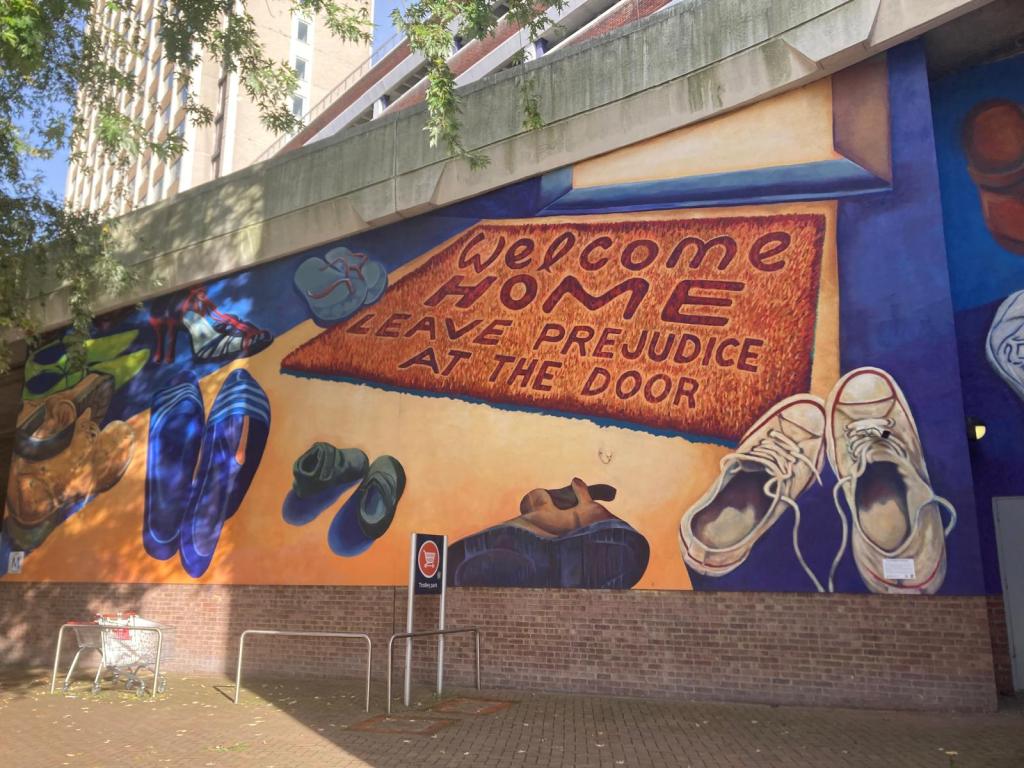
At the moment the museum is located in the Lewisham shopping centre in south-east London where it fits in well in this multi-ethnic neighbourhood. It is also easy to get to. It’s only 300 yards from the DLR.
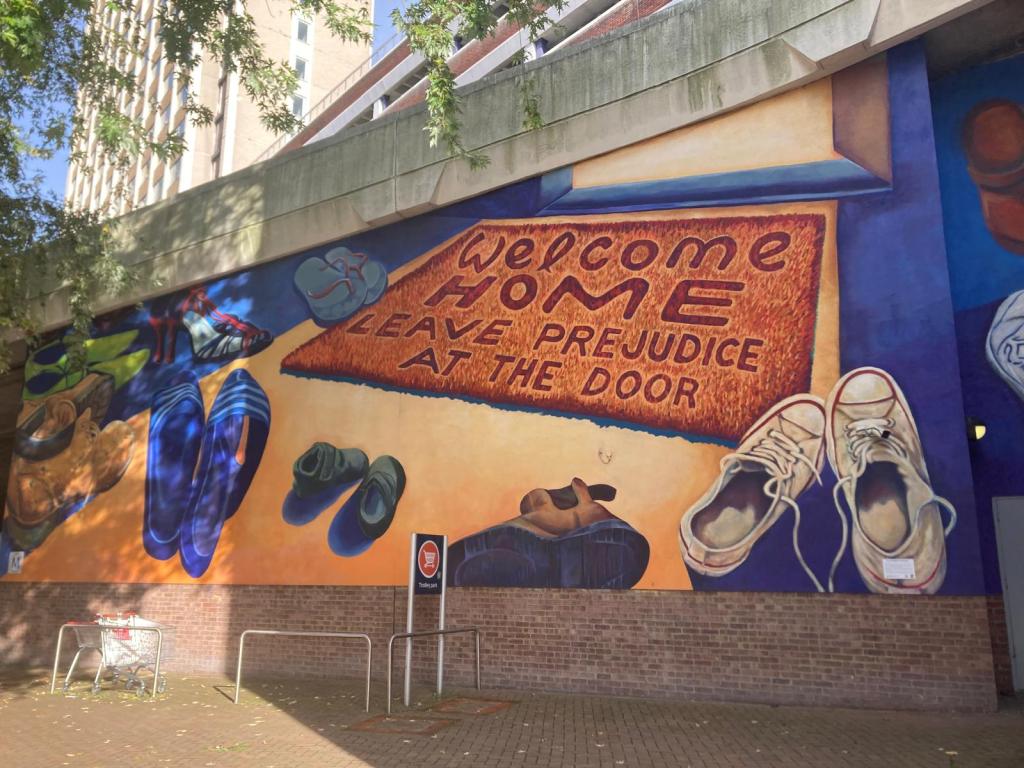
Mural on the outside of the shopping centra, Lewisham. Photo: Suzie Howell

But you don’t have to wait till 2027. Visit now and don’t miss the current exhibition. It is an antidote to the lies that are so destructively promulgated in the media. And don’t forget to visit the bookshop. They have a wide range of books on migration.

Links 

Migration Museum:  https://www.migrationmuseum.org/

The Centre for Global Development: #LiftTheBan: Why UK Asylum Seekers Don’t Have the Right to Work #LiftTheBan: Why UK Asylum Seekers Don’t Have the Right to Work | Center For Global Development
El Museo de la migración

Entrada del museo de la migración, Lewisham, Londres: dos fragmentos del Muro de Berlín. Foto: Hanyu001 en Wikimedia Commons

Sales de este museo recordando cosas positivas. Más que nada recuerdas el amor y respeto a sus padres y abuelos que tienen las segundas y terceras generaciones de inmigrantes. Y lo orgullosos que están de la aportación útil que todos sus parientes han hecho a nuestra sociedad.

La exposición actual, Todas nuestra historias (All our Stories), «reúne el trabajo realizado por el museo a lo largo de la última década, junto con nuevas historias y obras de arte que ponen de relieve la importancia de la migración en nuestras vidas.»

All our Stories (Todas nuestra historias)

La cita encima es del librillo Todas nuestra historias que acompaña la exposición. Más que un folleto y menos que un libro, la publicación de 50 páginas solo te costará una donación, pero cómpratela porque lo encapsula todo relacionado con el tema y es una explicación esencial del espíritu y naturaleza del museo. Sus artículos sobre el trabajo del museo son muy sucintos, destilados e informados, van al grano y clarifican los muchos términos que caracterizan el debate sobre la migración.

El mensaje del museo es de fácil asimilación.

Como decía George Alagiah, el recién fallecido corresponsal y presentador de la BBC que nació en Sri Lanka, creció en Ghana y se hizo adulto en Inglaterra, el museo es «un lugar donde se cuenta la historia de Gran Bretaña en todo su colorido y variedad. Un Reino Unido de pueblos. Eso es lo que representa el Museo de la migración.»

Eso es lo que hace el museo: se centra en las historias personales de los migrantes y sus familias. Demuestra que somos todos iguales, cualquiera que sea nuestra etnia, nuestro color o nuestra religión. Somos todos miembros los unos de los otros.

Estrena tu visita viendo el cortometraje que se ha preparado sobre la historia de este pequeño trocito de tierra fría que no fue habitable hasta hace 10,000 años, la época en la que se derritió el hielo y nuestros ancestros pudieron llegar desde la masa continental europea. Sí, desde el primer instante en el que el primer ser humano pisó esta isla, todos somos inmigrantes. La película concluye hablando de los recién llegados de Ucrania. (Esperemos que finalmente nuestros gobiernos en el oeste cumplieran su palabra y les diera la ayuda militar que les hace falta para que ellos puedan hacer lo que les anhela hacer: volver a su propio país. Pero eso se deja por ver.)

El museo evita ser rencoroso y vitriólico. Eso no quiere decir que se encoja a la hora de señalar la vergonzosa manera con la que tratamos a muchos inmigrantes y cómo los utilizamos para desviar la atención fuera de nuestros propios fracasos políticos y económicos. 

Por ejemplo, en la exposición Chart of Shame (La muralla de la vergüenza), se muestran las portadas de la prensa británica cara al notorio referéndum de 2016 sobre nuestra permanencia en la Unión Europea. Se demuestra que, en vez de analizar las posibles repercusiones económicas terribles de autoexcluirnos del bloque comercial más grande del mundo, la prensa ayudó a convertirlo todo en un voto contra los inmigrantes. Liz Gerard, otra periodista, hizo una colección de todas las portadas de los periódicos nacionales de aquel año en que 287 de ellas llevaban un titular hostil dirigido indiscriminadamente a la presencia de cualquier extranjeros en nuestro país.

La muralla de la vergüenza (The Chart of Shame)

Ella lo describe así: «Los periodistas entienden muy bien las diferencias entre migrantes de la Unión Europea y los de otros países del mundo; entre refugiados, solicitantes de asilo e inmigrantes ilegales – pero algunos periodistas se dieron el gusto de crear la impresión general de una masa amorfa empeñada en invadir nuestro país con la intención de cambiar nuestro modo de vida. Es más fácil echar la culpa al «otro» que asumir nuestra responsabilidad por todo lo malo de nuestra sociedad. Y es una vergüenza para mi oficio».

El mensaje del museo es que la historia de este país que nos ofrecen los periódicos está entregada patas arriba y para que tenga sentido hay que darle la vuelta. Solo entonces podemos ver que no es cierto que los inmigrantes dependan de nosotros, sino que nosotros dependemos de ellos. Es decir, sin inmigrantes, nunca vamos a conseguir nada. Ellos son los médicos y enfermeros de nuestro sistema nacional de salud, trabajan en nuestros laboratorios, son nuestros científicos e inventores, los conductores de autobuses y taxis, nuestros músicos y autores, están a cargo de nuestro sector de hostelería y restauración, son el personal de las universidades, profesores y catedráticos, son presentadores y corresponsales de la televisión, y desempeñan un papel esencial por toda la gama de la industria británica: son empleados de las fábricas, trabajadores agrícolas, ayudantes domiciliarios y limpiadores de oficinas y hogares. Constituyen la mayoría de los jugadores habituales de la Premier League de nuestro deporte nacional. Tanto es así, que 9 de los 11 titulares de la selección inglesa para la Eurocopa 2024 eran hijos y nietos de inmigrantes. Si se les hubiera excluido de la selección, sólo John Stones y Phil Foden habrían podido jugar.

El museo nos recuerda que también decenas de miles de nosotros, los mismísimos británicos, hemos dejado nuestro país de origen y nos hemos ido a vivir a otras partes del globo. Nunca debemos olvidar que somos todos migrantes. David Olusoga, el historiador de la esclavitud y la discriminación racial, dice en la pagina 52 de Todas nuestra historias que «una de las estadísticas más asombrosas y significantes es, tal vez, la menos conocida. Entre la batalla de Waterloo en 1815 y el estallido de la primera guerra mundial en 1914, 22 millones de británicos se zarparon para hacerse habitantes de otros países o ciudadanos de las colonias británicas».  

El museo no emprende campañas políticas. No ofrece soluciones a los problemas logísticos a los que se enfrentan tanto el gobierno como los inmigrantes. Las exposiciones se limitan a dar testimonio de las experiencias de los migrantes, tanto las buenas como las malas, El museo hace exactamente lo que hace un buen museo: enseña todo relacionado con el tema central. La única diferencia entre este y otro museo más histórico es que las cuestiones que aquí se enfocan y se abordan son presentes, actuales, están pasando ahora, son reales y candentes, y muchas de ellas quedan por ser resueltas.

La cosa que yo nunca he entendido bien es por que, en su mayor parte, los solicitantes de asilo no tienen el derecho de trabajar mientras que están esperando la resolución de su caso particular, un embargo que produce toda una serie de problemas absurdos. Este porcentaje de inmigrantes suele llegar aquí sin dinero y sin techo. El número de personas afectadas varía de mes en mes pero el gobierno estimaba, a finales de Marzo de 2024 que, en ese momento, la cifra ascendía a más de 117,000. Aunque el gobierno no les da dinero, el gobierno acepta la responsabilidad de albergar a estas personas y darles de comer. Esto resulta en la creación de una industria de alojamiento privado (no siempre de una calidad aceptable). Muchos solicitantes de asilo esperan más de un año para una decisión sobre su futuro. Durante este periodo no están permitido buscar trabajo y la consiguiente espera tan larga puede tener un efecto muy desmoralizante. También, este alojamiento cuesta un ojo, algo que da lugar a un resentimiento no solo entre los racistas británicos, sino también entre el público normal y corriente. A la vez que estos solicitantes de asilo no tienen nada que hacer, el Reino Unido experimenta una escasez de mano de obra a largo plazo. Es por eso por lo que la situación es absurda. 

Sin embargo la situación puede mejorarse. No tiene que ser así. Sería fácil darles permiso de trabajar, dándoles un número de seguridad social que les diera la oportunidad de buscar trabajo y sentirse útiles, y con suerte, apreciados. A la vez el ministerio de trabajo y pensiones podría controlar sus movimientos utilizando el mismo número. Así se cubrirían vacantes de empleo, los empleados cobrarían un sueldo, encontrarían su propio alojamiento y pagarían su propio alquiler. Sería una situación en la que todos saldrían ganando.

Finalmente pero no menos importante es la función educacional que desempeña el museo. Cada año miles de estudiantes de primaria y secundaria pasan por sus aulas donde aprenden el valor positivo de la migración. En el 2027 el museo se va a mudar a calle Fenchurch en el centro de Londres. En su nuevo hogar el museo disfrutará de recursos didácticos más amplios y sofisticados, capaces de acomodar más de 20,000 estudiantes anualmente. También, como ya lo hacen, se enseñarán cursos de formación del profesorado, y por supuesto, otros más generalizados sobre la inclusión e integración social.  

Por el momento el museo se encuentra en el shopping de Lewisham en el sureste de Londres, a solo unos trescientos metros de una de las terminales de la DLR*. Hay que decir que el museo se encaja bien en su hogar provisional en este barrio multiétnico del sureste de Londres. 

Mural en la parte exterior del shopping de Lewisham. Foto: Suzie Howell

Pero, no tienes que esperar hasta el año 2027. Visítalo ahora y no te pierdas la exposición actual. Es un antídoto a las mentiras que se van promulgando tan destructivamente en los medios. Y no te olvides de visitar la librería. Tienen un gran surtido de libros sobre la migración.

* El DLR es un sistema de tren ligero plenamente integrado en el sistema de transporte de Londres: el DLR comparte billetes con el metro y puedes moverte entre las dos redes sin obstáculo alguno; sus líneas aparecen en los mapas del metro como parte de la red. Todos los trenes del DLR son de conducción automatizada.

Links 

Migration Museum:  https://www.migrationmuseum.org/

The Centre for Global Development: #LiftTheBan: Why UK Asylum Seekers Don’t Have the Right to Work #LiftTheBan: Why UK Asylum Seekers Don’t Have the Right to Work | Center For Global Development