Overtourism in Cornwall is due to historical and literary factors and «good marketing»

It was the arrival of the railway that marked the beginning of tourism in Cornwall. The first line to London opened in 1859. Initially, it transported copper and tin ore, agricultural and dairy products, kaolin and fresh fish. The only passengers were businessmen and mine owners. During the 1860s, the copper and tin market collapsed dramatically as a result of new competition from South America, especially Chile. But as Cornwall’s mining industry declined, tourists began to arrive, holding out the possibility of a profitable future for railway companies.

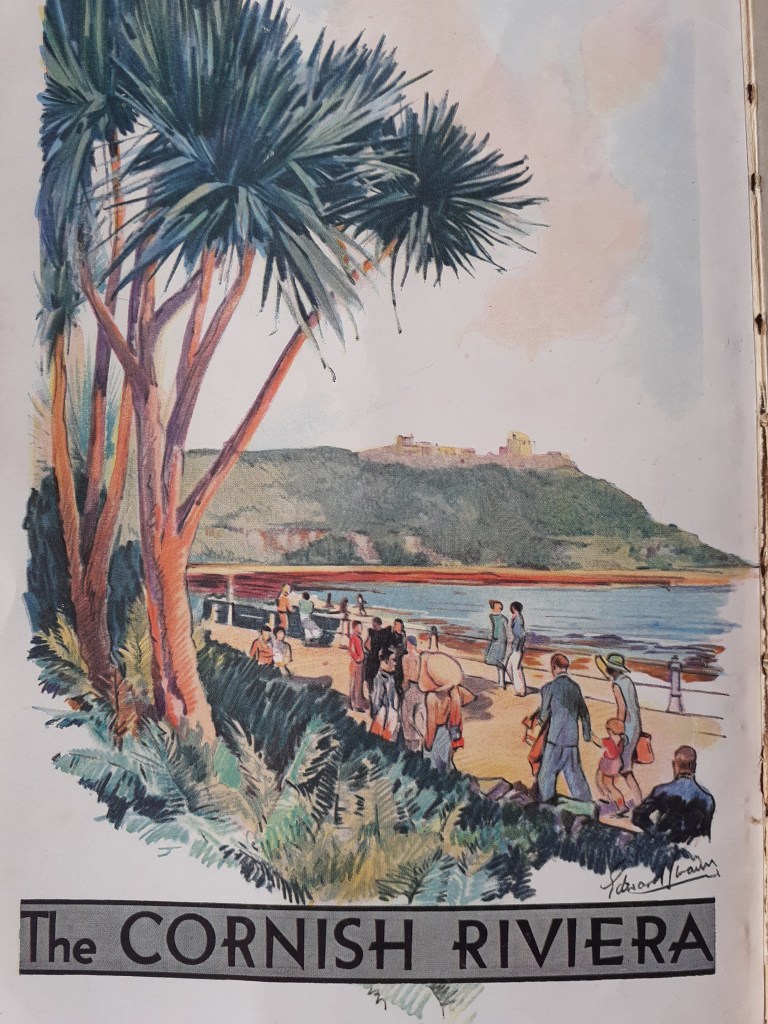
So it was that the Great Western Railway (GWR) did everything it could to promote this new socio-economic lifeline. In 1904, GWR coined the term “Cornish Riviera” and named one of its trains after it: the Cornish Riviera Express began service from London Paddington to Penzance in the same year, taking seven hours and twenty-five minutes to reach its destination.
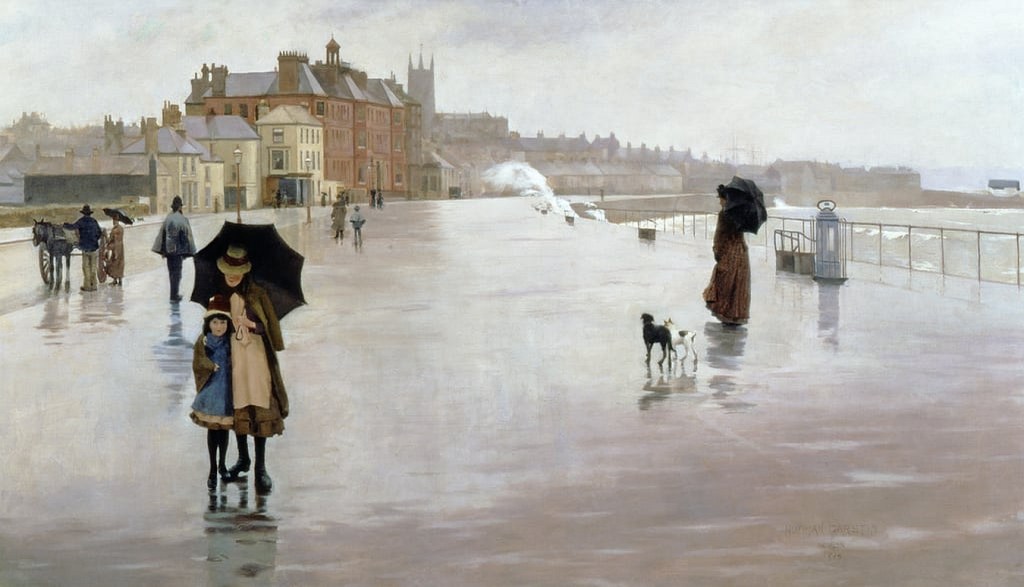
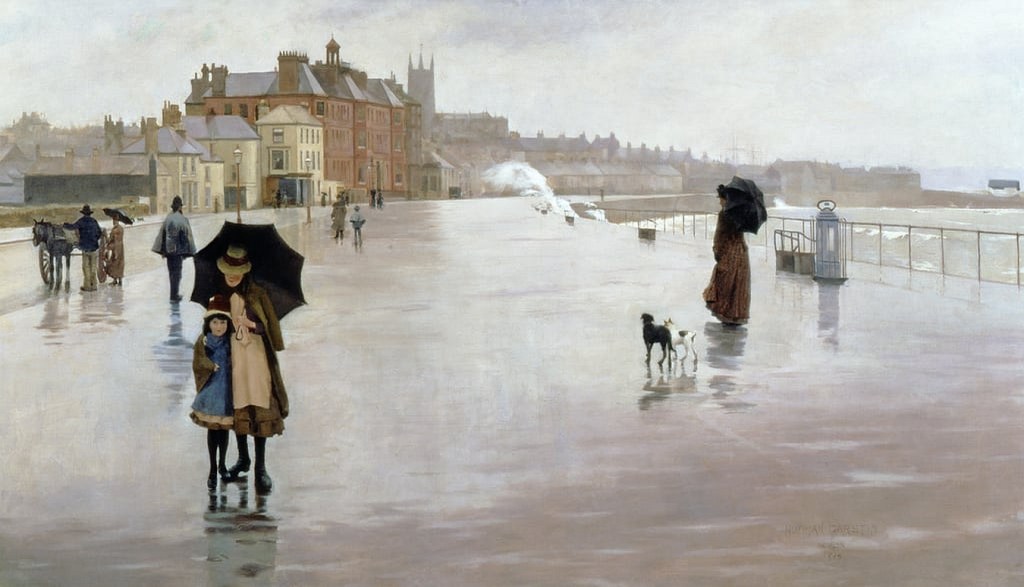
This painting by Norman Garstin is from 1889. and it is one of the best known portraits of Penzance. Note the theme of the painting. It is entitled, The Rain it Raineth Every Day. It’s a quote from Twelfth Night by Shakespeare (Act V, Scene 1, line 154)

In 1928, almost a hundred years ago, the GWR published its very own guide to Cornwall entitled ‘The Cornish Riviera’, which once again falsely implied that the climate of this part of southern England was similar to that of southern France.

The author of the book was full of praise for the county and made special mention of the climate, saying things like:

The simple truth is that in Falmouth it is as warm in January as it is in Madrid, and as cool in July as it is in Leningrad…..

Penzance is proving a formidable rival to Madeira, the Scillies to the Azores, and Mullion to Monte Carlo.

And so began a whole mythology about the climate of Cornwall.

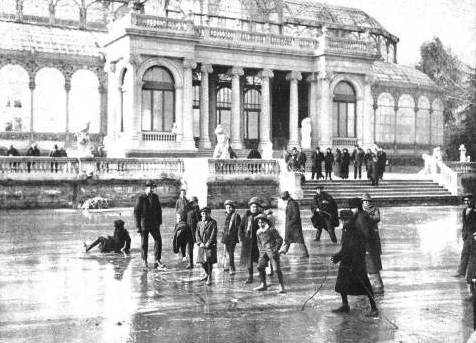
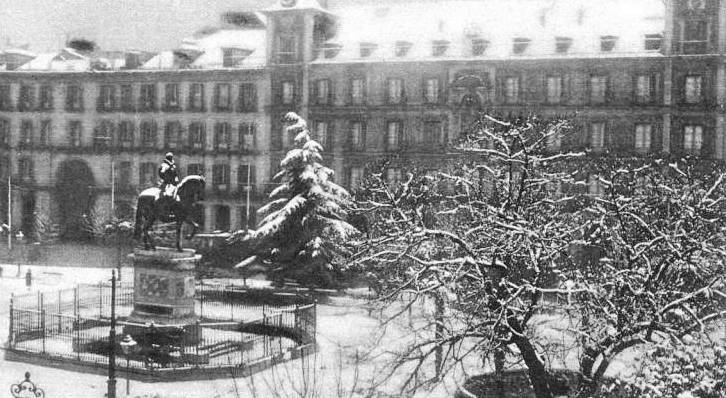
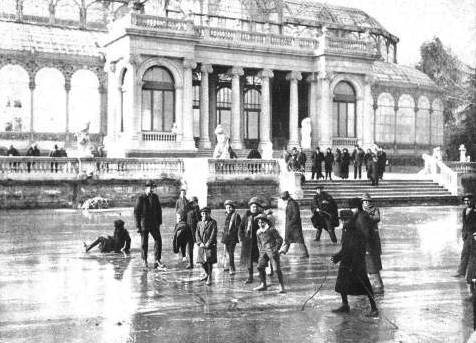
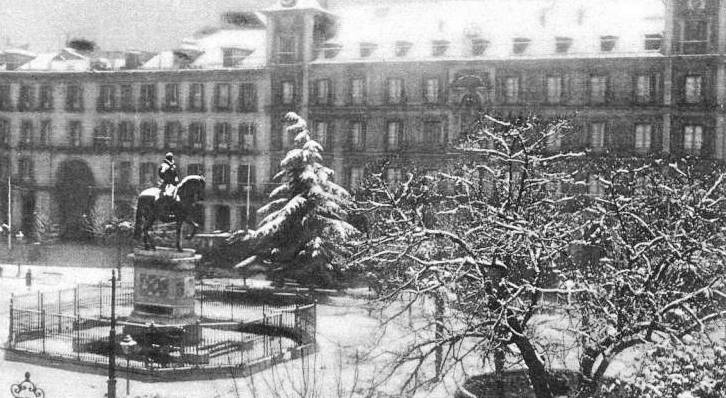
Oh dear! This was not only misleading, but also painfully inaccurate, and could even have damaged the GWR’s argument if the public had been more aware of the true nature of recent winters in Madrid. For example, in 1914, a few years before the publication of this book, January in Madrid was so cold that the lake at the Crystal Palace in the Retiro Park froze over, serving as an improvised skating rink for weeks. In the very winter of the book’s publication, the Spanish capital was once again covered in snow.
In southern England, the climate is generally wet but mild. Winters are cold and windy. However, there is a slight regional variation in the weather. There is always more wind and rain on the Atlantic coast, but the further east you go, the less rain you will find. In the town of Penzance, located near the western tip of the county, annual rainfall is around 1200 mm, while in the city of Norwich, located at the easternmost point of the country, annual rainfall is only around 732 mm. Also, in the south-east, summer temperatures are about 4 degrees Celsius higher than in Penzance. We are talking about average temperatures, but the actual difference in summer can be much more dramatic. One week in August, while we were on holiday on the Thames estuary, the temperature was 30 degrees: in Penzance, people were shivering in just 17 degrees.

But yes, it can be said that in Penzance the winter temperature reaches around 8 degrees Celsius, which is higher than in other towns further east. It is true that it rarely freezes in Penzance; it is not so cold that its imported Mediterranean plants die. That is why, technically, and only technically, the term subtropical can be applied to Cornwall. This technical term has been exploited unscrupulously by companies eager to sell holidays in the “subtropical paradise” of Cornwall. Woe betide anyone who arrives at their hotel in March expecting to spend the week lounging by the pool, sipping margaritas and surrounded by tropical jungle. The truth is that it is cold and it rains a lot. Remember the picture of the seafront? Norman Gaston has captured the essence of a typical winter’s day in Penzance.

However, local tourism boards, hotels, tourist offices and all social media insist on repeating the term like parrots, unable to understand its true meaning; although the facts categorically deny it, the myth of a Mediterranean or subtropical climate has stuck in the public’s mind.

A century after the advertising campaign launched by the GWR, Cornwall continues to enjoy the myth of its exotic climate. In fact, the myth has prospered. Cornwall has become such a desirable holiday destination that companies compete to associate themselves with it. What was once nothing more than a remote, rocky promontory perpetually shrouded in mist and drizzle, a poor Atlantic cape buffeted by the wind, is now portrayed in advertising as a sunny Shangri-La surrounded by blue seas, a paradise where time stands still in an atmosphere of peaceful excellence and value for money. If it had a corporate slogan, it would resemble the simple motto that the Galician regional government has been promoting for several decades: “Galicia, Calidade” (Galicia, Quality). No company does this better than Seasalt, a famous retailer of casual wear. Take a look at their website. But beware, although they are based in the Cornish town of Falmouth and their advertising only contains views of Cornwall captured on sunny days, their primary manufacturers are not Cornish; their garments are made in exactly the same places as those sold by their competitors: India, Turkey, China, Vietnam, Pakistan, Bangladesh, Sri Lanka and Bulgaria.

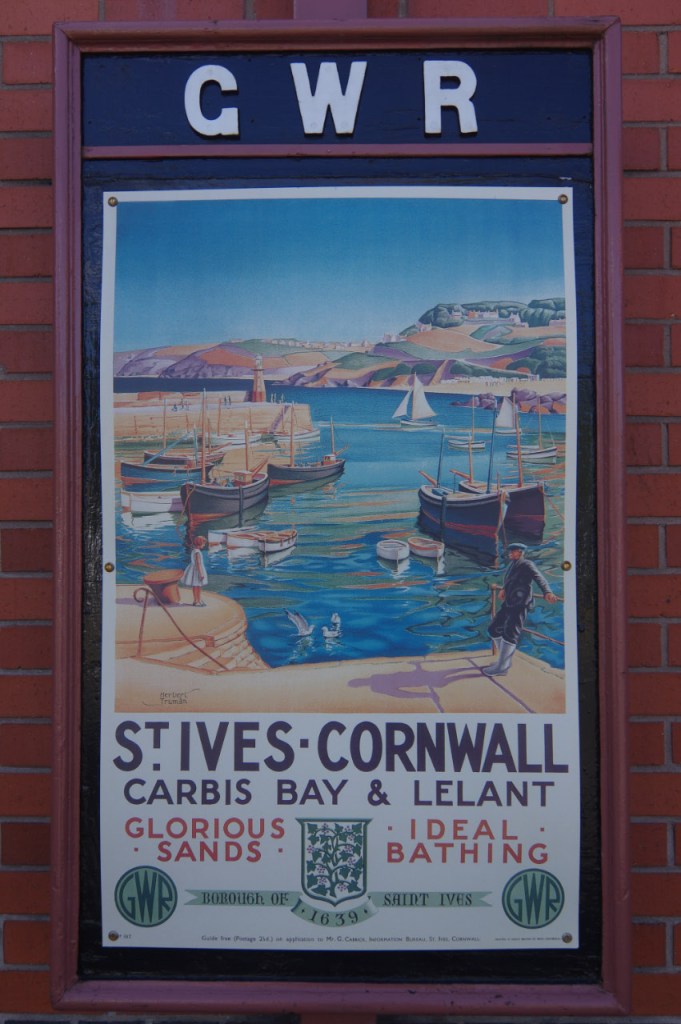
In the interwar period, the GWR was proud that its mode of transport was the fastest and most comfortable way for the new middle-class tourists to travel to their destination. However, the company was also increasingly aware that a new era was dawning and that it should not ignore the boom in the motor industry. As a result, it intensified its advertising campaigns. In addition to its collection of tourist guides to all of its destinations, GWR produced a series of posters in various styles that are still very famous in this country; hundreds of thousands of reproductions are still sold every year.
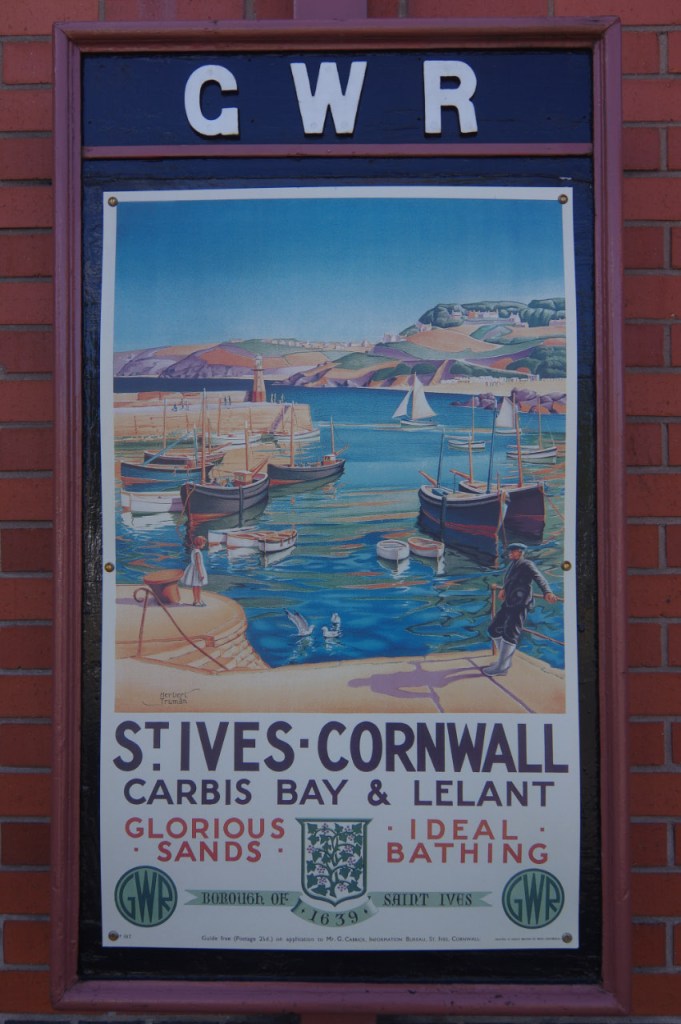
Photo: Stephen McKay via Wikimedia Commons

The romantic literature of the interwar years, especially the many novels by Daphne du Maurier set in Cornwall, helped to undermine the hegemony of the railway. The most famous of her novels are Jamaica Inn (1936), Rebecca (1938) and Frenchman’s Creek (1941).

During the Second World War, people enjoyed reading these literary creations, and in the years immediately following the cessation of hostilities, the idea of discovering the most remote areas of their own country by car captured the imagination of a whole new class of people: car owners. The best of these novels was Rebecca which was made into a film by Alfred Hitchcock in 1940. Shot in black and white, it is the cinema version most faithful to du Maurier’s chilling Gothic novel.

Both the novel and the film show the desperation of the villain, Maxim de Winter, in his mad insistence on driving his classic convertible car to London and back in a single day to consult his solicitor, crossing the entire south of the country in one go on the primitive and rather slow road network that existed in the 1930s. See the actual car here: https://imcdb.org/vehicle_62913-MG-SA-Tourer-Charlesworth-SA1407-1937.html . Chat gpt estimates that at that time, the one-way journey by car from St Austell, a fairly accessible town in Cornwall, to central London would have taken between 9 and 12 hours, or even longer. Of course, du Maurier wrote with poetic licence, but people believe what they want to believe, and the mere mention of the words “car” and “Cornwall” side-by-side, served to stimulate the ambitions of all new motorists. It gave the impression that such a trip was feasible. That’s not to say that everyone wanted to replicate Maxim de Winter’s feat, but with a few stops along the way in picturesque villages, Cornwall could be a great destination.

Then, to further whet the reader’s appetite, came the Poldark saga written by Winston Graham, a series of 12 novels published between 1945 and 2002. This saga has been not only one of the most phenomenal popular literary successes of the 20th century, but also one of the most watched series on the BBC. There have been 43 episodes across 5 television seasons.

The saga has it all. It is an informal history of Cornwall that deals with the events of the 18th and 19th centuries and the social relations of the time: the divisions between the landowning nobility, the poor people who work for them, the copper and tin mines, the conflicts between the owners and the miners, 19th-century politics, labour reform, the American War of Independence, the French Revolution and much more. It also includes the essential love triangle and all the possible conflicts engendered by inheritance. In other words, all the ingredients of a real soap opera. As for the popularity of the television series, the performance of the very handsome Aidan Turner, who played the role of Ross Poldark for the last few seasons, cannot be overlooked. The other major protagonists are the landscape and the weather: the raging seas, cliffs and storms reflect the inner turmoil of the characters and the untamed spirit of the region.

Another major «influencer» and contemporary of du Maurier and Graham was the famous North London poet John Betjeman. In 1908, at the age of two, Betjeman accompanied his family to Cornwall for the first time. From then on, they visited the same place every summer, accompanied by their maid. They stayed in the small village of Trebetherick in the north of the county. Although this village was closer to London than Penzance, the branch line was slower than the main line, so the steam train took up to nine hours to complete the journey from London Waterloo to Wadebridge, the nearest station to their final destination. When they arrived in Wadebridge, the family still had to endure a two-hour journey by horse-drawn carriage along a rough, unpaved road.

For a poet, Betjeman was very popular, especially amongst the middle and upper classes. They liked him a lot. They found his television series very affecting and nostalgic: programmes about churches, architecture, the Victorian era, steam trains, the leafy north of London (especially Highgate), pretty English villages and the countryside (especially Cornwall). When visiting these places he loved so much, Betjeman was comfortable and comforting, funny and good-humoured. The influence of his childhood memories of holidays in Cornwall and the growth of tourism should not be underestimated. His many television appearances until his death in 1984 helped to create a refined and well-off holidaying public from London and the Home Counties. Today, if you sit quietly and eavesdrop on conversations in Cornwall during the high season, in the most expensive pubs in the style of the «good old days» or in the most bohemian cafés perched on the clifftops, you will still hear talk of nannies and houses in Portugal: all spoken in southern English accents, most noticeable those of the wealthy north and west of London. These people reserve for themselves the most exclusive coves that, during high season, become a sort of Kensington-on-sea or Highgate Beach. Betjeman’s comforting influence is still there, and his small, affectionate and welcoming Edwardian summer world lives on.

Naturally, with the arrival of so many wealthy tourists and immigrants, the price of housing is now well beyond the means of local people. A significant percentage of homes in the county are now tourist rentals, second homes or houses built by English immigrants. Interestingly, the area most affected, where the percentage has reached 70%, are the parishes around Trebetherick, the very place made famous by John Betjeman.

Although they are very different places, the causes of homelessness in Cornwall are the same as those in the Balearic Islands. I recently saw a documentary by the German broadcaster Deutsche Welle entitled ‘The dark side of tourism: the property crisis in Mallorca’, which is still available on YouTube: https://www.youtube.com/watch?v=qzsZTYv93Fg. But, curiously, the documentary barely mentions the enormous proliferation of second homes in this popular tourist destination. In Mallorca, for example, the average price per square metre for the sale of homes is €6,000/m². The number of wealthy owners from northern Europe is phenomenal. Every month, hundreds of Mallorcans have to flee to the mainland because they cannot afford to compete with wealthy outsiders. In other words, homelessness is a problem with two causes which are closely linked: the immense proliferation of tourist lets and second homes. If you want to protect the local population, you have to tackle them together. In Spain central, regional and local governments are doing nothing.

In Cornwall, as we noted in the previous post on the housing crisis, there are villages that, in summer, resemble affluent London neighbourhoods, but in winter become sad, empty and dark places. The enormous proliferation of tourist accommodation and second homes contrasts sharply with the situation of many local people who cannot afford to own their own homes. Many of them have to subsist in caravans and sheds. Young people cannot become independent; they have no chance of competing with wealthy people from outside the area. The local government (Cornwall County Council) imposes a 200% surcharge on property tax for second homes, and the national government imposes a 5% tax on the purchase price, but these fiscal measures have little effect. The invasion continues unabated.

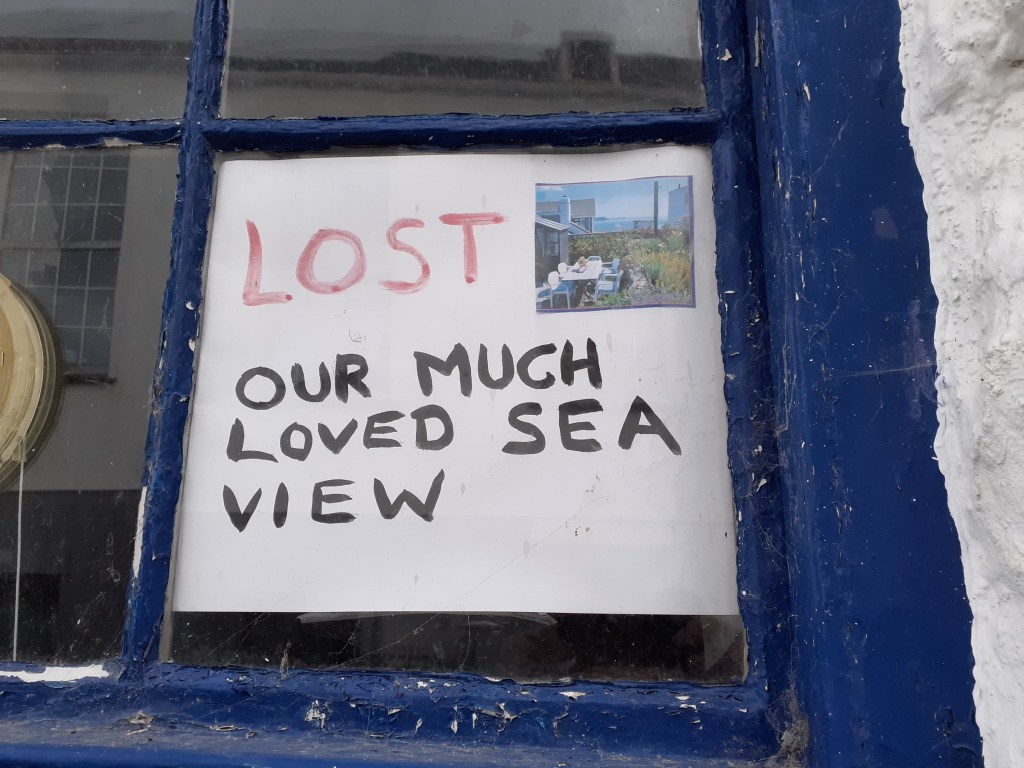
Imagine that for generations your family has enjoyed a little house by the sea in a small picturesque fishing village. However, one day a new wealthy family arrives and takes advantage of the narrow strip of land between the beach and your old house to build their new dream home. So it is that you lose your prime spot on the coast forever. All that remains of your sea view is this small photo in the window and the sad memory of something you will never get back.

All that remains of your sea view is this small photo in the window and the sad memory of something you will never get back.

And we have to talk about traffic.

When I refer to Maxim de Winter’s reckless exploits, I am not saying that one of the characters in a novel by an English author who wrote a novel in the 1930s was responsible for the current traffic chaos one encounters on the narrow Cornish roads, but I had to start somewhere.

Cornwall is a beautiful place, but it is very, very small: a peninsula of just 3,562 km², a tiny piece of land compared to its Atlantic cousins: Galicia 29,574 km² and Brittany in France 27,209 km². And beyond the recent improvements to the main roads, the rest of the map is a network of fairly narrow country roads. The closer you get to the coast, the more delicate this web of lanes becomes. Although they are now covered with tarmac, their dimensions are more or less the same as they were a hundred years ago and they cannot cope with the congestion produced during the high season. The current population of Cornwall is estimated at 600,000, plus the 4 or 5 million visitors that arrive each year, a third of them during the peak summer season. And for the most part, they arrive by car. Summer traffic jams are legendary, and when a traffic jam encounters a tractor coming in the opposite direction, reversing is at once comical, long-winded, exhausting, tedious and time-consuming, and involves a tremendous overdose of frustration for everyone involved.

It should also be mentioned that house prices are not the only things that have risen so sharply. Prices for everything have become stratospheric. The knock-on effect of so many visitors has been to create inflation in all local prices. A couple of examples:

The cost in Padstow (located on the other side of the River Camel opposite Trebetherick) of takeaway fish and chips sold in a shop named after the famous chef Rick Stein is double the national average. This year, his takeaway cod and chips will set you back £21. Not only do you have to pay a fortune, but you also have to find a place to eat your food, cradling it in your lap and trying not to spill it. If it rains, you’ll have to eat it in your car, but then the car will smell of stale fish and chips for the rest of your holiday.

I have noticed that in some places with a large tourist influx, there is a dual economy. I first noticed this about 15 years ago when the person serving in a small shop near the setting of Frenchman’s Creek asked me, ‘Are you local?’ He implied that there was one price for locals and another for visitors. I had to confess that I wasn’t, and as it turned out, he charged me double.

Second example. If you are on holiday and it is raining, and you are contemplating the perennial problem of what to do with the kids when it is raining and it is impossible to take them to the beach, well, why not grab your umbrella and head to King Arthur’s castle? You can’t have forgotten how the mythical king is supposed to fascinate children? Since the invention of the myth, and with little evidence to go on, many towns have competed for the honour of being the headquarters of the supposed King Arthur. But here in Cornwall you have the current market leader, the much-heralded and highly publicised Tintagel Castle. Although the remains of the castle are nothing more than a few piles of stones, the admission prices alone should convince you of the authenticity of Tintagel’s claims to be the real fortress of the one and only King Arthur. This year, a family ticket will cost you £58.

Architectural evidence suggests that the castle was not built in the 6th century during the heyday of the supposed King Arthur, but rather during the Norman period. Another Norman castle from the same period that is managed by the same company, English Heritage, is Goodrich Castle in Herefordshire. The castle is in much better condition than Tintagel Castle, and the entrance fee for a family is £28.60.

Once upon a time the coast was free for everyone. Now everything has a price, and the price of everything is sky-high… This is the problem with overtourism, wherever it occurs.
El sobreturismo en Cornualles es el resultado de factores históricos y literarios y un «buen marketing»

Fue la llegada del ferrocarril que dio comienzo al turismo en Cornualles. La primera línea entre Londres y Cornualles abrió en 1859. Al principio transportaba mineral de cobre y mineral de estaño, productos agrícolas y lácteos, caolín y pescado fresco. Los únicos pasajeros eran hombres de negocios y propietarios de minas. Durante la década 1860 el mercado de cobre y estaño se desplomó vertiginosamente a raíz de la nueva competición de Sudamérica, especialmente de Chile. Pero, conforme la industria minera de Cornualles iba desapareciendo, fueron llegando los turistas, salvando así la rentabilidad de las compañías ferroviarias. 

De ahí que The Great Western Railway (GWR) hiciera todo lo que pudiera para fomentar este nuevo salvavidas socioeconómico con la esperanza de que pudiese sacarle las castañas del fuego. En el año 1904 GWR acuñó el término, Cornish Riviera (La riviera córnica), y le puso este nombre a uno de sus trenes: el Cornish Riviera Express estrenó el servicio de London Paddington a Penzance en el mismo año, tardando siete horas y veinticinco minutos en llegar a su destino.

Este cuadro de 1889 es del artista Norman Garstin y es uno de los retratos más conocidos de Penzance. Toma buena nota del tema del cuadro. Se titula, Es que todos los días diluvia. Es una cita de La noche de reyes, de Shakespeare (Acto V, escena I, línea 415) 

En 1928, hace casi cien años, la GWR publicó su propia guía a Cornualles titulada, «The Cornish Riviera» que, una vez más, implicaba falsamente que se asemejan el clima de esta parte del sur de Inglaterra y el sur de Francia. 

El autor del libro se deshizo en elogios del condado e hizo una mención especial del clima, diciendo cosas como:

«La simple verdad es que en Falmouth hace tanto calor en enero como en Madrid, y tanto frío en julio como en Leningrado……Penzance está demostrando ser un formidable rival para Madeira, las Scillies para las Azores y Mullion para Montecarlo»

Y así se dio comienzo a toda una mitología sobre el clima de Cornualles..

¡Ay, por Dios! Esto no solo era una ilusión, sino también una frase dolorosamente inexacta, e incluso pudiera haber perjudicado el argumento del GWR si el público hubiera sido más consciente de la verdadera naturaleza de los últimos inviernos en Madrid. Por ejemplo, en 1914, unos años antes de la publicación de este libro, el enero en Madrid fue tan frío que se congeló el lago del palacio de Cristal en el Retiro, sirviendo de pista de patinaje improvisada durante semanas. En el mismísimo invierno de la publicación del libro, la capital española estuvo una vez más cubierta de nieve. 

En el sur de Inglaterra el clima es, por lo general húmedo, pero templado. El invierno es frío y ventoso. Sin embargo hay una leve variación meteorológica regional. Siempre hay más viento y lluvia en la vertiente Atlántica pero cuanto más al este que te vayas, menos lluvia encontrarás. En el pueblo de Penzance, situado cerca de la finisterra atlántica córnica, la precipitación anual es de 1200 mm más o menos, mientras que en la ciudad de Norwich, ubicada en el punto más oriental del país, la precipitación anual es de solo unos 732 mm. También, en el sureste las temperaturas veraniegas son más o menos 4 grados centígrados más altas que las de Penzance. Estamos hablando de temperaturas medias, pero la diferencia real en verano puede ser mucho más dramática. Un día de Agosto estábamos de vacaciones en Whitstable, en la orilla sur del estuario del Támesis, y la temperatura era de 30 grados, mientras que en Penzance los turistas estaban tiritando de frío en temperaturas de 17 grados.

Pero si, se puede decir que en Penzance la temperatura invernal llega a unos 8 grados centígrados, una cifra más alta que la de otros pueblos más orientales. Es verdad que en Penzance se hiela raras veces; no hace un frío tan espeluznante que mueren sus plantas mediterráneas importadas. Por eso es por lo que, técnicamente, y solo técnicamente, se puede aplicar el término subtropical a Cornualles. Este término técnico han explotado sin escrúpulos los vendedores de vacaciones en el «paraíso subtropical» de Cornualles. Pobre de alguien que llega al hotel en Marzo esperando que va a quedar la semana tumbado al lado de la piscina, bebiendo a sorbos un cóctel Margarita y rodeado de selva tropical. La verdad es que hace frío y llueve bastante. ¿Recuerdas el cuadro del paseo marítimo? Norman Gaston ha capturado la esencia de un típico día invernal de Penzance.

Sin embargo, las juntas de turismo locales, los hoteles, las oficinas de turismo y todos los los medios sociales se empeñan en repetir el término como papagayos sin ser capaces de entender su auténtico sentido; aunque los hechos lo niegan tajantemente, el mito del clima mediterraneo o subtropical se le ha pegado al público 

Un siglo después de la campaña publicitaria que inauguró la GWR, Cornualles sigue disfrutando del mito de su clima exótico. De hecho, el mito ha prosperado. Cornualles se ha hecho un destino vacacional tan deseable que hoy en día empresas compiten para asociarse con él. Lo que era, alguna vez, nada más que un lejano promontorio rocoso perpetuamente envuelto en neblinas y llovizna, un pobre cabo atlántico llevado por el viento, ya se representa en la publicidad como un soleado Shangri-La rodeado de mares azules, un paraíso en donde el tiempo se detiene en un ambiente de paz donde se ofrece una buena calidad por dinero. Si tuviera una consigna empresarial se parecería al lema sencilla que promociona la Xunta de Galicia desde hace varias décadas, «Galicia, Calidade». No hay empresas que lo hagan mejor que Seasalt, un famoso minorista de ropa de sport. Échale un vistazo en la web. Pero ojo, aunque tienen su sede en la ciudad córnica de Falmouth y su publicidad solo contiene vistas de Cornualles capturadas en días soleados, sus fabricantes primarios no son córnicos; sus prendas se confeccionan en exactamente los mismos sitios de la ropa vendida por sus competidores: India, Turquía, China, Vietnam, Pakistán, Bangladesh, Sri Lanka y Bulgaria. 

En el periodo de entreguerras el GWR estuvo orgulloso de que su modo de transporte era el más rápido y cómodo en que los nuevos turistas de la clase media podían trasladarse a su destino. Pero, también la compañía era cada vez más consciente de que estaba amaneciendo una nueva época y que no deberían hacer caso omiso del boom de la industria automovilística.

Por eso se intensificaron sus campañas de publicidad. Además de su colección de guías turísticas sobre todos sus destinos, produjo toda una serie de carteles de varios estilos que siguen siendo muy famosos en este país; aún se venden cientos de miles de reproducciones anualmente. 

foto: Stephen McKay via Wikimedia Commons

La literatura romántica de los años de entreguerras, especialmente las muchas novelas de Daphne du Maurier ambientadas en Cornualles ayudaron a socavar la hegemonía del ferrocarril. Las más famosas de sus novelas son Jamaica Inn (La posada de Jamaica) 1936, Rebecca (Rebeca) 1938 y  Frenchman’s Creek (El río del francés) 1941. 

Durante la segunda Guerra Mundial la gente se divirtió mucho leyendo estas creaciones literarias y durante los años inmediatamente después de la sucesión de hostilidades la idea de irse descubriendo en coche las zonas más remotas de su propio país capturó la imaginación de toda una nueva clase de personas, los propietarios de automóviles. La mejor de estas novelas fue Rebecca (1938) y fue llevada al cine por Alfred Hitchcock en 1940. Rodada en blanco y negro es la version cinematográfica más fiel a la novela gótica escalofriante de du Maurier. 

Tanto en la novela como en la película se demuestra la desesperación del malo, Maxim de Winter, por su loca insistencia en conducir su coche clásico descapotable a Londres de ida y vuelta en un solo día para consultar a su abogado, cruzando, de una tacada, todo el sur del país por la primitiva y bastante lenta red vial que existía en los años 30. Ver el coche real aqui: https://imcdb.org/vehicle_62913-MG-SA-Tourer-Charlesworth-SA1407-1937.html Chat gpt estima que en aquel entonces el viaje en coche por carretera, solo de ida, desde St Austell, un pueblo de Cornualles bastante asequible, al centro de Londres, hubiera tardado entre 9 y 12 horas, o incluso más. Claro que du Maurier escribió con licencia poética pero la gente cree lo que gente quiera creer y la mera mención de las palabras «coches» y «Cornualles» juntas, sirvió para estimular las ambiciones de todos los nuevos motoristas. Daba la impresión de que tal viaje era factible. Eso no quiere decir que todos quisieron replicar la hazaña de Maxim de Winter pero, con unas paradas en el trayecto, en unas pueblecitos pintorescos, Cornualles pudiera ser un destino macanudo. 

Después para ensalzar aún más el apetito del lector, vino la saga de Poldark escrita por Winston Graham, una serie de 12 novelas publicadas entre 1945 y 2002. Esta saga ha sido no sólo uno de los éxitos literarios populares más fenomenales del siglo 20, sino también una de las series más vistas de la BBC. Hay 43 episodios en las 5 temporadas televisivas.

La saga lo tiene todo. Es una historia informal de Cornualles que trata de los acontecimientos de los siglos XVIII y XIX y las relaciones sociales de la época: las divisiones entre la nobleza terrateniente, la gente pobre que trabaja para ellos, las minas de cobre y estaño, los conflictos entre los dueños y los mineros, la política decimonónica, la reforma laboral, la guerra de independencia de los EEUU, la revolución francesa y un largo etcetera. Se incluye también el esencial triángulo amoroso y todos los conflictos posibles engendrados por la herencia. Es decir, todos los ingredientes de un auténtico culebrón. En cuanto a la popularidad de la serie televisiva, no se puede desestimar la actuación del guapísimo Aidan Turner, que interpretó el papel de Ross Poldark, el protagonista de las últimas temporadas. El otro gran protagonista es el paisaje y el tiempo: los mares embravecidos, los acantilados y las tormentas reflejan la turbulencia interior de los personajes y el espíritu indómito de la región. 

Otro gran «influencer» y contemporáneo de du Maurier y de Graham era el famoso poeta del norte de Londres, John Betjeman. En 1908, a la edad de dos años, Betjeman acompañó por primera vez a su familia a Cornualles. A partir de ese año visitaban el mismo sitio todos los veranos. Les acompañaba la criada. Tenían alojamiento en el pueblecito de Trebetherick en el norte del condado. Aunque este pueblo quedaba más cerca de Londres que Penzance, el ramal era más lento que la línea principal, así que el tren de vapor demoraba hasta 9 horas en completar el trayecto desde London Waterloo a Wadebridge, la estación más cercana a su último destino. Cuando llegaron a Wadebridge aún les quedaba a la familia el calvario de dos horas en carruaje tirado por caballos por un camino accidentado y sin pavimentar.

Para ser poeta, Betjeman era muy popular, especialmente entre las clases media y alta. Les caía sumamente bien. Encontraron muy afectuosas y nostálgicas sus series en la tele: programas sobre iglesias, arquitectura, la época victoriana, los trenes de vapor, la frondosa zona norte de Londres (especialmente Highgate), los bonitos pueblos ingleses y el campo (especialmente él de Cornualles). Al visitar estos lugares que amaba tanto, Betjeman se mostraba cómodo y reconfortante, divertido y de buen humor. No hay que subestimar como influyeran sus recuerdos de infancia sobre las vacaciones en Cornualles y la crecida del turismo. Sus muchas salidas en la tele hasta su muerte en 1984 contribuyeron a crear un público vacacional londinense refinado. Hoy en día, si te sientas en silencio y escuchas a escondidas las conversaciones en Cornualles durante la temporada alta, en los pubs más caros de los viejos buenos tiempos o en las cafeterías más bohemias que se encuentran posadas sobre los acantilados, todavía oirás hablar de niñeras y casas en Portugal: todo pronunciado en acentos del sur de Inglaterra, más notables los del acaudalado norte y oeste de Londres. Esta gente reserva para sí las calas más exclusivas que convierten en Kensington del mar o Playa de Highgate. La reconfortante influencia de Betjeman sigue ahí y su mundo veraniego tan pequeño, cariñoso y acogedor sigue siendo para ellos un gran sueño.

Naturalmente, con la llegada de tantos turistas e inmigrantes adinerados, el precio de la vivienda ya se encuentra muy por encima de las posibilidades de la gente local. Un porcentaje significante de las viviendas en el condado son ahora casas turísticas de alquiler, residencias secundarias o casas construidas por inmigrantes ingleses. Curiosamente, el área más afectada donde el porcentaje ha llegado al 70% es la parte que contiene Trebetherick, el mismísimo distrito que hizo famoso John Betjeman.

Aunque sean sitios muy distintos, las causas de estar sin techo en Cornualles son iguales a las de Baleares. Vi recientemente un documental de la emisora alemana Deutsche Welle titulado. «El lado oscuro del turismo: la crisis inmobiliaria en Mallorca» que todavía queda disponible en YouTube: https://www.youtube.com/watch?v=qzsZTYv93Fg . Pero, cosa curiosa: en el documental apenas mencionan la enorme proliferación de residencias secundarias en este sitio de gran afluencia turística. En Mallorca p.ej. el precio medio por metro cuadrado para la venta de viviendas es de 6,000 €/m². El número de propietarios ricos del norte de Europa es fenomenal. Cada mes, cientos de mallorquines tienen que huir a la península porque no tienen el dinero para competir con la gente adinerada de fuera. O sea, es un problema con dos facetas estrechamente vinculadas. Si quieres proteger a la población autóctona tienes que resolverlos juntos. Los gobiernos españoles, nacionales y locales no hacen nada.  

En Cornualles, como notamos en el post anterior sobre la crisis de la vivienda, hay pueblos que, en verano, parecen opulentos barrios londinenses, y que en invierno se ponen tristes, vacíos y oscuros. La enorme proliferación de viviendas turísticas y residencias secundarias contrasta fuertemente con la situación de mucha gente autóctona que no pueden permitirse el lujo de tener su propio hogar. Muchos de ellos tienen que subsistir en caravanas y cobertizos. La gente joven no puede independizarse; no tienen la menor posibilidad de competir con la gente adinerada que viene de afuera. El gobierno local (Cornwall County Council) impone un sobrecargo de 200% del IBI en el caso de las residencias secundarias y el gobierno nacional les impone un impuesto de 5% sobre el precio de compra, pero estas medidas fiscales surten poco efecto. La invasión sigue sin tregua. 

Imaginaos, que a lo largo de las generaciones vuestra familia ha disfrutado de vuestra casita al lado del mar situado en un pequeño pintoresco pueblo pesquero, pero un dia llega una nueva familia adinerada y aprovechan la delgada faja de tierra entre la playa y vuestra vivienda antigua para construir la casa nueva de sus sueños. Así perdisteis para siempre vuestro sitio de primer plano en la costa. Lo único que queda de vuestra vista del mar es esta pequeña foto puesta en la ventana y este triste anuncio de una cosa perdida.

Este triste anuncio de una vista perdida

Y tenemos que hablar del tráfico. 

Cuando me refiero de las hazañas temerarias de Maxim de Winter, no digo que uno de los personajes de una novela de una autora inglesa que escribió una novela en los años treinta fuera el responsable del caos del tráfico actual con que uno se encuentra en las angostas carreteras córnicas, pero tuve que comenzar en algún sitio. 

Cornualles es un sitio precioso, pero es muy, muy pequeño: una península de apenas 3562 km², una parcela de tierra minuciosa comparada con sus primos atlánticos: Galicia 29574 km² y la Bretaña de Francia 27209 km². Y más allá de las mejoras recientes en las carreteras troncales el resto del mapa es una red de carreteras rurales bastante estrechas. Cuanto más te acercas a la costa, más delicada se vuelve esta telaraña de corredoiras. Aunque ahora están cubiertas de asfalto, sus dimensiones son más o menos iguales a lo que eran en los años cincuenta y no soportan la congestión producida durante la temporada alta. La población actual se estima en 600,000 habitantes y anualmente se reciben alrededor de 4 millones de visitas, un tercio de ellas durante la temporada alta de verano. Y en gran parte, llegan en coche. Los embotellamientos veraniegos son legendarios y cuando un atasco se tropieza con un tractor que viene en sentido contrario, lo de la marcha atrás es a la vez cómico, largo, extenuante, tedioso y requiere de mucho tiempo para escaparse, e implica para todos los involucrados una sobredosis de frustración tremenda.

Hay que mencionar tambien que los precios de las casas no son las unicas cosas que se han aumentado tanto. Los precios de todo se han hecho estratosféricos. El efecto en cadena de tantos visitantes ha sido la creación de una inflación de todos los precios locales. Un par de ejemplos.

El coste en Padstow, (situado en la otra orilla del río Camel frente a Trebetherick), de un fish and chips para llevar que se vende en una tienda en nombre del famoso chef, Rick Stein, es el doble del coste medio nacional. Este año su cod and chips para llevar te cuesta €24.30. Es decir, no solo has tenido que pagar un dineral, tienes que buscar sitio para comerlo, sosteniéndolo en el regazo sin derramarlo. En el caso de lluvia tendrás que comerlo en coche, pero en este caso, el coche huele a pescado rancio a lo largo del resto de tus vacaciones. 

He notado que en algunos sitios de gran afluencia turística se practica una economía doble. Lo noté por primera vez hace unos 15 años cuando el tendero en una pequeña tienda cerca del sitio donde se ambientaba El río del francés, me preguntó ¿eres local? El intimaba que había un precio para la gente de ahí y otro para visitantes. Tuve que confesar que no, y como resulta, me cobró el doble.  

Segundo ejemplo. Si estás de vacaciones y está lloviendo y si estás contemplando el perenne problema de que haces con los peques cuando está lloviendo y es imposible que los lleves a la playa, bueno, ¿como no coger el paraguas y dirigíos al castillo del rey Artur? ¿No se te ha olvidado como el rey mítico fascina a los niños? Desde la invención del mito, muchos pueblos han competido por el honor de ser la sede del supuesto Rey Artur. Pero, aquí en Cornwall tienes el líder actual del mercado, el mucho anunciado y muy publicitado castillo de Tintagel. Aunque los restos del castillo no son nada más que unas míseras pilas de piedras, los precios de entrada en sí mismas deben convencerte de la autenticidad de las reivindicaciones de Tintagel de ser la auténtica fortaleza del solo y único rey Artur. Este año una entrada familiar os va a costar €67.74.

La evidencia arqueológica sugiere que el castillo no se construyó en el siglo VI durante el apogeo del supuesto rey Artur, sino en la época de los normandos. Otro castillo normando del mismo periodo que está regentado por la misma compañía, English Heritage, es el de Goodrich en el condado de Herefordshire. El castillo se encuentra en muchas mejores condiciones que el de Tintagel y el precio de entrada para una familia es de €36.45.  

Érase una vez, cuando yo era joven, que la costa era libre para todos. Ahora todo tiene precio, y todos los precios están por las nubes.…..Esto si que es el problema del sobreturismo, dondequiera que ocurra.