Child abuse. Ian McEwan and Fernando Aramburu. Two perspectives

Lessons is the recent novel by Ian McEwan. It’s the fictional biography of Roland Baines, a man who was born, like McEwan, in the years directly following the Second World War.  As a background to Roland’s life, the narrative evokes many of the events of the Cold War, especially the division and subsequent reunification of the two Germanies, something Roland witnessed first-hand. In this sense the book is also an informal history that stretches from the end of the war to the present day.

Ian McEwan. Photo: Suzie Howell 2022

The book begins with a brief account of Roland’s childhood on a Libyan military base. The narrative then concentrates on the events of his adolescence and his years as a student at a British boarding school.

Although the law today criminalises what happened to Roland there, such an affair is not automatically what we think of when we refer to what is known as child sexual abuse. This term usually refers to the systematic and organised prostitution of underage children. Often, the criminal irony is that the victims are children who are already living for their own protection in some kind of church or council-run orphanage, home or reception centre. Many cases that occurred during the 1950s and 1960s have only recently come to light, decades later, because at the time they took place, many people turned a blind eye or considered the children who came from «broken homes» (a contemporary umbrella term for children without parents or with absent or simply hopeless parents) to be manipulative and liars. Moreover, few people believed that children living in council care needed protection from the adults employed in the residential homes. In other words, children had no voice and few people would take a child’s word against that of an adult.

And because these children were routinely disbelieved, it didn’t occur to anybody to provide a legal framework that could have protected them. 

What was it that gave rise to this serious situation? I think it had something to do with the mood of society and the attitude of mind that prevailed in the wake of the Second World War.

At that moment in history, those who held the moral high ground were those who had beaten the Nazis. That is, all the adults. Their authority was absolute and unquestionable.

In the post-war world that I remember, all the adults, by dint of their sacrifices in the war, deserved all the respect we could give them. They had defeated the Devil (come to Earth in the form of Adolf Hitler) and rescued us children from an immensely cruel future under the rule of the Third Reich. Adults had risked their lives fighting the forces of evil, and so had been granted the right to pontificate on what was and was not acceptable in our childish behaviour. Whatever adult, however foolish they might be, however trivial might have been their role in the downfall of Adolf Hitler, still felt that they had the right to be our moral compass, the guiding light of children who hadn’t yet reached the age of reason. How often, when I had done something unacceptable, had I heard the reproachful refrain that began with the words, «I did not fight in the war, exposing myself to the danger of being killed, so that YOU could do THAT! It was a ubiquitous, omnipotent and unappealable reproach. It demanded immediate and total obedience. As for the children, the watchword of the time was, «children must be seen but not heard».

History textbooks usually say that the psychology of the British people who emerged victorious from the Second World War was positive and that a large majority wanted to elect a government that would guarantee them the building of a new, fairer, more prosperous, and more redistributive society. Many had behaved heroically and honourably during the war and they wanted a more equitable world in return for the suffering and sacrifices they had made during six years of struggle. That is why they voted for the socialist government that initiated in 1948 the new Welfare State that included a social service that provided care for unwanted or physically abused children. This is the official version but it doesn’t tell the entire story.

What was not taken too seriously was the need to better protect children from the more abhorrent sexual appetites of some adults. There was a widespread belief that, in the brave new world of the British post war, such protection would not be needed. After all, evil had been driven from the earth. Unfortunately, such complacency left the depraved to roam free, and they did so, either by working in the new children’s homes or by frequenting such places in the guise of respectable visitors, such as politicians, policemen, or people of religious ilk. 

The taste of some people, mainly men, for the sexual exploitation of children was underestimated.  Such was the atmosphere of naivety engendered in the normal population by the euphoria of victory and the moral smugness that accompanied the apparent re-establishment of the hegemony of good over evil, that their perverse sexual predilections went unnoticed. This human scum mingled with heroes, and thus acquired a respect they did not deserve. 

I just want to underline that the social climate prevailing in the post-war period gave the right exclusively to adults and left children unprotected, easy prey to sexual exploitation.

Slowly but surely things began to change, but it still took more than half a century to produce the Sexual Offences Amendment Act 2000, a law that had, amongst its aims, the protection of children from their protectors. This Act introduced the new offence of «having sexual intercourse or engaging in any other sexual activity with a person under 18 if in a position of trust in relation to that person». (This law was replaced by the Sexual Offences Act 2003 which included the same provision). 

In his novel Lessons, Ian McEwan addresses the issue of child sexual abuse from the perspective of the new law.  But, it seems to me, he has chosen a bad example, that of the fictional Roland Baines.

The dream of most teenage boys is to have a girlfriend 10 years older, with a 5-star body who likes to have sex seven times a day. The only difference in Roland Baines’ case is that his teenage fantasy comes true. He is seduced by his very attractive, but very unhinged piano teacher. The problem is that he only realises that she is madly obsessed with him when it is too late. He gets to realise his dreams in bed (as well as learning to play piano duets like a consummate professional), but the big catch is that she imprisons him in her house, with the inevitable consequence that he is forced to neglect his academic studies and as a result fails all his final exams.

Like all good novelists, Ian McEwan is a good moral philosopher. And like all good moral philosophers, he urges us to resist simplistic explanations. Roland Barnes, in adulthood, is disappointed with the instability of his emotional life and has several candidates to blame. The search for the culprit is complicated: is it the young piano teacher who seduces him at the tender age of fourteen? Is it his ruthless mother who abandons the children of her first marriage to ingratiate herself with her new husband, Roland’s father? Is it his father, an alcohol-addicted army officer who is a poor model of masculinity? Is it the wife who abandons Roland and their two-year-old baby to pursue her own dream of becoming a famous writer? Is it something more difficult to identify: the disintegration of a social system in which traditional family values are being undermined by the advent of the new “permissive society”? Given the number of possible variables, Roland finds it almost impossible to unravel the reasons for his unsuccessful search for a stable psychological union.

One of the problems with the book is that it does not present a credible clinical picture. Although it suggests in later passages that the adolescent affair damaged Roland psychologically, the text provides no convincing evidence or rationale other than that, in his future relationships, he feels the need to have sex every day, something which naturally tends to annoy his girlfriends but does not serve to differentiate him from millions of other men, most of whom manage to successfully sublimate their pressing urges with regular masturbation. Otherwise, there is little or no evidence that the adult Roland continues to exhibit signs or symptoms of sexual abuse. Moreover, he has not developed negative character traits. He grows up to be a kind, sympathetic, understanding, cultured and loving man, a good father, and a poet. What is his problem?

You can even point out positive aspects of his illicit relationship with the teacher: with her he learns the joy and pleasure of sex. At the same time he learns negative lessons that are no less important: that you should always be careful what you wish for and that it is essential to find out as soon as possible what you really don’t want in life. 

Moreover, it feels like a book overloaded with themes and as such, it tends to lose definition: is it a political history of the second half of the twentieth century to the present day, a history that concentrates on the Cold War and its lasting effects; is it a reflection on the Manichaeism of laws concerning sexual offences, or is it a more ambitious book: a reader for moral philosophy in the 21st century? Is it a social history of the evolution of the modern British family? Is the author adding his influence to the clamour against global warming? Or is the book by an author who fears he has forgotten to include many issues in his work and feels he should make a last-ditch effort to incorporate all the issues he has left to address before he dies and his voice is extinguished forever?

Compare it to Fernando Aramburu’s recent book, Los vencejos (The Swifts), in which a middle-aged man, a secondary school philosophy teacher, recounts his life through his diary entries.
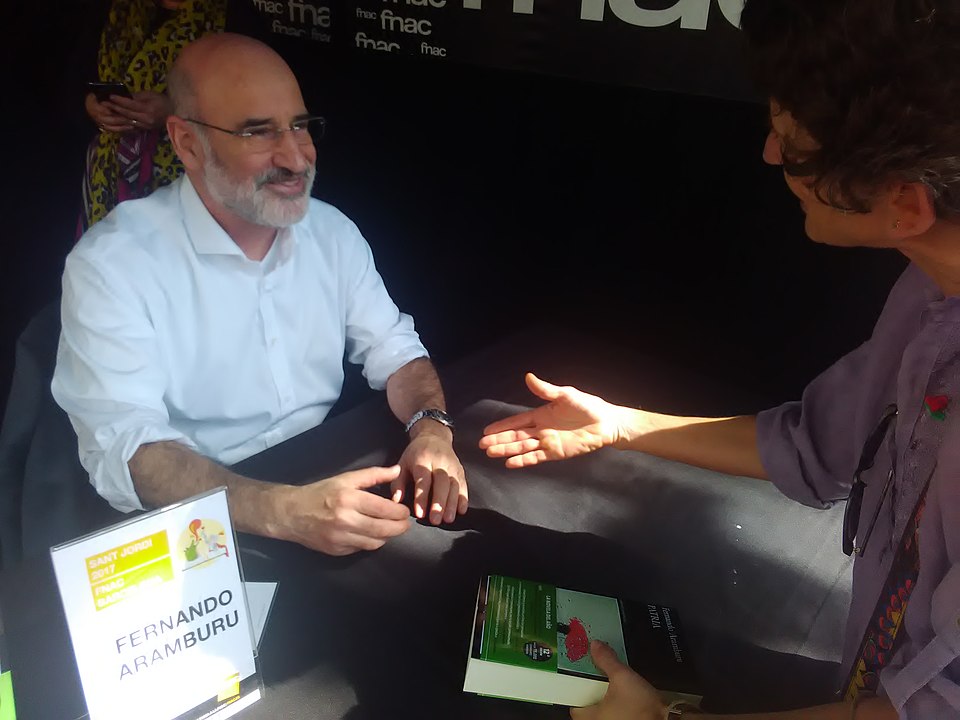
Fernando Aramburu. Photo: Climent Sostres 2017

It’s a longer book than McEwan’s, some 700 pages, but it’s one of those tomes you never want to finish. It’s the life story of Toni, another man who is abandoned by his wife. She doesn’t leave him for her art, which is the case with Roland Baines, but for another woman. His marriage has been the latest in a series of failures. He believes that, although his life has been a disaster, this is not an accident that has happened specifically to him, either through circumstance or bad luck. He comes to the conclusion that life is a vale of tears and that failure is a constant, universal and inevitable part of the human condition.  It is not worth living any longer. It only prolongs the misery. Existence is shit and he decides voluntarily to end it all. He seeks death for relief and not in expectation of resurrection. He is an atheist like Roland. 

Nevertheless, he decides that he will continue with the ordeal that is his life for one more year, a period during which he will write in a notebook everything that happens to him every day. His diary leads him to remember episodes from his life that illuminate his past.  He recalls them in a non-linear way, just like Roland Baines.

As we read the entries in his diary we realise how damaged Toni is as a result of the childhood abuse he suffered. He witnessed a lot of gender-based violence in his family of origin. Not only did his mother have to endure the macho brutality of her husband, but also Toni and his brother were victims of aggression that bordered on sexual abuse. His experiences at home marked him forever. He feels that his adult life has been a total failure. He does not seem to know how to form loving friendships, and sees the world as a rejecting place.

Although Toni is a philosophy teacher, he is not at all pretentious. Nor does he move in such intellectual circles or live in such progressive neighbourhoods as Roland. He leads a more sordid but no less intellectual life than Roland but, unlike him, he is not interested in summarising the history of Western civilisation, nor in making a compilation of the political events of contemporary Spain, although inevitably, national events have an impact on him and from time to time he comments upon them and entertains us with his observations. 

Toni is sincere, like Roland, but more so. His confessions are brutal. He hides none of his vices. He writes with sarcasm and irony. He says things like a man who knows he only has twelve months to live, that he has an expiry date. He says things with no holds barred and with his own style of black humour.

McEwan tries to show that child abuse can be subtle but, in doing so, creates a weak example that misses the truth. On the other hand, Aramburu’s book is more concrete and more convincing and, above all, endearingly amusing.

Abuso infantil: Ian McEwan y Fernando Aramburu, dos interpretaciones

Lecciones es la biografía ficticia de Roland Baines, un hombre que nació, como el autor Ian McEwan, en los años directamente después de la segunda guerra mundial. Como trasfondo a la vida de Roland, la narrativa evoca muchos de los sucesos de la guerra fría, especialmente la división y la subsiguiente reunificación de los dos países alemanes, algo de que Roland fue testigo directo. En este sentido el libro es también una historia informal que se extiende del final de la segunda guerra mundial hasta nuestros días. 

Ian McEwan. Foto: Suzie Howell 2022

El libro comienza con un breve recorrido de su niñez en una base militar libio. Luego la narrativa se concentra en los sucesos de la adolescencia de Roland y sus años como estudiante en un internado británico. 

Aunque, hoy en día, la ley tipifica como delito lo que le pasó allí a Roland, un lío de esa indole no es automáticamente en lo que pensamos cuando nos referimos a lo que se califica de abuso sexual de niños. Este término se suele referir a la prostitución sistemática y organizada de niños menores de edad. Muchas veces, la ironía criminal es que las víctimas son niños que ya viven por su propia protección en algún tipo de orfanato, hogar o centro de acogida a cargo del ayuntamiento o la iglesia. Muchos casos ocurridos durante los años 50 y 60 solo han salido a la luz recientemente, décadas después de los hechos porque en aquella época en la que tuvieron lugar, numerosas personas hicieron la vista gorda o consideraban que los niños que salieron de «hogares rotos» (un término global contemporáneo por niños sin padres o con padres ausentes o simplemente sin remedio) eran unos manipuladores y mentirosos. Además, poca gente creía que los niños que vivían bajo la tutela del ayuntamiento o la iglesia necesitaran protección contra los adultos empleados en las residencias. Es decir, los niños no tenían voz y fueron pocas las personas que tomaran la palabra de un niño contra la de un adulto. 

Y porque se les descreía habitualmente, a nadie se le ocurrió la idea de proporcionar a esos niños un marco jurídico que pudiera haberles protegido.

¿Qué fue lo que dio lugar a esta situación tan seria? Yo digo que tuvo algo que ver con el ambiente social y la mentalidad que imperaba aquí en la estela de la segunda guerra mundial. 

En aquel momento de la historia, la superioridad moral la tenían los que habían vencido a los nazis. Es decir, todos los adultos. Su autoridad fue absoluta e incuestionable.

Que yo recuerde, en la posguerra británica, los adultos, a fuerza de sus sacrificios en la guerra, merecían todo el respeto que les pudiéramos ofrecer. Ellos habían vencido al Diablo (venido a la Tierra en forma de Adolf Hitler) y nos habían rescatado a los niños de un futuro inmensamente cruel bajo el dominio del Tercer Reich. Los adultos se habían arriesgado la vida luchando contra las fuerzas del mal, y así se les había garantizado el derecho de pontificar sobre lo que fuera y lo que no fuera aceptable en nuestro comportamiento pueril. Cualquier adulto, por muy tonto que fuera, por muy trivial que hubiera sido su papel en la caída de Adolf Hitler, seguía sintiéndose con derecho a ser nuestra brújula moral, la luz que guiaba a los niños que aún no habíamos alcanzado la edad de la razón. ¿Cuantas veces, cuando yo había hecho una cosa inaceptable, había yo oído la cantinela reprobatoria que comenzaba con las palabras «¡Yo no peleé en la guerra, exponiéndome al peligro de perderme la vida, para que TÚ pudieras hacer ESO!». Era un reproche ubicuo, omnipotente e inapelable. Exigía una obediencia inmediata y total. En cuanto a los niños la consigna de la época fue, «los niños deben ser vistos pero no escuchados».

Los libros de texto de la historia suelen decir que la psicología de los británicos que emergieron victoriosos de la segunda guerra mundial era positiva y la gente quería elegir un gobierno que les garantizara la construcción de una nueva sociedad más justa, más próspera, y más redistributiva. Mucha gente se había comportado heroica y honradamente durante la guerra y todos querían un mundo más equitativo a cambio de los sufrimientos y sacrificios que habían hecho a lo largo de los seis años de lucha. Por eso votaron por el gobierno socialista que inició en 1948 el nuevo estado de bienestar que incluía un servicio social que proporcionaba atención a los niños no deseados o maltratados físicamente.

Esta es la versión oficial pero no es la historia entera.

Lo que no se tomaba demasiado en serio era la necesidad de proteger mejor a los niños de los más aborrecibles apetitos sexuales de algunos adultos. Existía una creencia generalizada que, en el nuevo mundo feliz de los años de la posguerra esta protección no haría falta. Ya que, a fin de cuentas, el mal había sido expulsado de la Tierra. Tal complacencia dejó libre a los perversos para que camparan a sus anchas, y así lo hacían, o trabajando en los nuevos hogares de niños o frecuentando esos sitios como visitantes respetables como, por ejemplo, políticos, policías o personas de carácter religioso. 

Se subestimaba el gusto que tenían algunas personas, principalmente hombres, por la explotación sexual de niños y niñas.  Tal fue el ambiente de ingenuidad engendrada en la población normal por la euforia de la victoria y por la complacencia moral que acompañaba el aparente restablecimiento de la hegemonía del bien sobre el mal, que sus predilecciones sexuales perversas pasaban desapercibidas. Esta escoria humana se mezclaba con héroes, y así adquirían un respeto que no merecían. 

Sólo quiero subrayar que el clima social que prevalecía en la posguerra daba la razón exclusivamente a los adultos y dejaron a los niños desprotegidos, presas fáciles a la explotación sexual.

Poco a poco las cosas comenzaron a cambiar pero, aun así, se tardó más de medio siglo en producirse la Ley de enmiendas sobre los delitos sexuales del año 2000, una ley que tenía, entre sus objetivos, él de proteger a los menores de sus protectores. Esta ley introdujo el nuevo delito de «mantener relaciones sexuales o participar en cualquier otra actividad sexual con una persona menor de 18 años si se está en una posición de confianza en relación con esa persona». (Esta ley fue sustituida por la Ley sobre los delitos sexuales de 2003 que incluyó la misma protección). 

En su novela Lecciones, Ian McEwan aborda el tema del abuso sexual de los niños desde la perspectiva de la nueva ley.  Pero, a mi me parece que el elige un mal ejemplo, él del ficticio Roland Baines.

El sueño de la mayoría de los quinceañeros es de tener una novia de 10 años mayor, con un cuerpazo de 5 estrellas a quien le gusta tener sexo siete veces al día. La única diferencia en el caso de Roland Baines es que su fantasía adolescente se hace realidad. Le seduce su muy atractiva, pero muy chiflada profesora de piano. El problema es que él solo se da cuenta de que ella está locamente obsesionada con él cuando ya es demasiado tarde. Resulta que el realiza sus sueños en la cama (y aprende a tocar dúos de piano como un consumado profesional), pero el gran inconveniente es que ella le encarcela en su casa, con la consecuencia inevitable que el se ve forzado a desatender sus estudios académicos y como resultado suspende todos sus exámenes finales. 

Como todos los buenos novelistas, Ian McEwan es un buen filósofo moral. Y como todos los buenos filósofos morales, nos insta a resistir las explicaciones simplistas. Roland Barnes, en su edad adulta queda decepcionado con la inestabilidad de su vida emocional y tiene varios candidatos a quienes puede echar la culpa. La búsqueda del culpable es complicada: ¿es la joven profesora de piano que le seduce a la tierna edad de catorce años? ¿Es su madre despiadada que abandona a los hijos de su primer matrimonio para congraciarse con su nuevo marido, el padre de Roland? ¿Es su padre, un oficial del ejército, adicto al alcohol, que es un pobre modelo de masculinidad? ¿Es la esposa que abandona a Roland y a su bebé de dos años para perseguir su propio sueño, eso de convertirse en escritora famosa? ¿Es algo más difícil de identificar: la desintegración de un sistema social en el que los valores familiares tradicionales están siendo socavados por la llegada de la nueva «sociedad permisiva»? Dada la cantidad de variables posibles, a Roland le resulta casi imposible desentrañar las razones de su infructuosa búsqueda de una unión psicológica estable.

Uno de los problemas del libro es que no presenta ningún cuadro clínico creíble. Aunque en pasajes posteriores sugiere que la aventura adolescente le dañó psicológicamente, el texto no aporta ninguna prueba o fundamento convincente, salvo que, en sus futuras relaciones, Roland siente la necesidad de tener sexo todos los días. Naturalmente, esto es algo que tiende a molestar a sus novias, pero para mi, no sería una cosa que sirviera para diferenciarlo de millones de hombres normales, la mayoría de los cuales consiguen sublimar con éxito sus apremiantes impulsos diarios con la masturbación frecuente. Hay poca constancia de que el adulto Roland siga mostrando signos o síntomas de abuso sexual. Además, no ha desarrollado rasgos de carácter negativos. Crece y se convierte en un hombre amable, simpático, compasivo, culto y cariñoso, un buen padre y poeta. ¿Cuál es su problema?

Incluso se pueden señalar aspectos positivos de su relación ilícita con la profesora: con ella aprende el gozo y el placer del sexo. Al mismo tiempo, aprende lecciones negativas no menos importantes: que siempre hay que tener cuidado con lo que se desea y que es esencial descubrir cuanto antes lo que realmente NO se quiere en la vida.

Además, se da la sensación de ser un libro sobrecargado de temas y así tiende a perder definición. ¿Es una historia política de la segunda mitad del siglo veinte hasta nuestros días, una historia que se concentra en la guerra fría y sus efectos duraderos? ¿Es una reflexión sobre el maniqueísmo de las leyes sobre los delitos sexuales, o es un libro más ambicioso: un libro de lectura de filosofía moral para el siglo 21? ¿Es una historia social de la evolución de la familia británica moderna? ¿Es que el autor está añadiendo su influencia al clamor en contra del calentamiento global? ¿O es que el libro es de un autor que teme que se le haya olvidado incluir en su obra muchos temas y cree que debería hacer un último esfuerzo para incorporar todas las cuestiones que le quedan por abordar antes de que se muera y su voz quede extinguida para siempre?

Compáralo con el reciente libro de Fernando Aramburu, Los vencejos, en el que un hombre de mediana edad, profesor de filosofía de instituto, relata su vida a través de las entradas de su diario.

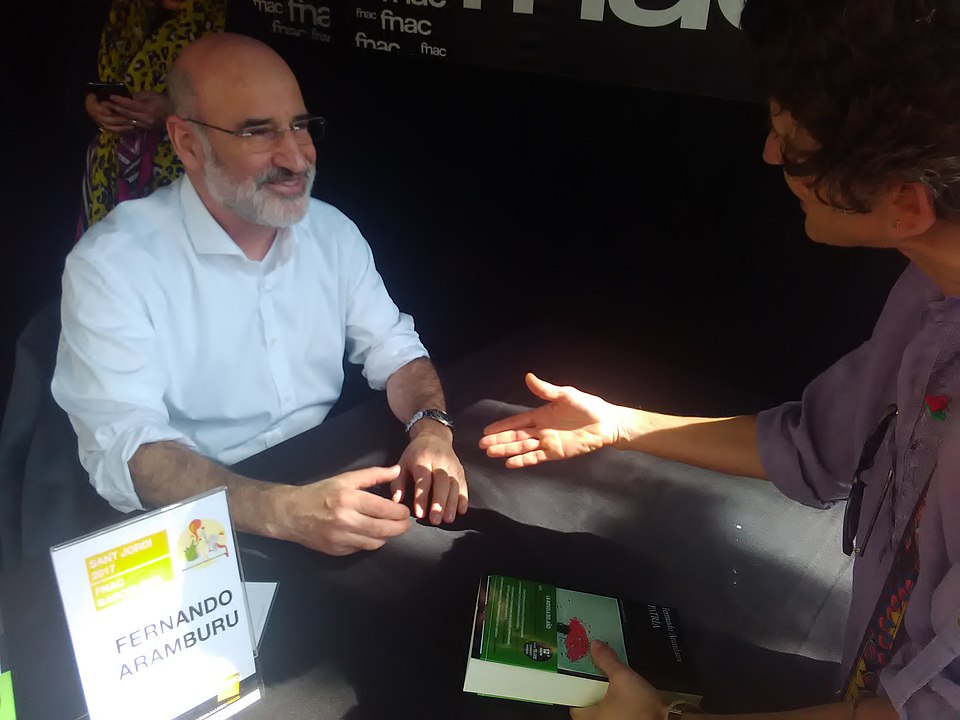
Fernando Aramburu. Foto: Climent Sostres 2017

Es un libro más largo que él de McEwan, de unas 700 páginas, pero es uno de esos tomos que no quieres que se acaben nunca. Es la historia de la vida de Toni, otro hombre que se queda abandonado por su mujer. No le deja por su arte, que es el caso de la de Roland Baines, sino por otra mujer. Su matrimonio ha sido el último de una serie de fracasos. Toni cree que, aunque su vida ha sido un desastre, esto no es un accidente que le ha ocurrido específicamente a él, ni por circunstancias ni por mala suerte. La vida es un valle de lágrimas y la derrota es una característica incesante, universal e ineludible de la condición humana. Juzga que la existencia es una mierda y decide terminar voluntariamente con la suya. No vale la pena que siga viviendo, y así ir prolongando la miseria. Busca la muerte por alivio y no en espera de resurrección. Es ateo como Roland.

No obstante, decide que continuará con el calvario que es su vida por un año más, un período durante el cual escribirá en una libreta todo lo que le pase cada día. Su diario le lleva a recordar episodios de su vida que iluminan su pasado.  Los rememora de manera no lineal, igual que lo hace Roland Baines.

Conforme vamos leyendo las entradas en su diario nos damos cuenta de lo dañado que es Toni como resultado del maltrato infantil que sufrió. Fue testigo de mucha violencia de género en su familia de origen. No solo tuvo que soportar su madre la violencia machista de su marido sino que también Toni y su hermano fueron victimas de agresiones a manos de su padre que lindaban con abuso sexual. Sus experiencias en casa los marcaron de por vida. En el caso de Toni, él siente que toda su vida emocional ha sido ingrata. No parece que sepa formar amistades cariñosas duraderas, y ve el mundo como un sitio que le rechaza.

Aunque Toni es profe de filosofía no es de nada pretencioso. Tampoco se mueve en círculos tan intelectuales o vive en barrios tan progres como los de Roland. Lleva una vida más sórdida pero no menos intelectual que la de Roland pero, a diferencia de él, no le interesa resumir la historia de la civilización occidental, ni hacer una recopilación de los eventos políticos de la España contemporánea,  aunque inevitablemente los sucesos nacionales le impactan y de vez en cuando los comenta y nos entretiene con sus observaciones. 

Como Roland, Toni es sincero, pero muy sincero. Sus confesiones son brutales. No esconde ninguno de sus vicios. Escribe con sarcasmo e ironía. Dice las cosas como un hombre que sabe que solo le cabe un año de vida, que él tiene fecha de caducidad. Dice las cosas sin tapujos y con su propio estilo de humor negro.

McEwan intenta demostrar que el maltrato infantil puede ser sutil pero, al hacerlo, crea un ejemplo débil que falta a la verdad. En cambio, el libro de Aramburu es más concreto y más convincente y, sobre todo, entrañablemente divertido.