A very long time ago I read Sociology at the University College of North Wales in Bangor. During the first year I lived in a hall of residence in the upper part of town. My room was on the top floor and from the balcony you could see the mountains of Snowdonia National Park. Every morning in the winter, I would wake to the beautiful sight of the snow-covered peaks. It was around then that I fell in love with Wales.

From then on I have always taken at least one break a year in Wales, like many of my fellow Englishmen. Wales has a wilder and more mountainous countryside than England, its next door neighbour. And, generally speaking, its beauty spots are not all ruined by pubs, food vans and souvenir shops. It is much less crowded. The majority of its coasts are unspoilt and are not marred by huge tourist developments.
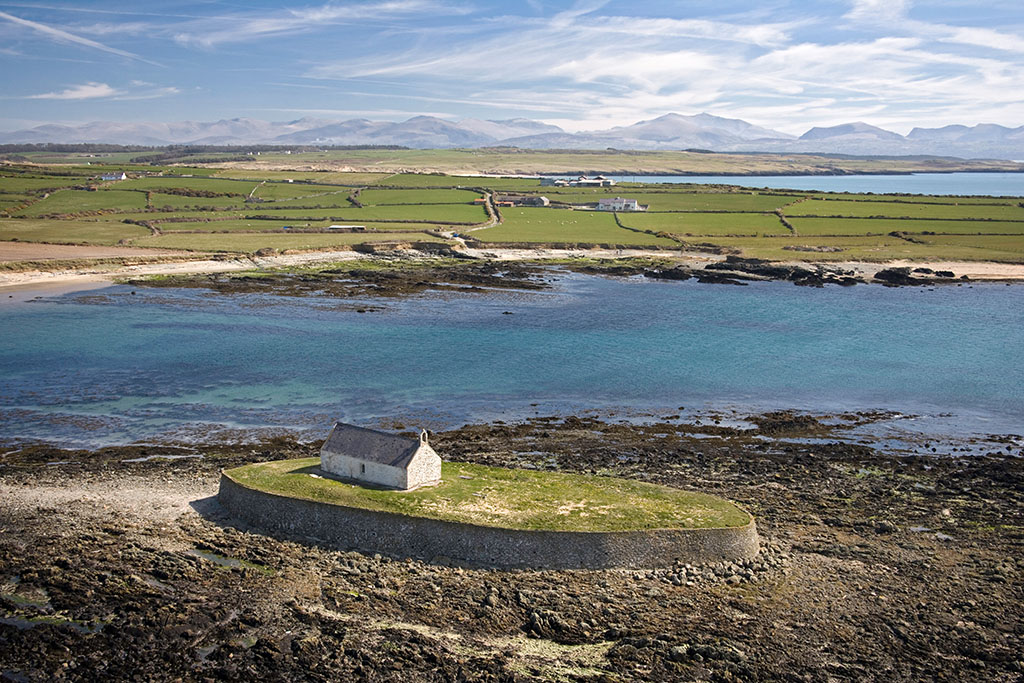
Wales is the only nation in the world that has an uninterrupted footpath that runs the entire length of its coast: a very picturesque walk, 870 miles long. The only important exception is the north coast between Chester and Llandudno. The heavy industry on the estuary of the River Dee is followed by a succession of not particularly attractive towns plus an endless string of caravan sites. The latter are miles long and dominate whatever coastline isn’t already built up. For the last seventy years these caravans have been supplying cheap holidays to north-west England and they are not about to go away, given the difficult economic years that are on their way. (This could be a bit snobbish and unjust.)
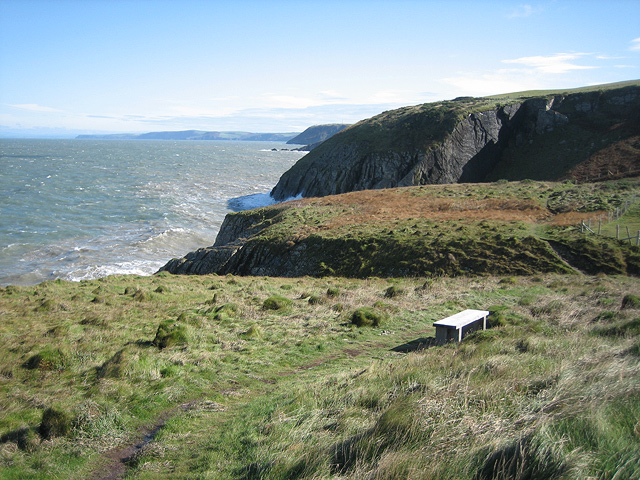
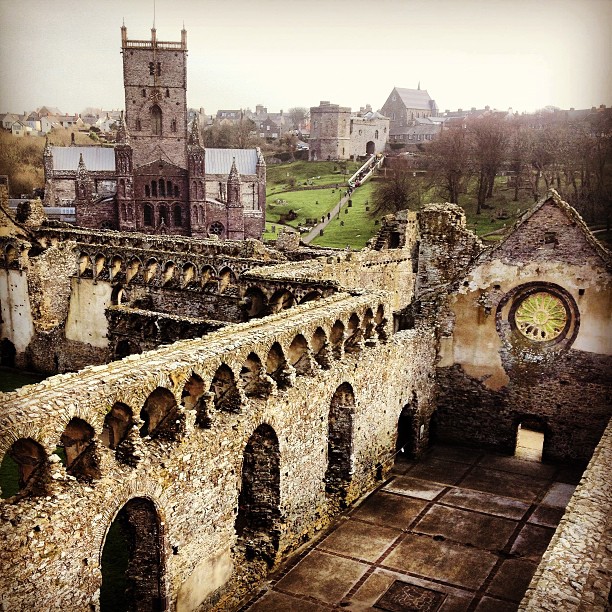
The rest of the coast is a pure delight, especially the west and the south – high cliffs, remote churches, deserted beaches, interesting little towns and villages. It’s a land of castles, built mainly by the Normans and the English in their attempts to subdue the people and to ward off any foreign threat. The coastal path passes some magnificent fortresses, Conwy, Caernarfon, Harlech, Chepstow and Beaumaris being some of the best examples. (In the case of St Donat’s which I mentioned in last month’s post, the way crosses the concrete platform which protects the grounds of the castle from the onslaught of high tides.) But the footpath passes many other places of historic interest, St David’s cathedral in the south west corner of the country in particular.

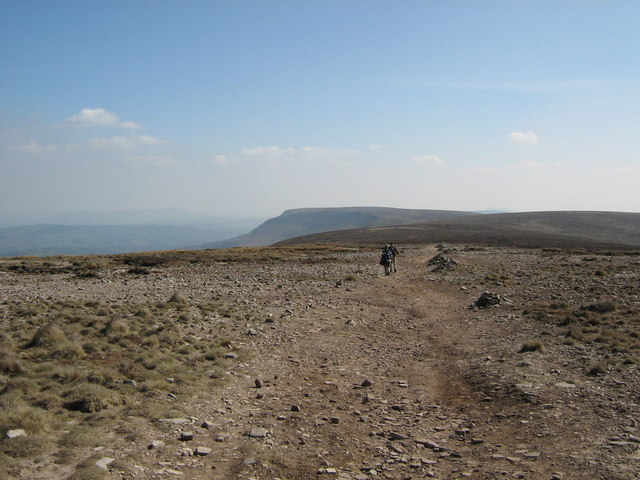
If you like hiking, Wales is the ideal place. It’s criss-crossed by short and long-distance routes. I recommend Offa’s Dyke Path which follows the route of the embankment that King Offa of Mercia (a kingdom in central England which existed in the Early Medieval Period) built in the sixth century to control the border with Wales. The path doesn’t follow the present border but weaves in and out of both countries. It’s a journey you can complete in 10 or 11 days. There is an offshoot called Glyndŵr’s Way which leads you some out of the way places in central Wales.

Wales is a bit reminiscent of Galicia. I know, because I’ve lived in both countries. The climate is similar: it rains “from time to time”. But it doesn’t get hot in Wales in the summer: the temperatures in Wrexham or Brecon don’t reach those you’ll find in deepest Galicia, in Lugo or Ourense. The two countries also have the same surface area and more or less the same number of inhabitants. In Wales, Galicia and all agricultural and livestock rearing countries, the rural population is scattered. Galicia has millions of cows but Wales specialises in sheep. I don’t know the ratio of people to sheep but I do remember an interminable succession of fields of sheep on Offa’s Dyke Path, a nightmare if you are walking with a dog. Although Wales is a mountainous country, its ranges are not as high as those of Galicia. Wales is a bilingual country, but unlike Galician, the autochthonous language doesn’t bear any relation to the national language of the State in which it is situated; it is a Celtic language that has descended from the speech of the Ancient Britons who retreated to the north and west of these islands to escape from the incursions of the Germanic invaders during the early centuries of the Common Era. If, at that time the Welsh had defeated the Anglo-Saxons it is possible that all the people who live in Great Britain would now be speaking Welsh. One final thing about Galicia: the University College of North Wales in Bangor hosts the Centre for Galician Studies in Wales.(The Centre has a good library.)
Although Wales is a bilingual country, its own language is heard at its best in the north and west. Here, hidden away behind the mountains, Welsh has remained intact for many centuries and generations of Roman, Norman and Anglo-Saxon invaders have had to retreat in the face of brave resistance from fierce Welsh warriors. (Well, things didn’t happen exactly like that, but it sounds more romantic to say it in that way.) The last leader who mounted an armed rebellion against the British crown was the iconic hero of modern Welsh nationalists, Owain Glyndŵr, the man who took on the forces of Henry IV at the beginning of the fifteenth century. Glyndŵr did well but, in the end, he failed in his attempt to liberate his country because he lacked the artillery and the naval power to protect the territory and the strongholds that he had captured.
In cities like Caernarfon in the north-west, Welsh is the only language you will hear. The irony is that it is hardly heard in the capital, Cardiff / Caerdydd, close to the border with England, where it only makes an appearance on road signs. There are people who say that nowadays Welsh is losing ground to English but there are others who say the language is on the up.
The University of Wales has four principal colleges: Bangor, Aberystwyth, Swansea and Cardiff. They are all bilingual but you can study many units and modules through the medium of Welsh. Clearly, you have to be able to speak the language well. However, the Department of Welsh and Celtic Studies is available to those who wish to learn Welsh from scratch; this degree in Welsh for beginners lasts four years.
There you have it. If you are young and you are good at languages, this is an opportunity to learn about the culture, history and literature of the most thriving Celtic language in the world. Besides, if you wish to complement your studies with outdoor sporting activities, hiking, climbing, windsurfing, coasteering or whatever, then this is your place.

 Ingleses