………¿o porno blando victoriano?
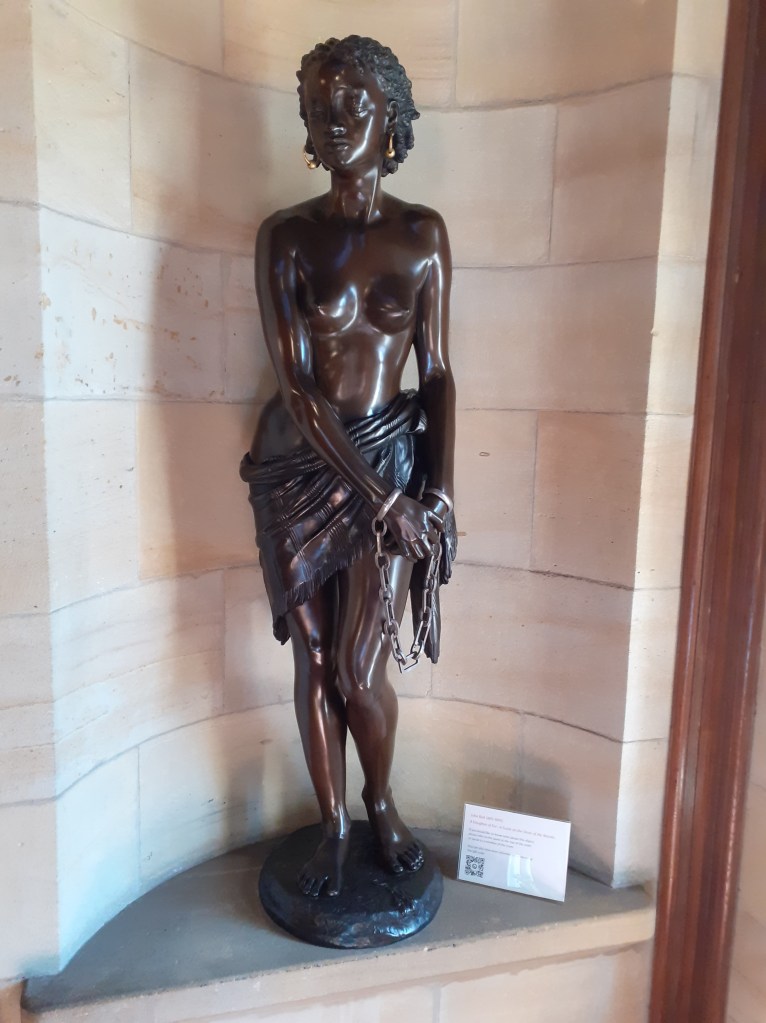
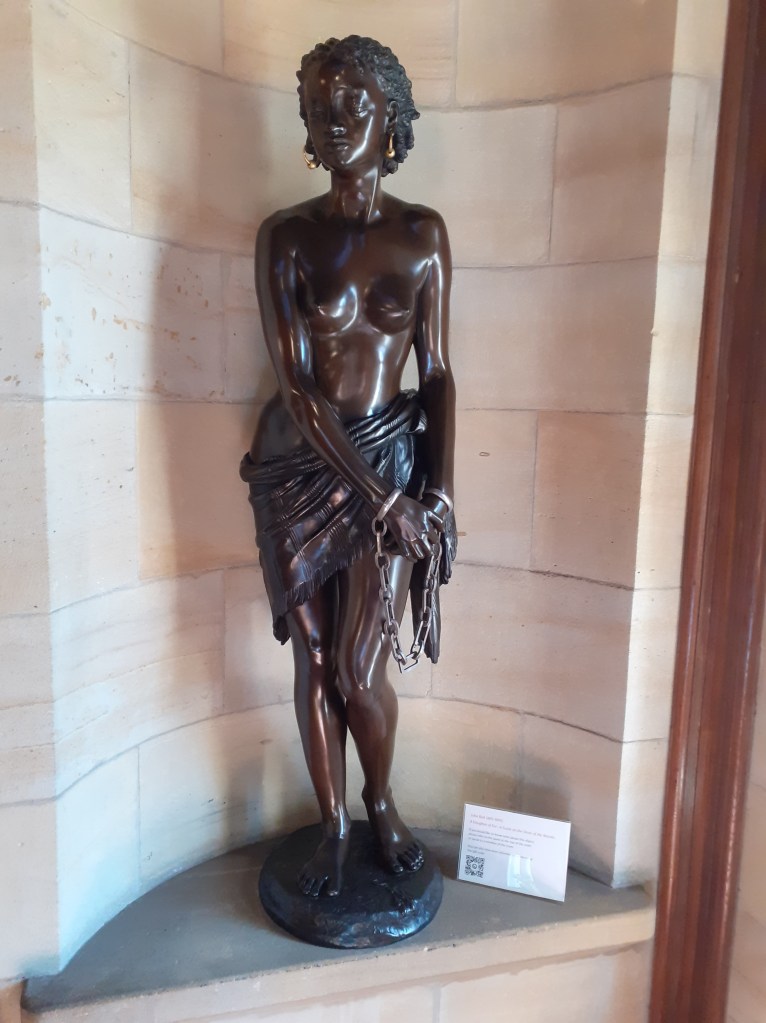
John Bell Inglaterra 1853
Esta escultura pertenece a la National Trust británica (Fundación nacional para la preservación de lugares de interés histórico o belleza natural). Normalmente se ve expuesta en Cragside, una de las casas señoriales que pertenecen a la Fundación.
Sin embargo, este año la estatua está cedida al museo Ashmolean en Oxford (21 septiembre 2023 – 18 febrero 2024). El año que viene la obra se puede ver en la Academia Real en Londres (3 febrero 2024 – 28 abril 2024). (Donde estará entre 3 y 18 de febrero no tengo la menor idea).
Cuando la vi en Cragside a principios de este año, la estatua estaba acompañada de un letrero explicativo que sostenía que la obra representaba a una mujer esclavizada. Ella está allí de pie «a orillas de África occidental, esperando ser transportada a América del norte» La obra, decía el letrero, era una protesta contra la esclavitud allí.
El letrero continúa diciendo que «la representación de ella parcialmente desnuda y encadenada cosifica su cuerpo de un modo que hoy resulta profundamente incómodo».
Es decir, sospechan que hay un problema asociado con la imagen pero no pueden decir lo que sea exactamente.
La National Trust (NT) siempre tiene dificultades con problemas asociados con el sexo y la esclavitud. Como ya hemos observado en varios posts, evitan a toda costa mencionar que hasta 4.000 esclavos chinos tuvieron que morir en condiciones similares a las de los campos de concentración nazi, minando el tóxico guano para la creación de la fortuna de William Gibb el hombre que construyó Tyntesfield, otra casa señorial que hoy en día pertenece a la NT. En vez de decir la verdad, los dirigentes de la NT prefieren relatar el bonito cuento de hadas del hombrecito cristiano muy listo que se hizo rico con la venta de la caca que las aves marinas sudamericanas amablemente depositaban gratis en el suelo; de hecho, las amistosas aves le hicieron tan rico que se pudo construir Tyntesfield, la lujosa mansión con sus jardines a unos cuantos kilómetros de la ciudad de Bristol. Véanse por ejemplo estos posts:
https://wordpress.com/post/ingleses.blog/214
https://wordpress.com/post/ingleses.blog/189
Igualmente, los directores de la NT no tienen mucho que decir sobre la imagen sexualizada de la chica en pelotas. Porque, diga lo que diga la NT, la escultura no es de una mujer, sino de una adolescente. Parece que el señor Bell optó por representar a una chica adolescente pero los directores de la NT no pueden reconocer lo que está ante sus ojos.
Para que sepan, esta es la imagen idealizada y erotizada de una esclava africana adolescente que lleva las manos esposadas. Solo la presión de las manos y el peso añadido de los grilletes impide que no se le caiga al suelo el retazo de tela que le cubre el sexo. Es una chica mansa, humilde y dócil. Tiene el cutis inmaculado y radiante y sus pechos jóvenes y sus caderas voluptuosas y provocativas son la perfección en sí misma.
Es relevante señalar aquí que la imagen aparece en una época en la que circulaban varios mitos populares sobre la sexualidad de la gente negra. Se creía en general que las mujeres negras eran muy libidinosas e insaciables. Como consecuencia, eran muy seductoras y promiscuas. No podían resistir la tentación de acostarse con todos. Eran muy dadas a ser esclavas del sexo. En la imaginación popular se habría supuesto que esta chica tan dulce y sumisa estaría muy agradecida a cualquier hombre que le hiciera el favor de quitarle las esposas. O puede ser que él prefiriera que ella permaneciera con los grilletes puestos hasta que hubiera tenido la oportunidad adecuada de mostrarle su gratitud.
Todo esto nos lleva a sospechar que quizás la estatua no sea tan inocente como afirma el artista. Por lo menos se puede decir que su estatua tiene muchos de los ingredientes de la pornografía infantil victoriana suave. Tal vez John Bell, a la hora de crear su obra, tuvo un ojo puesto en el mercado de material erótica infantil.
Sin embargo, la pornografía infantil fue solo la punta del iceberg en cuanto a la explotación sexual de los niños en la Inglaterra victoriana. Esta imagen de una una joven desnuda aparece en una época cuando la prostitución infantil había llegado a ser una epidemia. El mercado fue saturado con chicas de una edad muy tierna que se compitieron a prostituirse en las calles de Londres.
En 1848 casi 2.700 niñas londinenses de entre 11 y 16 años fueron hospitalizadas por enfermedades venéreas, muchas de ellas como consecuencia de la prostitución. En 1875, la edad de consentimiento, que había permanecido en 12 años desde 1285, se elevó a 13, en parte como resultado de la preocupación por la gran escala de la prostitución infantil.
Tal fue la pobreza de la Inglaterra victoriana que miles y miles de prostitutas de 13 años o menos proliferaron en las calles de Londres y solo para darles de comer a sus hermanos más pequeños.
Entonces, no nos dejemos engañar. Tener relaciones sexuales con una niña de 12 o 13 años era totalmente legal. Y la novedad de una niña negra de una edad parecida como Una hija de Eva, incluso en forma de figura fabricada en serie que reposaba sobre la repisa de la chimenea de tantos hogares de clase media, no podía estar mejor diseñada para venderse a muchos de los hombres que frecuentaban a esas desdichadas menores de edad.
La estatua aparece en una época en la que el romanticismo no tiene reparo en compaginar el eroticismo con el sufrimiento y la muerte prematura. La literatura contemporánea está repleta de pálidas protagonistas que guardan cama, muriendo de enfermedades incurables, jóvenes postradas que esperan pacientemente su fallecimiento inevitable, figuras patéticas en el lecho de su muerte, que de vez en cuando suspiran trágicamente, y dirigen la cara exangüe y cansada hacia la luz débil que se filtra por los visillos de su habitación. Merecen una mención especial las inválidas que tienen condiciones debilitantes como la tuberculosis, una enfermedad consuntiva que produce una apariencia dolorosamente demacrada que hace destacar las líneas de la estructura ósea de la cara de la víctima, dándole un aspecto emaciado que la hace muy atractiva a los hombres que aprecian esta combinación particular de flaqueza y vulnerabilidad. El romanticismo de la época tenía un lado insidioso y siniestro.
El género, con ejemplos, está bien resumido en el post de Christina Newland: The Prettiest way to die (La forma más bonita de morir) https://lithub.com/the-prettiest-way-to-die/.
Aparentar sexy mientras una se muere no era un tópico confinado a la literatura romántica inglesa decimonónica. Se encontraba por todo el mundo occidental de aquel entonces. El romanticismo tardó bastante en llegar a España pero el país alberga unos buenos ejemplos. Muy impresionante es la obra de Ramón Maria del Valle-Inclán, especialmente su famosa Sonata de Otoño, publicada en 1902. Valle-Inclán estaba convencido de que no hay nada más bonita que la muerte de una tísica.
El suyo era un apetito sexual morboso que lindaba con la explotación sexual. En eso, no estaba solo. Siempre ha habido un porcentaje de hombres a los que les gusta cualquier mujer o niña desamparada, vulnerable o fácilmente intimidada, por la razón que sea ― debilidad, adicción, juventud, pobreza, daño psicológico, enfermedad, discapacidad, y como no, la esclavitud personificada por una adolescente negra encadenada en grilletes.
Resumiendo. Esta estatua sexualmente provocativa de una adolescente negra y encadenada aparece en una época en la que los indefensos habituales, las mujeres y los niños menos afortunados, se vieron forzados a prostituirse para sobrevivir. La estatua aparece con el pretexto de ser una protesta contra la esclavitud en América del norte. Sin embargo, la estatua nunca constituyó ninguna parte de la solución de nada. Siempre fue parte del problema de la opresión de las personas que forman la base del pirámide económico victoriano. En el fondo de nuestra consciencia, la reconocemos como un ejemplo de la pornografía exótica calculada a excitar la gama muy variada de los hombres que integraban la clientela de las numerosas prostitutas infantiles.
Eso es lo que nos hace sentir incómodos.
La estudiada ingenuidad de la NT ante algunos de los aspectos más odiosos de la Inglaterra del siglo XIX es vergonzosa. Parecen querer ofuscar en lugar de aclarar. Celebran siglos de casas señoriales construidas por las clases adineradas, pero lo que no quieren hacer es enfrentarse seriamente a los desagradables corolarios de la época, trabajo esclavo y prostitución infantil incluidos.
 Ingleses