What is the Leyenda Negra ?

The leyenda negra or the Black Legend is a term invented by Spanish intellectuals in the early 20th century to give a name to what they saw as the continuous anti-Spanish propaganda which, since the conquest of the Americas, had slowly but surely been causing an unwarranted deterioration in the country’s image, and this, in turn, had infected national self-esteem, created doubts that undermined trust in the State and corroded public morale.
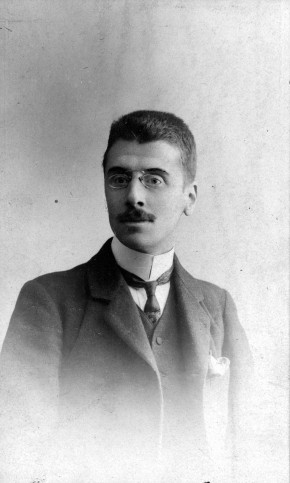
Julián Juderías (1877-1918) via Wikimedia Commons

Although the notion of a leyenda negra already existed in the works of several well-known Spanish writers around the turn of the 19th and 20th centuries, the idea was formally formulated in 1913 by Julián Juderías, an official in Spain’s Ministry of Foreign Affairs, in his prize-winning essay on Spain’s image abroad which was published in the journal, La Ilustración Europea y Americana.

In other words, the original concept of the black legend dates back to a period in Spanish history when Spain had just lost the last vestiges of its great American empire.

Throughout the 19th century Spain was losing its colonial possessions. From Mexico to Chile, the former Spanish colonies rebelled and took their independence. The final blow came in what became known as the Disaster of 1898, when Spain was humiliated in war by the US armed forces, to whom the empire was forced to surrender all remnants of its foreign possessions. Thus it was that the US took control of Cuba, Puerto Rico, the Philippines and Guam. After 500 years, one of the first modern European empires had come to an end. Spain sank into depression and succumbed to a long period of low national esteem. Not only had an empire been lost, but also its reputation had suffered a severe blow..

This is the moment when the idea of the Black Legend was born. It arose as a mechanism to blame all the ills afflicting the country on the malevolent meddling of foreign powers. So it was that an excuse for the loss of Spanish greatness was formulated. Thus, the sense of being defeated was somewhat mitigated. It was more comfortable to consider that a colony had been fooled by an English conspiracy or American propaganda than to think that the people of the colonies really wanted independence from Spain.

In this way, the development of a national inferiority complex was prevented and, over time, the legend came to form a protective psychological shield that deflected further offence to national pride.  

From the beginning, the expression has been very well received by historians and the politicians and ideologues of Spanish nationalism and populism; it has always served them as an instrument to combat the introverted tendency of national self-criticism.

The reason the concept went viral overnight is that it became a political tool. ‘The wolf is at the door’ is a simple trick that is as old as the hills, but it is still very effective. If you are a politician or military man and you want the population of a country to stop arguing with each other, to show solidarity and make common cause, one of the tried and tested techniques you can take advantage of is to identify an external enemy, one that would serve to refocus public attention outside the country, blaming rival nations for the particular failure of the moment.

In this case, the creation of the black legend offered the opportunity to lay the blame for the disintegration of the empire on Spain’s European rivals who had painted a false image of a backward, superstitious and violent nation at the head of a destructive empire. It was a conspiracy of hispanophobes, protestants, communists, jews, freemasons and all the liars of Perfidious Albion: all the scum of the earth. 

It was they who, over the centuries, had been fomenting discontent throughout the empire, and they who had been stoking the Creole political anger that eventually led to the various uprisings against Spanish sovereignty and culminated in the Disaster of 1898.
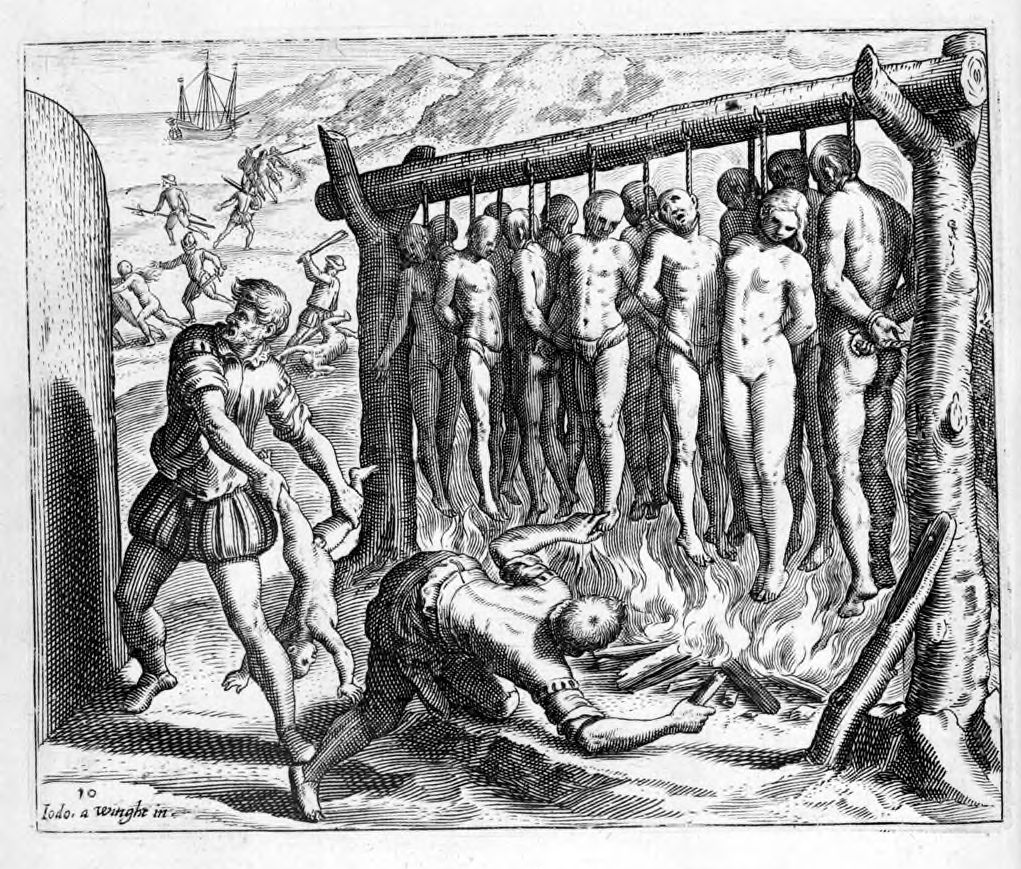
This 16th century drawing by the Belgian Theodor de Bry was inspired by the «Brevísima relación de la destrucción de las Indias» published in 1552, a famous denunciation of the cruelty of the conquest written by Bartolomé de Las Casas, a Spanish Dominican friar who accompanied the conquistadors. Such illustrations characterise the leyenda negra.

One of the major central themes of the leyenda negra is that Spain’s enemies have been trying for centuries to tarnish the country’s image through negative propaganda that invents, exaggerates and lies about the events that took place in the acquisition of the American colonies. Especially exaggerated are the mortal sins committed by the conquistadors: the atrocities they carried out in order to enrich themselves, the looting and plundering of gold and silver and the crimes they committed against humanity.

Fernando Cervantes, the respected Mexican historian, in his recently published book Conquistadores eloquently details the origins of the legend and argues in favour of it. He asserts that the world of the Conquistadors «was not the cruel, backward, obscurantist and fanatical myth that the legend claims, but the world of the crusades of the late Middle Ages that witnessed the eradication of the last vestiges of Muslim rule in continental Europe». 

(Let us overlook the internal contradiction implicit in the sentence in which Cervantes denies that the expulsion of the Muslims was not «cruel, backward, obscurantist and fanatical». Moreover, we will not conclude by extrapolation that «the eradication of the last vestiges of Muslim rule in continental Europe» was any heroic, noble and civilising feat).

There are a number of reasons traditionally adduced to justify or condone the actions of the conquistadors, some of which are echoed by Cervantes.

1 Since the inauguration of the concept of the black legend every enthusiastic supporter of the Spanish empire feels obliged to preface his account of events during the conquest with the observation that we should not judge the behaviour of the conquistadors by today’s standards. They say that the morality of our modern society is new and more sophisticated. They hold that people then did not think the same way as we do today. They were Christians but Christianity was a different thing – no less dedicated to the Lord, but more muscular and visceral. This is also what I was taught at uni, including by Fernando Cervantes himself.

In other words, we have to accept the violence of past centuries, dismiss it as inevitable and say to ourselves, «That was in the past” or «Just close your eyes and ignore it”.

I have never accepted this rationalisation. The conquerors knew what they were doing. They simply chose their own interests over the welfare of the indigenous people.

The crews of the ships that sailed to the Indies were not chosen for their eagerness to preach the gospel. Most of the volunteers who signed up for the adventure of discovering new continents were people who risked everything because they had nothing to lose. Many were poor people, criminals and scoundrels. Many were fleeing from justice. When they signed up for the adventure of discovering the Americas they had been promised gold and the crews of the ships went for it. Of course, the officers in charge of the expeditions were more professional. They had been chosen by the Crown’s agents and represented the king’s interests. So they were in a difficult position; they had to mediate between the conflicting desires of the men on board (to get rich as quickly as possible) and the dictates of the monarch (to find gold and bring it back to the royal coffers as soon as possible, and at the same time to convert the natives to Christianity and make them subjects of the throne).

2 No conquest took place because the tribes did not possess a country to conquer.

3 The so-called conquerors only formed alliances with tribes already disaffected from the other ruling tribes.

4 It was the imported European diseases that decimated the indigenous people. The alleged Spanish violence had little to do with it. 

5 Chiefs, commanders and leaders like Cortés did the indigenous people a favour with their annihilation of the Aztecs, an extremely cruel empire with its frequent ritual sacrifices of men, women and children.

It should be added that Cervantes does not defend the cause of the black legend with great conviction. After repeating the obligatory tropes intended to pardon the conquistadors, Cervantes goes on to write the most complete account of the conquistadors’ aggression that I have ever read: the lethal destructuring of the Taino family order, the annihilation of the Aztec army, the razing of the entire city of Tenochtitlan; the many massacres they inflicted all over the continent; the cruelty they handed out to any indigenous tribe that did not wish to accept Christianity, inflicting upon them, torture, slavery and the needless execution of their leaders.

It is a well-written and very detailed chronicle based upon hitherto unexplored primary sources. Indeed, Cervantes has collated many ancient documents. As he says, «From diaries, letters, chronicles, biographies, instructions, histories, epics, encomiums and treatises written by the conquerors, their defenders and detractors, I have tried to weave a story that often reveals surprising and unknown threads.”

There is also another reason commonly used to downplay the seriousness of the behaviour of the conquistadors:

6 There were excesses but the English would have done worse.

For me, this last observation is the most valid of all. The British Empire reigned for a long time over many populous regions of the world and committed countless crimes against humanity. However, to a large extent, we have now come to terms with our violent past and we do not deny the veracity of the crimes our forefathers perpetrated in the name of king and country.

Indeed, several members of the current British royal family accept their country’s responsibility for the empire’s many crimes. For example, next week the king will visit Kenya, the former British colony that gained its independence in 1963 after a decade-long liberation war led by the armed Mau Mau movement. Ten years ago, on the occasion of Kenya’s 50th anniversary of independence, the British government made a historic statement of regret for the «torture and other forms of ill-treatment» perpetrated by the colonial administration during the emergency period and paid compensation of £19.9 million to some 5,200 people.

(Although, it should be noted that, in total, an estimated 90,000 people were executed, tortured or mutilated during the war).

In addition, Prince William said in March 2022, during a speech to the Jamaican Prime Minister and other dignitaries, that «Slavery was abhorrent and should never have happened. I agree wholeheartedly with my father……..who said in Barbados last year that the appalling atrocity of slavery forever stains our history».

So, I ask myself, why can’t so many Spanish historians also accept their nation’s own past crimes, even if they believe that they were committed on a smaller scale? Why do they insist, ad nauseam, that the conquistadors behaved well towards the native peoples during the conquest and that the country’s bad image is only the result of an international conspiracy to tarnish its reputation? 

What is remarkable is that all the other European empires of the last 500 years never acquired such notoriety as the Spanish, although they may have have deserved it even more.  Significantly, these empires never complained about their own leyenda negra. One is tempted to suspect that the invention of the term became a self-fulfilling prophecy and that Spain’s reputation would have been less tarnished if the authors of the expression had not themselves drawn further attention to the events which occurred during the acquisition of the South American colonies.

However, after more than a century of reification of the black legend, it is too late to cancel or to withdraw the expression. Besides, even the most thoughtful of historians such as Fernando Cervantes still believe in it. Indeed, if you look on YouTube it has some very vociferous defenders. You can watch them now as they rant resentfully against allegations of genocide, fulminate against critics of the Spanish empire and beg you to believe the equanimity with which the conquistadors treated the indigenous peoples with whom they chanced to meet.

As for owning up about the misdeeds of the past, perhaps Spanish regal pride is so strong that no one in the royal family wishes to acknowledge that the «plot» to discredit Spain was nothing more than the reification of a concept adopted by intellectuals in an attempt to preserve the country’s dignity in the face of the defeats of the 19th century.
¿Qué función cumple la leyenda negra?

La leyenda negra es un término inventado por intelectuales españoles a comienzos del siglo 20 para dar nombre a lo que ellos consideraban la continua propaganda antiespañola que, desde la conquista de las Américas, de forma lenta pero segura, había ido ocasionando un injustificado deterioro en la imagen del país, y esto, que en su turno había contagiado la autoestima nacional, había creado dudas que minaban la convicción en el Estado y corroído la moral del público.

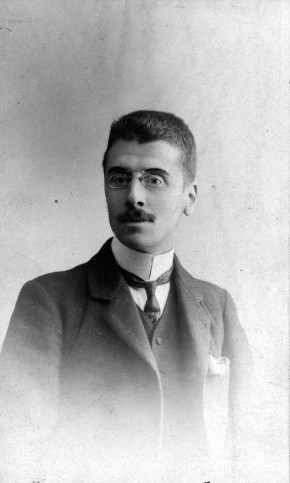
Julián Juderías (1877-1918) via Wikimedia Commons

Aunque la noción de una leyenda negra ya existía en las obras de varios conocidos escritores españoles alrededor de los finales del siglo 19 y los principios del siglo 20, la idea fue formulada formalmente en 1913 por Julián Juderías, un funcionario del ministerio de AAEE de España, en su ensayo ganador del premio convocado por la revista, La Ilustración Europea y Americana sobre la imagen de España en el extranjero.

Es decir, el concepto original de la leyenda negra se remonta a un periodo en la historia de España en el que el país acababa de perder los últimos vestigios de su gran imperio americano. 

Durante todo el siglo 19 España fue perdiendo sus posesiones coloniales. Desde México a Chile las antiguas colonias españolas se fueron sublevando e independizando. El golpe final llegó en lo que se dio a conocer como el Desastre del 1898 en el que España se vio humillado en guerra a manos del ejército estadounidense, a quien el imperio se vio obligado a entregar todos los restos de sus posesiones extranjeras. Así fue que EEUU se hizo con el control de Cuba, Puerto Rico, Filipinas y Guam. Después de 500 años, uno de los primeros imperios europeos modernos había tocado a su fin. España se hundió en una depresión y sucumbió a un largo periodo de baja estima nacional. No solo se había perdido un imperio sino también había perdido su reputación. 

Este es el momento en que nació la idea de la leyenda negra. La idea surgió como un mecanismo para echarle la culpa de todos los males que afligieran el país a la intromisión malévola de potencias extranjeras. Así se formuló una excusa para la pérdida de la grandeza española. Así, se mitigó algo el sentido de estar derrotado. Fue más cómodo considerar que las colonias se habían dejado engañar por una conspiración inglesa o la propaganda estadounidense que pensar que la gente de las colonias realmente quisiera su independencia de España.

De este modo se evitó el desarrollo de un complejo de inferioridad nacional y, a lo largo del tiempo, la leyenda llegó a ser un duro caparazón psicológico protector que contrarrestó los sentimientos nacionales ofendidos.  

Desde el principio, la expresión ha tenido muy buena acogida entre los historiadores, los políticos e ideólogos del nacionalismo y los charlatanes del populismo español; siempre les ha servido de instrumento para combatir la tendencia introvertida de la autocrítica nacional.

La razón por la cual el concepto se volvió viral de la noche a la mañana es que se convirtió en una herramienta política. «El lobo está en la puerta» es un truco sencillo y tan viejo como las montañas, pero sigue siendo muy eficaz. Si eres un político o militar y quieres que la población de un país deje de discutir entre sí, se solidarice y haga causa común, una de las técnicas usadas y probadas de las que puedes aprovechar es la de identificar a un enemigo exterior, un enemigo que sirviera para volver a centrar la atención pública fuera del país, identificando a las naciones rivales de España a las que se pueda echar la culpa del fracaso del momento. 

En este caso, la creación de la leyenda negra ofrecía la oportunidad de echar la culpa de la desintegración del imperio a los hispanófobos: los críticos, los protestantes, los comunistas, los judíos, los masones y los mentirosos de la Pérfida Albión, es decir toda la escoria del mundo. Fueron ellos que, a lo largo de los siglos, habían estado fomentando el descontento por todo el imperio, y ellos que habían estado atizando el cabreo político criollo que finalmente condujo a los varios levantamientos en contra de la soberanía española y que culminaron en el Desastre del 1898.

Este dibujo del siglo 16 del belga Theodor de Bry está inspirado en la obra «Brevísima relación de la destrucción de las Indias» publicado en 1552, una famosa denuncia de la crueldad de la conquista escrita por Bartolomé de Las Casas, un fraile dominico español que acompañó a los conquistadores. Tales ilustraciones forman parte de la leyenda negra.

Uno de los mayores temas centrales de la leyenda negra es que los enemigos de España llevan siglos intentando ensuciar la imagen del país por medio de una propaganda negativa que inventa, exagera y miente sobre los sucesos acaecidos en la adquisición de las colonias americanas. Especialmente exagerados son los pecados mortales cometidos por los conquistadores: las atrocidades que llevaron a cabo a fines de enriquecerse: el saqueo, pillaje y masacres que llevaron a cabo.

Fernando Cervantes, el respetado historiador mejicano, en su recién publicado libro Conquistadores detalla con elocuencia los orígenes de la leyenda y se muestra partidario de la misma. Asevera que el mundo de los conquistadores «no era el mito cruel, atrasado, oscurantista y fanático que dice la leyenda, sino el mundo de las cruzadas de la Baja Edad Media que fue testigo de la erradicación de los últimos vestigios del dominio musulmán en la Europa continental». 

(Pasamos por alto la contradicción interna implícita en la frase en la que Cervantes niega que la expulsión de los musulmanes no «fue cruel, atrasada, oscurantista y fanatica». Ademas, no vamos a concluir por extrapolación que «la erradicación de los últimos vestigios del dominio musulmán en la Europa continental» fue una hazaña heroica, noble y civilizadora.)

Hay una serie de razones que se aducen tradicionalmente para justificar o perdonar las acciones de los conquistadores, unas de las cuales están repetidas por Cervantes:

1 Desde la inauguración del concepto de la leyenda negra, cada entusiasta del imperio español se siente en la obligación a prologar su recuento de los hechos ocurridos durante la conquista con la observación que no debemos juzgar el comportamiento de los conquistadores según las normas actuales. Dicen que la moralidad de nuestra sociedad moderna es nueva y más sofisticada. Sostienen que en aquel entonces no pensaban igual que nosotros. Eran cristianos pero el cristianismo de los siglos 15 y 16 era cosa distinta – no menos dedicados al Señor, pero más muscular y visceral. Esto también es lo que me enseñaron en la uni, incluso el propio Fernando Cervantes.

Dicho de otra forma, tenemos que aceptar la violencia de los siglos pasados: «Eso era antes». «Hay que cerrar los ojos y hacer como si nada».

Yo nunca he aceptado esta racionalización. Los conquistadores bien sabían lo que hacían. Ellos simplemente eligieron sus propios intereses sobre el bienestar de los indígenas. 

Las tripulaciones de los barcos que zarparon hacia las Indias no estaban elegidas por su afán de predicar el evangelio. La mayoría de los voluntarios que se alistaron a la aventura de descubrir nuevos continentes era gente que se arriesgaba todo porque no tenían nada que perder. Muchos eran gente pobre, criminal y canalla. Muchos huían de la justicia. Cuando se alistaron a la aventura de descubrir las Indias se les habían prometido oro y las tripulaciones de los barcos se fueron a por ello. Claro que los oficiales a cargo de las expediciones eran más profesionales. Ellos habían sido escogidos por los agentes de la Corona y representaban los intereses del rey. Así que se encontraban en una posición difícil; tenían que mediar entre los deseos conflictivos de los hombres a bordo (hacerse ricos lo más rápido posible) y los dictados del monarca (buscar oro y traerlo a las arcas reales en cuanto antes, y, a la vez convertir a los indígenas al cristianismo y hacerles súbditos del trono).

2 No tuvo lugar ninguna conquista porque las tribus no poseían un país por conquistar.

3 Los llamados conquistadores solo formaron alianzas con tribus ya desafectas de las otras reinantes.

4 Fueron las enfermedades europeas importadas que diezmaron a la gente indígena. La supuesta violencia española tuvo poco que ver. 

5 Jefes, comandantes y líderes como Cortes hicieron un favor a la gente indígena con su aniquilación de los aztecas, un imperio sumamente cruel con sus frecuentes sacrificios rituales de hombres, mujeres y niños. 

Hay que añadir que Cervantes no defiende la causa de la leyenda negra con gran convicción. Después de repetir los tropos obligatorios que pretenden perdonar a los conquistadores, Cervantes pasa a escribir la más completa versión de la agresión de los conquistadores que he leído en mi vida: desde la desestructuración letal del orden familiar de los Taínos, la aniquilación del ejercito azteca, el arrasamiento de toda la ciudad de Tenochtitlan, y los otros muchos masacres que infligieron por todo el continente, a los horrores que infligieron sobre cualquier tribu indígena que no quisiera aceptar el cristianismo: la crueldad, tortura y esclavitud y la ejecución innecesaria de sus lideres etc.

Es una crónica bien escrita, muy detallada y basada en fuentes primarias hasta ahora inexploradas. Cervantes ha cotejado muchos documentos muy antiguos. Dice el autor, «A partir de diarios, cartas, crónicas, biografías, instrucciones, historias, epopeyas, encomios y tratados elaborados por los conquistadores, sus defensores y sus detractores, he intentado tejer una historia que a menudo muestra hilos sorprendentes y desconocidos». 

Hay también otra razón que se usa para justificar el mal comportamiento de los conquistadores:

6 Hubo excesos pero los ingleses lo hubiesen hecho peor.

Para mi, esta última observación es la más válida de todas. El imperio británico reinó por un largo tiempo sobre muchas regiones muy pobladas del mundo y cometió un sinfín de crímenes de lesa humanidad. Pero, hoy en día y en gran medida, nosotros asumimos nuestro pasado violento y no nos negamos la veracidad de los crímenes que nuestros antepasados perpetraron en nombre del monarca y el imperio.

Incluso, varios miembros de la familia real británica actual aceptan la responsabilidad del imperio por los muchos crímenes cometidos. Por ejemplo, dentro de unas semanas el rey visitará Kenia, la antigua colonia británica que ganó su independencia en 1963, después de una década de guerra de liberación liderada por el movimiento armado, Mau Mau. Hace 10 años, en ocasión del 50 aniversario de la independencia de Kenia, el gobierno británico hizo una histórica declaración de arrepentimiento por las  «torturas y otras formas de malos tratos» perpetradas por la administración colonial durante el periodo de emergencia y pagó indemnizaciones por valor de 19,9 millones de libras a unas 5.200 personas.

(Aunque, se debe señalar que se estima que durante la guerra 90.000 personas fueron ejecutadas, torturadas o mutiladas.)

Por añadidura, el príncipe Guillermo dijo en marzo de 2022, durante un discurso ante el primer ministro de Jamaica y otros dignatarios, que «La esclavitud fue aborrecible y nunca debería haber ocurrido. Estoy totalmente de acuerdo con mi padre ………… que dijo en Barbados el año pasado que la espantosa atrocidad de la esclavitud mancha para siempre nuestra historia».

Entonces, me pregunto, ¿por qué no pueden los españoles también aceptar sus crímenes aunque sean de menor escala? ¿Por qué insisten, erre que erre, que se portaron bien hacia los indígenas durante la conquista y la mala imagen del país es solamente el resultado de una conspiración internacional para manchar su reputación? 

Lo notable es que todos los otros imperios europeos contemporáneos con el español nunca adquirieron tanta notoriedad aunque se la merecieran. Pero, esos imperios nunca tuvieron su propia leyenda negra. Uno se ve tentado a sospechar que la invención del término llegó a generar una profecía autorrealizada y la reputación de España hubiera resultado menos manchada si los autores de la expresión no hubieran llamado la atención a los hechos ocurridos durante la adquisición de las colonias suramericanas. 

Puede ser que, después de más de un siglo de cosificación de la leyenda negra ya sea demasiado tarde para retirar el término. Incluso los más reflexivos de los historiadores como Fernando Cervantes todavía creen en ella. Sin embargo, los más vociferantes resentidos se aglomeran en el Youtube desde donde despotrican contra las alegaciones de genocidio, fulminan a los críticos del imperio español y señalan la ecuanimidad con la que los conquistadores trataron a los indígenas.

Tal vez el orgullo de España es tal que nadie quiere reconocer que el «complot» no fuera nada más que la reificación de un concepto adoptado por intelectuales en un intento de preservar la dignidad del país ante las derrotas del siglo 19.