Straits. Beyond the Myth of Magellan

by Felipe Fernández-Armesto

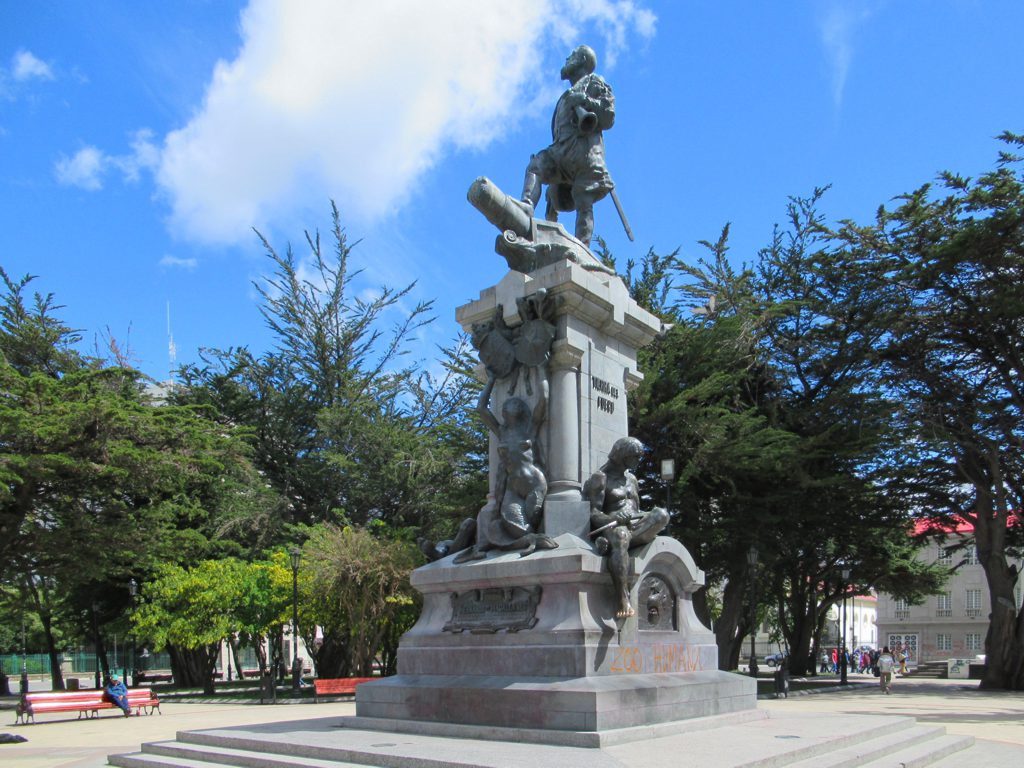
The Monumento Hernando De Magallanes was erected on Plaza de Armas Muñoz Gamero, Punta Arenas, Chile, in 1920 to commemorate the 400th anniversary of the discovery of the Estrecho de Magallanes. Photo by David Stanley via Wikimedia Commons

Until the publication of this book, Magellan’s reputation has remained largely uncriticised. What Felipe Fernández-Armesto has done to amuse himself during lockdown has been to carry out an exhaustive reading of all the sources on Magellan’s famous «circumnavigation» of the globe. As a result, the author has concluded that the time is ripe to confront the undeserved apotheosis of this paranoid murderer.

This is a magnificent book that completely dismantles the whole scaffolding of lies that, over five centuries, has been erected around the figure of Ferdinand Magellan in order to fabricate and maintain an image of a good, scientific and courageous man who circumnavigated the world without falling into the trap, as many did, of making enemies of the indigenous peoples they encountered during the time of the «discoveries». In the post-imperial world in which many of us like to believe we live, all other Christian crusaders have already been unmasked and their cruelty exposed for all to see.

Many of the statues of these men (for they were always men) have been torn down and the stories of their achievements have been rewritten to correct the old image of them as benefactors of the human race. A small local example recently took place in my own city of Bristol: an angry mob pulled down the statue of the 17th century slaver, Edward Colston, and threw it into the dock.
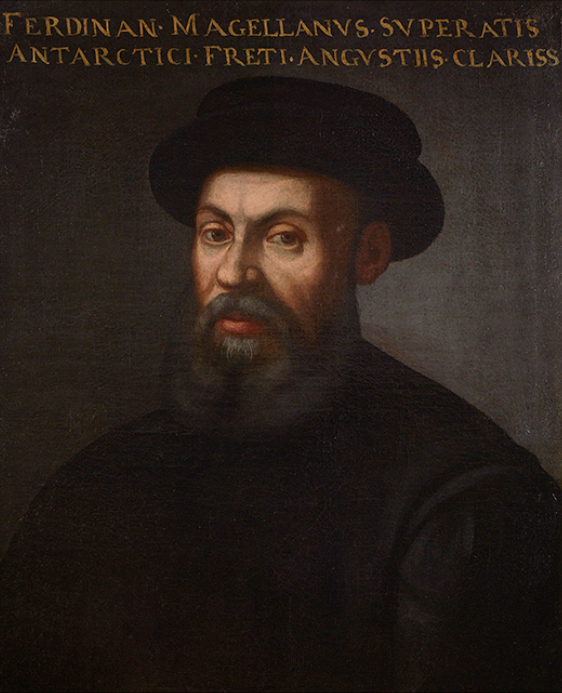
An anonymous portrait of Hernando de Magallanes del siglo XVI o XVII (The Mariner’s Museum Collection, Newport News, VA) Public domain. Via Wikimedia Commons: 

Magellan was a paranoid, stubborn and brutal Portuguese adventurer who parted bad-temperedly from King Manuel of Portugal when the latter flatly rejected the idea of funding the search for a strait through which one could pass through South America, cross the Pacific Ocean and reach the Moluccas, the so-called «Spice Islands», from the west. Frustrated and morose, Magellan renounced his allegiance to the Portuguese crown and offered his services to the Casa de Contratación in Seville. After much consideration, he was offered a fleet of five caravels and a generous budget. However, neither King Charles of Spain nor Bishop Fonseca of Burgos, the main bureaucrat of the Casa, trusted this impetuous, selfish and disobedient man and had serious doubts about his intentions. To keep an eye on the renegade Portuguese, the two insisted that their own confidants should accompany him. They also installed a system of checks and balances on board that limited Magellan’s power. Power would be shared amongst several officers who would exercise undisputed control over key responsibilities. For example, Juan de Cartagena was given full responsibility for governing the expedition’s finances, giving him absolute control over what Magellan could buy and bring on board. They included their own pilots in the crew and insisted that two loyal Spaniards, Luis de Mendoza and Gaspar Quesada, should captain two of the other five ships. Thus, by taking authority away from Magellan, a difficult and aggressive man, the preconditions for conflict on the high seas were created.

From the moment he set sail, Magellan did all he could to foment a mutiny that would justify the degree of repression that a few months later would rid him of these officers who had been sent to meddle in affairs that he considered to be his alone. Before he stumbled upon the strait that would eventually lead him to the Pacific Ocean, that is, still on the coast of Patagonia, Magellan had already precipitated the insurrection and the subsequent settling of scores had already taken place. In a single incident he disposed of all untrusted crew members, stabbing, hanging and abandoning them where they had no chance of survival. Most of his victims were Spanish officers, the trusted men of the King and Bishop Fonseca. Luis de Mendoza and Gaspar Quesada were killed and Juan de Cartagena and a priest, Pedro Sanchez de Reina, found themselves abandoned to their fate on the inhospitable coast of Patagonia.

He not only ruthlessly executed members of the crew of his own ships but also killed any natives who annoyed him. Upon reaching the Mariana Islands, the inhabitants made off with some of Magellan’s supplies as well as the skiff the ship was towing. Magellan responded like any good conquistador: he sent a death squad to the robbers’ island to murder dozens of natives with crossbows and burn their village of some fifty huts.

From there he set sail for the Philippines without delay, contrary to his promise to the king to go directly to the Spice Islands. It seems that it had always been his intention to get rich quick from the gold of the Philippines and to appropriate one of the islands for his own exclusive domain. When he arrived in the archipelago he began to behave as he had done in the Marianas. He treated the native people with contempt and belligerence, burning whole villages to intimidate them.

However, Magellan made the lethal mistake of agreeing a mutual defence pact with one of the lesser kings of the island of Cebu and died in a poorly planned and very unequal battle.

In other words, he did not even have the honour of being the first person to circumnavigate the world, although many continue to credit him with this feat. Magellan fell short because of his stubbornness, his violence and his eagerness to profit from the gold of the Philippines.

There is an interview with Felipe Fernández-Armesto about this book on the YouTube channel, Travels Through Time which you find through the following link:
https://www.youtube.com/watch?v=ZLAnoPF_WHg&t=3s

Magallanes, más allá del mito.

Por Felipe Fernández-Armesto

Estatua de Magallanes en Punta Arenas. Foto: David Stanley via Wikimedia Commons

Hasta la publicación de este libro, la reputación de Magallanes ha permanecido en gran medida exenta de críticas. Lo que ha hecho Fernandez-Armesto para divertirse durante la cuarentena ha sido llevar a cabo una lectura exhaustiva de todas las fuentes sobre la famosa «circunnavegación» del globo de Magallanes. Como consecuencia el autor ha concluido que ya ha llegado el momento de enfrentarse a la apoteosis inmerecida de este asesino paranoico.

Este es un magnífico libro que desmantela por completo todo el andamiaje de mentiras que, a lo largo cinco siglos, se ha ido elevando alrededor de la figura de Fernando Magallanes para fabricar y mantener la imagen de un hombre bueno, científico y valiente que circunnavegó el mundo sin caer en la trampa, como lo hicieron muchos, de enemistarse con las gentes indígenas con las que se encontraron durante la época de los «descubrimientos». Hoy en día muchos creemos que los hombres que posaban como cruzados de cristianismo ya han sido desenmascarados y su crueldad expuesta para que todo el mundo la vea. Finalmente, Fernández-Armesto lo ha hecho también con Magallanes.

Muchas de las estatuas de estos hombres (porque fueron siempre hombres) han sido derribadas y las historias de sus logros han sido reescritas para corregir la antigua imagen de ellos como benefactores de la raza humana. Un pequeño ejemplo local que tuvo lugar recientemente en mi propia ciudad de Bristol: una muchedumbre enfurecida tiró abajo la estatua del esclavista del siglo XVII, Edward Colston, y la tiró en la dársena.

Un retrato anónimo de Hernando de Magallanes del siglo XVI o XVII (The Mariner’s Museum Collection, Newport News, VA) Dominio publico. Via Wikimedia Commons: 

Magallanes fue un aventurero portugués paranoico, terco y brutal que se quedó cabreado con el Rey Manuel de Portugal cuando éste rechazó de plano la idea de financiar la búsqueda de un estrecho por el que se pudiera pasar por Suramérica, cruzar el océano Pacífico y llegar a las Molucas, las llamadas «islas de las especias», desde el occidente. Frustrado y malhumorado, Magallanes renunció a su fidelidad a la corona portuguesa y ofreció sus servicios a la Casa de Contratación en Sevilla. Después de mucha consideración se le ofreció una flota de cinco carabelas y un presupuesto generoso. Sin embargo, ni el rey Carlos ni el obispo Fonseca de Burgos, el principal burócrata de la Casa, no fiaban nada de este hombre impetuoso, egoísta y desobediente y albergaban serias dudas sobre sus intenciones. Para vigilar al renegado portugués, ambos insistieron en que sus propios confidentes le acompañaran. También instalaron a bordo un sistema de controles y contrapesos que limitaba el poder de Magallanes. Fue por eso por lo que se dividieron las competencias de abordo entre varios oficiales que ejercerían un control indiscutible sobre sus propias responsabilidades fundamentales. Por ejemplo, se le dio a Juan de Cartagena toda la responsabilidad de gobernar las finanzas de la expedición, otorgándole un dominio absoluto sobre lo que Magallanes pudiera comprar y traer a bordo. Incluyeron en la tripulación a sus propios pilotos e insistieron que los fieles españoles, Luis de Mendoza y Gaspar Quesada, capitanearan dos de los otros cinco barcos. Así, quitando autoridad de Magallanes, un hombre difícil y agresivo, se crearon las condiciones previas para un conflicto en alta mar.

Desde el momento de hacerse a la mar, Magallanes hizo todo lo posible para fomentar un motín que le justificara el grado de represión que unos meses después le libraría de los oficiales que se entrometieron en sus asuntos. Antes de tropezar con el estrecho que finalmente le condujera al Océano Pacifico, es decir todavía en la costa de Patagonia, Magallanes ya se había precipitado la insurrección y ya se había llevado a cabo el subsiguiente ajuste de cuentas. En un solo incidente se deshizo de todos los miembros de la tripulación en los que no se confiaba, apuñalando, ahorcando y abandonándolos donde no tenían la menor posibilidad de sobrevivir. La mayoría de sus víctimas eran oficiales españoles, los hombres de confianza del rey y del obispo Fonseca. Luis de Mendoza y Gaspar Quesada fueron asesinados y Juan de Cartagena y un cura, Pedro Sánchez de Reina se encontraron abandonados a su suerte en la costa inhóspita de Patagonia.

No solo ejecutó despiadadamente a miembros de la tripulación de sus carabelas sino también mató a cualquier nativo que le molestara. Al llegar a la islas Marianas los habitantes le robaron algunos suministros así como el esquife que el navío remolcaba. Magallanes respondió como todo buen conquistador: envió a un escuadrón de la muerte a la isla de los ladrones para asesinar con ballestas a docenas de indígenas y quemar su aldea de cincuenta casitas.

Desde allí puso rumbo sin dilación a las Filipinas, en contra de la promesa que hizo al rey de ir directamente a las islas de las Especias. Parece que siempre había sido su intención principal la de hacerse rico con el oro de las Filipinas y apropiarse de una de las islas para su propio dominio exclusivo. Al llegar al archipiélago comenzó a comportarse igual que se había hecho en las Marianas. Trató a la gente autóctona con desprecio y beligerancia, quemando pueblos enteros para intimidarlos.

Sin embargo, Magallanes cometió el error letal de acordar un pacto de defensa mutua con uno de los reyes menos fuertes de la isla de Cebú y murió en una batalla mal planeada y muy desigual.

Es decir, ni siquiera tuvo el honor de ser la primera persona en circunnavegar el mundo, aunque muchos continúan atribuyéndolo esta hazaña. Magallanes se quedó corto por su testarudez, su violencia y por sus ansias de lucrarse con el oro de las Filipinas. 

(Entrevista en inglés con Felipe Fernandez-Armesto sobre este libro en el canal de YouTube, Travels Through Time https://www.youtube.com/watch?v=ZLAnoPF_WHg&t=3s)