La aportación duradera de Margaret Thatcher a la crisis de la vivienda

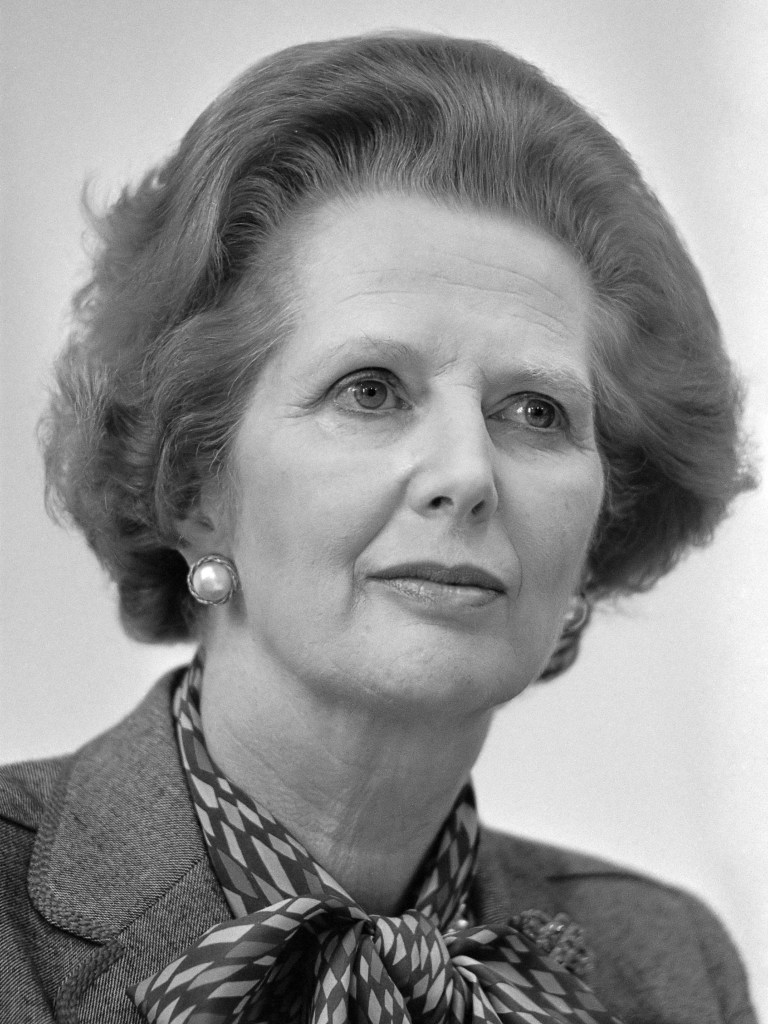
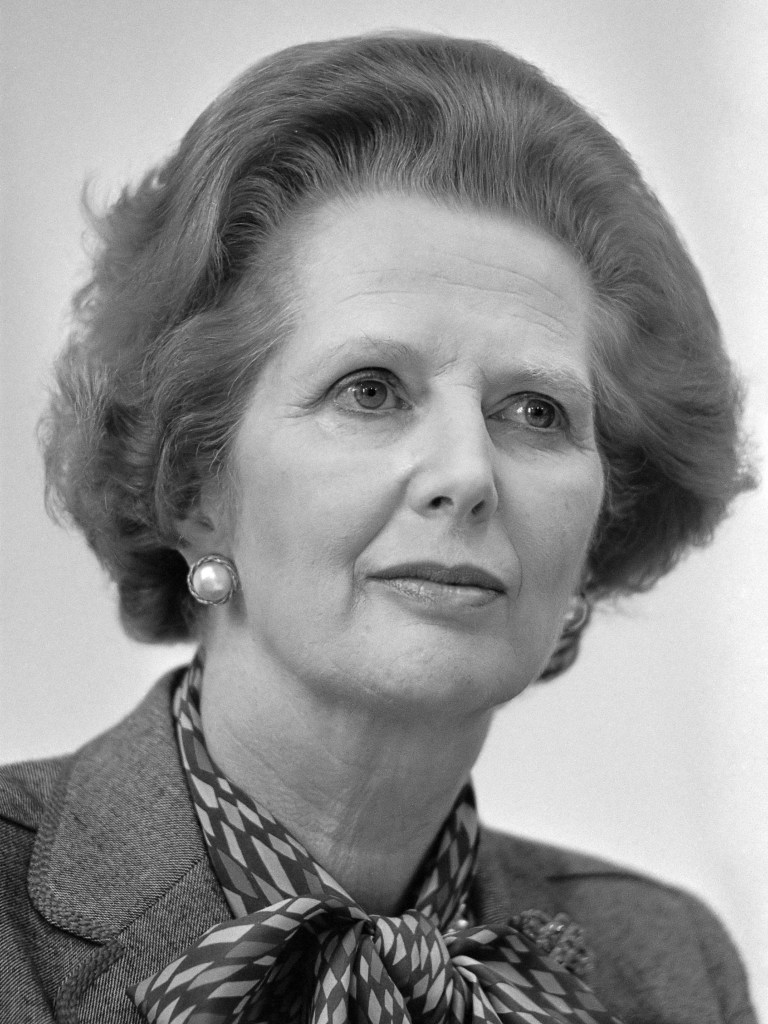
Primera ministra, Margaret Thatcher, 1983 (courtesy of Wikimedia Commons)

Cómo enfocaba el mundo la señora Thatcher

Recuerdo sentarme en uno de los cubículos de los aseos de la universidad de Sussex en 1972 y ver escrito allí un grafiti que alguien había garabateado justo encima del soporte del rollo del papel higiénico: «Licenciaturas en sociología. Por favor, tome una».

Así, esta persona graciosa, por seguro un estudiante serio de una de las ciencias tradicionales o tal vez un vocero de una de las humanidades de mayor abolengo, mostraba su desdén por esta nueva abominación pseudo académica que algunos progres habían fertilizado en una probeta de laboratorio norteamericano: un feto impío que implantaron en el útero de la madre de asignaturas universitarias para que lo llevaran a término; un resultado de la unión antinatural de la ciencia y las artes; con toda certeza un monstruo bicéfalo enclenque que moriría pronto, siendo biológica e intelectualmente inviable. 

¿Un estudio científico de la sociedad? Bah! 

Hasta la señora Thatcher, primera ministra entre 1979 -1990) estaba indignada. ¿Sociedad, sociedad? «No hay tal cosa» citaba la revista de mujeres, Woman’s Own, en ocasión de la entrevista que publicaron con ella en 1979.

Al igual que la sociología era una asignatura fraudulenta, el socialismo era una creencia aberrante, ilusoria y mal concebida: un cuento de hadas que procuraba dar derechos a personas que no los merecían. El mito del socialismo tenía que ser desmentido y las estructuras equivocadas erigidas por sus confundidos proponentes deberían ser abolidas.

Ella estaba opuesta doctrinalmente a todas las medidas sociales que se había llevado a cabo anteriormente todo gobierno laborista  Hizo misión suya ir cortando por lo sano todo el marco regulatorio que interviniera en la vida del individuo. Creía ella, que si logramos algo en la vida, nuestro éxito se debiera exclusivamente a nuestros esfuerzos personales. 

Margaret Thatcher tenía aire de predicadora. Dentro del partido conservador se le consideraba como espíritu renovador: una evangelista e idealista que pregonaba un retorno a valores tradicionales. Proclamaba un mensaje conservador decimonónico.  Era resuelta, una fuerza tremenda de la naturaleza. Daba miedo. (Curiosamente, era muy popular entre el público ruso.) Inspiraba a todo gobierno conservador que le siguió a continuar con la tarea principal de privatizar cualquier industria y servicio público que hubiera sido previamente estatalizada por un gobierno laborista. 

A ella se debió el resurgimiento del partido conservador de finales del siglo veinte y a ella se debió la ola de desnacionalizaciones que ocurrió a partir de los años 80, la subsiguiente privatización de todos los medios de transporte público y la debilitación y decaimiento del poder de los sindicatos (véase la lucha entre ella y Arthur Scargill el líder del sindicato nacional de mineros). Ella dio rienda suelta a la desestatalización de las utilidades. Los monopolios públicos de luz, gas y agua se hicieron añicos. En su lugar apareció una selva de pequeñas compañías suministradoras.

Estos nuevos pequeños feudos de servicios públicos han hecho retroceder al país a una verdadera economía de libre mercado, suministrando no solo electricidad, gas y agua, sino también caos, ineficiencia y grandes dividendos para sus accionistas: un modelo de capitalismo decimonónico poco adecuado a las necesidades de un economía del siglo 21. Hoy en día, nuestros ríos tienen más mierda que agua…. Ah, y piénsalo bien antes de emprender viaje en el mosaico de las 28 empresas que ahora operan en nuestra red ferroviaria nacional. Los retrasos y las cancelaciones son peores que nunca.

Otra «abominación» que le molestaba a la señora Thatcher era el sistema de viviendas de protección oficial (VPO)

Desde finales de la primera guerra mundial hemos tenido en Gran Bretaña un sistema de VPO construidas por los gobiernos locales. Este sistema tiene sus raíces en la primera guerra mundial. Durante la guerra se observó con alarma el mal estado físico de muchos reclutas urbanos al ejército. El día después del armisticio en noviembre de 1918 el entonces primer ministro David Lloyd George prometió un nuevo programa para mejorar la salud de la población general, un programa que incluía un nuevo sistema de viviendas de protección social. Desde aquella fecha para adelante, cada ayuntamiento en el país tendría la responsabilidad de construir casas dignas de los héroes que habían ganado la guerra. Lloyd George hizo hincapié en que el país tenía una especial deuda de gratitud a los soldados rasos, los miembros de la clase obrera que hicieron que la victoria fuera posible. Alquilarían sus nuevas viviendas a un precio asequible, subvencionado por el Gobierno. Desde entonces las personas que no ganaban el dinero necesario para permitirse el lujo de comprar su propia vivienda podrían vivir en casas de buena calidad y seguridad de tenencia, por cortesía del Estado. 

Así fue creado un buen sistema de VPO. Sufrió algunos altibajos debidos a la segunda guerra mundial, pero, hablando por lo general, funcionaba bien y servía bien a la clase obrera británica……

…….. hasta que subió al poder la señora Thatcher que decidió que los inquilinos de las VPO deberían tener el derecho de comprar las casas sociales en que vivían. 

Su nueva ley de 1980 mandaba que los ayuntamientos, (Councils), tenían que ofrecer a vender sus casas a cualquier inquilino que ya hubiera vivido en su VPO el período de años necesarios que les diera la elegibilidad de comprar a un precio muy reducido. Aunque habían construido las viviendas con sus propios fondos, los gobiernos locales no tenían permiso de quedarse con el dinero de la venta. Se veían obligados a dárselo todo al gobierno central. Por eso es por lo que todos los ayuntamientos, de cualquier color político, dejaron de construir las famosas «council houses».   

La política de Thatcher tenía varios objetivos, principalmente la inclusión de la clase obrera en la democracia propietaria, un término escrito en el corazón del partido conservador. Así el partido pudiera congraciarse con la «alta clase obrera» y darles ánimo a votar conservador. 

A largo plazo la intención fue la reducción al mínimo, si no la eliminación entera, del parque de vivienda pública. 

A raíz del programa del derecho de compra, el número de estas viviendas ha caído vertiginosamente. Según las propias cifras del gobierno, solo en Inglaterra entre 1980 y 2024 el país perdió alrededor de más de 2,020,279 viviendas de protección oficial.

Esta pérdida ha tenido muy malas consecuencias para los gobiernos locales y ha conducido directamente a llenar los bolsillos de propietarios privados con dinero de las arcas públicas. 

¿A quienes pertenecen ahora estas viviendas de protección social?

Como se puede apreciar, una proporción sustancial de los nuevos dueños son las personas a la que la política iba destinada. Pero, en 2013 el periódico The Daily Mirror publicó un análisis de los otros nuevos propietarios que también se habían adueñado de una cantidad importante de las antiguas VPO:

«Un tercio de las viviendas municipales vendidas en los años ochenta bajo el mandato de Margaret Thatcher son ahora propiedad de arrendadores privados. En un borough (distrito) de Londres, casi la mitad de las viviendas de protección oficial están subarrendadas a inquilinos.»

A menudo, estos nuevos propietarios no son individuos sino compañías offshore y las VPOs que poseen forman parte de sus portfolios de inversiones inmobiliarias. 

La situación va de mala en peor. Según la New Economics Foundation, para el año 2024 un 41% de las antiguas VPO, previamente la propiedad de los ayuntamientos, estaban siendo alquiladas al precio del mercado, una cifra centenares de veces más alta de lo que pagaban anteriormente los inquilinos del municipio.  

¿Cómo se adquieren las ex VPO?

Como en la historia de cualquier casa, llega un momento en que las ex VPO se venden. Los dueños las dejan en herencia cuando mueren. Muchos herederos las venden para dividir las ganancias entre sí.  Otras parejas se divorcian y venden la casa. No todos los nuevos compradores quieren seguir viviendo allí felices como perdices para siempre: otros venden porque han comprado su casa a un precio muy razonable del consistorio y quieren sacar provecho realizando un beneficio rápido. Hay tantas otras otras razones por las que las casas se venden. 

Pero, sea cual sea el motivo de la venta, el inconveniente es que si eres una de las personas que ha comprado una de estas casas, descubres enseguida que no se venden como churros. 

Casas así tienden a atraer hipotecas de mucho menos de 100%. Tienen problemas que no inspiran en los bancos la confianza necesaria para prestar dinero. Hay complicaciones de barrio, de construcción, de reparación, de estar situadas en bloques de apartamentos sociales. En el caso de estos últimos las viviendas comparten tejado o corren el riesgo de revestimiento flamable (como fue el caso de Grenfell Tower en el barrio de North Kensington al oeste de Londres donde en 2017 ocurrió un incendio que se propagó rápidamente, y murieron 72 personas porque no existían ni un procedimiento adecuado para la evacuación ni una vía de escape fácil). 

Más aún, la gente corriente a la que se le ocurre comprar un antiguo apartamento municipal son personas que normalmente tendrán menos poder adquisitivo; muchas veces tienen problemas adicionales que les impiden obtener una hipoteca, p ej  no tienen el flujo de efectivo para desembolsar entre 1% y 2% del precio de la venta en honorarios a la agente inmobiliario. Además, si no están comprando por primera vez en su vida, se verán obligados a pagar un impuesto (stamp duty) de 5% sobre la banda de precios de viviendas entre £250,000 – £925,000 (la banda típica actual por todo el Reino Unido).

«Lo que necesitas es un comprador rápido»

Un comprador rápido es una empresa (o raras veces un individuo) que tiene el dinero por adelantado para comprar el piso o la casa. Escucha cómo la empresa LDN properties en su web describe su trabajo de comprador rápido. Escucha la canta de sirena, la voz reconfortante de la hada madrina, el rollo del dinero fácil:

«Estas empresas son capaces de hacer ofertas rápidas y competitivas para comprar una amplia gama de pisos y casas en propiedad absoluta o en arrendamiento, independientemente de su forma, antigüedad, estado o tamaño. Se denominan compradores rápidos porque, por lo general, pueden completar el proceso de compra de su vivienda en unas pocas semanas, lo que incluye el intercambio de contratos y todos los demás pasos.»

Son muchos estos conglomerados financieros que no tienen problemas de flujo de efectivo y que disponen de mucho capital al instante. Compran a precios risibles. 

«Una clara ventaja de recurrir a un comprador rápido es que no discrimina a la hora de comprar una vivienda y puede considerar casi cualquier tipo de propiedad que podría tener dificultades para venderse con otros métodos, como antiguos pisos municipales, casas heredadas pero no deseadas, propiedades situadas en calles ruidosas, casas de ocupación múltiple, pisos con revestimiento, casas con fosas sépticas, etc.» 

Más aún, no se tiene que pagar nada a ningún agente inmobiliario.

Se han producido muchos casos escandalosos que implican a personas en el corazón del partido conservador. Por ejemplo, el magnate Charles Gow y su esposa son propietarios de al menos 40 VPOs de una urbanización del sur de Londres. El padre de Charles Gow fue Ian Gow, uno de los principales ayudantes de Margaret Thatcher y durante los primeros años del derecho a la compra el fue el ministro de vivienda. 

No se ha infringido ninguna ley comprando las VPO así. Solo es que el dinero público que se utilizaba para construir esta casa ahora se ha convertido en una mina de oro para un hombre que no la necesita ni para su propia familia ni para su simpática colección personal de gente de barrio.

Las consecuencias para los consistorios y el Ministro de finanzas (y últimamente, el resto de nosotros)

En Gran Bretaña desde 1948 los gobiernos locales han tenido la responsabilidad de ofrecer alojamiento temporal a todas las familias y personas vulnerables sin hogar. La erosión de su propio parque inmobiliario ha hecho que esta tarea sea cada vez más difícil y costosa. Por ejemplo, solo en Londres las 32 boroughs (distritos) de la capital pagan un total de £4m de libras a diario a arrendatarios privados para cumplir con su deber de poner un techo sobre las cabezas de los sin hogar. Irónicamente, para cumplir con su deber, muchas veces los ayuntamientos se ven obligados a alquilar una antigua VPO, una casa de la que eran, en el pasado, los propios dueños, pagando un alquiler a un precio exorbitante. Es decir, no solo las autoridades locales han perdido una vivienda, sino que además tienen que pagar un alquiler inflado a los propietarios privados que ahora son dueños del inmueble. Muchas veces, en el caso de emergencia o de personas vulnerables los nuevos dueños no tienen reparo en cobrar el doble o el triple del precio del mercado. 

Además, se han formado asociaciones «especializadas» en alquilar viviendas para gente vulnerable. Por ejemplo, dicen ser especialistas en personas con problemas de salud mental, aunque en realidad no son nada más que empresas privadas que también se ponen las botas, cobrando a los ayuntamientos un alquiler desorbitado. Solo aparentan ser organismos caritativos y responsables. Yo trabajé 40 años en departamentos de servicios sociales ingleses y lo he visto muchas veces.

Cabe mencionar también que el consistorio tiene otra obligación financiera estrechamente relacionada con este debate. Cualquier propietario privado tiene el derecho de alquilar sus viviendas a gente con bajos ingresos; personas que no tienen los fondos necesarios para pagar el dinero que demandan.  Si el alquiler no resulta excesivo el consistorio tiene que subvencionar a estos inquilinos pagándoles ayudas (housing benefit).

Conclusión

Claro que hay una constelación de factores que influyen en la escasez de viviendas y el alto coste del alquiler. Los problemas son complejos y confusos pero eso no quiere decir que no tengamos que quedarnos petrificados por miedo o por dificultad.  Para resolver cualquier problema complicado tienes que deshacerte de los impedimentos uno por uno, actuando de una manera sistemática. Vamos por partes.

  • El derecho de comprar es una variable que sí podríamos eliminar de inmediato.  En Escocia ya han dado este primer paso. En 2016 el gobierno autonómico de Escocia derogó la ley por completo y a partir de aquel año el derecho de comprar queda abolido.
  • Después podríamos abordar el problema de los pisos de alquiler turístico y las residencias secundarias. Por ejemplo, en el condado de Cornualles, el popular destino turístico al suroeste de Inglaterra, hay pueblos que, en verano, parecen opulentos barrios londinenses, y en invierno quedan vacíos y oscuros. La enorme proliferación de viviendas turísticas y residencias secundarias contrasta fuertemente con la situación de mucha gente autóctona que no pueden permitirse el lujo de tener su propio hogar. Muchos de ellos tienen que subsistir en caravanas y cobertizos. La gente joven no puede independizarse; no tienen la menor posibilidad de competir con la gente adinerada que viene de afuera. El gobierno local (Cornwall County Council) impone un IBI de 200% sobre residencias secundarias y el gobierno nacional impone un impuesto de 5% sobre el precio de compra pero estas medidas fiscales surten poco efecto.
  • Podríamos prohibir que los especuladores inmobiliarios dejaran vacíos los edificios y rascacielos que construyen. En el mercado sobrecalentado londinense es suficiente dejar un edificio desierto para que adquiera valor mucho más rápido que la inflación.
  • Es Igualmente rentable dejar solares urbanos sin edificar. Si el gobierno quiere que la gente vuelva a vivir en los centros de ciudad debe insistir que cualquier terreno edificable se utilice pronto, y si no, el gobierno debe asegurarse que los ayuntamientos tengan no solo el derecho de adquirir el solar por orden de expropiación forzosa sino también el dinero para emplearlo para la construcción de viviendas a precios asequibles.
  • De forma complementaria se debe prestar atención a la expansión urbana incontrolada, la llamada mancha urbana, algo que lleva a la pérdida de hábitat natural. Esta pérdida está exacerbada por la psicología de los ingleses. Todo inglés aspira a vivir en un chalet o, por lo menos, una casa adosada.  Por eso es por lo que, entre empresas constructoras y departamentos de planificación, hay una marcada reticencia a fomentar la construcción hacia arriba en lugar de hacia afuera. Ningún gobierno se ha enfrentado al problema de la marea de hormigón de secado rápido que está cubriendo de manera lenta pero segura y para siempre la verde campiña inglesa. El sur de Inglaterra va convirtiéndose en una vasta, ininterrumpida urbanización. En el sureste de este país donde un pueblo termina, otro empieza. Se da la sensación de que estás siempre en las afueras de una ciudad que debe estar ahí, al doblar la esquina. Pero, por cuántas esquinas que dobles, nunca llegas a ninguna auténtica ciudad. 

El gobierno acaba de anunciar un programa de construcción de 1,5 millones de viviendas nuevas para el año 2029. Pero, aunque pasaran por alto los serios problemas delineados arriba y se centraran únicamente en números, no van a ser capaz de reducir la escasez así. Ni siquiera disponen de la mano de obra necesaria; desde nuestra salida de la UE no quedan albañiles suficientes en el país.

Nos hace falta un programa completo; un programa que indique un cambio de actitud hacia el problema de la escasez de viviendas. Un programa que sea justo con todos. Tal programa iría en contra de los valores del partido conservador, de su lema, «sálvese quien pueda»; se desataría una tormenta de protestas de la industria inmobiliaria. Y no nos debemos olvidar que el programa implicaría el reverso de la política del derecho de comprar iniciado por Margaret Thatcher.
Margaret Thatcher’s Lasting Contribution to the Housing Crisis

Margaret Thatcher 19 September 1983 (via Wikimedia commons)

How Mrs Thatcher viewed the world

I remember sitting in one of the cubicles in the toilets at Sussex University in 1972 and seeing graffiti that someone had scribbled just above the toilet roll holder: “Degrees in Sociology. Please take one”.

Thus it was that this anonymous wag, surely a serious student of one of the traditional sciences or perhaps a spokesperson for one of the more venerable humanities, showed their disdain for this new pseudo-academic abomination that some progressives had fertilised in a laboratory test tube in the USA: an unholy foetus that they had then implanted in the womb of the mother of university courses so that she might carry it to term; an unnatural child of the godless union of science and the arts; most certainly a weak two-headed monster that would soon die, being organically and intellectually nonviable. 

A scientific study of society? Bah!

Even Mrs Thatcher, Prime Minister between 1979 and 1990, was outraged. Society, society? ‘There is no such thing,’ quoted the women’s magazine Woman’s Own from an interview with her published in 1979.

Just as sociology was a fraudulent subject, socialism was an aberrant, illusory and ill-conceived belief: a fairy tale that sought to give rights to people who did not deserve them. The myth of socialism had to be debunked and the misguided structures erected by its confused proponents had to be abolished.

She was doctrinally opposed to all the social measures that had been carried out previously by Labour governments. She made it her mission to ruthlessly cut out all regulatory framework that inhibited the effort of the individual. She believed that if we achieve something in life, our success should be due exclusively to our own personal endeavour. 

Margaret Thatcher had the air of a preacher. Within the Conservative Party, she was considered a renovating spirit: an evangelist and idealist who preached a return to traditional values. She proclaimed a nineteenth-century Conservative message.  She was a tremendously determined force of nature. She was scary. (She was curiously very popular with the Russian public.) She inspired every Conservative government that followed her to continue with the main task of privatising every industry and public service that had previously been nationalised by Labour. 

She was almost single-handedly responsible for the resurgence of the Conservative Party at the end of the twentieth century. She was the instigator of the wave of denationalisation that began in the 1980s, the subsequent privatisation of all public transport, and the weakening and decline of trade union power (see the struggle between her and Arthur Scargill, the leader of the National Union of Mineworkers). She gave free rein to the deregulation of utilities. The electricity, gas and water monopolies were smashed to pieces. In their place appeared a jungle of small electricity, water and gas supply companies.

These new small-fiefdom utilities returned to a true free market economy, supplying not only electricity, gas and water but also chaos, inefficiency and large dividends for its shareholders. Today, our rivers are more shit than water. Oh, and think carefully before you travel on the jigsaw of 28 companies that now run on our national rail network. The delays and cancellations are worse than ever.

Another “abomination” that bothered Mrs Thatcher was council housing

Since the end of the First World War, we have had a system of social housing built by local governments in Britain. This system has its roots in the First World War. During the war, the poor physical condition of many urban recruits to the army was noted with alarm. The day after the armistice in November 1918, the then Prime Minister, David Lloyd George, promised a new programme to improve the health of the general population, a programme that included a new social housing system. From that date onwards, every local council in the country would be responsible for building decent homes for the heroes who had won the war. Lloyd George emphasised that the country owed a special debt of gratitude to the rank-and-file soldiers, the members of the working class who made victory possible. They would rent their new homes at an affordable price, subsidised by the government. From that time on, people who did not earn enough money to afford to buy their own home could live in good quality accommodation with security of tenure, courtesy of the state. 

Thus, a good social housing system was created. It suffered some ups and downs due to the Second World War, but, generally speaking, it worked well and served the British working class well…….

………until Mrs Thatcher came to power and decided that council tenants should have the right to buy the social housing in which they lived. 

Her new law of 1980 stated that local councils had to offer to sell their houses to any tenants who had lived in them for the necessary number of years to become eligible to buy at a greatly reduced price. Although they had built the homes with their own funds, local governments were not allowed to keep the money from the sale. They were forced to give it all to central government. That is why all local councils, regardless of their political affiliation, immediately stopped building council houses.   

Thatcher’s policy had several objectives, mainly the inclusion of the working class in the «property-owning democracy», an emotive phrase always on the tip of the tongue of every true member of the Conservative Party. Amongst the party faithful, it was considered that this key policy would allow the Tories to ingratiate themselves with the “upper working class” and thereby encourage them to vote Conservative.

In the long term, the intention was to minimise, if not entirely eliminate, the public housing stock. 

As a result of the right-to-buy programme, the number of these homes has fallen dramatically. According to the government’s own figures, in England alone between 1980 and 2024, the country lost around 2,020,279 social housing units.

This loss has had very bad consequences for local governments and has directly led to private landlords lining their pockets with public money.

Who owns these social housing units now?

As you might expect, a substantial proportion of the new owners are the people for whom the policy was intended. However, in 2013, The Daily Mirror newspaper published an analysis of the other new owners who had also acquired a significant number of former council dwellings.

‘A third of the council homes sold in the 1980s under Margaret Thatcher are now owned by private landlords. In one London borough, almost half of social housing is sublet to tenants.’

Often, these new owners were not individuals but offshore companies, and the social housing they now own is part of their property investment portfolios. 

The situation is deteriorating. According to the New Economics Foundation, by 2024, 41% of former social housing, previously owned by local councils, was being rented at market rates, a figure hundreds of percent higher than that which the tenants previously paid to the local authority.  

How are former council homes acquired?

As with any house, there comes a time when former council houses are sold. Sometimes, owners leave them as inheritance when they die. Many heirs sell them to divide the proceeds among themselves; other couples divorce and sell their house; not all new buyers want to continue living there happily ever after, some simply sell because they have bought their house at a very reasonable price from the council and want to make a quick profit. But whatever the reason for the sale, the downside of selling an ex-council house is that they do not fly off the shelf to ordinary buyers.

Houses like these tend to attract mortgages of considerably less than 100%. They have problems which do not inspire building societies with confidence. They often have issues with construction and repairs as council flats are inevitably located within blocks of council accommodation. In the case of the latter, they share a roof, or in a worst case scenario, they have inflammable cladding (as was the notorious case of Grenfell Tower in the North Kensington neighbourhood of West London where, in 2017, 72 people died in a fire which spread rapidly and there was no proper procedure for evacuation nor any easy escape.)

Furthermore, the ordinary people who consider buying an old municipal flat are usually those with less purchasing power and who often have additional problems that prevent them from obtaining a mortgage, e.g. they do not have the cash flow to pay between 1% and 2% of the sale price in estate agent fees. In addition, if they are not first-time buyers, they will be required to pay a 5% stamp duty on the price band of homes between £250,000 and £925,000 (the typical price band across the UK).

‘What you need is a fast buyer’

A fast buyer is a company (or, in rare cases, an individual) that has the money up front to buy the flat or house. Listen to how LDN Properties describes its work as a fast buyer on its website. Listen to the siren song, the comforting voice of the fairy godmother, the promise of easy money:

» These companies are able to make speedy and competitive offers for buying a large range of freehold and leasehold flats and houses, no matter their shape, age, condition or size. They are called fast buyers because they can generally complete the process of purchasing your home in a few short weeks, and that includes exchanging contracts and all other steps.»

There are many of these financial conglomerates that have no cash flow problems and have a lot of capital available instantly. They buy at ridiculously low prices.  

» A clear benefit of using a fast buyer is that they do not discriminate when purchasing homes and can consider almost any type of property that might struggle to sell using other methods, such as ex-council flats, inherited but unwanted retirement houses, properties situated on noisy streets, houses of multiple occupancy, flats with cladding, homes with septic tanks, and more.»

What’s more, you don’t have to pay anything to an estate agent.

There have been many scandalous cases involving people at the heart of the Conservative Party. For example, tycoon Charles Gow and his wife own at least 40 social housing properties on a south London estate. Charles Gow’s father was Ian Gow, one of Margaret Thatcher’s top aides and the housing minister during the early years of the right to buy. 

No law has been broken by buying social housing in this way. It’s just that the public money that was used to build these houses has now become a gold mine for a man who doesn’t need them, neither for his own family nor for the accommodation of his charming personal collection of working class people.

The consequences for local councils and the Chancellor of the Exchequer (and, ultimately, the rest of us)

In Great Britain since 1948, local governments have been responsible for providing temporary accommodation to all vulnerable homeless families and individuals. The erosion of their own housing stock has made this task increasingly difficult and costly. For example, in London alone, the capital’s 32 boroughs pay a total of £4 million per day to private landlords to fulfil their duty to provide shelter for the homeless. Ironically, in order to fulfil this responsibility, local councils are often forced to rent a former council property, a house that they themselves owned in the past: one that now costs them an exorbitant rent. In other words, not only have local authorities lost housing, but they also have to pay inflated rents to the private landlords who now own the property. Often, in emergencies or in the case of vulnerable people, the new owners have no qualms about charging double or triple the market price. 

In addition, associations have been formed that “specialise” in renting housing to vulnerable people. For example, they might claim to be specialists in client groups with mental health problems, although, in reality, they are nothing more than private letting companies with little special expertise who also charge local councils exorbitant rents. They only appear to be charitable and responsible organisations. I worked in social services departments for 40 years and I have experience of these firms.

It is also worth mentioning that the council has another financial obligation closely related to this debate. Any private landlord has the right to rent their properties to people on low incomes; people who do not have the necessary funds to pay the money they demand. If the rent is not excessive, the council has to subsidise these tenants by paying them housing benefit. 

Conclusion

Of course, there are a constellation of factors that influence the housing shortage and high rental costs. The problems are complex and confusing, but that does not mean we have to remain paralysed by fear or difficulty.  To solve any complicated problem, you have to remove the obstacles one by one, acting in a systematic manner. Let’s take it step by step. 

  1. The right to buy is one variable that we could eliminate immediately. Scotland has already taken this first step. In 2016, the Scottish government repealed the law completely, and since then, the right to buy has been abolished.
  2. Next, we could tackle the problem of tourist rental flats. Closely linked to this is the problem of second homes. For example, in Cornwall there are villages that, in summer, look like opulent London neighbourhoods, and in winter are empty and dark. The enormous proliferation of tourist accommodation and second homes contrasts sharply with the situation of many local people who cannot afford to own their own homes. Many of them have to subsist in caravans and sheds. Young people cannot leave home; they have no chance of competing for houses with wealthy people from outside the area. Cornwall County Council does impose an annual 200% council tax on second homes and the government a 5% surcharge on their purchase but these measures have had little effect.
  3. We could prevent speculators from leaving empty the buildings and skyscrapers that they erect. In London’s overheated market, simply leaving a building unoccupied is enough for it to increase in value faster than inflation. It is equally profitable to leave urban plots undeveloped.  If we want people to repopulate our city centres, scarce building land should either be used promptly or the site compulsorily purchased for affordable housing.
  4. In addition, we should pay attention to uncontrolled urban expansion, a direct cause of the loss of natural habitat. This is a small island and our native flora and fauna are rapidly disappearing. The problem is exacerbated by the psychology of the English. Every English person aspires to live in a detached house or, at least, a semi-detached house with a garden.  That is why there is a marked reluctance among construction companies and planning departments to encourage building upwards rather than outwards. No government has ever really tackled the problem of the advancing tide of quick-drying cement that is slowly but surely (and forever) covering the green English countryside. The south of England is becoming a vast, uninterrupted housing estate. In the south-east of this country, where one town ends, another begins. Driving around, you get the feeling that you are always on the outskirts of a town that must be just around the corner. But no matter how many corners you turn, you never reach a real town.

The government has just announced a building programme of 1.5 million new homes by 2029. But even if they ignore the serious problems outlined above and focus solely on numbers, they will still not be able to reduce the shortage in this way, for they do not even have the necessary labour force; since our departure from the EU, there are not enough builders left in the country.

We need a comprehensive programme, one that signals a change in attitude towards the problem of housing shortages: one that is fair to everyone. Such a programme would go against the values of the Conservative Party with its motto of “every man for himself ” and it would unleash a storm of protests from the property industry. And, of course, it would mean reversing Margaret Thatcher’s lasting contribution to the housing crisis, the right-to-buy policy.

The Crown: Thatcher and the Falklands reviewed by Fuera de Foco

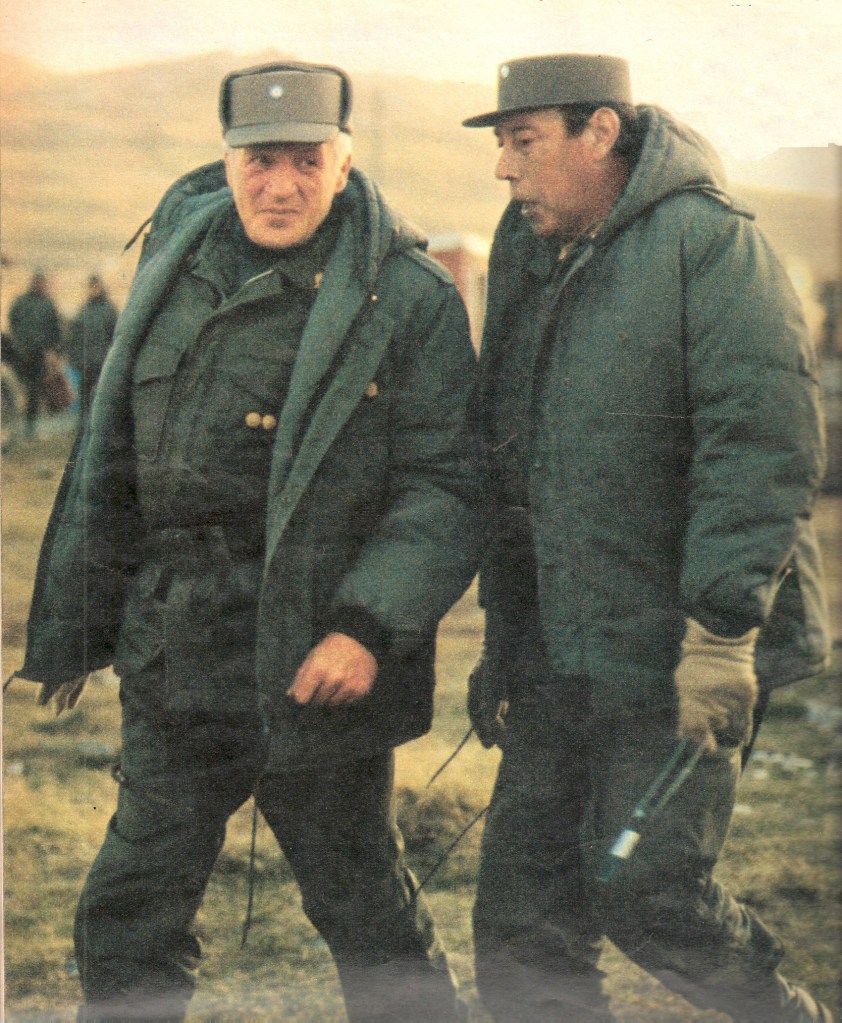
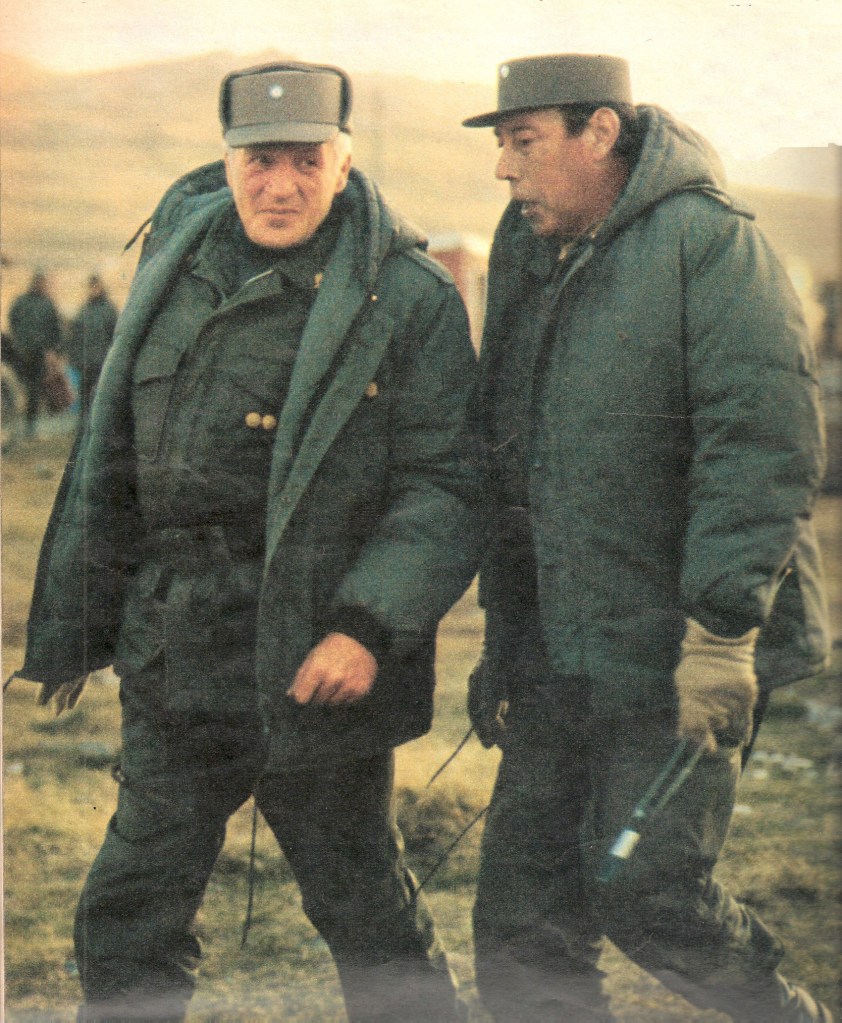
Generals Galtieri and Jofre on The Falklands
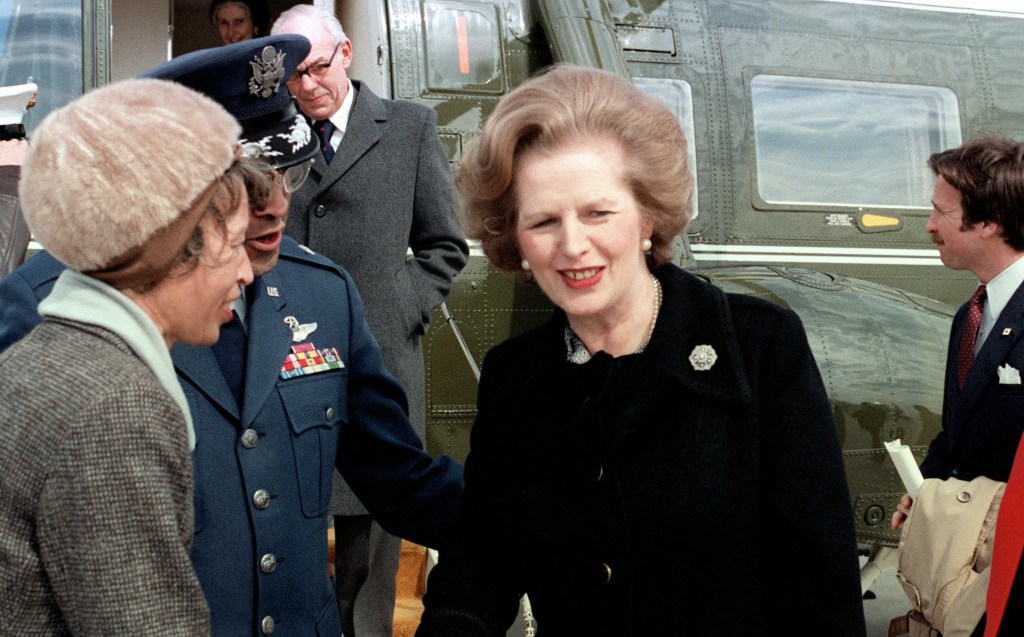
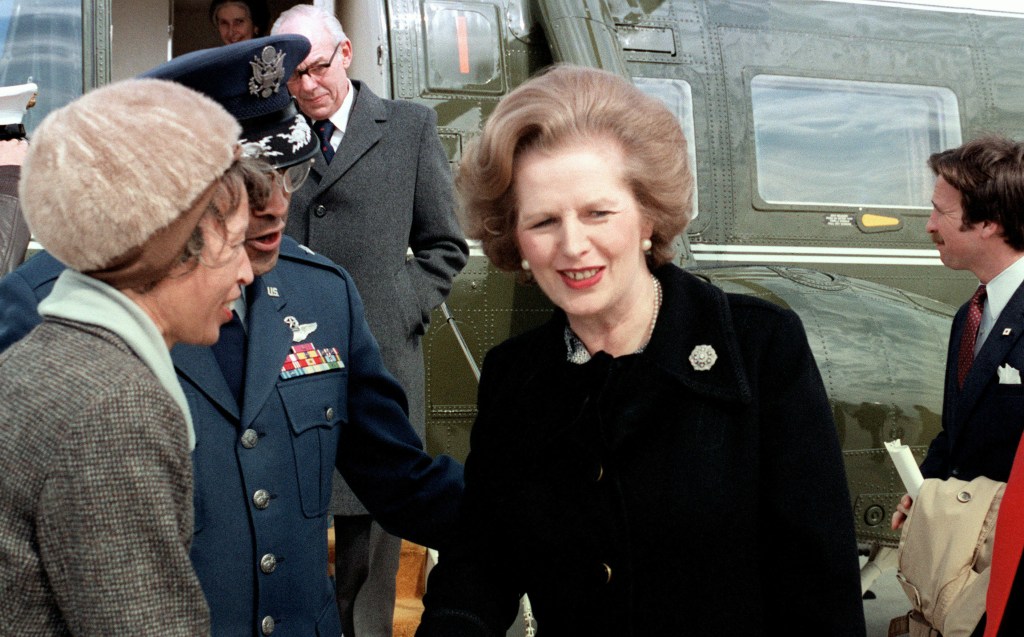
Prime Minister Margaret Thatcher of England is bid farewell on her departure after a visit to the United States.

Last time I commented on the very few minutes of his time that Carlos Boyero bestowed upon The Crown after having watched 10 hours of Series 4. Much more exhaustive is the treatment of Gaby Meza on her Mexican channel Fuera de Foco (Out of Focus). The outstanding feature of her analysis is the special mention she makes of her Argentinian audience, addressing them directly and asking for their opinion of how they feel the series tackles the Falklands War in “CRÍTICA: THE CROWN Temporada 4 | Princesa Diana, Tatcher [sic] y Las Malvinas”.

Gaby greets her many Argentine followers, sends them a hug and the now clichéd symbol of “I love you”, pressing her fingers together to form the shape of a heart. It’s obvious she’s nervous and feels the necessity of ingratiating herself with her Argentinian audience.

She says of the Falklands episode, “The only mention of the Argentine point of view was that it was some country that wanted to have the Falklands, end of. If you are Argentinian you will have much more understanding of the issue, so if you have something important to say on this matter, I would love you to comment below about what you thought of the portrayal of this issue. Are you happy or unhappy about it and why?”

Once again, at the end of the video, Gaby urges Argentinians to submit their commentaries.

Despite the nervousness that Gaby feels at having to tackle the subject of the Falklands War and the evident fear she has of offending her subscribers the matter only occupies a small percentage of the 3000 comments. Of course, there are some “The Malvinas are Argentine and will always be Argentine!!!!” but the majority of the visitors to her channel are more interested in the psychological conflicts within the Royal Family.

Like Gaby herself, I was expecting much more fury and resentment on the part of her Argentinian public but the majority of the replies are, generally, much more weighed and considered than they are rancorous. Take for example, this one. Although it is a little incoherent, it demonstrates an understanding of the situation:

“I’m a 40 year old Argentinian woman and I was 2 during the war. I never thought I’d have any support for my theory and now I see it in this series. This episode was very important for me. I got goosebumps when I saw the characters speaking in Argentinian. From my point of view this war should never have taken place. It existed because of the government at the time in Argentina. They believed that making war on England would put them in a better position but the opposite happened. When I see Margaret declaring war, sending troops, she does not do it just because she wants her government to be popular, but also to defend the small population of the Malvinas. Fascist. I believe that, thanks to England, this government ended up falling. And that the Argentinians should be grateful to England. Many people would kill me if I said this out loud but it’s what I truly feel.. Keep going The Crown, the best series on Netflix.”

The lady is correct. That’s how it works: when the leader of a country in the middle of an economic crisis wishes to divert public attention away from their domestic policy, one of their solutions is to look for an external enemy. There is nothing better to unify the people behind a hated leader than a patriotic fight to kick out an evil invader. Samuel Johnson said in 1775 that patriotism is the last refuge of the scoundrel. In the case of the Falklands this principle can be applied equally to Margaret Thatcher and General Galtieri. Both were presiding over an economic mess and both looked gladly upon the popularity they might regain with the reconquest of the Falklands/Malvinas. I don’t believe that Mrs Thatcher’s primary objective was to oust the bloodstained military dictators and restore democracy to Argentina, but that’s what happened. It’s an ill wind….

Curiously, the thing that most annoyed commentators was that Netflix hadn’t taken the trouble to employ Argentinian actors to play the soldiers and the scrap metal dealers who hoisted the Argentinian flag on South Georgia and sang the national anthem during the days that led up to the war. Netflix had given the job to other Spanish speakers and their accents grated on the Argentinian television viewers.

“CRÍTICA: THE CROWN Temporada 4 | Princesa Diana, Tatcher [sic] y Las Malvinas”

Margaret Thatcher en EEUU 1981. Autor, Williams, US Military

A la izquierda, Generales Galtieri y Jofre en las islas Malvinas, revista Gente, Abril 1982. Autor desconocido

En la última entrada de blog comenté sobre los escasos minutos que Carlos Boyero se dignó de conceder a La Corona después de ver 10 horas de la serie 4.  Mucho más exhaustiva es la crítica de la mejicana Gaby Meza en su popular canal de YouTube, Fuera de Foco. La nota que destaca de su análisis es la mención especial que ella hace de su público argentino. Se dirige directamente a ellos, pidiéndoles que den su opinión de cómo la serie aborda la Guerra de las Malvinas en “CRÍTICA: THE CROWN Temporada 4 | Princesa Diana, Tatcher [sic] y Las Malvinas”.

Gaby saluda a sus muchos seguidores argentinos, les manda un abrazo y el ya tópico símbolo de “te amo”, juntándose los dedos en forma de corazón. Es evidente que está nerviosa y siente la obligación de congraciarse de inmediato con su público argentino.

Dice del episodio de Las Malvinas: “No se ve mucho de la postura argentina fuera de que los retraten como este país que quiere quedarse con estas tierras de las Malvinas y listo. Si tú eres argentino seguramente tendrás muchos más conocimientos al respeto, así que si tienes algo importante que decir sobre este tema me encantará que comentes aquí abajo que te pareció la forma en la que abordaron. ¿Estás contento o no y por qué?”

Otra vez, al final de su video, Gaby insta a los argentinos a que envíen sus comentarios.

A pesar del nerviosismo que siente Gaby al tener que abordar el tema de las Malvinas y el evidente miedo que tiene de ofender a sus suscriptores, el asunto solo ocupa un pequeño porcentaje de los 3000 comentarios. Claro que hay unos “¡¡¡¡Las Malvinas son argentinas y siempre serán argentinas!!!!” pero la mayoría de los visitantes al canal están más interesados en los conflictos psicológicos dentro de la familia real.

Como la propia Gaby, yo esperaba mucho más furia y resentimiento por parte de los argentinos, pero la mayoría de sus respuestas son, por lo general, mucho más sopesadas y consideradas que rencorosas. Pongo, por ejemplo, este. Aunque sea un poco incoherente, demuestra una comprensión de la situación:

Yo soy Argentina tengo 40 años tenía 2 años cuándo fue la guerra. Siempre lo pensé pero no tenía donde apoyarme con mi teoría y ahora lo vi en la serie ese capítulo fue para mí muy importante. Se me puso la piel de gallina cuando vi personajes hablando en argentino. Desde mi opinión esta guerra nunca tendría que haber existido. Existió por culpa del gobierno de facto de ese momento en Argentina. Creían que hacerle guerra a Inglaterra los iba a posicionar y fue todo lo contrario. Cuando en la serie veo que Margaret le declara la guerra mandando tropas , lo hace tanto para defender a la pequeña población de las malvinas y más por qué era un gobierno de facto. Fasista. Yo creo que gracias a Inglaterra ese gobierno terminó de caer. Y que los argentinos deberían agradecerle a Inglaterra. Me Matarían muchos si digo ésto en persona pero es lo q de verdad siento.. aguante the crown la mejor serie de Netflix.”

La señora tiene razón. Así es como funciona la cosa: cuando un líder de un país en plena crisis económica quiere desviar la atención pública de su política doméstica, una de sus soluciones es de buscar a un enemigo exterior. No hay nada mejor para unificar a un pueblo detrás de un líder odiado que una lucha patriótica para quitarse de encima a un invasor maléfico. Samuel Johnson dijo en 1775 que el patriotismo es el último refugio de un canalla. En el caso de la Guerra de la Malvinas este principio puede aplicarse igualmente a Margaret Thatcher y al general Galtieri. Ambos se habían metido en un lio económico y ambos vieron con buenos ojos la popularidad que pudieran recuperar con la reconquista de Las Malvinas. No creo que el objetivo principal de la señora Thatcher fuera él de desbancar a los ensangrentados dictadores militares y la restauración de la democracia en Argentina, pero así ocurrió. No hay mal…

Por curiosidad, la cosa que más molestaba a los comentaristas era que el Netflix no se hubiera dado la molestia de contratar a actores argentinos para interpretar a los chatarreros y soldados que izaron la bandera argentina y cantaron el himno nacional en la isla Georgia del Sur durante los días antes de que se estrellara la guerra. Netflix había empleado otros hispanoparlantes y los acentos les molestaba bastante a los telespectadores argentinos.