The Definitive History of Modern Spanish Tourism and the Fight to Save the Mar Menor

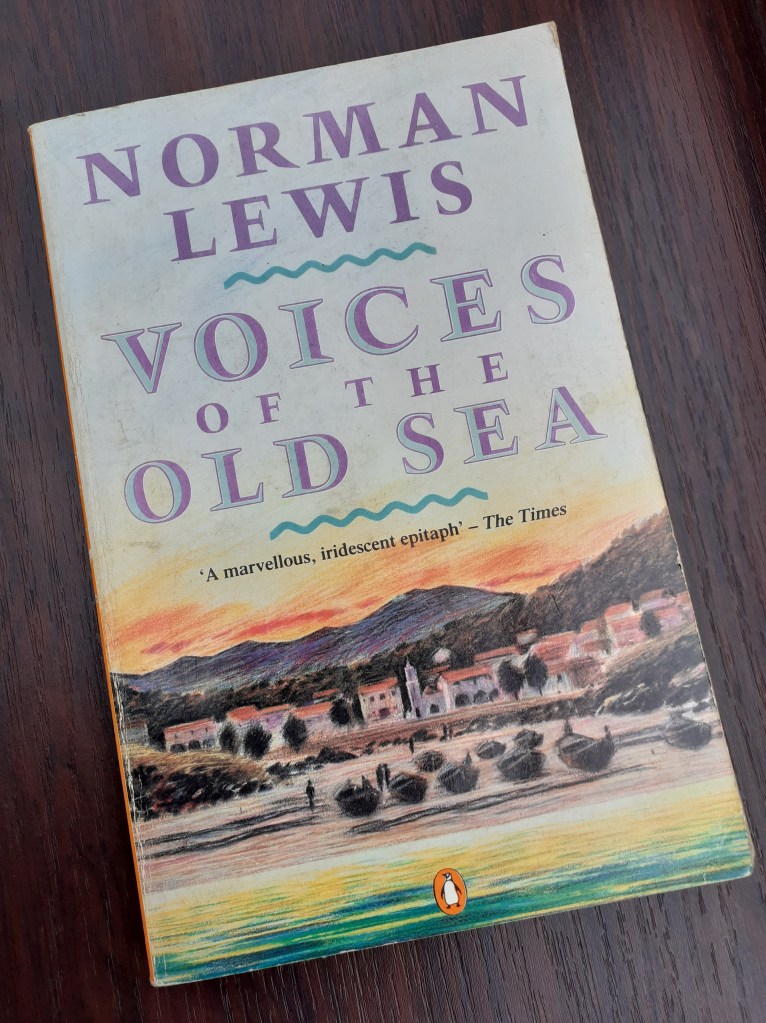
The definitive history of modern Spanish tourism has yet to be written. When somebody does so they have to include excerpts from Voices of the Old Sea by Norman Lewis, an English writer who lived for a couple of years in a remote Catalan fishing village during the late 1940s, at a time before the arrival of mass tourism. Lewis contrasts the innocence of the place with the endemic corruption of local politics. The area is a microcosm of Francoist post Civil War Spain. The provincial politicians and landowners make up the rules, taking advantage of their domination to do whatever takes their fancy. Lewis observes how they invent tourism, appropriating other people’s land, confiscating grounds adjacent to the beach and remodelling the old guest houses to create the primitive hotels that will open their doors to the first English and German visitors.  Lewis witnesses the birth of the Catalan tourist industry, the invention of  the Costa Brava and the beginning of the inexorable process which will culminate, in only 70 years, in environmental disasters such as that of the poisoning of the Mar Menor. Of course the mass tourist invasion was yet to come, as was the intensification of agriculture and the construction of the blocks of apartments, but they wouldn’t be far behind. By the 1960s the industry would grow like topsy and the die would be cast. The pollution caused by the plague of  “affordable” tourism from the countries of Northern Europe and the lack of a local infrastructure that was capable of dealing with the consequences was a lethal combination that could end up killing the Mediterranean, starting with the salt lagoons that border the open sea.
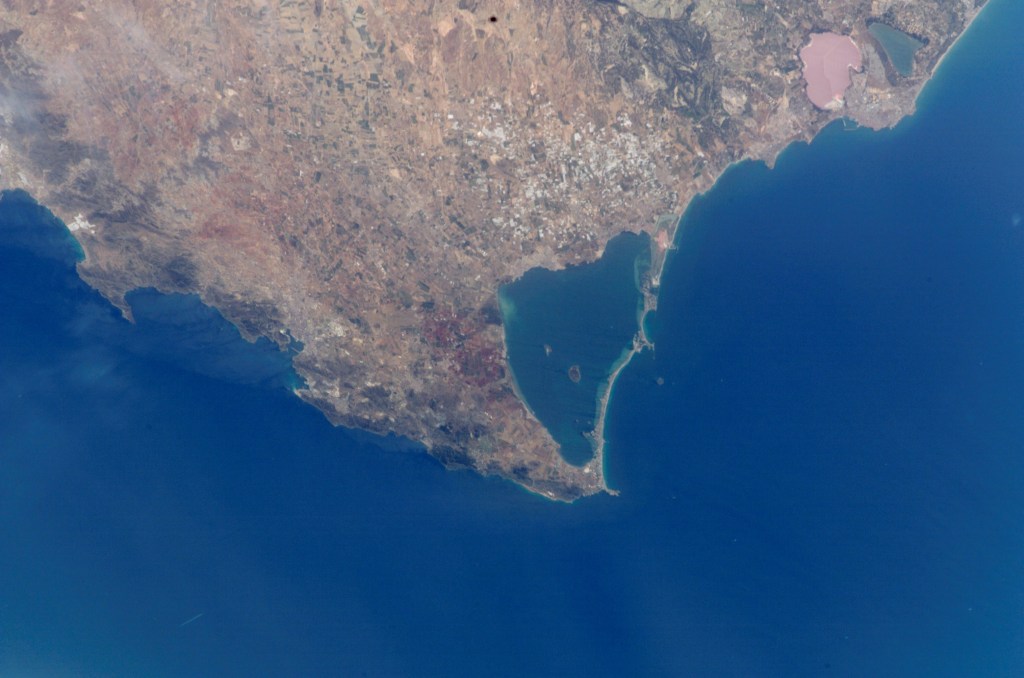
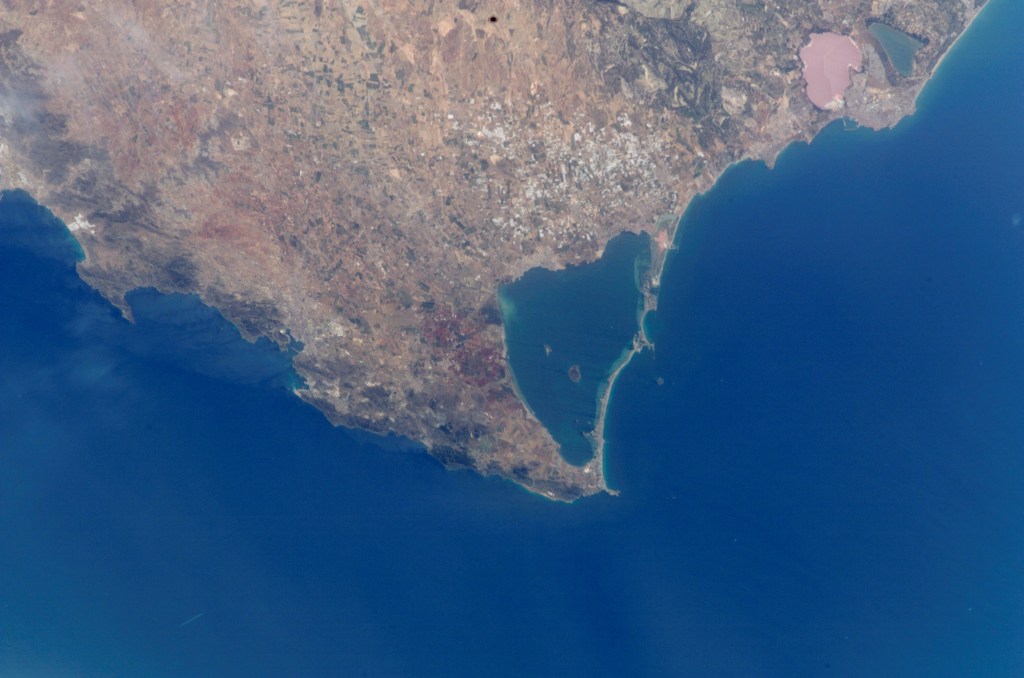
The Mar Menor seen from a NASA satellite. In the top left part of the Mar Menor there can be seen the faint image of the run-off which contains the fertilisers
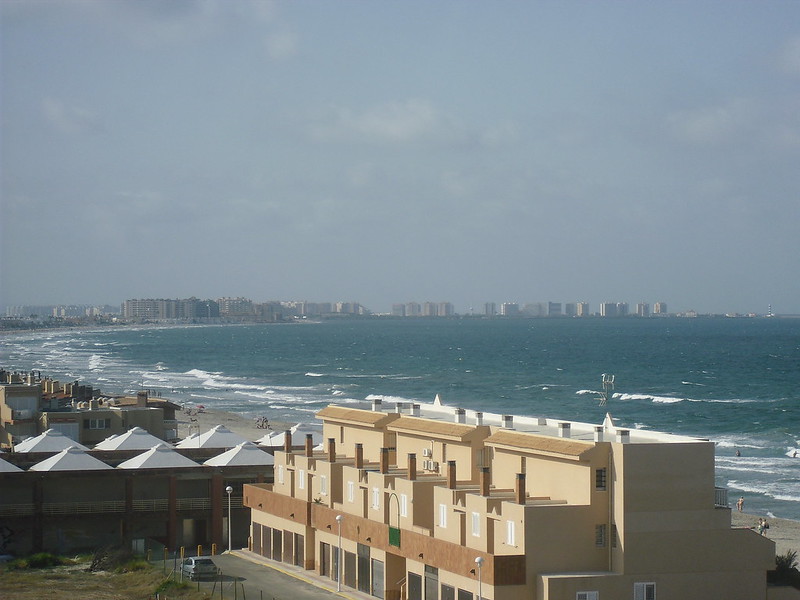
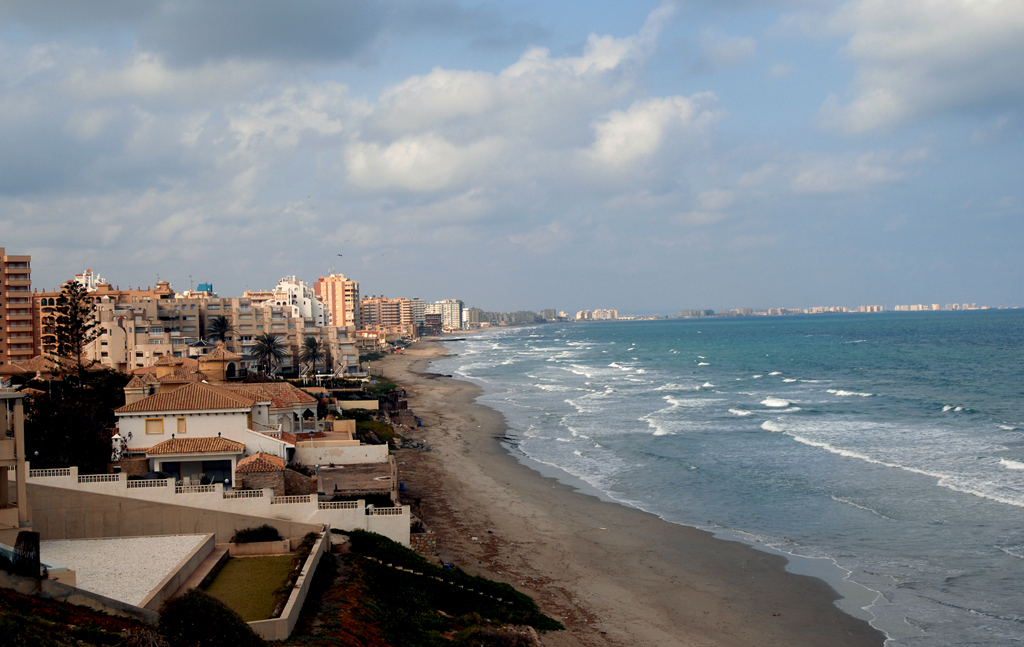
La Manga and the Mar Menor. From satellite you cannot appreciate the ring of hotels that surround the Mar Menor. Photo by Raúl Soriano

In  a guest essay for  the  New York Times (12.08.21) entitled “The Spanish Coast is Threatened by Death”, David Jimenez writes about the precarious state of health of the Mar Menor. It is a hard-hitting piece which contains links to other excellent articles which explain the catastrophe in detail. 

In brief, the ecosystem of the Mar Menor is not capable of dealing with the quantity of fertilisers that ends up in its waters. They arrive at this salt lagoon by two routes. In the first instance they get there in the run-off from the land which surrounds the Mar Menor. Secondly, and more important still, is the devastation caused by the raw brine discharged into the Mar Menor as a consequence of the activity of the many desalination plants that supply drinking water to the local people and the tourist population  (The lack of rainfall in the region of Murcia, the insufficient diversion of water into the local River Segura from other parts of Spain and the overexploitation of the aquifers make necessary the generalised use of desalination plants).  The raw brine is the infamous “green soup”, the residue that the desalination plants dump into the Mar Menor: a fetid liquid which contains a concentration of nitrates which causes death to all plant and animal life in the sea.

When it’s all said and done the designation of the Mar Menor as a special conservation zone by the European Union hasn’t offered an ounce of protection against everything that has been dumped in its waters. It seems that for twenty years the Government of the Región de Murcia has done little to comply with the European regulations for the protection of the environment in the Mar Menor. Environmental rules are nothing if they are not enforced.                   

Going back to the matter of the unbridled building boom that began in the 60s, there is an essay on the internet by Sasha D. Pack in which she points out that legislation that could have controlled construction on the Costas did exist during the 60s although nobody could be bothered to enforce it:

“Built hastily and under considerable pressure from land speculators and foreign tour operators, the hotels were with a few exceptions poor imitations of high modernism. The economics of high-volume, low-cost tourism thwarted ambitions of quality in urban design. The rapid sale of coastal agricultural terrains to land speculators drove prices upward, and as a result the objective of maximising tourist volume and density quickly overshadowed pretensions of inventing another Côte d’Azur. The Franco government has often received blame for failing to prevent the “architectural horrors” that beset Spanish coasts. In fact, the regime had adopted urban development laws mandating green space, height restrictions on buildings, and the provision of municipal services. The general disregard for such laws frustrated urban planners and tourism authorities in Madrid throughout the 1960s. As provincial delegations continually reported “clandestine” touristic developments proliferating with no state approval, Francoist officials quarrelled over how better to enforce the law. Along the southern littorals, the resort village that fully met legal urban-planning standards was a rarity by the mid-1960s.”

Tourism, Modernisation, and Difference: A Twentieth-Century Spanish Paradigm Sasha D. Pack University at Buffalo  https://www.ucm.es/data/cont/docs/297-2013-07-29-3-07.pdf

Although law-breaking corruption is not a contemporary phenomenon unique to Spain, it would be fair to say that during and after the post-war period the level of fraud in the country has broken all records. I am not saying that it did not exist before. Of course it has existed since the Garden of Eden, but undoubtedly the impunity with which politicians and businessmen who had been good servants of the National Movement acted during the 1960s has contributed to the strong prevalence of dishonesty in civic life that continues to this day.

Lewis published Voices of the Old Sea in 1984. He wrote it based on notes he took while he lived in his unnamed fishing village. In the New York Times of 14/07/85 the book was reviewed by one Barbara Probst Solomon. She accused Norman Lewis of being nothing more than a romantic egocentric who would have preferred the fishing village to remain slumped in poverty rather than to be transformed into a prosperous beach resort. According to her it was “Better a littered landscape than stagnation”.       

To me this negative review only indicates that American neoliberalism and Spanish corruption go hand in hand. Neither of them are concerned about the negative consequences of unruly economic growth.

If Norman Lewis is the writer who best captures the spirit of the first moments of tourism at the height of the post Civil War period, there is no doubt that the last novels of Rafael Chirbes best express the general repugnance that people feel for the construction and corruption that has done so much damage to the coast of Valencia. (It must not be forgotten that Voices of the Old Sea is an anthropological study whereas Chirbes’ books are novels, even if the genres do manifest a tendency to overlap.)

Chirbes published Crematorio in 2007 (It was first  published in English as Cremation in 2016). The book is a contemporaneous work, set right at the height of the building boom. Ruben, aged 73, is the villain of the piece. He has made his fortune selling “hundreds of prefabricated bungalows erected on plots in dry river beds and ravines that have been falsely recertified during the boom as building land: with their poor foundations it is only possible to live in the bungalows for certain months of the year, and only then because of the relatively mild nature of the local climate”.      

Ruben financed his developments by laundering dirty money: cash that came directly from the Colombian drug industry (the cash obtained from the sale of cocaine concealed in the intestines of horses imported legally into the country), roubles que were exported illegally from the former Soviet Union and dollars that flowed from the pernicious activities of the American mafia.  Ruben has done whatever was needed to make himself rich. He employs simple immigrants as cheap labour and uses Russian criminals to carry out his more sinister dealings. The book is full of characters who are dying or who die an early death, as well as crooks, hypocrites, criminals, murderers, invalids and addicts.   

Very often the prose is foul, gross and distorted as are the lives of the protagonists. As is the case with Chirbes’ next book, On the Edge (first published as En la orilla in Spanish 2013), which deals with the economic depression which follows the boom, Crematorio is a dense volume, difficult to read. The author deliberately ignores the rules of punctuation. Both books are four hundred and twenty pages without paragraphs or commas. They deal with difficult subjects. The laws of society are broken and the author has abandoned the rules of writing.

In Chirbes’ writing, building work sweeps all before it. Orange orchards are ripped from the ground, centuries-old cypresses and pines are sawn off at the base, moscatel vines are grubbed up, market gardens are concreted over, and the wells from which cold refreshing water once came are capped and sealed. Likewise the Arab and Roman remains (the water channels, the ancient walls, the stone built reservoirs etc) are buried beneath the new estates. Chirbes doesn’t deal directly with the protection of the sea but he does mention the developers’ indifference towards the wetlands along the coast: the marshes serve as rubbish tips; they are even useful as places to dump the corpses of those unfortunates who have disrupted the activities of the local mafiosos. In the first chapter of On the Edge, two wild dogs fight over the remains of a human hand that has surfaced from a saltmarsh.

The Fight to Save The Mar Menor

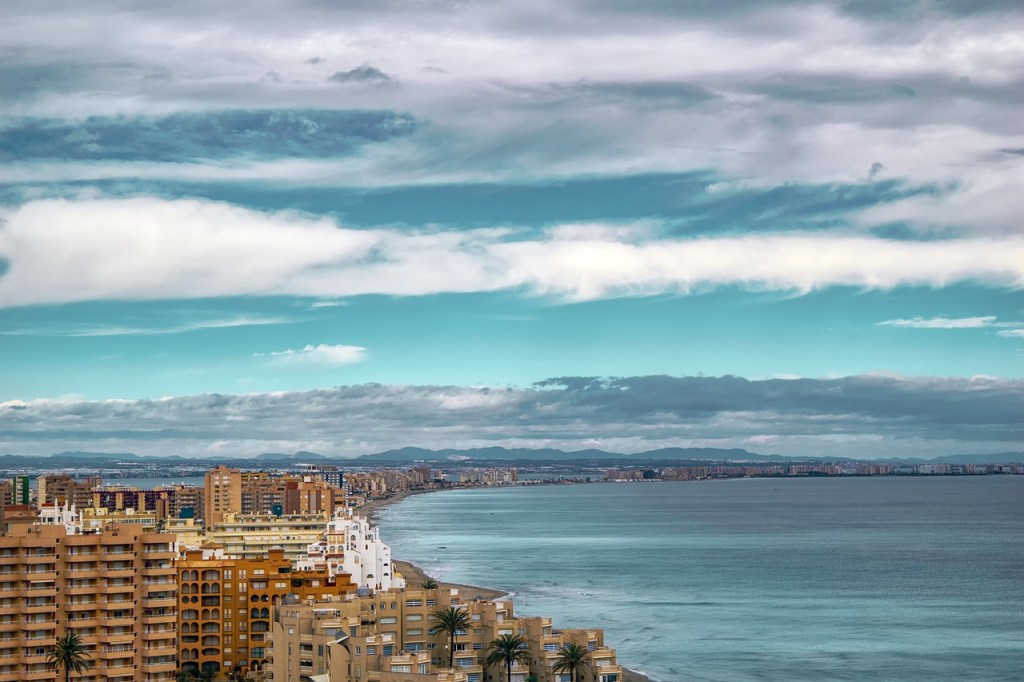
For years, local people have been warning of the slow death of the Mar Menor. Photo by P4K1T0

So far, politicians have done nothing to prohibit the flow of chemical substances into the lagoon. They seem content to argue amongst themselves. Once more, the local people have been the ones to take the initiative. An alliance of local people, ecologists and lawyers are calling for the Mar Menor to be given legal status in its own right. It is an extraordinary strategy that has as its aim, the right of the lagoon to exist and to defend itself just like any other person or enterprise. This right will mean, from the moment it is granted, that all the constituent parts of the Mar Menor, the water, all the organisms that live within it and the surrounding soil, must be left in peace and whatever damage that the lagoon incurs, must be made good. The first step for  this to happen is to obtain the signatures of 500,000 Spanish voters before the coming 28 October.  If the petition reaches this figure it can be placed before the Spanish parliament for debate. Even then, this only  guarantees that a debate will take place in the Congress.  If the signatures achieve their goal and if the Congress gives a go-ahead to the proposal, the rights of the salt lagoon can be defended in the courts. At the time of writing, some 300,000 signatures have already been collected and the organisers are confident that they can obtain the quantity demanded by law within the given period.   

The mass tourism, the never-ending construction, the desalination of the sea water, the discharge of the poisoned brine and the intensification of agricultural production are all connected.  It is not possible to deal with any of these huge problems without facing up to them all.
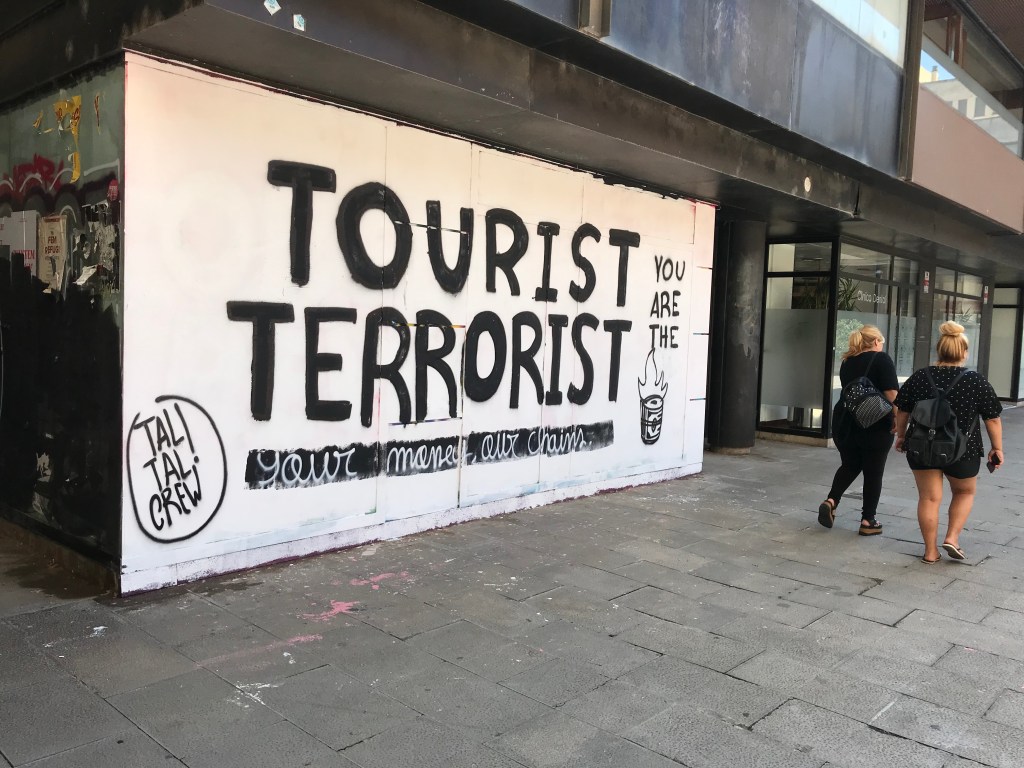
Graffiti in plaça Josep Pla in Girona, photo by Davidpar

In  many places, “tourist” has become a swear word and there is growing public discontent.

However, tourism is  going to continue in one form or another, but at this time the government should announce a moratorium on building because the ecosystems can no longer cope with the stress of the agglomeration of so many people on the Costas. Many local people believe that the government should go even further and do the unthinkable: begin a process of compulsory purchase of inappropriate coastal buildings, proceed directly to their demolition and commence a  programme of rewilding in these areas, whatever it costs.    

One thing is certain: economic growth solely based upon tourism in areas in danger of desertification are not environmentally sustainable.

La historia definitiva del turismo español moderno y la lucha para salvar el Mar Menor

En edición española, Voces del viejo mar

Hasta ahora no se ha escrito la historia definitiva del turismo español moderno. Cuando alguien lo haga tiene que incluir extractos del libro Voces del viejo mar por Norman Lewis, un escritor inglés que vivió un par de años en un remoto pueblo pesquero catalán a finales de la década de los cuarenta, una época antes de la llegada del turismo de masas.  Lewis contrasta la inocencia del lugar con la corrupción endémica de la política local. La comarca es un microcosmos de toda la España franquista de la posguerra. Los políticos provincianos y los terratenientes campan a sus anchas aprovechando su hegemonía para hacer todo lo que les dé la gana. Lewis observa cómo inventan el turismo, apropiándose de parcelas ajenas,  incautando las tierras adyacentes a la playa, y remodelando las viejas casas de huéspedes para crear los primeros y primitivos hoteles que abrirán sus puertas a los iniciales visitantes alemanes e ingleses. Lewis presencia el nacimiento de la industria turística catalana, la invención de la Costa Brava y los comienzos del proceso inexorable que culminará, en solo 70 años, en desastres medioambientales como él del envenenamiento del Mar Menor. Claro que quedaron por manifestarse la masificación de visitantes, la intensificación de la agricultura y la concentración de los bloques de apartamentos pero no tardarían mucho en producirse. Para los años 60 la industria había crecido como espuma y la suerte estaba echada. La contaminación ocasionada por la plaga del turismo “económico” del norte del continente europeo y la falta de una infraestructura local capaz de atenerse a las consecuencias era una combinación letal que pudiera acabar con la muerte del mar mediterráneo, comenzando por las albuferas de España.

El Mar Menor visto desde un satélite de la NASA. En la parte superior izquierda del Mar Menor se vislumbra la imagen difusa de la escorrentía que contiene los fertilizantes. La Manga es el nombre del cordón litoral que separa el Mar Menor del mar.
La Manga y su mar. Foto por Raúl Soriano. Desde el satélite no se ve el anillo de hoteles que rodean el Mar Menor

En un ensayo invitado en el New York Times (12.08.21) David Jimenez escribe sobre el estado precario de la salud del Mar Menor: “La costa española está amenazada de muerte”. Es un ensayo contundente que contiene enlaces a otros artículos excelentes que explican en detalles las causas de la catástrofe.    

En resumidas cuentas, el ecosistema del Mar Menor no es capaz de absorber la cantidad de fertilizantes que acaban en el mar.  Ellos llegan a esta laguna salada por dos rutas. En primera instancia, vienen directamente de la escorrentía de los campos que circundan el Mar Menor. Segundo y más importante aún es la devastación causada por la salmuera descargada al mar como consecuencia de la actividad de las muchas desaladoras que suministran agua potable a la población indígena y turística. (La falta de lluvia en la Región de Murcia, los trasvases inadecuados al río Segura y la sobreexplotación de los acuíferos, hacen esencial el uso generalizado de desaladoras). La salmuera es la notoria sopa verde, el residuo que las desaladoras vierten al Mar Menor: un líquido fétido que contiene una concentración de nitratos que provoca la muerte de toda la vida marina, tanto animal como vegetal.

A fin de cuentas la designación por la Unión Europea del Mar Menor como zona especial de conservación no le ha ofrecido ni una sola onza de protección contra todo lo que la sociedad haya vertido en sus aguas. Parece que desde hace 20 años el Gobierno de La Región de Murcia ha hecho poco para cumplir con la normativa europeo de protección del medio ambiente en el Mar Menor. Las reglas ambientales no son nada si no se las hacen cumplir. 

Volviendo al tema de la construcción desenfrenada que comenzó durante los años sesenta, hay un ensayo en internet por Sasha D. Pack en el que la autora señala que la legislación que pudo controlar la edificación en las Costas sí existía durante los años 60 aunque nadie se daba la molestia de imponerla:

«Construidos apresuradamente y bajo el fuerte apremio de los especuladores de tierras y de las agencias de viajes, los hoteles eran, en su gran mayoría, malas imitaciones del alto modernismo. La política económica de un turismo de alto volumen y de bajo coste no permitió la realización de una arquitectura de calidad. La venta rápida de las tierras agrícolas costeras a los especuladores inmobiliarios hizo que los precios dispararon. Como resultado de todo esto, se abandonó cualquier pretensión de crear una nueva Côte d’Azur. Muchas veces se critica al gobierno de Franco por no prevenir los horrores arquitectónicos que desfiguran las costas españolas. Sin embargo, el Régimen había adoptado leyes para el desarrollo urbanístico que obligaban la creación de espacios verdes, restringía la altura de edificios y mandaba la provisión de servicios municipales. La habitual inobservancia de estas reglamentaciones frustraron a los planificadores urbanos y las autoridades turísticas en Madrid a lo largo de los años 60. Delegaciones Provinciales continuamente informaron sobre la proliferación de construcciones turísticas que no tenían permiso de obras, mientras que los funcionarios franquistas discutían cómo se podía mejorar el cumplimiento de la ley.  Para los mediados de la década, era una rareza una urbanización turística que conformara a las normas de la planificación.»

Tourism, Modernisation, and Difference: A Twentieth-Century Spanish Paradigm Sasha D. Pack University at Buffalo  https://www.ucm.es/data/cont/docs/297-2013-07-29-3-07.pdf

Aunque la corrupción que frustra la ley no sea un fenómeno contemporáneo exclusivo de España, sería justo decir que durante y después de la posguerra el nivel de fraude en el país ha batido todos los récords. No digo que no existiera antes. Claro que existe desde el Jardín del Edén, pero sin duda alguna la impunidad con que actuaban durante los años 60, los políticos y empresarios que habían sido buenos servidores del Movimiento Nacional, ha contribuido a la fuerte prevalencia de la deshonestidad en la vida cívica que continúa hasta hoy día.

Lewis publicó Voces del viejo mar en 1984. Lo escribió basado en las notas que tomó cuando vivió en el pueblo pesquero anónimo. En el New York Times de 14/07/85 hizo la crítica del libro una tal Barbara Probst Solomon. Ella acusaba a Norman Lewis de ser nada más que un romántico egocéntrico. Decía que Lewis habría preferido que el pueblo pesquero se hubiera quedado sumido en la miseria que ser transformado en una próspera playa turística.  Según ella, era «mejor tener un paisaje contaminado con basura que un estancamiento económico”.

Para mi, esta reseña negativa solo indica que el neoliberalismo norteamericano y la corrupción española del último medio siglo van de la mano. A ninguno de los dos les interesa las consecuencias de un crecimiento económico descontrolado. 

Si Norman Lewis es el escritor que captura mejor el espíritu de los primeros momentos del turismo en plena posguerra, no hay duda alguna de que son las últimas novelas de Rafael Chirbes que mejor expresan la repugnancia general que se siente hoy en día por la corrupción y la construcción que han hecho estragos en la costa valenciana. (No hay que olvidar que Voces del viejo mar es un estudio antropológico mientras que los libros de Chirbes son novelas, aunque los dos géneros manifiesten una tendencia a solaparse.)

Chirbes publicó Crematorio en 2007 y el libro se sitúa ahí mismo, en el punto álgido del boom inmobiliario. Rubén es el malo de la película. Tiene 73 años y se ha enriquecido vendiendo «centenares de bungalows prefabricados, edificadas en terrenos dudosamente recalificados como residenciales, en ramblas, en barrancos, bungalows mal cimentados en los que solo se puede vivir durante algunos meses al año, y eso gracias a la relativa benevolencia del clima de la comarca».

Rubén financió sus urbanizaciones con el blanqueo de dinero sucio: dinero que venía directamente de la droga colombiana (los ingresos fueron obtenidos de la venta de la cocaína escondido en los intestinos de caballos importados legalmente al país), rublos que se exportaban ilegalmente de la antigua Unión Soviética y dólares que procedían de las prácticas perniciosas de los mafiosos norteamericanos. Rubén ha hecho todo lo que le haya faltado para enriquecerse. Emplea a inmigrantes sencillos como mano de obra barata y utiliza a criminales rusos para llevar a cabo sus tareas más siniestras. El libro está lleno de personajes moribundos, malogrados, hipócritas, corruptos, criminales, asesinos, adictos y enfermos. 

Muchas veces la prosa es soez, grosera y distorsionada, tal cual la vida de los protagonistas. Como el siguiente libro de Chirbes, En la orilla (2013), que cuenta la depresión económica que sigue el boom de la construcción, Crematorio es un tomo denso y de lectura difícil. A propósito el autor hace caso omiso de la mayoría de las reglas de la puntuación. Ambos son libros de cuatrocientas veinte páginas sin párrafos y sin comillas. Son intencionadamente complicados de leer. Tratan de temas incómodos: las reglas de la sociedad están rotas y el autor ha abandonado las reglas de escribir.

En la obra de Chirbes, la construcción se lleva toda la naturaleza por delante. Los naranjales son arrancados de cuajo, los cipreses y los pinos centenarios son cortados de raíz, las cepas de moscatel son extirpadas, los pozos de donde se extraía agua fría y refrescante son tapados y sellados y los huertos son convertidos en campos de hormigón. Desaparecen también los restos históricos: las ruinas árabes y romanas, (las acequias, las murallas, las albercas etc) son sepultados debajo de las nuevas urbanizaciones. 

Chirbes no trata directamente de la protección del mar pero menciona la actitud de indiferencia de los constructores para con los pantanos costeros; las marismas sirven de basurales; incluso son sitios útiles para tirar los cadáveres de los infortunados que han estorbado las actividades de los mafiosos locales. En el primer capítulo de En la orilla dos perros asilvestrados luchan por una mano humana que ha surgido de una marjal. 

La lucha para salvar el Mar Menor

Los vecinos llevan años advirtiendo a las autoridades de la lenta agonía del Mar Menor. Foto por P4K1T0

Hasta ahora los políticos no han hecho nada para prohibir el flujo de sustancias químicas al Mar Menor. Parecen contentos de reñir entre sí. Una vez más son los vecinos quienes han tomado la iniciativa. Una alianza de vecinos, ecologistas y abogados reclama que se dote al Mar Menor de personalidad jurídica. Es una estrategia extraordinaria que pretende que la laguna cuente con el derecho a existir y a defenderse, como a cualquier otra persona o empresa. Este derecho implica que, desde su aprobación en adelante, todas las partes constituyentes del Mar Menor, el agua, todos los organismos que contiene naturalmente y el suelo que lo circunda deberán estar dejados en paz y que cualquier daño sea remediado. El primer paso para que esta demanda se admita a trámite hay que obtener 500,000 firmas de votantes españolas antes del próximo 28 de octubre. Si la petición llega a esta cifra, puede ser presentada al Congreso de los Diputados. Aun así, esto solo garantiza que el asunto se debate en el Congreso. Si se obtienen las rúbricas necesarias y el Congreso le da luz verde a la propuesta, los derechos de la albufera podrán ser defendidos ante los tribunales de justicia. En el momento de escribir ya se han recogido unas 300,000 firmas y los organizadores confían en que van a ser capaces de obtener la cantidad demandada por la ley dentro del período especificado.

La masificación del turismo, la eterna construcción, la desalinización del agua, la descarga de la salmuera envenenada y la intensificación de la producción agrícola están todos vinculados. No es posible resolver uno de estos problemas descomunales sin encarar los otros.

Mural a la plaça Josep Pla de Girona, foto por Davidpar

En muchos sitios “tourist” se ha hecho una palabrota y hay un descontento público creciente. 

Sin embargo, el turismo va a continuar de una manera u otra, pero en este momento el gobierno debería anunciar una moratoria sobre la construcción porque los ecosistemas ya no pueden con el estrés de las aglomeraciones de tantas personas en las Costas. Mucha gente local cree que el gobierno debería ir aún más lejos y hacer lo impensable: iniciar un proceso de expropiación de edificios costeros inapropiados, proceder inmediatamente al desmantelamiento de estos y comenzar un programa de retorno de la vida silvestre en estas zonas, cueste lo que cueste.

Una cosa sí es cierta: el continuo crecimiento económico basado únicamente en el turismo en zonas que se están aproximando a la desertificación no es sostenible desde el punto de vista medioambiental.