The Crown: Thatcher and the Falklands reviewed by Fuera de Foco

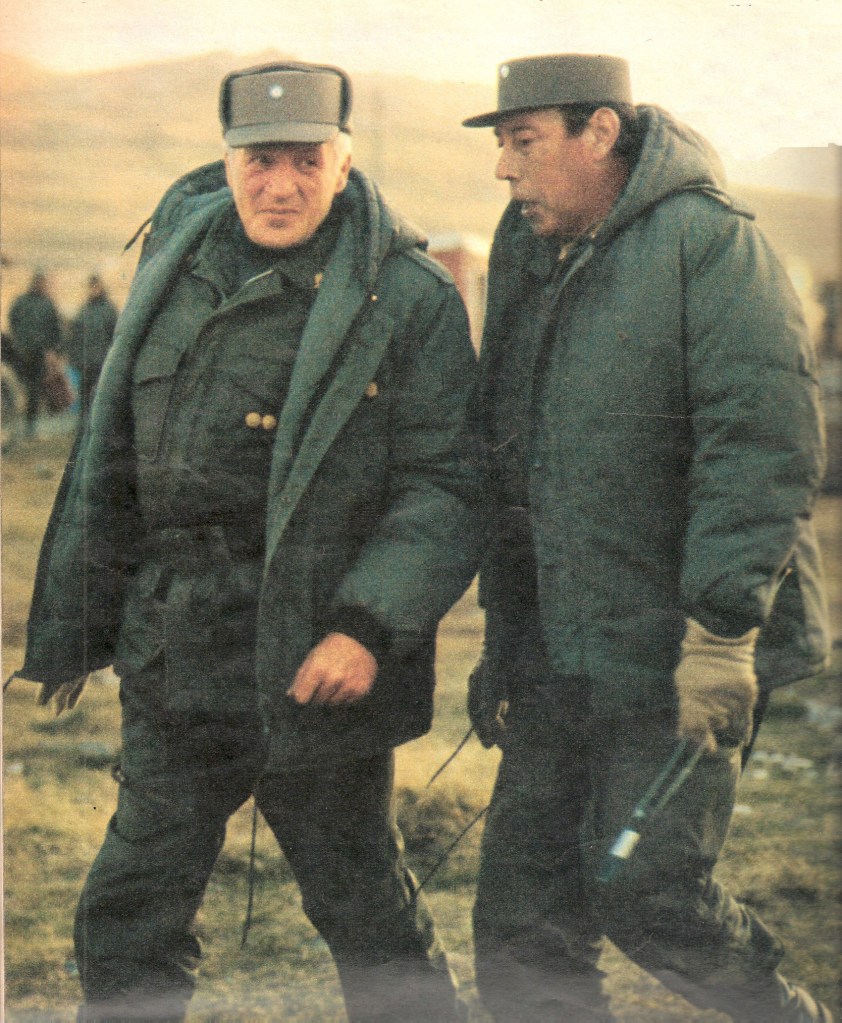
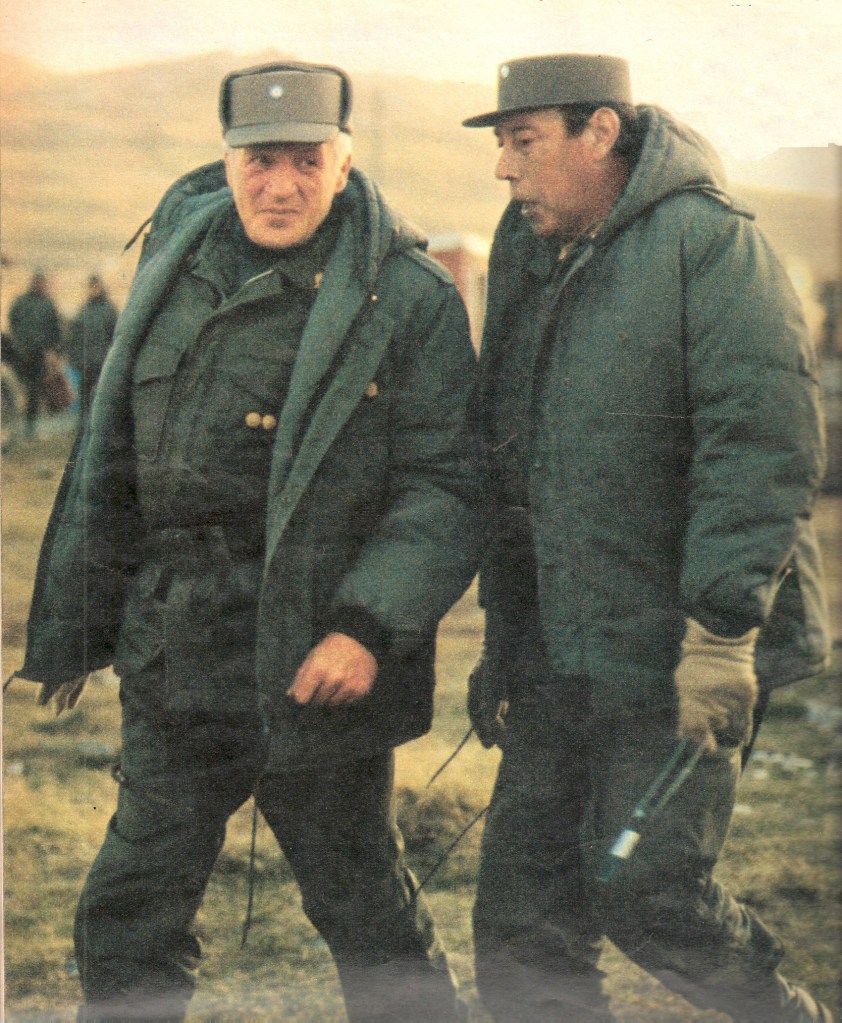
Generals Galtieri and Jofre on The Falklands
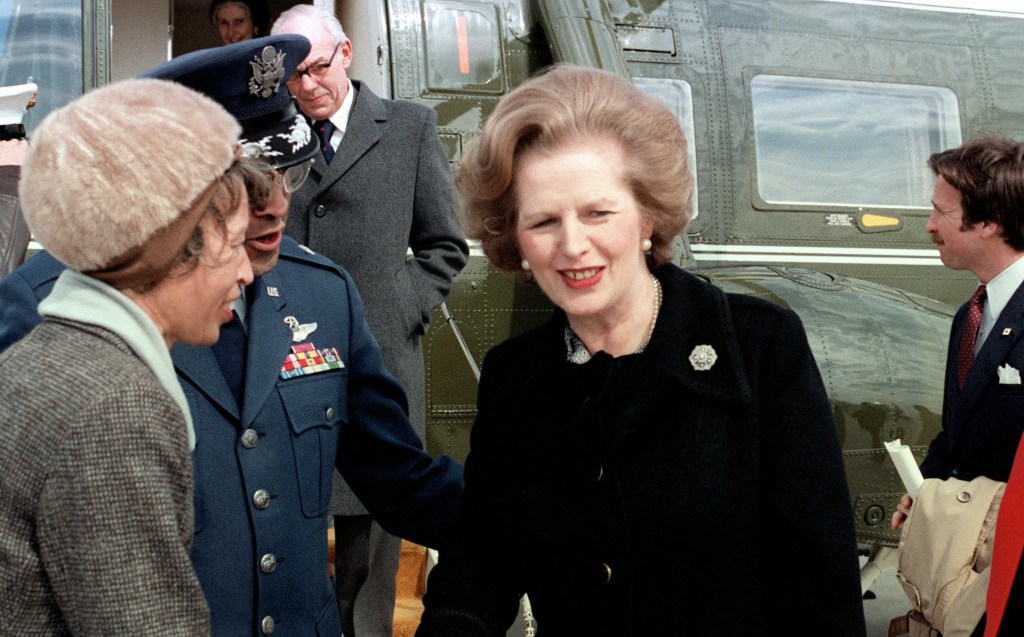
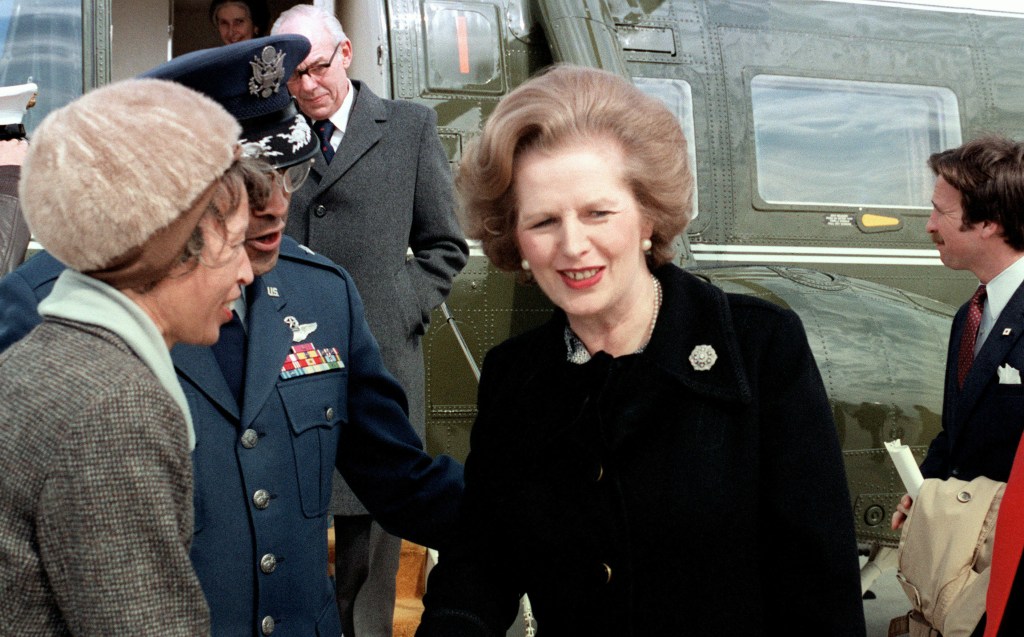
Prime Minister Margaret Thatcher of England is bid farewell on her departure after a visit to the United States.

Last time I commented on the very few minutes of his time that Carlos Boyero bestowed upon The Crown after having watched 10 hours of Series 4. Much more exhaustive is the treatment of Gaby Meza on her Mexican channel Fuera de Foco (Out of Focus). The outstanding feature of her analysis is the special mention she makes of her Argentinian audience, addressing them directly and asking for their opinion of how they feel the series tackles the Falklands War in “CRÍTICA: THE CROWN Temporada 4 | Princesa Diana, Tatcher [sic] y Las Malvinas”.

Gaby greets her many Argentine followers, sends them a hug and the now clichéd symbol of “I love you”, pressing her fingers together to form the shape of a heart. It’s obvious she’s nervous and feels the necessity of ingratiating herself with her Argentinian audience.

She says of the Falklands episode, “The only mention of the Argentine point of view was that it was some country that wanted to have the Falklands, end of. If you are Argentinian you will have much more understanding of the issue, so if you have something important to say on this matter, I would love you to comment below about what you thought of the portrayal of this issue. Are you happy or unhappy about it and why?”

Once again, at the end of the video, Gaby urges Argentinians to submit their commentaries.

Despite the nervousness that Gaby feels at having to tackle the subject of the Falklands War and the evident fear she has of offending her subscribers the matter only occupies a small percentage of the 3000 comments. Of course, there are some “The Malvinas are Argentine and will always be Argentine!!!!” but the majority of the visitors to her channel are more interested in the psychological conflicts within the Royal Family.

Like Gaby herself, I was expecting much more fury and resentment on the part of her Argentinian public but the majority of the replies are, generally, much more weighed and considered than they are rancorous. Take for example, this one. Although it is a little incoherent, it demonstrates an understanding of the situation:

“I’m a 40 year old Argentinian woman and I was 2 during the war. I never thought I’d have any support for my theory and now I see it in this series. This episode was very important for me. I got goosebumps when I saw the characters speaking in Argentinian. From my point of view this war should never have taken place. It existed because of the government at the time in Argentina. They believed that making war on England would put them in a better position but the opposite happened. When I see Margaret declaring war, sending troops, she does not do it just because she wants her government to be popular, but also to defend the small population of the Malvinas. Fascist. I believe that, thanks to England, this government ended up falling. And that the Argentinians should be grateful to England. Many people would kill me if I said this out loud but it’s what I truly feel.. Keep going The Crown, the best series on Netflix.”

The lady is correct. That’s how it works: when the leader of a country in the middle of an economic crisis wishes to divert public attention away from their domestic policy, one of their solutions is to look for an external enemy. There is nothing better to unify the people behind a hated leader than a patriotic fight to kick out an evil invader. Samuel Johnson said in 1775 that patriotism is the last refuge of the scoundrel. In the case of the Falklands this principle can be applied equally to Margaret Thatcher and General Galtieri. Both were presiding over an economic mess and both looked gladly upon the popularity they might regain with the reconquest of the Falklands/Malvinas. I don’t believe that Mrs Thatcher’s primary objective was to oust the bloodstained military dictators and restore democracy to Argentina, but that’s what happened. It’s an ill wind….

Curiously, the thing that most annoyed commentators was that Netflix hadn’t taken the trouble to employ Argentinian actors to play the soldiers and the scrap metal dealers who hoisted the Argentinian flag on South Georgia and sang the national anthem during the days that led up to the war. Netflix had given the job to other Spanish speakers and their accents grated on the Argentinian television viewers.
“CRÍTICA: THE CROWN Temporada 4 | Princesa Diana, Tatcher [sic] y Las Malvinas”

Margaret Thatcher en EEUU 1981. Autor, Williams, US Military

A la izquierda, Generales Galtieri y Jofre en las islas Malvinas, revista Gente, Abril 1982. Autor desconocido

En la última entrada de blog comenté sobre los escasos minutos que Carlos Boyero se dignó de conceder a La Corona después de ver 10 horas de la serie 4.  Mucho más exhaustiva es la crítica de la mejicana Gaby Meza en su popular canal de YouTube, Fuera de Foco. La nota que destaca de su análisis es la mención especial que ella hace de su público argentino. Se dirige directamente a ellos, pidiéndoles que den su opinión de cómo la serie aborda la Guerra de las Malvinas en “CRÍTICA: THE CROWN Temporada 4 | Princesa Diana, Tatcher [sic] y Las Malvinas”.

Gaby saluda a sus muchos seguidores argentinos, les manda un abrazo y el ya tópico símbolo de “te amo”, juntándose los dedos en forma de corazón. Es evidente que está nerviosa y siente la obligación de congraciarse de inmediato con su público argentino.

Dice del episodio de Las Malvinas: “No se ve mucho de la postura argentina fuera de que los retraten como este país que quiere quedarse con estas tierras de las Malvinas y listo. Si tú eres argentino seguramente tendrás muchos más conocimientos al respeto, así que si tienes algo importante que decir sobre este tema me encantará que comentes aquí abajo que te pareció la forma en la que abordaron. ¿Estás contento o no y por qué?”

Otra vez, al final de su video, Gaby insta a los argentinos a que envíen sus comentarios.

A pesar del nerviosismo que siente Gaby al tener que abordar el tema de las Malvinas y el evidente miedo que tiene de ofender a sus suscriptores, el asunto solo ocupa un pequeño porcentaje de los 3000 comentarios. Claro que hay unos “¡¡¡¡Las Malvinas son argentinas y siempre serán argentinas!!!!” pero la mayoría de los visitantes al canal están más interesados en los conflictos psicológicos dentro de la familia real.

Como la propia Gaby, yo esperaba mucho más furia y resentimiento por parte de los argentinos, pero la mayoría de sus respuestas son, por lo general, mucho más sopesadas y consideradas que rencorosas. Pongo, por ejemplo, este. Aunque sea un poco incoherente, demuestra una comprensión de la situación:

Yo soy Argentina tengo 40 años tenía 2 años cuándo fue la guerra. Siempre lo pensé pero no tenía donde apoyarme con mi teoría y ahora lo vi en la serie ese capítulo fue para mí muy importante. Se me puso la piel de gallina cuando vi personajes hablando en argentino. Desde mi opinión esta guerra nunca tendría que haber existido. Existió por culpa del gobierno de facto de ese momento en Argentina. Creían que hacerle guerra a Inglaterra los iba a posicionar y fue todo lo contrario. Cuando en la serie veo que Margaret le declara la guerra mandando tropas , lo hace tanto para defender a la pequeña población de las malvinas y más por qué era un gobierno de facto. Fasista. Yo creo que gracias a Inglaterra ese gobierno terminó de caer. Y que los argentinos deberían agradecerle a Inglaterra. Me Matarían muchos si digo ésto en persona pero es lo q de verdad siento.. aguante the crown la mejor serie de Netflix.”

La señora tiene razón. Así es como funciona la cosa: cuando un líder de un país en plena crisis económica quiere desviar la atención pública de su política doméstica, una de sus soluciones es de buscar a un enemigo exterior. No hay nada mejor para unificar a un pueblo detrás de un líder odiado que una lucha patriótica para quitarse de encima a un invasor maléfico. Samuel Johnson dijo en 1775 que el patriotismo es el último refugio de un canalla. En el caso de la Guerra de la Malvinas este principio puede aplicarse igualmente a Margaret Thatcher y al general Galtieri. Ambos se habían metido en un lio económico y ambos vieron con buenos ojos la popularidad que pudieran recuperar con la reconquista de Las Malvinas. No creo que el objetivo principal de la señora Thatcher fuera él de desbancar a los ensangrentados dictadores militares y la restauración de la democracia en Argentina, pero así ocurrió. No hay mal…

Por curiosidad, la cosa que más molestaba a los comentaristas era que el Netflix no se hubiera dado la molestia de contratar a actores argentinos para interpretar a los chatarreros y soldados que izaron la bandera argentina y cantaron el himno nacional en la isla Georgia del Sur durante los días antes de que se estrellara la guerra. Netflix había empleado otros hispanoparlantes y los acentos les molestaba bastante a los telespectadores argentinos.

Why the Spanish like The Crown (Series 4)

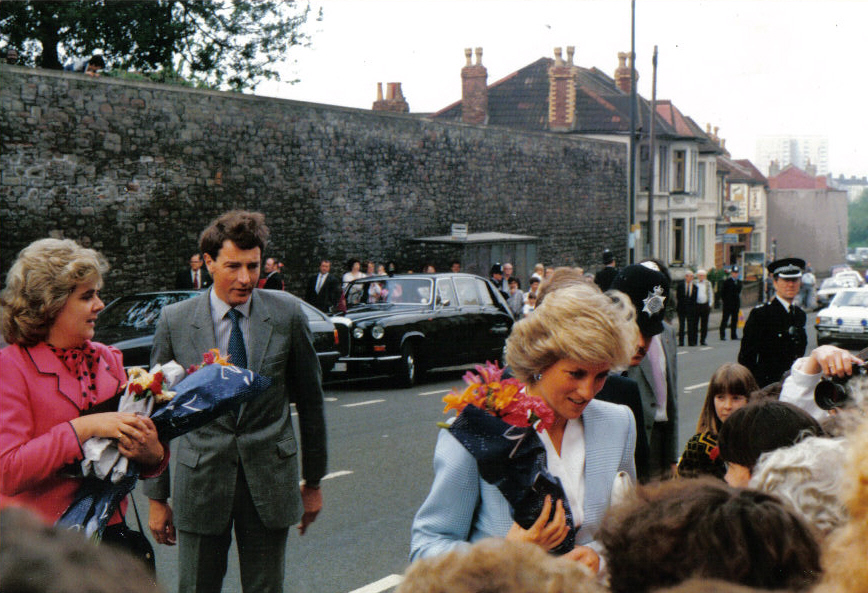
Princess Diana opening a community centre in Bristol in 1987. Photo by Rick, CC BY 2.0 https://creativecommons.org/licenses/by/2.0, via Wikimedia Commons

Carlos Boyero, a film critic for the Spanish radio station La SER, says, “I believe that this series is a tremendous boon for the British Monarchy….Talented film-makers are trying to show us….that these are very human people in almost constantly difficult circumstances….”

I can assure you that nothing could be further from the truth. The majority of the English believe that this series is yet another nail in the coffin of the monarchy. What it does show us is the coldness of the Queen, the self-serving behaviour of the whole family in their perpetuation of their image at all cost, quite prepared to sacrifice whoever gets in the way; it shows us that the marriage of Prince Charles with Diana Spencer was arranged by the family in psychopathic style to serve as a cover for his “inappropriate” relationship with the married Camilla Parker Bowles; it shows the ensuing coldness and the cruelty with which they treated poor Diana when she became aware of the set up and expressed her repulsion at what was going on. Then, when every member of the royal family ignored her protests, they labelled her as hysterical or mad, showing us their collective lack of humanity. Charles comes out of this portrayal particularly poorly.

And what does Señor Boyero think of the episode which concerns the two female cousins of the Queen who are declared dead in the newspaper, whereas, in reality, they have been locked away in an institution for people with learning difficulties in an attempt to protect the image of a family with an impeccable genetic structure?

In The Crown every member of the royal family, other than the Queen, appears to be merely selfish, spoilt and bored. Throughout series 4 there is nobody, apart from the Queen, who has any redeeming features. No señor. This series has been a real disaster for the British royal family.

Señor Boyero says that he has watched all the episodes (ten hours) of the series, but I suggest he goes back and takes another look at them all. Because, the first time around, he didn’t get the message at all.

This series shows us a collection of pampered, irritable and superficial characters who have no pity for anyone. Practically the only mention that señor Boyero makes of them is when he professes his love and fascination for Princess Margaret, (“To me, she is a great beauty, she has always seemed extremely attractive”) something which tells us more about his personal sexual frustration than anything else.

Is señor Boyero’s programme, La Ventana en el cine, a serious window on the world of films?

How is it possible that anyone can watch such a brilliant and complex series for ten hours and then have nothing to say other a few trivial remarks? Don’t the trials and tribulations of the British Royal Family represent anything other to Señor Boyero than the ups and downs of any average family: we’re all the same wherever you go?

Then, I thought, perhaps I ought to be a little more understanding with this man. It might be that his lack of criticism of the Royal Family, whether it be the real Windsors or the Netflix invention, indicates his desire to celebrate a royal family unsullied by the financial corruption that has blackened the name of the Borbons and has severely reduced their popularity in Spain; however many problems and defects the British Royal Family might have, they are still a royal family in the old style, full of personal intrigue and somewhat old fashioned, but at the end of the day, an innocent institution and a fine repository for Spaniards who are looking for a trustworthy abode in which to place their monarchist sentiments, a substitute royal family, a foster royal family for Spanish monarchists who feel let down by the home side.

Because, whatever you say, you have to admit that the recent mishaps of the British Royal Family are not very serious in comparison with the extravagant deceitfulness of their Spanish colleagues.