How the Emeritus King of Spain Can Help the People of Bradenstoke Realise Their Dream

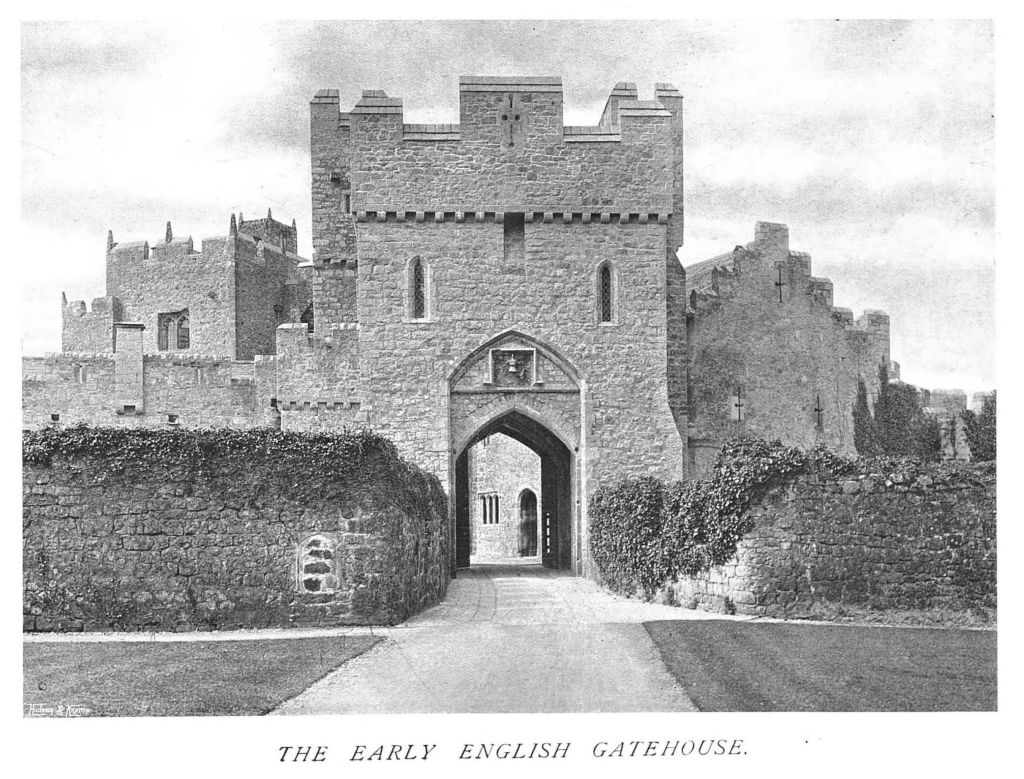
By Charles Latham (1847-1912) – https://archive.org/details/in-english-homes-vol-2-31295007279283, Public Domain, https://commons.wikimedia.org/w/index.php?curid=90520669

Some ten years ago my friends Susan and Mick were married in St Donat’s castle in the beautiful Vale of Glamorgan.The castle nestles discreetly in a breach of the cliffs from where it looks out over the Bristol Channel. The countryside there is peaceful, idyllic and off the beaten track. There are terrific views. From the Tudor rose gardens you get a panorama of the low-lying Somerset coast, 14 miles to the south. A little further to the south west where the County of Somerset meets Devon you can see the high ground of Exmoor National Park. So it was that we spent a perfect summer’s day at a fairy-tale castle in a marvellous state of preservation. But it wasn’t always like this.

The history of St Donat’s goes back to medieval times but by the 1920s the castle was in a partly ruinous state. It had a change of fortune in 1925 when it was acquired by William Randolph Hearst, the infamous American newspaper magnate who had so much money he could do anything he felt like doing. And whatever he felt like doing, he carried out with total disdain for history and with an absolute indifference towards public opinion; he would have laughed at modern concepts like cultural or world heritage.

Hearst purchased the castle after seeing it advertised for sale in Country Life; he cabled his agent in England to buy it. In order to transform St Donat’s into the castle of his dreams, and add a little more “historical interest” Hearst bought other buildings of inestimable historical value, had them dismantled and transported to Wales with the intention of incorporating them into his phantasmagorical plans.

His greatest act of vandalism was the destruction of the Agustinian priory of Bradenstoke in the English county of Wiltshire, founded in 1142. He removed the enormous and magnificent vaulted roof and used it to cover the party room that he added to the castle. He also ripped out the windows and the magnificent prior’s fireplace, adding these to his party room and at the same time reducing the priory to rubble. It was here in his party room during his very infrequent visits to the castle that Hearst entertained his illustrious guests – members of high society, important politicians, Hollywood stars and members of the royal family.

What I cannot get into my head is why Hearst didn’t get his carpenters to copy the roof instead of destroying the monastery. Hearst was dripping with money and the only explanation for his vandalism is that he must have been an impulsive and impatient man, a man who was used to getting what he wanted immediately. Obviously, it was a more rapid solution to rip it off the top of an incalculably valuable building rather than to wait a few months for a replica, or at least, something similar. There’s no doubt whatsoever that the carpenters would have been capable of making a faithful reproduction because when they installed the roof in the castle they had expanded it from 50 to 90 feet in length.

If you wish to see the priory before it was destroyed visit the webpage of the Lyneham and Bradenstoke parish council:https://www.lynehamandbradenstoke-pc.gov.uk/community/lyneham-and-bradenstoke-parish-council-16223/old-images-of-bradenstoke-prioryabbey/

Now, all that is left of the priory is a portion of the tower and the ruins of the undercroft.
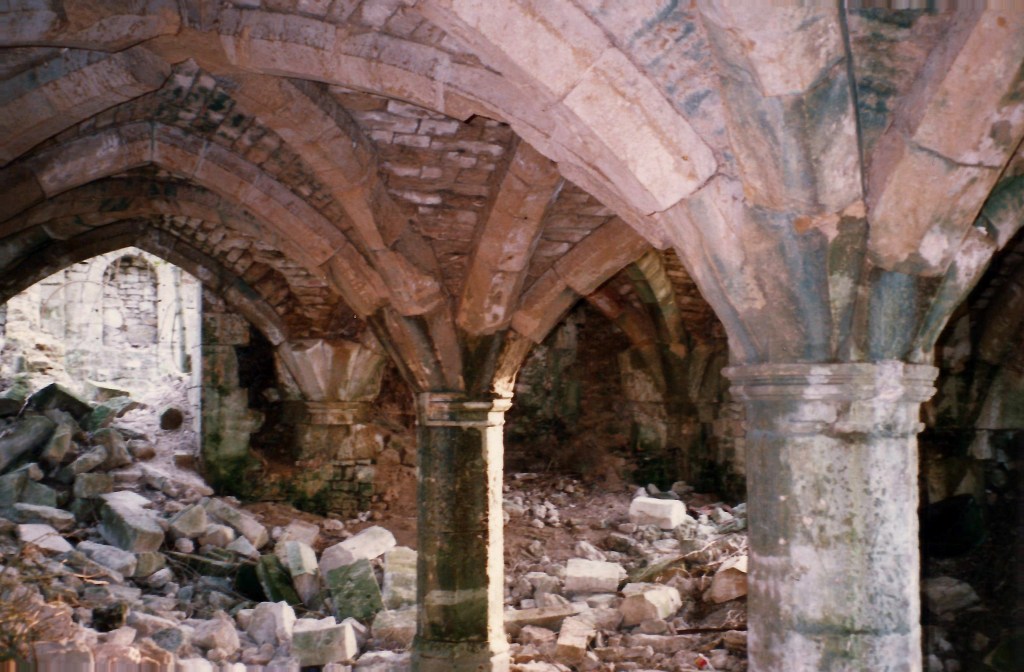
photo by Rodhullandemu

The castle was sold after the death of Hearst and in 1962 it became Atlantic College, a private sixth form boarding school where the students study for  the International Baccalaureate. Tatler, the British high fashion magazine says that Atlantic College “has become the place where international royals, Californian scenesters and intellectual bohemians choose to send their children to study”. When Princess Isabel of Belgium enrolled in the college in 2018 the Times of London called the castle the “Hogwarts for hippies”.

In the next school year the college will welcome another daughter of royalty, Princess Leonor of Asturias, the 17 year old heir to the Spanish throne. For two years Atlantic College will be where she works towards the International Baccalaureate at a total cost of £67,000, a sum which will be paid by her parents, King Philip VI and Queen Letizia. 

Hearst also bought and dismantled Bradenstoke priory tithe barn, another building of immense historical interest. He crated up the wooden framework and shipped it to his other luxury castle in San Simeon, California. Once again, Hearst lost interest in the project and sold the barn to another businessman who planned to rebuild it as a wedding chapel in the Californian city of San Luis Obispo. However, the city council prohibited him from doing so because the building was not earthquake proof. So it is that 90 years later the 109 long crates that contain the beams, the doors, the wind braces and the many other timbers that comprise the barn, are still stored in a warehouse belonging to Alex Madonna Construction of San Luis Obispo. If you wish to see photos of this enormous medieval building take a look at this video:

It’s also very worthwhile having a look at the little-watched BBC video in which the historian Dan Cruickshank interviews Hannah Swarbrick, the last surviving person who lived in the priory before it was bought by Hearst. Cruickshank also visits the ruins of the priory and St Donat’s castle. He then travels to San Luis Obispo where he opens the crates containing the tithe barn “kit” and enthuses about the idea of returning the building to its original site.

The people of Bradenstoke understand full well that they have lost the priory forever but the return of the tithe barn continues to be a dream of theirs, even though the parish doesn’t have the necessary funds to buy it, bring it back home and rebuild it. What a marvellous gesture it would be for the Emeritus King of Spain, the ex King Juan Carlos I, to use his extensive funds to grant them their wish! Besides, he would have the satisfaction of knowing that he had helped to right one of the many wrongs that Hearst committed in the sacking of Bradenstoke, the village which gave its medieval soul to the reconstruction of the Hogwarts Castle at which his granddaughter is to complete the final phase of her secondary education. 
Como el Rey emérito de España puede ayudar a la gente de Bradenstoke a realizar su sueño

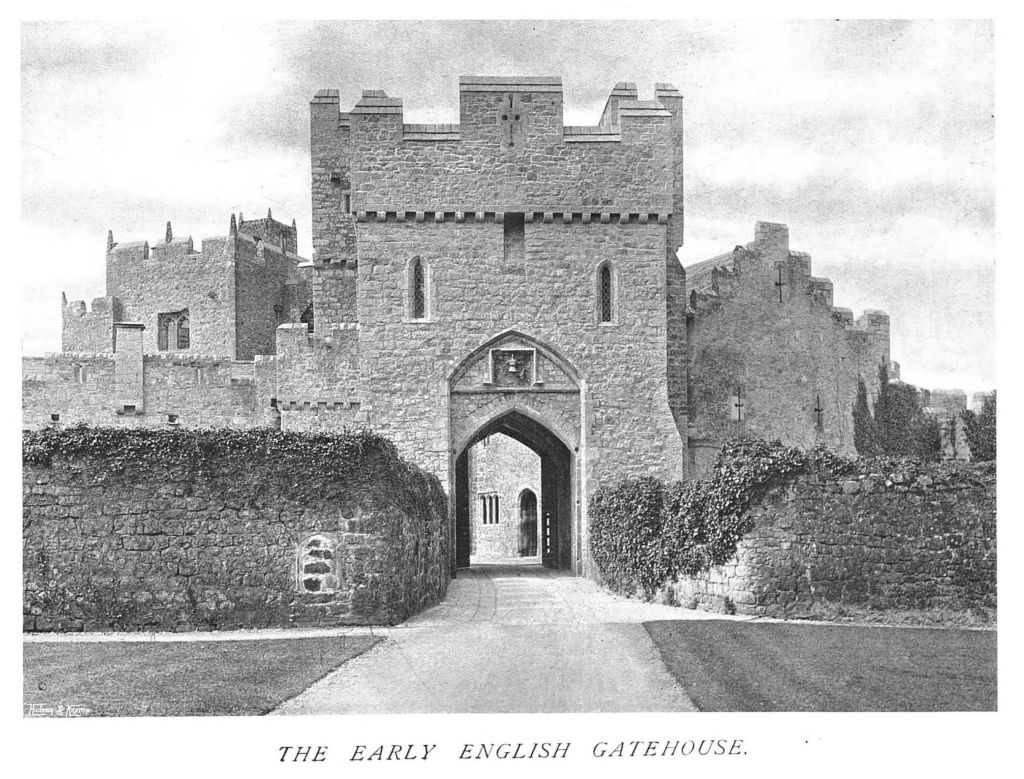
foto por Charles Latham (1847-1912) – https://archive.org/details/in-english-homes-vol-2-31295007279283, Public Domain, https://commons.wikimedia.org/w/index.php?curid=90520669

Hace unos diez años mis amigos Mick y Susan celebraron sus bodas en el castillo de San Donato, que se sitúa discreto en una brecha de los acantilados galeses que dan al canal de Bristol. Es un paisaje idílico, tranquilo y apartado. Tiene vistas tremendas. Desde los jardines tudor llenos de rosas se tiene un panorama de la costa del condado inglés de Somerset que se encuentra baja en la orilla opuesta del canal, a unos 20 kilómetros de distancia. Un poco más al suroeste, donde el condado de Somerset se encuentra con Devon se pueden ver las tierras altas del pintoresco Parque Nacional de Exmoor. Así fue que pasamos un día perfecto en un castillo de cuento de hadas que se encuentra en un maravilloso estado de conservación. Pero no siempre fue así.

La historia del castillo de San Donato se remonta a tiempos medievales pero, para los años 20 del siglo pasado el castillo había venido a menos. Su fortuna cambió en 1925, el año en el que fue adquirido por William Randolph Hearst, el infame magnate de la prensa norteamericana que tenía tanto dinero que podía hacer absolutamente todo lo que se le ocurriera. Y cualquier cosa que se le ocurriera lo llevaba a cabo con un desdén total por la historia y con la más absoluta indiferencia a la opinión pública; se habría reído de conceptos modernos como ‘patrimonio cultural’ o ‘patrimonio de la humanidad’. 

Hearst compró el castillo tras haberlo visto anunciado a la venta en la revista Country Life; envió un mensaje por telegrama a su agente en Inglaterra ordenándole que lo comprara. Para transformar San Donato en el castillo de sus sueños, y añadir un poco más de “interés histórico”, Hearst compró otros edificios de valor histórico inestimable, los hizo desmantelar y los transportó a Gales con la intención de incorporarlos en su proyecto fantasmagórico. 

Su mayor acto de vandalismo fue la destrucción del priorato agustino de Bradenstoke en el condado inglés de Wiltshire, un espléndido monasterio fundado en 1142. Quitó el enorme y magnífico techo abovedado medieval y lo utilizó para cubrir el gran salón de fiestas que añadió al castillo. Arrancó de cuajo también las ventanas y la magnífica chimenea del prior, añadiéndoles a su «party room» y a la vez, reduciendo el monasterio a escombros. Fue aquí, en su salón de fiestas, durante sus muy infrecuentes visitas al castillo, que Hearst entretenía a sus invitados ilustres – miembros de la alta sociedad, políticos importantes, estrellas de Hollywood y miembros de la familia real. 

Lo que no me entra en la cabeza es por qué no hizo Hearst que sus carpinteros copiaran el techo en vez de destrozar el monasterio. Hearst estaba podrido de dinero y la única explicación por su vandalismo es que él debe de haber sido un hombre impulsivo e impaciente, un hombre acostumbrado a conseguir todo lo que quisiera en seguida. Evidentemente, fue una solución más rápida arrancarlo de encima de un edificio de valor incalculable que esperar unos meses para que se fabricara una réplica o, por lo menos, algo por el estilo. No hay lugar a dudas de que los carpinteros habrían sido capaces de hacer una reproducción fiel porque cuando instalaron el techo en el castillo ya lo habían expandido de 50 a 90 pies de longitud.

Si quieres ver el priorato antes de su destrucción visita la web del concejo parroquial de Lyneham y Bradenstoke: https://www.lynehamandbradenstoke-pc.gov.uk/community/lyneham-and-bradenstoke-parish-council-16223/old-images-of-bradenstoke-prioryabbey/

Ahora, lo único que queda del priorato es una porción de la torre y las ruinas de la cripta.

foto por Rodhullandemu

El castillo se vendió después de la muerte de Hearst y en 1962 el conjunto se convirtió en Atlantic College, un internado privado en el que los estudiantes (350 de ellos entre 16 y 18 años de edad) concluyen su educación secundaria, cursando el bachillerato internacional. Como dice la Tatler, la revista británica de alta costura, Atlantic College se ha hecho “el lugar al que la realeza internacional, los hipsters californianos adinerados y los bohemios intelectuales eligen enviar a sus hijos a estudiar”. Cuando la princesa Isabel de Bélgica se matriculó en el colegio en 2018 el Times de Londres llamó el castillo “el Hogwarts de los hippies”.

El año lectivo que viene el colegio dará la bienvenida a otra hija de la realeza, esta vez la Princesa Leonor de Asturias, la heredera de 17 años del trono español. Por dos años Atlantic College será donde ella estudiará el Bachillerato Internacional a un coste de €76,500, un importe que pagarán sus padres, el Rey Felipe VI y la Reina Letizia.   

Hearst compró y desmanteló también el granero de diezmos del priorato de Bradenstoke, otro edificio medieval de inmenso interés histórico. Embaló el armazón de madera y lo envió todo a su otro castillo de lujo en San Simeon, California. Una vez más, Hearst perdió interés en el proyecto y vendió el granero a otro empresario que planeaba a reconstruirlo como capilla de bodas en la ciudad californiana de San Luis Obispo. Sin embargo, el ayuntamiento le prohibió hacerlo porque el edificio no estaba a prueba de terremotos. Así que, 90 años después, los 109 cajones que contienen las vigas, las viguetas, los contraventeos, las puertas y los otros muchos componentes de madera, siguen almacenados en un depósito perteneciente a Alex Madonna Construction de San Luis Obispo. Si quieres ver fotos de este enorme edificio medieval echa un vistazo a este video:

 https://www.youtube.com/watch?v=80PHqu9fH9Q.

Vale la pena también el video poco visto de la BBC en el que el historiador inglés Dan Cruickshank entrevista a Hannah Swarbrick la última persona sobreviviente que vivía en el priorato antes de que Hearst lo comprara. Cruickshank visita también las ruinas del priorato y el castillo de San Donato. Luego viaja a San Luis Obispo donde abre los cajones que contienen el «kit» del granero y se entusiasma sobre la idea de devolver el edificio a su sitio original.

La gente del pueblecito de Bradenstoke entiende muy bien que han perdido el priorato para siempre pero el retorno del granero sigue siendo un sueño de ellos aunque la parroquia no tenga los fondos suficientes para comprarlo, traerlo a casa y reconstruirlo. ¡Qué gesto tan magnífico sería que el Rey emérito de España, el ex Rey Juan Carlos I, utilizara sus fondos extensivos para concederles su deseo! Además, el tendría la satisfacción de saber que había ayudado a enderezar uno de los muchos males que cometió Hearst durante su saqueo de Bradenstoke, el pueblecito que dio su alma medieval a la construcción del castillo de Hogwarts en que su nieta está destinada a recibir la fase final de su educación secundaria.